


“We can’t believe what is happening (to the city) now,” Drovko says, explaining how parks and the apartment courtyards, which used to be filled with kids playing, are now empty.
“The city is dying,” he told reporters from the Kyiv Independent.
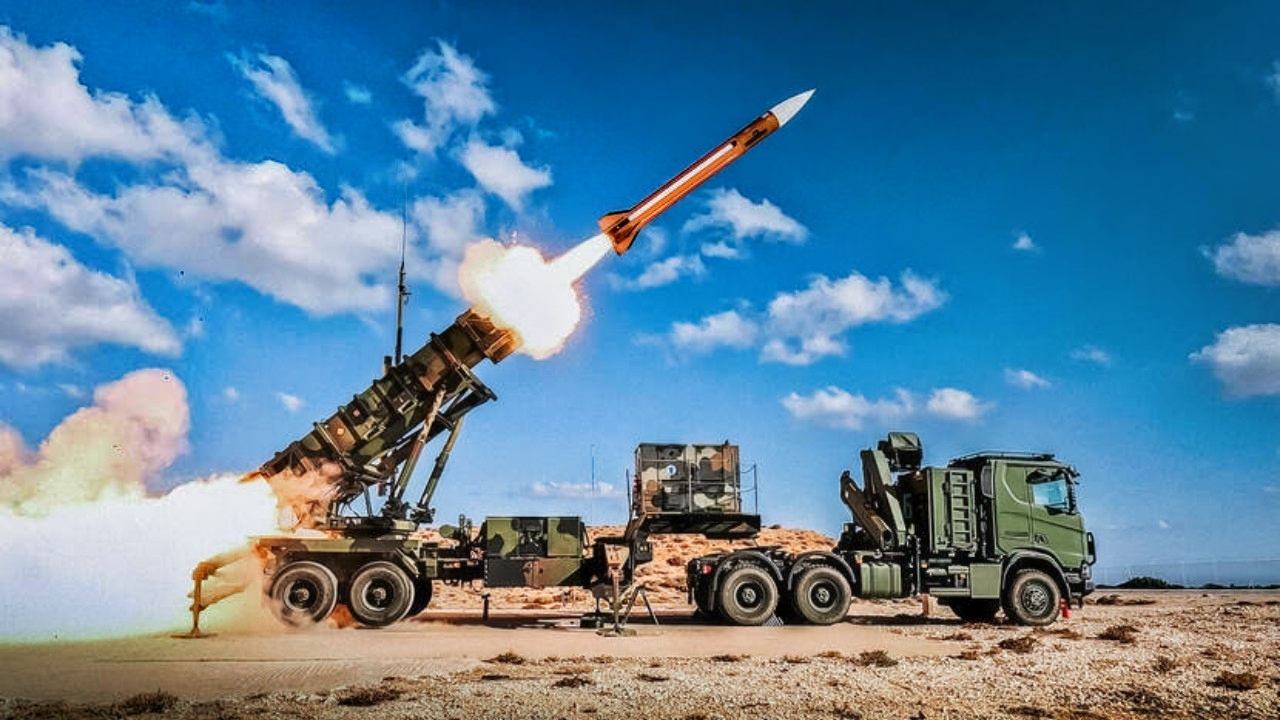
Patriot Missile Launch. Image Credit: Creative Commons.
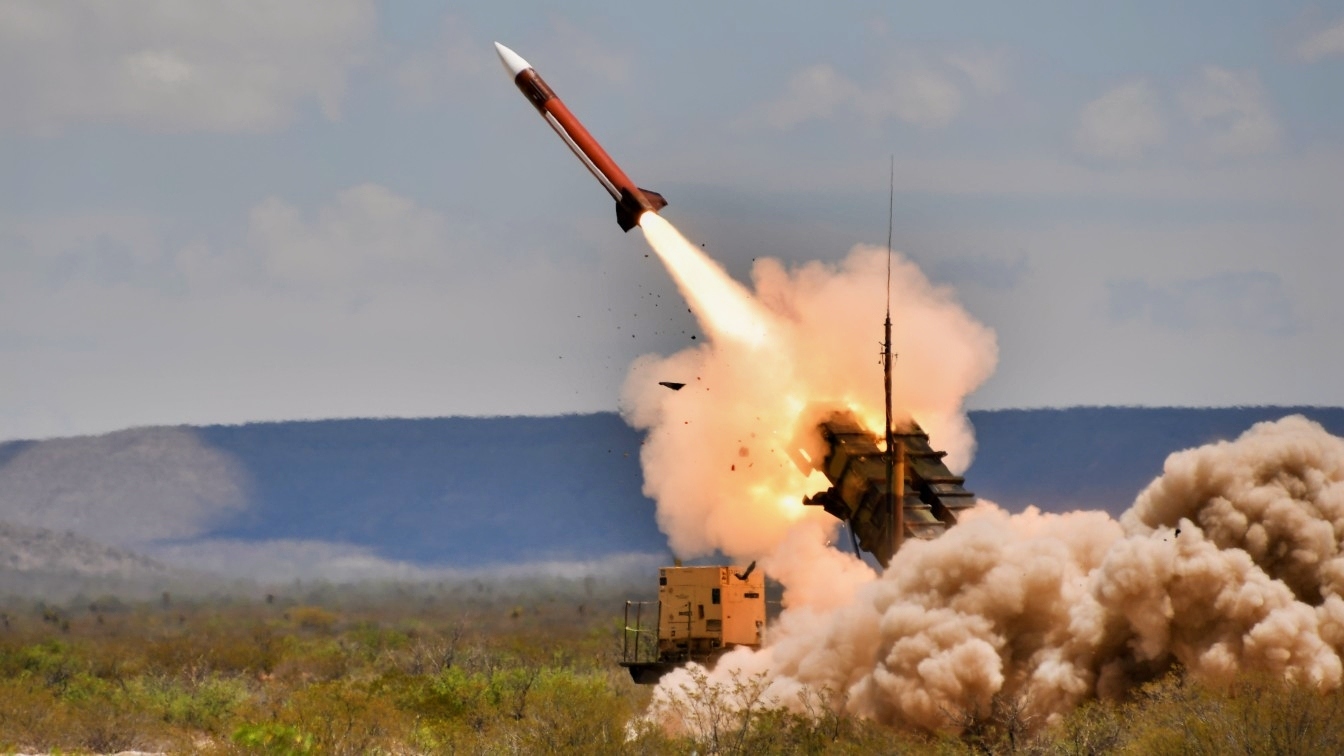
A MIM-104 Patriot Surface-to-Air Missile System assigned to the Fort Bliss, Texas-based 11th Air Defense Artillery Brigade fires as part of a bi-lateral live-fire exercise with military members from the Royal Netherlands Ground-based Air Defense Command at McGregor Range, N.M., May 11, 2024. The Patriot Missile System is a highly mobile air defense guided missile system designed to engage and intercept any aerial threats whether it be aircraft or tactical ballistic missiles under any weather conditions and in natural or induced environments. The command showcased its capabilities firing interceptors at simulated drone targets during the training event working with Dutch Allies.
(U.S. Army photo by Sgt. David Rincon)
As of noon on 26 August, at least 13 people have been killed, and about 150 others have been wounded in the city of Kramatorsk.
Drovko, who does not provide his last name, is a resident of the city, which is one of several in the Ukrainian Donetsk oblast in the Eastern Donbas region.
The city is under increasing attack – sometimes on a daily or even hourly basis. The attacks are so frequent that local authorities have formally designated Kramatorsk, its surrounding villages, and the neighboring city of Sloviansk as areas of active hostilities.
The designation came in an administrative order that took effect on 21 August. This classification comes under the authority of the Regional Development Ministry.
It allows local authorities to decide on the safety of the civilian population and issue evacuation orders when conditions dictate. The order also gives them the authority to administer social benefits and provide state aid.
Russian President Vladimir Putin’s most recent decree has called for his military to take the entirety of the Donbas by the end of the year 2026. This obsession of controlling this eastern region of Ukraine by the former KGB Lt. Col. has led him to plan for what is rumored to be another mass mobilization of 300,000 more military personnel after Russia holds parliamentary elections in September.
Russian forces currently control roughly 80 percent of the Donetsk oblast and almost all of Luhansk oblast, both of which are the main territories of the Donbas.
Russian troops have slowly been advancing toward Kramatorsk, now recognized as the region’s new de facto capital because of wartime conditions in the other major cities.
Fifteen Presidential Directives but Still No Cigar
Putin vowing that his military will take control of all the Donbas this year is another case of “it’s déjà vu all over again.” Both Ukrainian President Volodymyr Zelenskiy and the Washington, DC-based think tank Institute for the Study of War (ISW) report that this most recent deadline is the 15th self-imposed deadline Putin has set for this territorial objective since Russia’s full-scale invasion began in 2022.
All previous deadlines have consistently been missed and then conveniently forgotten by the Kremlin’s propagandists, who also redact as many references to each previous decree from official records.
“You have to make sure that the ‘Tsar’ is not embarrassed by his own ridiculous promises that never had any chance of coming to pass in the first place,” said one military and defense industry expert in Moscow who spoke with NSJ. “As difficult as it might be to believe, Putin’s 14 previous unfulfilled declarations ordering that Donbas be taken are even in excess of his six years’ of promises that the RS-28 Sarmat ballistic missile system would soon be fully tested and deployed.”
Since 2021, Putin and other officials in his administration have made at least 13 public pledges – ten of which were made by Putin personally – that the Sarmat was ready for deployment.
These promises were always that the missile would either be in service by a near-term date or – just as it is with his most current declaration that all of the Donbas will soon be under Moscow’s control – “by the end of the year.”
Escalating Attacks on Civilians
Local residents have become almost desensitized to the presence of the remote-controlled FPV drones that are ever-present in areas of the city where buildings are still occupied, or vendors work in street markets.
“See, it flies away, and no one even flinches anymore because people have already gotten used to bad things,” Serhii, a local street vendor, told the daily. Like Drovko, he asked to be identified only by his first name for security reasons.
As for the threat of drones buzzing about, he is largely fatalistic. “We can’t do anything about it anyway,” he told the Kyiv daily.
But as Russian troops inch closer to the city, the much more deadly and powerful glide bombs are becoming increasingly frequent, launched during the daytime.
White and green anti-FPV nets cover most of the city’s roads to provide protection from the drones, but offer no cover or barrier against these glide bombs for the vehicles or pedestrians on the street below.
On 20 August, Russia launched nine glide bombs against civilian targets, according to Donetsk Oblast Governor Vadym Filashkin.
One person was killed, and 10 others were injured. Fatalities could have been much higher had most of the locals found bomb shelters during the attack.
Meanwhile, the Russian army continues its campaign to destroy what is left of the Donbas. Still inching forward, but likely to miss another deadline to take the region – as before – “by the end of the year.”
About the Author: Reuben F. Johnson
Reuben F. Johnson has thirty-six years of experience analyzing and reporting on foreign weapons systems, defense technologies, and international arms export policy. Johnson is the Director of Research at the Casimir Pulaski Foundation. He is also a survivor of the Russian invasion of Ukraine in February 2022. He worked for years in the American defense industry as a foreign technology analyst and later as a consultant for the U.S. Department of Defense, the Departments of the Navy and Air Force, and the governments of the United Kingdom and Australia. In 2022-2023, he won two awards in a row for his defense reporting. He holds a bachelor’s degree from DePauw University and a master’s degree from Miami University in Ohio, specializing in Soviet and Russian studies. He lives in Warsaw.


