

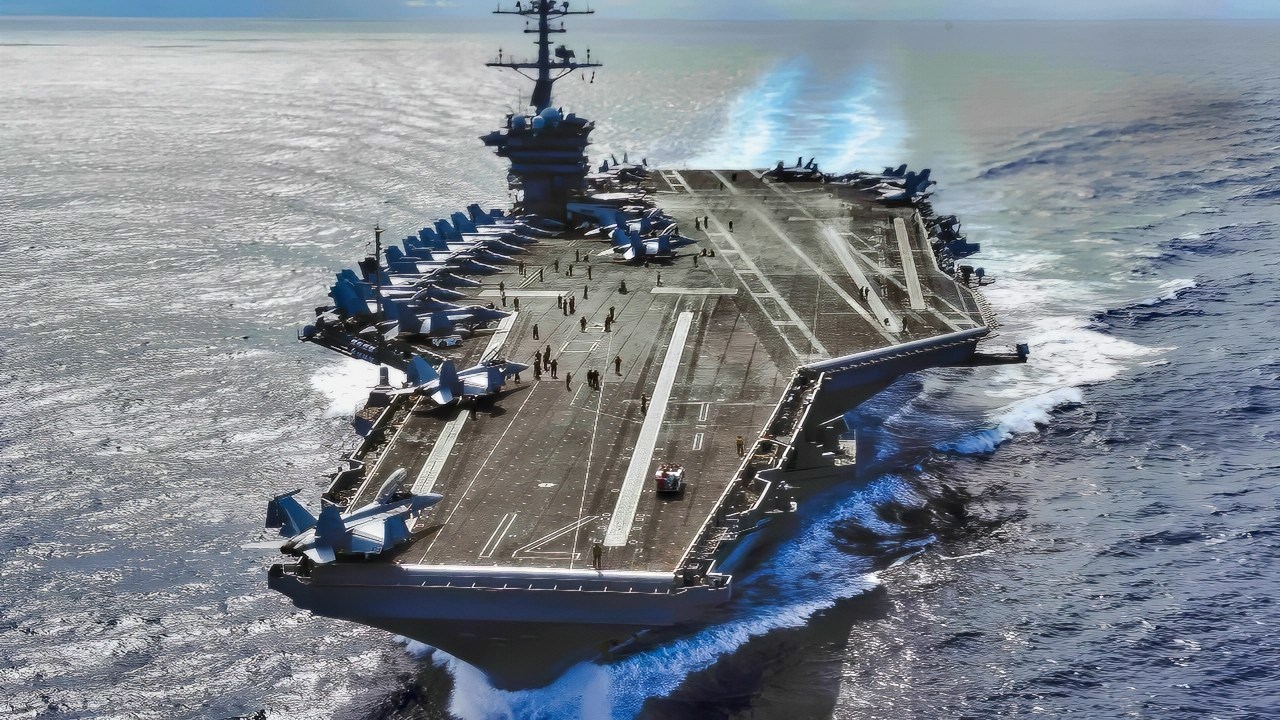
The United States is sending another aircraft carrier and thousands of additional troops to the Middle East.
The new carrier will add another major element of American naval air power to the theater in a deployment that comes as President Donald Trump says renewed US strikes against Iran are possible.
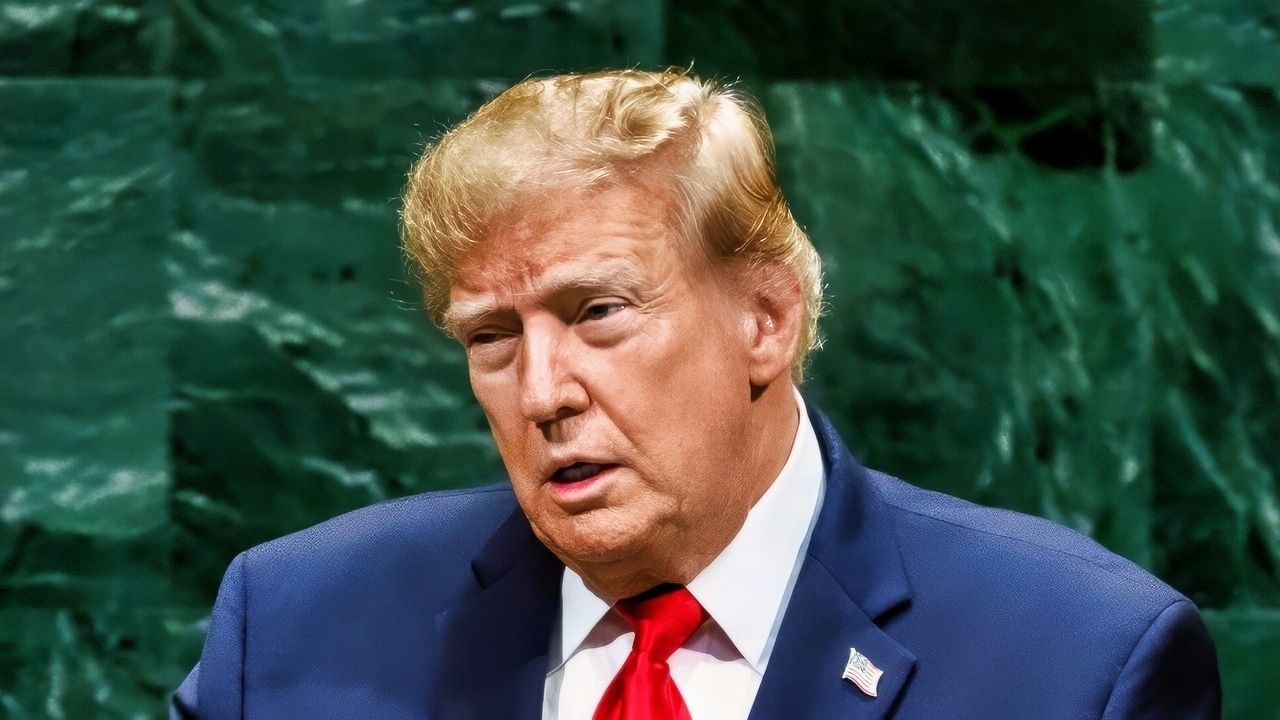
President Donald J. Trump delivers remarks to the 81st session of the United Nations General Assembly, Tuesday, September 22, 2026, at U.N. Headquarters in New York City. (Official White House Photo by Daniel Torok)
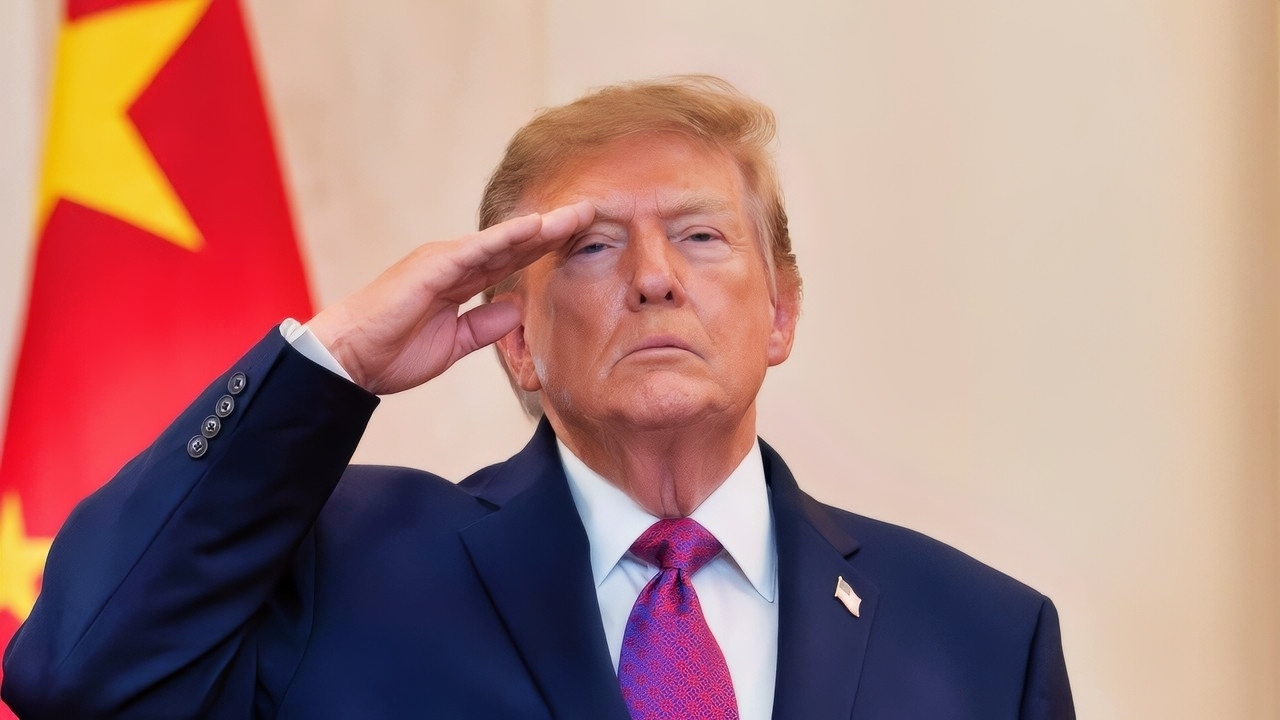
President Donald J. Trump and First Lady Melania Trump greet President Xi Jinping of China and First Lady Peng Liyuan at the South Portico during a State Arrival ceremony, Thursday, September 24, 2026. (Official White House Photo by Andrea Hanks)
Meanwhile, Tehran is reportedly preparing for another round of American attacks.
According to Reuters, Iran may no longer be interested in calibrated, symbolic retaliation and may instead pivot toward more forceful retaliation to reestablish deterrence.
None of this proves that another major US attack is imminent, but it suggests that Washington is positioning enough military power in the region to give itself more options in case Trump decides to escalate.
Sending Another Carrier
The carrier strike group is essentially a mobile airbase, bringing dozens of combat aircraft, strike capability, air defense, electronic warfare, airborne early warning, and command-and-control elements on site without a fixed base.
Escorts within the carrier strike group add additional elements, including Tomahawk land-attack missiles, ballistic- and cruise-missile defense, anti-submarine warfare, and additional sensors.
So it’s not just the carrier but the entire carrier ecosystem that is being moved to the region.
And it’s not just geopolitical symbolism—it’s a move that increases the number of aircraft the US could deploy for defensive counterair, offensive strikes, the suppression of Iranian air defenses, the protection of shipping in the region, or ISR missions.
Another aircraft carrier also creates redundancy.
Three Carriers?
If the new carrier joins two carriers already operating in the theater, the US would have an unusual three-carrier concentration.
Each American carrier normally carries about 60 or 70 aircraft of various types, like the F/A-18E/F Super Hornet, F-35C, EA-18G Growler, E-2D Hawkeye, and various helicopters.
Combined with land-based US Air Force aircraft, tankers, bombers, and regional bases, the additional carrier force would enable a much larger strike architecture and integrate into a broader American air-and-missile campaign.
Using the Carrier
If strikes against Iran resume, potential target categories in a broader campaign could include anything from missile launch infrastructure to drone facilities to air defense systems.
Carrier aircraft could also provide combat air patrol and missile/drone defense, not just offensive strikes.
Either way, carrier aircraft create a conventional mismatch for Iran, which cannot realistically match US Navy carrier groups ship for ship or aircraft for aircraft.
The US will enhance existing advantages in tactical aviation, surveillance, long-range strike, integrated air defense, and naval firepower.
But of course, Tehran’s strategy does not include winning a conventional naval battle.
Iran engages instead with ballistic missiles, cruise missiles, one-way attack drones, coastal anti-ship missiles, mines, small boats, and attacks on regional bases.
And Iran is on its home turf, in the Persian Gulf, a confined battlespace. So Iran can definitely target US infrastructure meaningfully without having to defeat the entire US military.
Hormuz-Centric
The military buildup arrives just as crude shipments (but not refined shipments) have almost recovered to prewar levels.
Roughly 13.5 million bpd of crude have recently moved through the Strait of Hormuz, with Gulf exporters adapting to wartime conditions by using US-protected shuttle tankers and pipeline bypasses.
That’s encouraging for global supply, but an abnormal wartime logistics system is sustaining the recovery.
Another major round of fighting could disrupt the system.
So Iran doesn’t need to fully seal the Strait to make a global economic impact; it only needs to make transit more dangerous and difficult, which would increase insurance costs, discourage commercial shipping, require greater naval protection, delay cargoes, and raise energy prices everywhere.
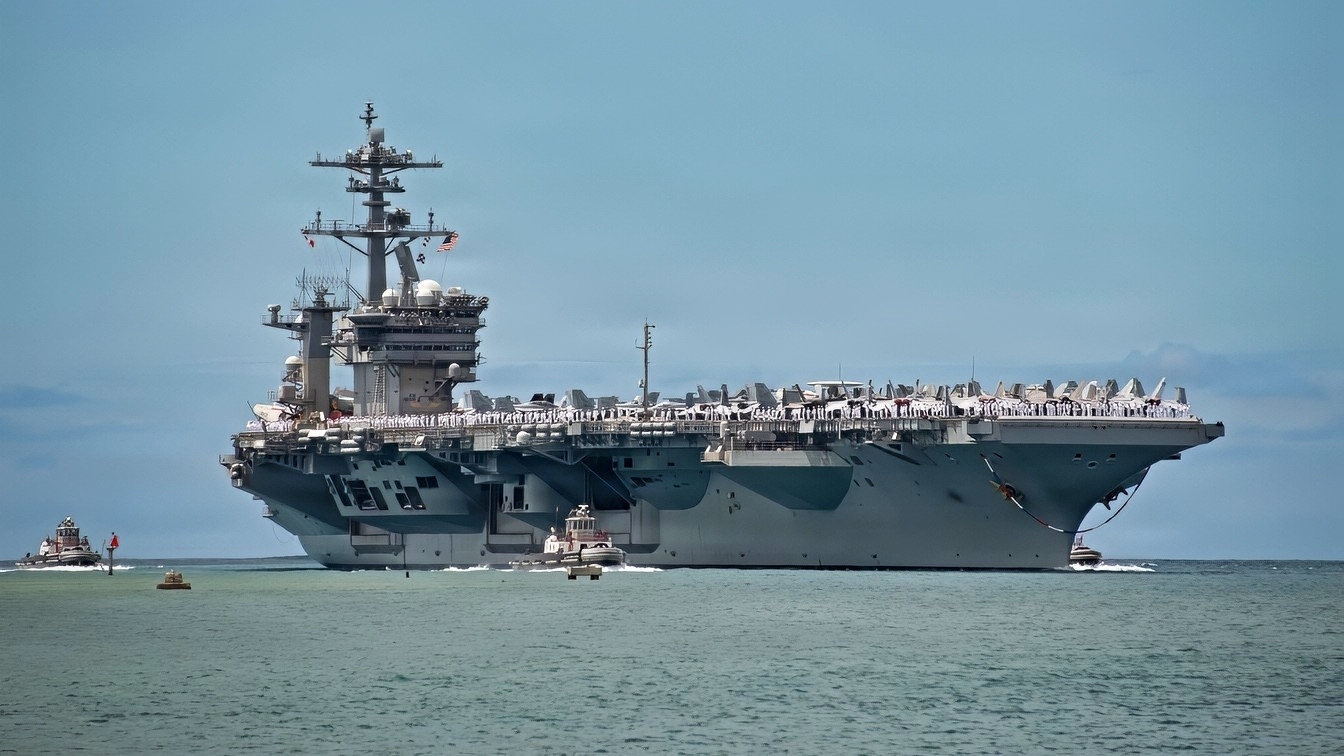
Nimitz-class aircraft carrier USS Theodore Roosevelt (CVN 71) arrives at Joint Base Pearl Harbor-Hickam, Hawaii, to participate in Exercise Rim of the Pacific 2026, June 23, 2026. Thirty-one nations, more than 36 surface ships, 5 submarines, 15 national land forces, more than 206 aircraft and 25,000 personnel are participating in RIMPAC in and around the Hawaiian Islands, June 24 to July 31. The world’s largest international maritime exercise, RIMPAC provides a unique training opportunity while fostering and sustaining cooperative relationships among participants critical to ensuring the safety of sea lanes and security on the world’s oceans. RIMPAC 2026 is the 30th exercise in the series that began in 1971. (U.S. Navy photo by Mass Communication Specialist 1st Class Erik Melgar)
More US military power in the region can make oil flows safer by better protecting tankers and potentially deterring attacks.
But the same buildup can spook markets.
For example, news of a carrier deployment spiked markets by four percent. So there’s a paradox: the carrier deployment strengthens deterrence but also signals readiness to escalate, making markets nervous.
About the Author: Harrison Kass
Harrison Kass is a writer and attorney focused on national security, technology, and political culture. His work has appeared in Tablet, City Journal, The Hill, The Spectator, and The Cipher Brief. He holds a JD from the University of Oregon and a master’s in Global & Joint Program Studies from NYU. More at harrisonkass.com.


