

While on the campaign trail, ahead of November’s midterm elections, Trump gave an update on the war with Iran.
The bottom line up front is that the U.S. has not come any closer to negotiating an end to the war.
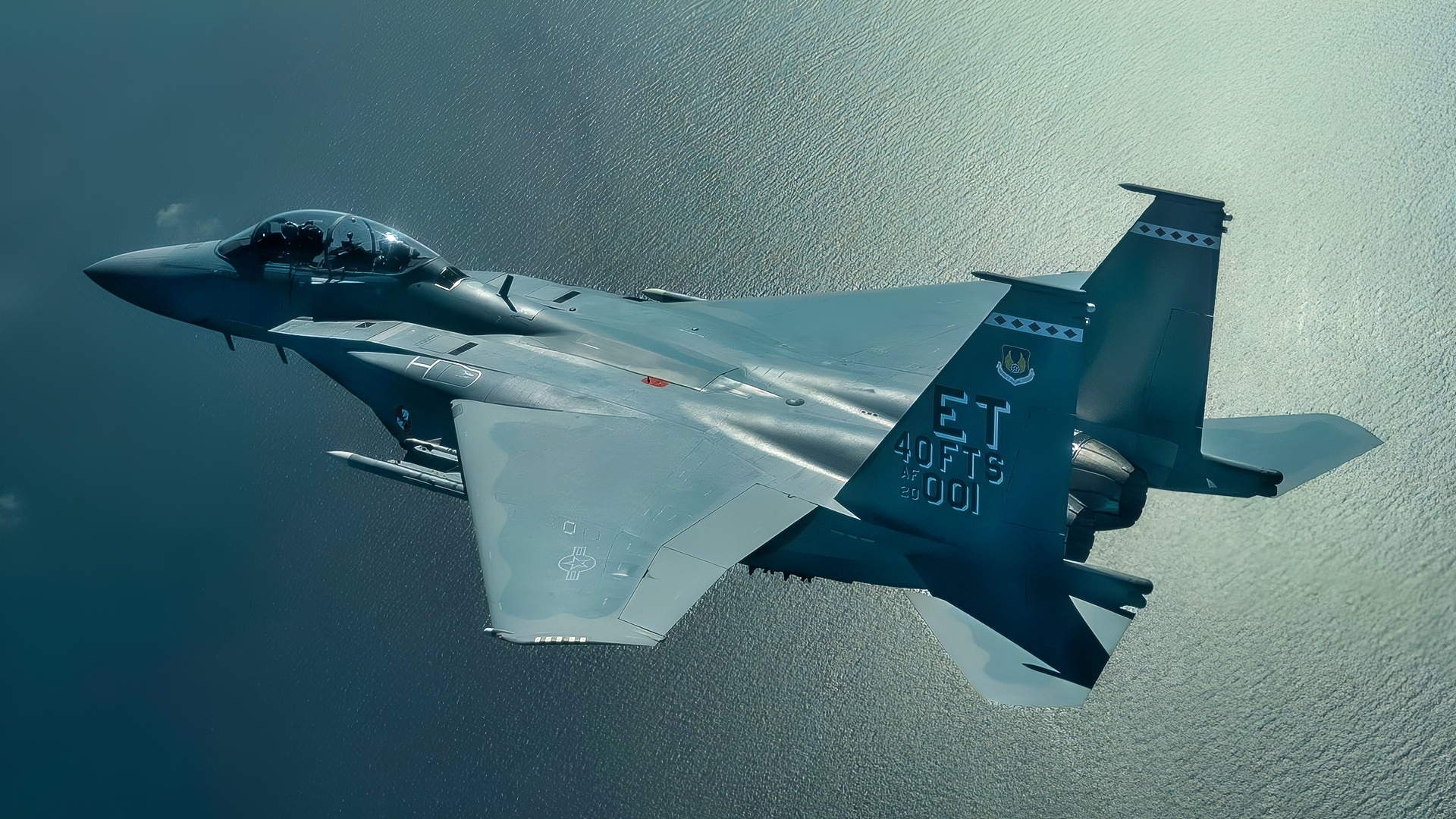
U.S. Air Force Lt. Col. Richard Turner, 40th Flight Test Squadron commander flies 40 FLTS Senior Enlisted Leader, MSgt Tristan McIntire during a test sortie in the F-15EX Eagle II over the Gulf of Mexico on Jun. 14, 2022. Assigned to the 96th Test Wing at Eglin Air Force Base, Fla., the F-15EX Eagle II is the Air Force’s newest 4th generation fighter being tested at the 40 FLTS. (U.S. Air Force photo by Tech. Sgt. John McRell)
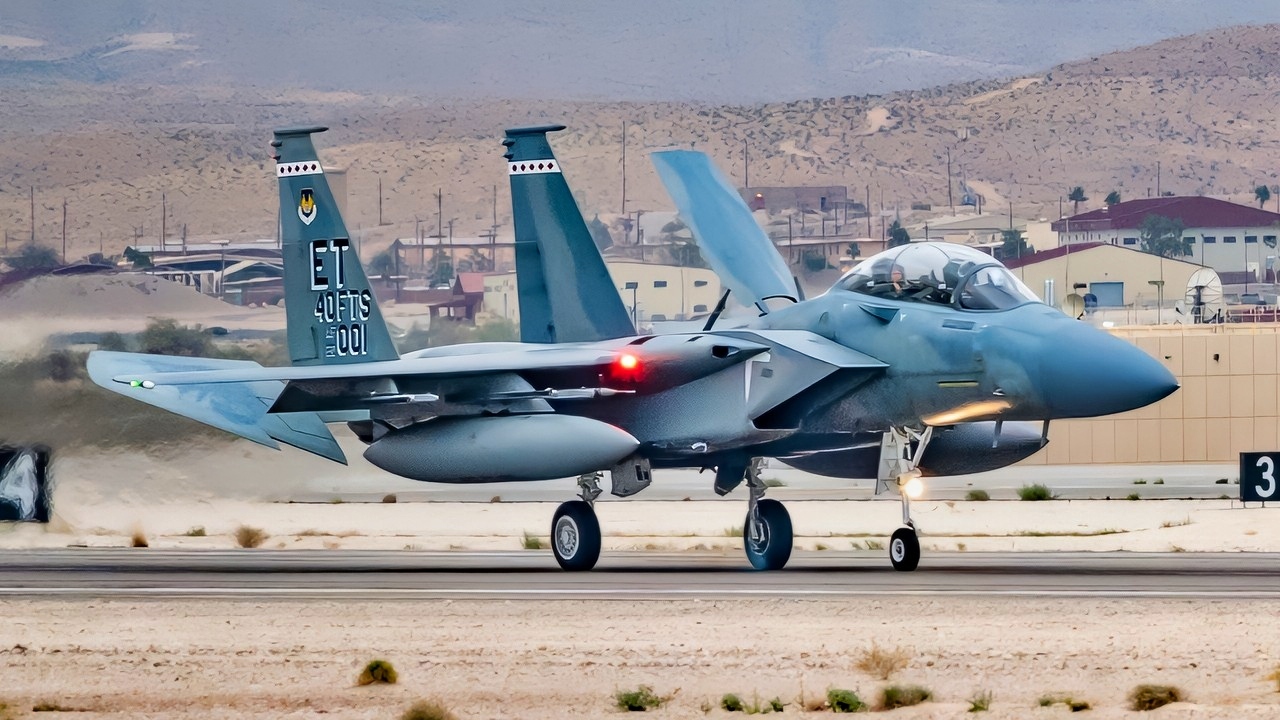
An F-15EX Eagle II lands on the flight line after a training operation at Nellis Air Force Base, Nevada, Nov. 15, 2023. The aircraft is able to fly at a speed of Mach 2.5, constituting it as the world’s fastest fighter jet. (U.S. Air Force photo by Airman 1st Class Elizabeth Tan)
With the war nearing its eighth consecutive month, the conflict has become a point of major political pressure for Trump and the republicans.
Because of the war, traffic through the Strait of Hormuz has slowed down significantly, and oil infrastructure across the Middle East has been damaged by Iranian and Houthi missiles.
As a result, global fuel prices have risen, and U.S. gas prices have yet to recover.
Who is the U.S. Negotiating With?
“They don’t have a navy. They don’t have an air force. Their army is decimated. Their leaders are gone,” Trump said during a campaign rally in Kalispell, Montana. “I should have probably left their leaders because I don’t know who the hell we’re negotiating with.”
Negotiations with Iran have been difficult in recent months, as neither side has engaged in direct talks for a long time.
Talks between Tehran and Washington are currently being conducted through intermediaries from Qatar, Oman, and Pakistan, each with its own interests and agenda.
The last time delegations from Iran and the U.S. sat at the same table was at the United Nations General Assembly in September, after which Secretary of State Marco Rubio ordered the Iranian delegation to leave after they “overstayed their welcome.”
Tehran’s nuclear program remains the highest priority for the Trump Administration.
Last week, Vice President Vance reiterated America’s commitment to dismantling Iran’s nuclear program. “I think if they want to show a commitment to not building a nuclear weapon, they would do something meaningful on their enrichment capacity,” he told Reuters. “In other words, the United States is not going to do things for mere promise of actions on the Iranian side. We need to trade actions for actions here, and we’ll see what the Iranians do.” The topic of Iran’s nuclear program has been a major point of contention for both sides, as Iran claims that it is not enriching uranium for military purposes.
At the same time, reports suggest that Iran’s facilities are enriching uranium to weapons-grade levels. The U.S. has maintained that any possible settlement must include the destruction of Tehran’s nuclear weapons program.
What’s Iran’s Plan?
Meanwhile, Iran appears content to play the long game.
The Islamic Republic is aware of the political pressure currently eroding Trump’s support base and is waiting for midterms to hopefully deal a blow to the administration.
Earlier this month, the President promised not to launch any new attacks against Iran until after November’s elections.
This, however, has given Iran enough wiggle room to reassert its influence over the Strait of Hormuz without fear of retaliation.
In September, reports suggested that traffic in the vital waterway was returning to prewar levels.
So far, in October, Iran has launched 22 separate attacks against civilian tankers in the region, according to the UK Maritime Trade Operations (UKMTO) center.
Likewise, the civil war in Yemen against Iran’s Houthi proxies has intensified, resulting in multiple attacks against Saudi Arabian oil infrastructure.
As a result, the energy market has struggled to adjust to the new normal as the Middle East continues to change.
While the U.S. remains focused on Iran’s nuclear program, Tehran’s main priority is reopening the Strait of Hormuz and, more importantly, lifting the U.S. naval blockade against Iran-bound vessels.
At the same time, Tehran does not seem in any hurry to take meaningful steps to end the war.
In September, the Iranians submitted a peace proposal to end the war, supposedly based on the June Memorandum of Understanding (MoU).
The proposal called for an immediate cessation of hostilities on all fronts, including in Lebanon, lifting sanctions on Iran, and lifting the naval blockade on Hormuz.
After that, Iran would begin talks on its nuclear program.
Trump promptly dismissed the proposal. Tehran likely knew the proposal would be rejected, yet submitted it anyway to further pressure the United States.
Both Sides Need the War to End
However, the longer the war goes on, the harder it will be for Iran to recover. Outright collapse isn’t out of the question.
Iran’s military has taken a beating during the fighting, and although its missile and drone production has continued, its Navy and Air Force have been hit especially hard. Likewise, Tehran’s economy is in shambles.
The Iranian rial has collapsed, inflation is at an all-time high, and because of the U.S. blockade in the Red Sea, the country’s oil exports have dropped to zero over the past month.
Before the war, Iran exported about 1.4 to 1.5 million barrels of oil per day, a sizable share of its economy.
Now, it has lost its main source of revenue, and the country has suffered immensely as a result. While Trump needs the war to end to alleviate some of the political pressure, Iran needs the war to end to survive.
About the Author: Isaac Seitz
Isaac Seitz, a Defense Columnist, graduated from Patrick Henry College’s Strategic Intelligence and National Security program. He has also studied Russian at Middlebury Language Schools and has worked as an intelligence Analyst in the private sector.


