


Energy crises don’t stay energy crises. More bad news today: the global food supply may be imperiled.
That’s the warning running through recent Financial Times reporting, and policymakers ignore it at their peril.
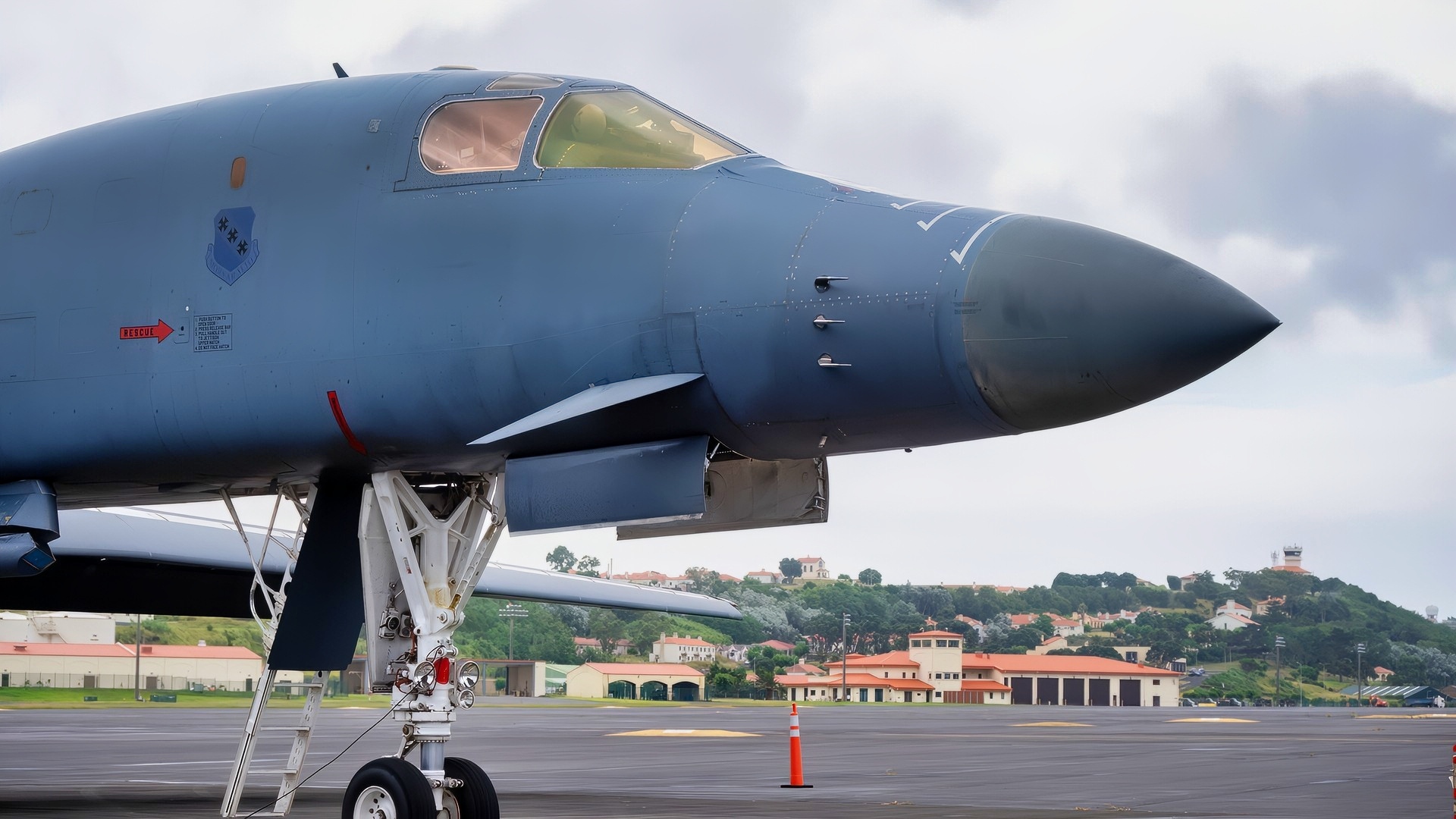
A U.S. Air Force B-1B Lancer sits on the flightline at Lajes Field, Azores, Aug. 22, 2025. The aircraft landed for a hot pit refuel during a Bomber Task Force Europe mission. (U.S. Air Force photo by Cristina Oliveira)
Sideview of B-1B Lancer Bomber. Image Credit: National Security Journal.
Nearly eight months after the U.S. and Israel struck Iran and Tehran choked off the Strait of Hormuz, the bill for this conflict may be moving from the gas station to the grocery store.
However, the worst of it hasn’t landed yet. A food shock runs on a delay, and that delay is running out.
Fertilizer Is Just Natural Gas In A Bag
Most people don’t connect a stranded tanker in the Persian Gulf with a loaf of bread in Cairo.
They should. Natural gas makes nitrogen fertilizer.
The Gulf states are among the world’s largest exporters of urea, the most widely used nitrogen fertilizer, and the same oil and gas operations produce the sulfur needed for phosphate fertilizer.
Before the current conflict, about a third of global urea shipments and nearly half of seaborne sulfur transited via the Strait of Hormuz.
According to the FT, urea imports from Gulf exporters fell 85 percent, while global urea prices rose 70 percent in the second quarter compared with a year earlier.
The World Bank projects urea prices to rise nearly 60 percent in 2026.
Then come the added effects. In Bangladesh, a liquefied natural gas shortage has shut down four of the country’s five urea plants since March.
India, which runs about 85 percent of its domestic urea production on LNG, is exposed on both ends. China restricted fertilizer exports because of this shortage.
That’s the shock.
Then comes the aftershock.
Diesel Is The Second Front On Farms And Food
Fertilizer is only part of the problem. Farms run on diesel. Tractors, combines, irrigation pumps, and the trucks hauling grain to port all burn diesel.
According to a new S&P Global analysis released Monday, the Middle East and Russia normally account for half of global net diesel exports.
Middle Eastern diesel exports have fallen by more than half, to under 1 million barrels a day as of July. Ukrainian strikes on Russian refineries haven’t helped.
Ukraine had followed a three-day ceasefire on Russian oil and gas refineries that President Trump announced.
Still, last week hit a major refinery outside of Moscow, as Russia has continued its attacks on Ukrainian power plants.
Ukrainian President Zelenskyy had enough of one-sided ceasefires. “The block (on attacking refineries) is out. We’re done,” he told the Financial Times.
S&P’s analysts then layered a strong El Niño on top of that, which threatens heat and erratic rainfall across major growing regions.
Their model has already trimmed Brazil’s corn forecast by 6 million metric tons.
Why The Food Shock Runs On A Delay
This can be confusing to some.
An oil price spike hits you the next time you fill up.
Food takes longer.
A farmer who skimps on fertilizer this season doesn’t see the damage until harvest.
Schroders economist David Rees told Reuters back in March that the energy hit comes first and the food hit follows as a second wave.
Many analysts say we’re entering that second wave now.
The UN’s International Fund for Agricultural Development said global agricultural prices jumped 13 percent in the third quarter and warned of a looming global food crisis.
Reuters reports that food inflation will accelerate well into 2027.
Bread in Egypt is up 25 percent.
Rice in Indonesia has hit record highs.
So has sugar in India.
Wheat is up more than 30 percent this year.
Here at home, American farmers had already bought much of the spring nitrogen before the Strait closed, which bought them some time.
However, University of Illinois agricultural economists warned that the bigger worry is the 2027 crop. That bill comes due this fall, when farmers buy fertilizer.
Hunger Is And Always Has Been A Security Problem
Say what you want about the humanitarian side.
That’s only part of the story.
Anyone who has lived in places where food is scarce knows what comes next.
Hungry populations don’t stay patient for long.
Food price spikes have a long track record of lighting fuses.
Bread prices helped ignite the Arab Spring in 2011.
Columnist Andreas Kluth noted this week that an official in the Sahel describes the relationship between hunger and war there as circular.
War cuts off farmland and markets.
Hunger then feeds more war.
An estimated 645 million people were already undernourished in 2025, before this shock hit.
That’s a recruiting poster for every militia and jihadist outfit from the Sahel to South Asia.
Any planner who thinks the consequences of the Iran conflict stop at the Strait is missing the second-order effects entirely.
There’s A Fix On The Table
The frustrating part is that a partial solution already exists.
In March, the UN drew up a plan to move fertilizer through the Strait, with a coordination center in Oman to register vessels and oversee safe passage.
UN Under-Secretary-General Jorge Moreira da Silva said last week it could be running within seven to 10 days if Washington and Tehran both sign off.
Neither has. Meanwhile, fertilizer has made up a negligible share of the cargo that has slipped through.
The G7 pledged $2.5 billion last week to help at-risk countries.
That’s a start.
However, it doesn’t move a single ship.
To be fair, not everyone thinks the sky is falling.
Fertilizer prices are off their spring peaks, and global cereal stocks remain decent.
S&P’s own team wrote that a global food crisis isn’t inevitable.
But they also wrote that it’s no longer a distant risk.
The energy crisis was the opening act.
The food shock is the second wave, and it’s already rolling in.
About the Author: Steve Balestrieri
Steve Balestrieri is a National Security Columnist. He served as a US Army Special Forces NCO and Warrant Officer. In addition to writing on defense, he covers the NFL for PatsFans.com and is a member of the Pro Football Writers of America (PFWA). His work was regularly featured in many military publications.


