
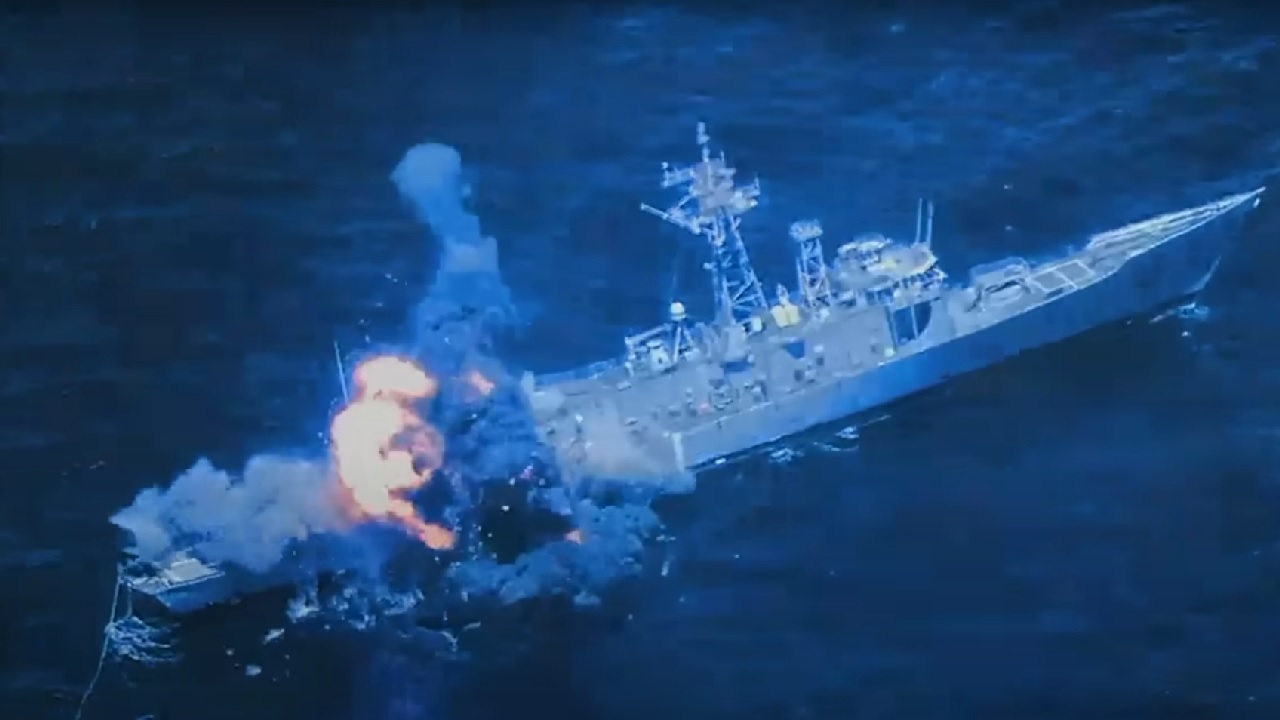
Iran is threatening to expand the war with the U.S. and Israel and begin launching new attacks against American military bases and economic targets throughout the Middle East.
The threats come as reports describe the Pentagon as preparing for another major offensive against Tehran, with President Donald Trump widely expected to authorize new strikes soon after the November 3 midterm elections.

The guided-missile destroyer USS Donald Cook (DDG 75) steams behind the aircraft carrier USS Theodore Roosevelt (CVN 71) in the Persian Gulf on Jan. 31, 2006. The Roosevelt Carrier Strike Group is conducting maritime security operations in the Persian Gulf.
(DoD photo by Airman Apprentice Nathan Laird, U.S. Navy. (Released))
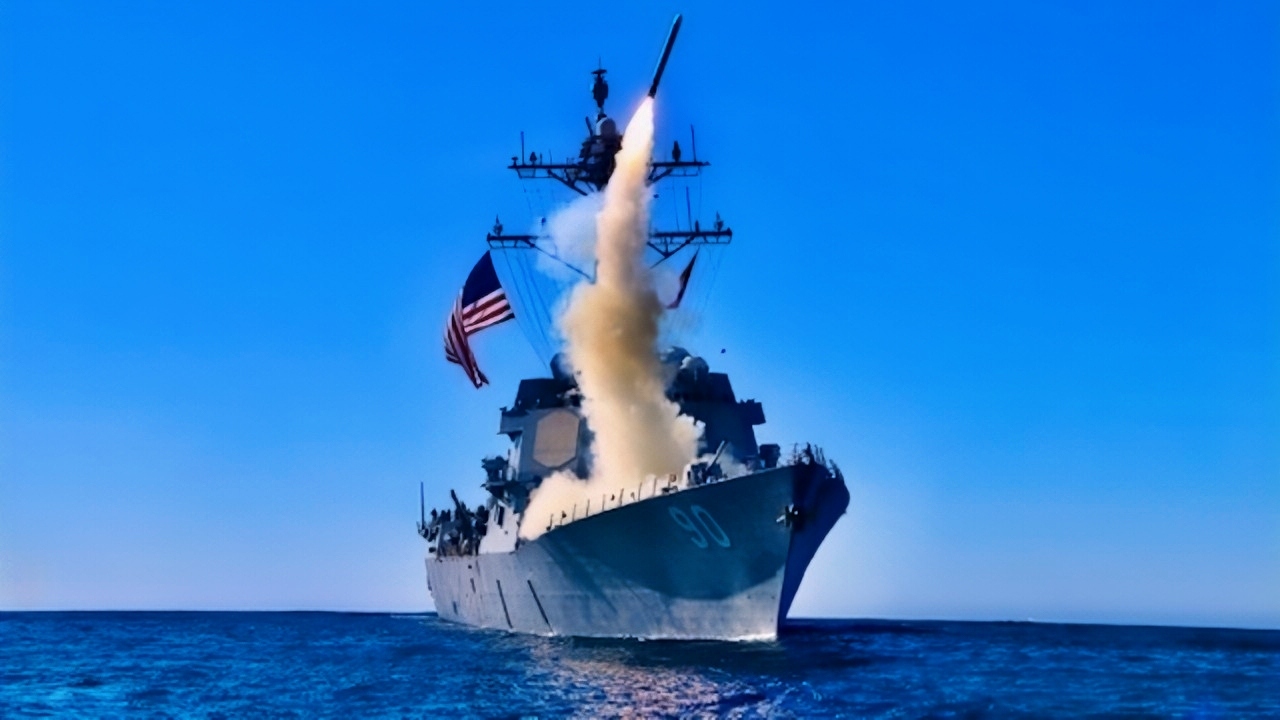
(Dec. 01, 2020) – The guided-missile destroyer USS Chafee (DDG 90) launches a Block V Tomahawk, the weapon’s newest variant, during a missile exercise. This event marked the first time a Block V Tomahawk missile was operationally tested, marking the Navy’s transition to a more advanced capability for the fleet. Block V includes an upgrade that will enhance navigation performance and provide robust and reliable communications. Chafee is currently assigned to Carrier Strike Group ONE and is homeported in Pearl Harbor. (U.S. Navy photo by Ens. Sean Ianno/Released)
The threats also come as Iran increases the frequency and scale of its attacks on commercial ships operating in the Strait of Hormuz under U.S. naval protection, and as Tehran claims to have recently attacked seven commercial vessels in the Persian Gulf and Strait of Hormuz.
A report from The Wall Street Journal published on Friday, October 23, describes how Iran is taking steps to retaliate against the next round of American attacks by expanding its targets to include airports, energy infrastructure, pipelines, and even undersea communications infrastructure throughout the Gulf.
On Thursday, the Islamic Revolutionary Guard Corps (IRGC) also threatened that U.S. bases could be targeted if the United States Navy continues to escort commercial ships through what it describes as “illegal” lanes in the Strait of Hormuz.
Iran’s Newest Threats
The IRGC Navy announced on Thursday, October 22, that its forces had targeted four vessels that it says were conducting unauthorized oil transfers in the northern Persian Gulf a day earlier.
Iranian forces also claimed that a further three vessels had struck naval mines near the western entrance to the Strait of Hormuz.
The ships were not identified, and no evidence has independently confirmed the incidents, leaving analysts – and even President Donald Trump – publicly suggesting that Iran may be exaggerating the scale of its attacks in an effort to spook the oil market.
The IRGC also issued a direct warning to U.S. forces operating in the region, suggesting it will launch new attacks even before the U.S. resumes its offensive.
“If the United States continues its hostile and aggressive actions, the US regime should expect a significant response from the armed forces of the Islamic Republic of Iran. We are stronger than ever,” the statement reads, referring to the U.S. naval blockade against Iranian ports.
The IRGC also warned that it may launch attacks on U.S. bases if Washington continues to help tankers move through the Strait of Hormuz.
“The US military must know that if this trend continues, the conflict will extend to its bases in the region,” a statement published on the Sepah News website reads. “This is a serious warning.”
Iran Threatens U.S. Aircraft Carriers
Iran’s newest threats also extend to American warships operating in the Gulf region.
According to the latest reporting by The Wall Street Journal, Iranian officials have privately warned mediators that Iranian forces may attempt to sink U.S. Navy vessels and kill their crews if Washington were to resume its military campaign.
The private warnings come after IRGC Navy Rear Adm. Ali Azmaei said on October 13 that Iranian forces were waiting for warships to approach the Strait of Hormuz.
“We are waiting for American warships to approach the entrance to the Strait of Hormuz so that we can sink them,” he said, adding that his forces are “counting down” the days for the encounter.
Iran has attempted to do precisely that, too. On September 5, Iranian forces launched ballistic missiles at an American aircraft carrier – believed to be the USS George Washington – and a guided-missile destroyer operating in nearby waters.
U.S. Central Command confirmed that the vessels evaded the attacks and that there were no American casualties; Iran claimed, however, that both vessels had sustained damage.
U.S. forces responded by attacking three Iranian oil tankers.
Two were disabled, and the third was destroyed.
The strikes were met with further Iranian missile attacks against U.S. warships on September 6 and 7, prompting more U.S. strikes on five Iranian oil tankers on September 8.
U.S. Prepares for Larger Regional War
The United States appears to be preparing for a backlash from Iran, as it also prepares its own next round of strikes.
American commanders have this week moved some military personnel away from bases in the region, and Washington is reducing its diplomatic presence in vulnerable locations in the Gulf.
On Wednesday, October 21, the State Department ordered all non-emergency U.S. government employees and their families to leave Saudi Arabia after deadly attacks by Houthi forces.
State Department spokesman Tommy Pigott confirmed the order and said that it only applies to Saudi Arabia.
A Reuters report, however, said that four American officials say plans are in place to withdraw diplomats’ families from other Gulf states.
Those departures have not been officially confirmed, but the reported plans suggest Washington expects Iran to strike back.
About the Author: Jack Buckby
Jack Buckby is a British researcher and analyst specializing in defense and national security, based in New York. His work focuses on military capability, procurement, and strategic competition, and he produces and edits analysis for policy and defense audiences. He brings extensive editorial experience, with a career output spanning over 1,000 articles at National Security Journal, and has previously authored books and papers on extremism and deradicalization.


