


The U.S. Navy just scrapped a Biden-era $3,000,000,000 submarine repair contract. The deal was for the USS Boise, a Los Angeles-class attack submarine. $800,000,000 was already spent on the overhaul. The original contract was projected at $1.2 billion. Costs ballooned to $3 billion. After the overhaul, the USS Boise would have delivered only 20% of its remaining service life. The cost was 65% of a new Virginia-class attack submarine. The USS Boise has been idle since 2015. It has been unable to dive since 2017.
The U.S. Navy Just Lost Another Nuclear Attack Submarine for Good

(March 21, 2009) The Los Angeles-class attack submarine USS Hartford (SSN 768) arrives pier side at Mina Salman pier in Bahrain where U.S. Navy engineers and inspection teams will asses and evaluate damage that resulted from a collision with the amphibious transport dock ship USS New Orleans (LPD 18) in the Strait of Hormuz March 20. Overall damage to both ships is being evaluated. The incident remains under investigation. Hartford is deployed to the U.S. 5th fleet area of responsibility to support maritime security operations. (U.S. Navy photo by Cmdr. Jane Campbell/Released)
The Trump administration just walked away from a major submarine repair because the economics (and the painful reality) no longer made sense. This move by the Trump administration to scrap a Biden-era repair deal for the Los Angeles-class attack submarine USS Boise is indicative of much greater woes afflicting the Navy’s overall fleet, but specifically the problems faced by the Navy’s submarine force.
Shipyards in Crisis, Industrial Base in Decline
It is not due to inadequate training or even to personnel shortages within the Navy. These failures stem directly from the cascading, systemic failures at America’s naval shipyards and throughout the wider American defense industrial base (DIB).
The Pentagon’s decision to scrap the Biden-era overhaul deal for the USS Boise means that already $800 million of the nearly $3 billion overhaul contract has been lost. Originally, the Biden deal was expected to cost $1.2 billion.
Over time, however, those costs ballooned to $3 billion.
Diminishing Returns: Why the Repair Made No Sense
After the proposed overhaul of the USS Boise was completed, the aging submarine would have delivered only around 20 percent of its remaining service life. What’s more, according to the bean counters at the Pentagon, the cost was around 65 percent of what it would have cost for a new Virginia-class attack submarine.
Boise has been idle since 2015 and unable to dive since 2017. A submarine that cannot dive is like a bird that cannot fly.
It’s a lame duck. Further, it was taking up finite space at America’s beleaguered naval shipyards as Washington figured out what to do with the aging submarine.

The Los Angeles-class fast attack submarine USS Philadelphia (SSN 690) arrives in Souda harbor for a routine port visit to Greece’s largest island. Philadelphia is homported in Groton, CT and began a scheduled six-month deployment in June 2005. Commissioned June 25, 1977, USS PHILADELPHIA is the third LOS ANGELES-class attack submarine and the first ship in her class built by Electric Boat. U.S. Navy photo by Paul Farley

(Dec. 10, 2010) The Los Angeles-class attack submarine USS Houston (SSN 713) takes part in a photo exercise as part of Keen Sword 2011. Keen Sword is a joint, bilateral exercise designed to strengthen Japan-U.S. military operations. (U.S. Navy photo by Mass Communication Specialist 3rd Class Casey H. Kyhl)
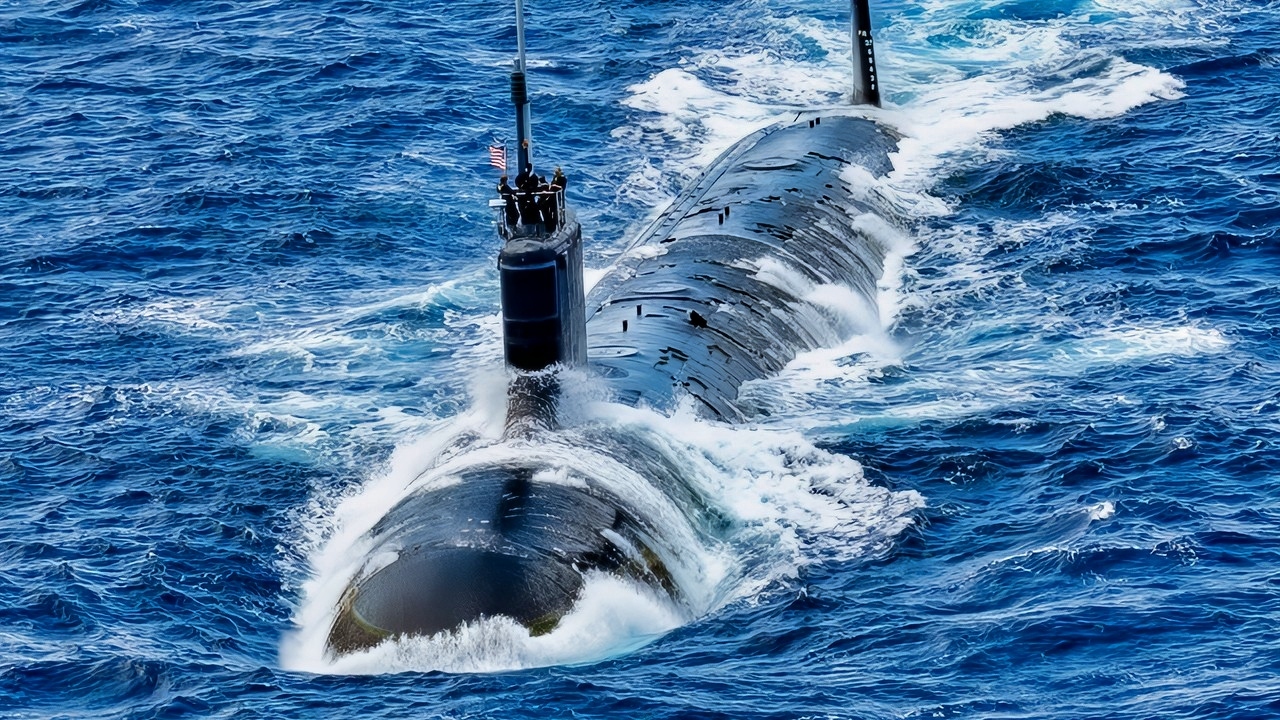
Virginia-class attack submarine USS North Carolina (SSN 777) sails in formation, off the coast of Hawaii during Exercise Rim of the Pacific (RIMPAC) 2024, July 22. Twenty-nine nations, 40 surface ships, three submarines, 14 national land forces, more than 150 aircraft and 25,000 personnel are participating in RIMPAC in and around the Hawaiian Islands, June 27 to Aug. 1. The world’s largest international maritime exercise, RIMPAC provides a unique training opportunity while fostering and sustaining cooperative relationships among participants critical to ensuring the safety of sea lanes and security on the world’s oceans. RIMPAC 2024 is the 29th exercise in the series that began in 1971. (U.S. Navy photo by Mass Communication Specialist 1st Class John Bellino)
The longer it sat idle, the older it got, the more resources and time it consumed, and the greater the sunk cost was for the submarine.
Cutting Losses in a Broken System
And that’s the real logic behind the cut. For years, there has been a severe bottleneck in shipyard capacity. Beyond the bottlenecks in America’s declining shipyards, there are significant labor shortages in the shipyard workforce that have been ongoing for decades.
Plus, there is a dearth of engineering talent, compounding all these shortages.
Rather than continue spending money the Navy doesn’t really have on a system that will never fully deliver due to its age and the ongoing shipyard crisis, the Trump administration opted to cut its losses.
Now, the resources and workers that had all been set aside to overhaul the Boise are being redirected to the already flagging construction of new Virginia-class attack submarines and Columbia-class subs. In essence, the US Navy cannot even fix what it already owns. Therefore, it is abandoning platforms midlife, meaning that taxpayers are getting hosed whether the overhaul continues or desists.
Shipyards Can’t Keep Up with U.S. Navy Submarine Repairs
Beyond that, the Navy’s shipyards, once the envy of the world, can no longer do multiple projects at once. The shipyard crisis and supply chain bottlenecks within America’s declining DIB have all led to a worsening submarine crisis.
Today, a massive portion—around 40 percent—of America’s attack submarine fleet is unavailable. They are unavailable only due to maintenance failures (caused by the ongoing naval shipyard crisis, supply chain bottlenecks, and worker shortages). The loss of 40 percent of the US submarine force to maintenance backlogs, shipyard delays, and workforce shortages ensures the force is operating at severely diminished capacity.
Strategic Consequences: Deterrence at Risk
This has real, critical impacts on America’s overall force posture along with its ability to effectively deter adversaries, notably the People’s Republic of China (PRC).
In any major conflict, which could erupt at any moment given the current global tensions, submarines will be the primary force multiplier for the US Navy against China. In fact, submarines are America’s best anti-ship, intelligence, surveillance, and reconnaissance (ISR), and strike platform in today’s era of contested battle spaces.
On the other end of this equation are the relative increases in China’s shipbuilding capabilities.
Production Gap: China Scaling, America Stalling
China’s advanced naval shipyards are building around 10 submarines every 4 years. Those numbers are increasing, too. In fact, it is reported that some of China’s naval shipyards can produce around 20 submarines at once.
Compare that to the United States, where we produce only around seven submarines in the same timeframe as China, and we have only two shipyards in the entire country capable of building nuclear submarines.
China can build its submarines faster, repair them more quickly, and scale production in wartime in ways that the United States cannot. America struggles to build two Virginia-class submarines per year.
The shipyard crisis in America is so severe that even top-priority projects, such as the construction of the Columbia-class submarine, are seriously delayed. As you’ve seen with the Boise situation, there’s a maintenance backlog that is proving to be massively damaging to the US Navy’s defense posture (and draining America’s already-emptying coffers).
Quantity vs. Quality—and China Increasingly Has Both
So, we are in a situation where the scale and speed of production for submarines and other weapons of war are far more useful than precision and quality. That’s the old way of doing things.
That was how we got through the post-Cold War era, when the United States was the undisputed global champion. We are now back to the Second World War mentality of just mass-producing as many easy-to-maintain war machines as possible, which is preferable to the post-Cold War mindset of creating a small group of exquisite machines that can do everything.
The law of averages applies. Quantity in this case is preferable to quality. It must be stressed, however, that China’s DIB is increasingly producing systems both in abundance and of high sophistication.
So, if a conflict with China ever did erupt, America’s military might be in for a rude awakening in which they not only are outnumbered by Chinese systems, but those systems are at least comparable to the advanced, expensive systems the Americans are deploying.
About the Author: Brandon J. Weichert
Brandon J. Weichert is the Senior National Security Editor. Recently, Weichert became the editor of the “NatSec Guy” section at Emerald.TV. He was previously the senior national security editor at The National Interest. Weichert is the host of The National Security Hour on iHeartRadio, where he discusses national security policy every Wednesday at 8pm Eastern. He hosts a companion show on Rumble entitled “National Security Talk.” Weichert consults regularly with various government institutions and private organizations on geopolitical issues. His writings have appeared in numerous publications, among them Popular Mechanics, National Review, MSN, and The American Spectator. And his books include Winning Space: How America Remains a Superpower, Biohacked: China’s Race to Control Life, and The Shadow War: Iran’s Quest for Supremacy. Weichert’s newest book, A Disaster of Our Own Making: How the West Lost Ukraine, is available for purchase wherever books are sold. He can be followed via Twitter/X @WeTheBrandon.


