

Key Points and Summary – The U.S. Navy exclusively operates nuclear-powered submarines due to their unparalleled advantages in endurance, speed, and firepower, which are essential for global power projection. Unlike diesel-electric or Air Independent Propulsion (AIP) submarines that require periodic surfacing and are slower, nuclear subs can stay submerged for months, travel faster (over 25 knots), and carry larger weapon loads.
-While AIP technology offers enhanced quietness for conventional boats and is a cost-effective choice for many nations focusing on regional defense, the U.S. prioritizes the unique strategic benefits—limitless range and persistence—that only nuclear propulsion provides for its global missions.
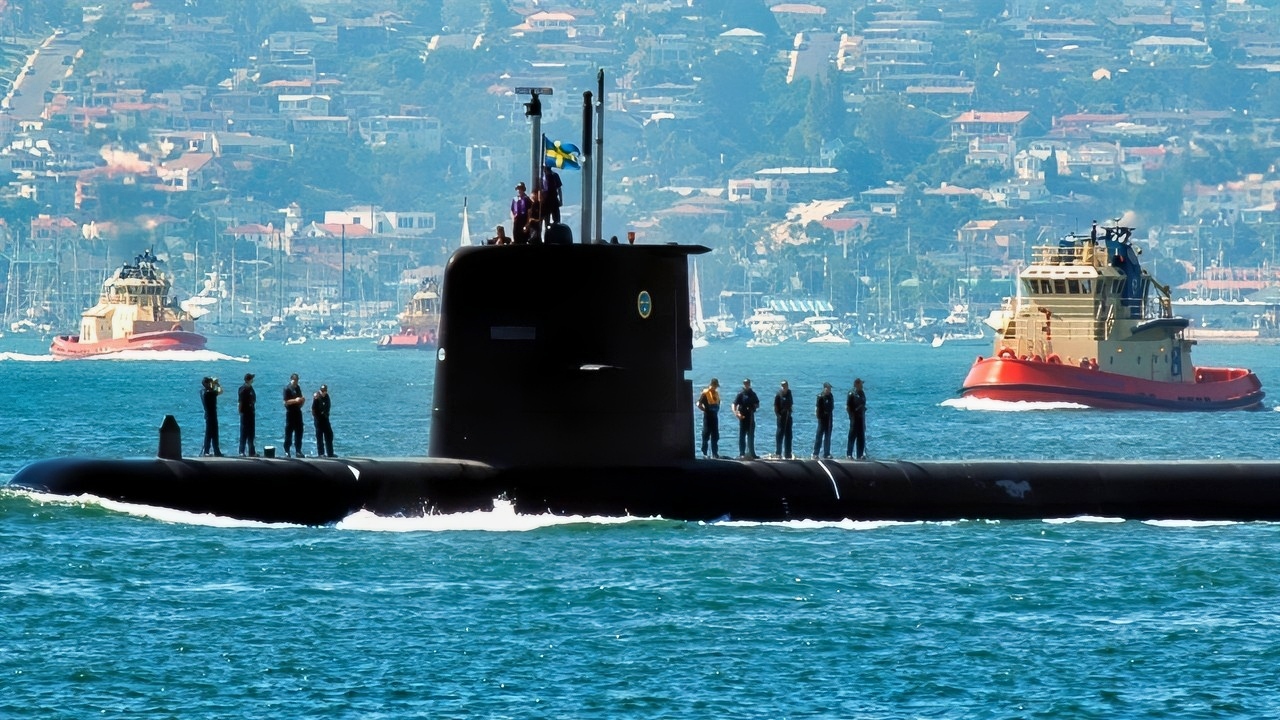
(Oct. 1, 2005) – The Swedish diesel-powered attack submarine HMS Gotland transits through San Diego Harbor during the “Sea and Air Parade” held as part of Fleet Week San Diego 2005. Fleet Week San Diego is a three-week tribute to Southern California-area military members and their families. U.S. Navy photo by Photographer’s Mate 2nd Class Patricia R. Totemeier (RELEASED)
Why No AIP Submarines for the U.S. Navy?
With so much ocean to cover during patrols, it is no surprise that the U.S. Navy prefers nuclear-powered submarines over diesel-electric and those with Air Independent Propulsion (AIP) systems.
Nuclear-powered subs are costly, complex, and time-consuming to build, but the increased range and endurance are worth it.
For some countries, diesel-electric and AIP subs make the most sense. The technology is readily available and priced right for crimped defense budgets. Most countries do not need nuclear-powered submarines.
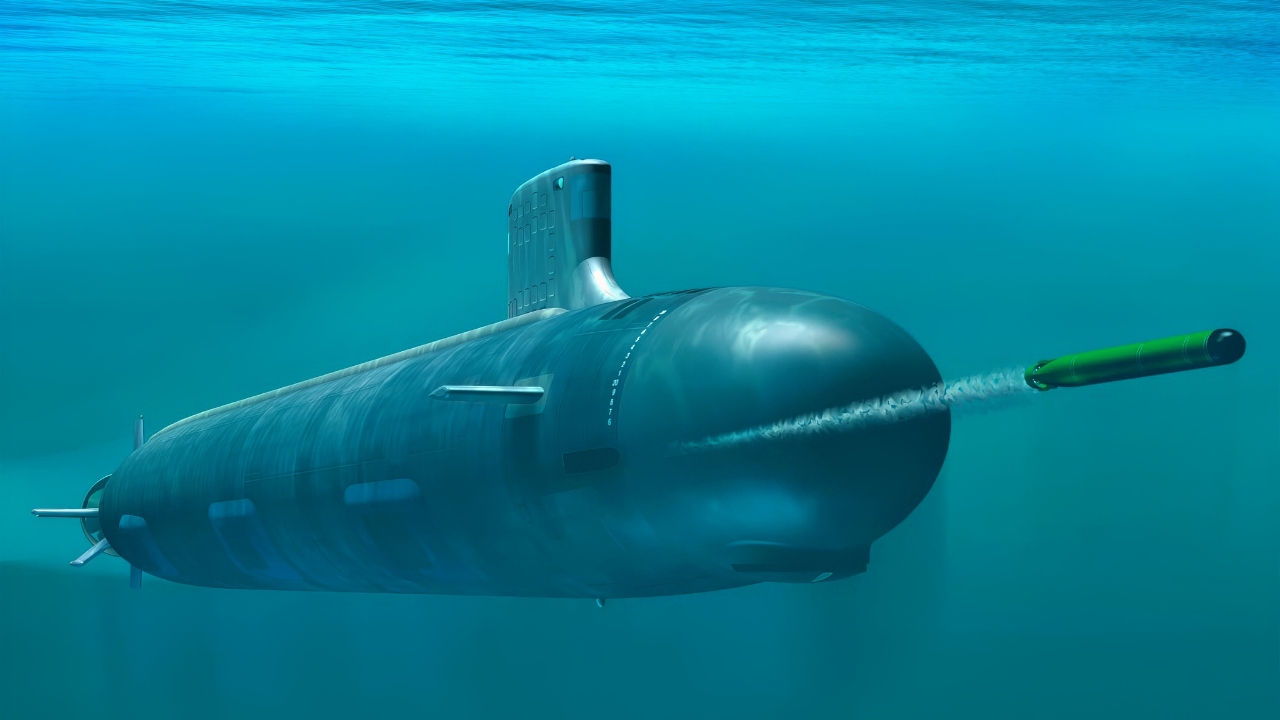
SSN 774 Virginia Class Submarine Artist Rendering from U.S. Navy.
These governments do not have nuclear weapons and thus are not required to sail these “boomers” all over the world.
Most of the time, subs with AIP systems are sufficient to protect a nation’s borders and sovereignty.
AIP Subs Should Not Be Ignored
Nuclear-powered submarines are usually stealthier than diesel-electric submarines with AIP, although there are exceptions to this.
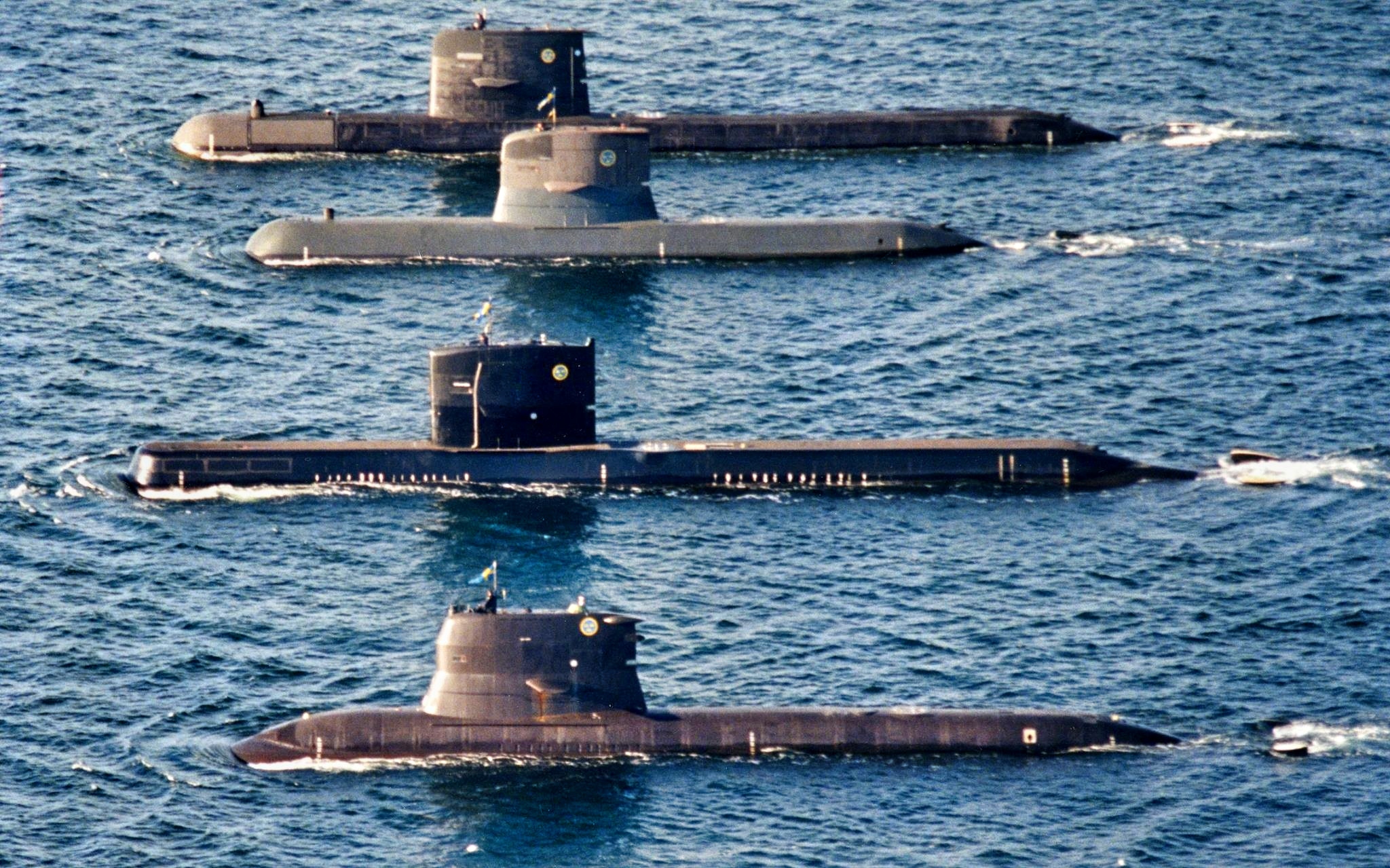
A Stirling AIP-powered Gotland-class diesel electric submarine from Sweden once got close enough to notionally “sink” a U.S. Navy aircraft carrier during a war game in 2005. AIP’s can be quiet with the ability to sneak around a carrier strike group without being discovered.
China is proud of its Type-039C Yuan-class submarine, which features AIP. The People’s Republic can build the Yuan-class cheaply, quickly, and efficiently.
The Chinese navy believes it can still maintain the level of stealthiness necessary to bring the undersea fight to the enemy.
Stealth defenses on the Yuan-class are improved with “angled sails” as well. Stirling AIPs use liquid oxygen and diesel fuel.
Advantages of a Nuclear-powered Submarine
A conventional diesel-electric sub must generate its own electricity to power the ship and engine.
But these power plants are noisy and require air to breathe, and need their batteries to be recharged.
Nuclear reactors, on the other hand, are quiet as a mouse, don’t need a supply of air, and recharging is not necessary.
They can run for as long as the crew and logistical supplies are in top shape and available.
Nuclear-powered boats can stay submerged for months at a time and rarely surface.
This is great for projecting power with submarine-launched nuclear-tipped ballistic missiles or Tomahawk cruise missiles and heavyweight torpedoes.
The White House Loves the American Submarine Fleet
Nuclear-powered submarines in the United States are strategic, presidential-level assets that can deter enemies without requiring boots on the ground.
They are an instrument of foreign policy that can be used to “do something” against an enemy that refuses to bend to America’s will.
Oftentimes, the United States will avoid sending troops into harm’s way and only make attacks with its nuclear-powered submarines to deliver destruction to adversaries. This is more politically acceptable.
Presidents do not have to worry about friendly casualties when they opt for a submarine cruise missile strike.
AIP Is the Poor Man’s Nuclear-power
However, most countries lack the necessary brainpower and resources to develop a nuclear-powered submarine, and they also do not require such offensive capabilities.
They must defend the homeland from enemy warships, though, and diesel-electric boats with AIP are more budget-friendly and technologically less sophisticated for defense industries that lack the talent or know-how to operate a nuclear-powered ship in active duty.
AIP Subs Are Popular Around the World
Stirling-cycle AIP systems require a more robust defense industry that can allocate more resources to manufacturing, as noted by defense analyst Sebastien Roblin.
Japan has Soryu-class submarines with Stirling AIP and now the Taigei-class. Germany has also built subs with AIP and electro-catalytic fuel cells.
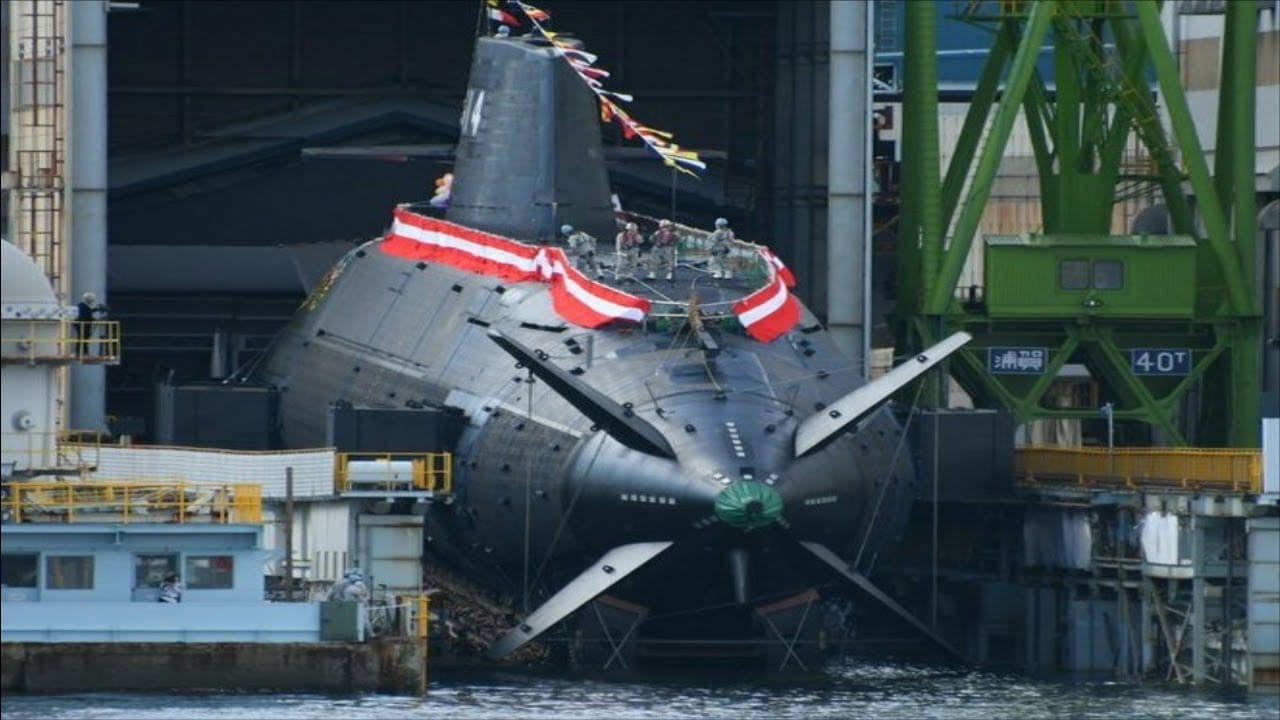
Taigei-Class Submarine from Japan. Image Credit: Creative Commons.

Taigei-Class Submarine from Japan. Image Credit: Creative Commons.
Fuel-cell submarines are also popular in Spain, India, and Russia. France and Pakistan have boats with a closed-cycle steam turbine called MESMA AIP.
AIP-propelled boats and others with different diesel-electric configurations, as noted above, are quiet, but not as silent as a nuclear-powered sub.
Nuclear-powered subs are often blind to passive sonar, which is a significant advantage that the United States likes to wield in undersea warfare exercises and trials.
The Endurance From Nuclear Power Is Immensely Valuable
It is the endurance of nuclear-powered subs that the Americans love so much. Hiding underwater for three or four months is an irresistible advantage for the U.S. Navy, especially when it means the potential to launch a nuclear missile.
A diesel-electric powered sub needs to resurface every two to four weeks.
This allows enemy anti-submarine assets to spot and destroy them while they are moving on top of the ocean.
The next advantage of a nuclear-powered boat is speed. The U.S. Navy’s Virginia-class subs can travel more than 25 knots when submerged. Even the fastest German AIP subs are slower than that.
This allows the Americans to avoid enemy undersea defenses more effectively, and they can outrun the enemy diesel-electric subs, too.
However, AIP subs are much more cost-effective. While a Virginia-class can cost between $2 billion and $3 billion, an AIP can be produced for between $200 and $600 million.
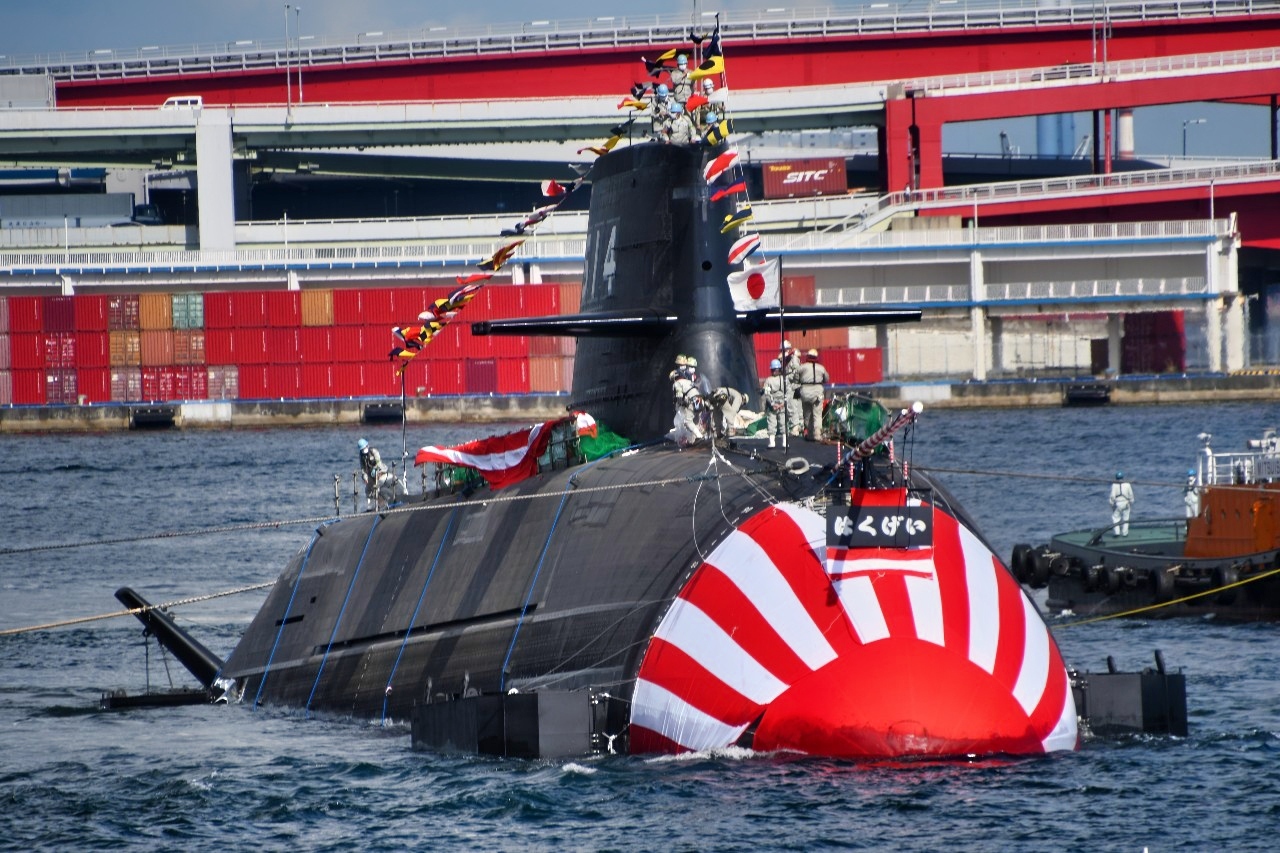
Taigei-Class Submarine from Japan. Image Credit: Creative Commons.
The price advantage here is offset by the fact that nuclear-powered subs take much longer to produce than AIP models.
Another reason to use nuclear-powered submarines is their size, which allows them to house vertical launch systems and carry a greater number of missiles and torpedoes. AIP-boats are much smaller with crews of between 30 and 60 sailors, and there is limited space for weapons.
In all, the U.S. Navy has made the right choice to depend solely on nuclear-powered subs. They are silent and have long endurance times, house more sailors, can carry more missiles, and are perfect for nuclear warfare. However, AIP subs are also high-quality boats. They are suitable for navies that are not flush with cash. They can still sneak up on enemy ships and cause mischief.
I support good old nuclear power, and I don’t look for the U.S. Navy to build any AIP-powered subs. There is nothing like being able to circumnavigate the globe and avoid anti-submarine defenses for months at a time. They run silent and run deep and are a testament to the expertise, experience, and skill of the U.S. Navy’s Silent Service.
About the Author: Brent M. Eastwood
Brent M. Eastwood, PhD is the author of Don’t Turn Your Back On the World: a Conservative Foreign Policy and Humans, Machines, and Data: Future Trends in Warfare plus two other books. Brent was the founder and CEO of a tech firm that predicted world events using artificial intelligence. He served as a legislative fellow for US Senator Tim Scott and advised the senator on defense and foreign policy issues. He has taught at American University, George Washington University, and George Mason University. Brent is a former US Army Infantry officer. He can be followed on X @BMEastwood.
More Military
No Fix’: China’s J-20 Stealth Fighter Has 1 Problem With No Solution
The Army’s ‘Super’ MBT-70 Tank Summed Up in 1 Word
Shinano: Japan’s ‘Super’ Aircraft Carrier Was the Biggest Warship Ever Sunk by A Submarine
Russia’s ‘New’ Tu-160M Blackjack Bomber Has A Mach 2 Message for the U.S. Air Force


