


Key Points and Summary – USS Carl Vinson (CVN-70), the third Nimitz-class supercarrier, has projected U.S. sea power since 1982—from Earnest Will and Southern Watch to Desert Fox and post-9/11 wars.
-An eight-month maiden world cruise set the tone; a 2005–09 Refueling and Complex Overhaul refreshed reactors, sensors, and combat systems, extending life by 25 years.
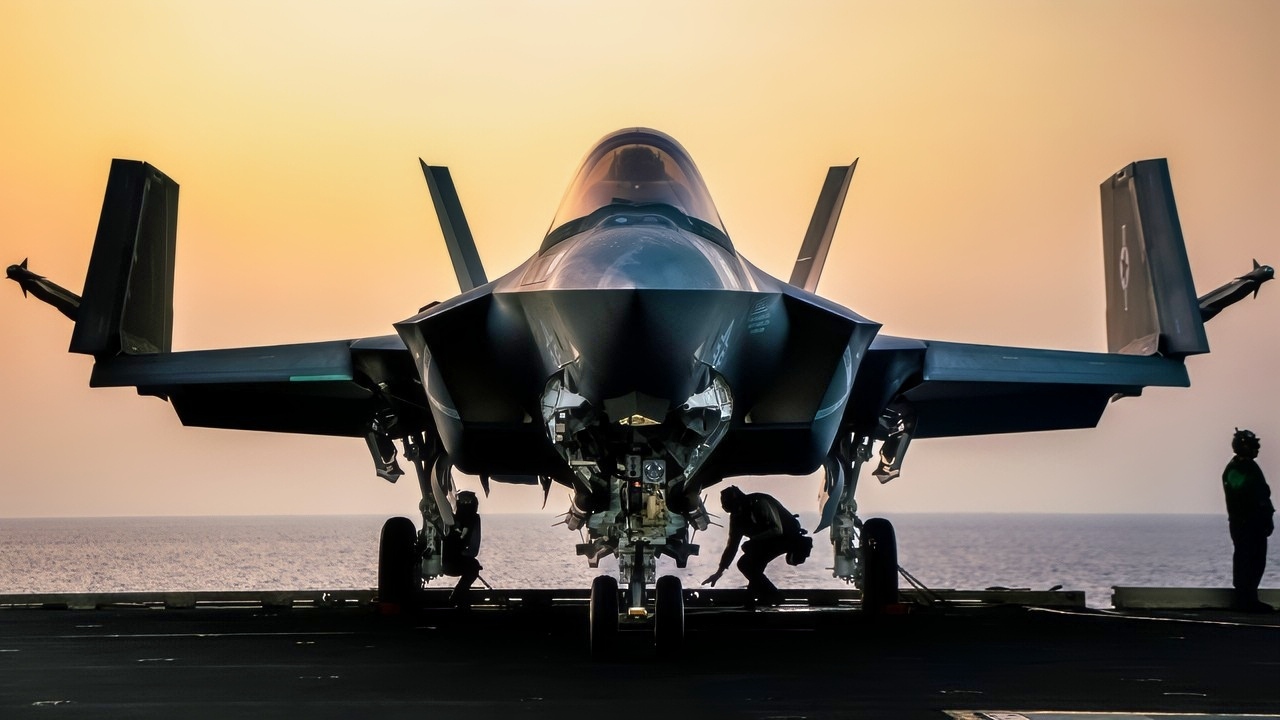
U.S CENTRAL COMMAND AREA OF RESPONSIBILITY (April 24, 2025) U.S. Sailors conduct pre-flight safety checks on an F-35C Lightning II, attached to Strike Fighter Squadron (VFA) 97, on the flight deck of the Nimitz-class aircraft carrier USS Carl Vinson (CVN 70) in the U.S. Central Command area of responsibility. (Official U.S. Navy photo)
-Cultural milestones include bin Laden’s 2011 sea burial and the first NCAA game on a carrier.
-Homeported in San Diego as CSG-1 flagship, Vinson fields 90 aircraft, exceeds 30 knots, and continues Pacific and Middle East deployments—remaining a versatile combat and humanitarian platform with years still to run.
USS Carl Vinson (CVN-70): 40+ Years of Carrier Power—and Still Going
The USS Carl Vinson is one of ten Nimitz-class aircraft carriers that are currently active with the U.S. Navy. As the third nuclear-powered supercarrier of its class, her legacy spans more than four decades, marked by global deployments, combat operations, humanitarian missions, and cultural milestones.
Currently, the aircraft remains active, with at least seven more years of service life remaining before it is expected to retire.
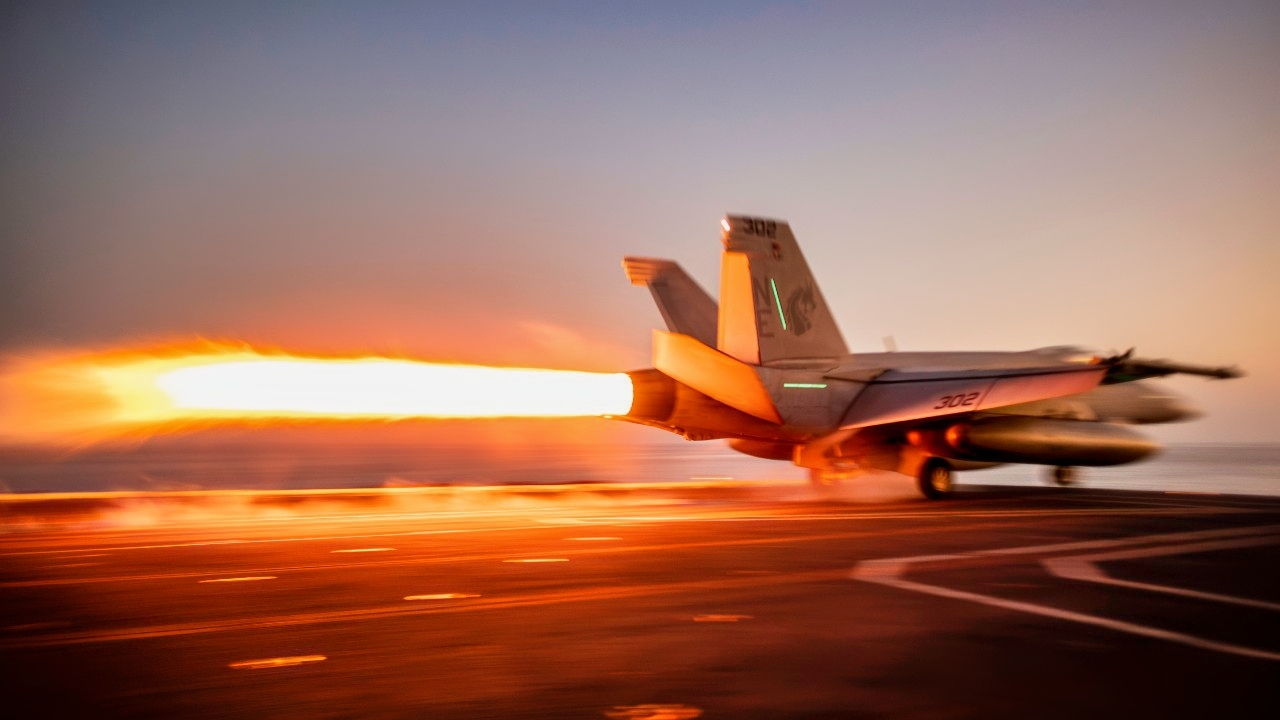
250429-N-FS097-1154 U.S. CENTRAL COMMAND AREA OF RESPONSIBILITY (April 28, 2025) An F/A-18E Super Hornet, attached to Strike Fighter Squadron (VFA) 192, launches from the flight deck of the Nimitz-class aircraft carrier USS Carl Vinson (CVN 70) in the U.S. Central Command area of responsibility. (Official U.S. Navy photo)
Design and Construction
Carl Vinson, the ship’s namesake, served in the U.S. House of Representatives for 50 years and played a pivotal role in shaping the modern Navy.
His legislative efforts, particularly the Vinson Acts, contributed to the expansion of the fleet in preparation for World War II. In recognition of his contributions, the Navy named CVN-70 after him, making Vinson the first living American to have a supercarrier named in his honor.
The ship was ordered on April 5, 1974, and constructed by Newport News Shipbuilding in Virginia. Her keel was laid on October 11, 1975, and she was launched on March 15, 1980.
After completing sea trials, the USS Carl Vinson was officially commissioned into service on March 13, 1982.
Her commission marked the beginning of a long and impactful career that would see her deployed across the globe.
USS Carl Vinson Sets Sail
Her maiden deployment began in March 1983 and was a monumental eight-month around-the-world cruise. During this deployment, she operated in the Mediterranean, Atlantic, Indian Ocean, Arabian Sea, South China Sea, and Pacific Ocean.

Sailors prepare to man the rails as Nimitz-class aircraft carrier USS Carl Vinson (CVN 70) arrives at Joint Base Pearl Harbor-Hickam for Exercise Rim of the Pacific (RIMPAC) 2024, June 25. Twenty-nine nations, 40 surface ships, three submarines, 14 national land forces, more than 150 aircraft and 25,000 personnel are participating in RIMPAC in and around the Hawaiian Islands, June 27 to Aug. 1. The world’s largest international maritime exercise, RIMPAC provides a unique training opportunity while fostering and sustaining cooperative relationships among participants critical to ensuring the safety of sea lanes and security on the world’s oceans. RIMPAC 2024 is the 29th exercise in the series that began in 1971. (U.S. Navy photo by Mass Communication Specialist 2nd Class Leon Vonguyen)
She visited ports in Monaco, Morocco, Ivory Coast, Australia, the Philippines, Japan, Korea, and Hawaii before arriving at her new homeport in Alameda, California, in October 1983. This deployment showcased her global reach and versatility, setting the tone for future missions.
Throughout the 1980s, the Carl Vinson participated in major naval exercises such as RIMPAC and PACEX and supported operations like Earnest Will, which involved escorting U.S.-flagged tankers in the Persian Gulf during heightened tensions with Iran. She became the first modern U.S. carrier to operate in the Bering Sea and earned multiple awards, including the Admiral Flatley Memorial Award for aviation safety and the Meritorious Unit Commendation.
Overhaul and Military Operations in the Middle East
In the 1990s, the ship underwent a 28-month complex overhaul in Bremerton, Washington, beginning in 1990.
This extensive maintenance period ensured her continued operational readiness. She resumed deployments in 1994, supporting Operation Southern Watch, which enforced the no-fly zone over southern Iraq.
In 1995, she hosted President Bill Clinton during ceremonies commemorating the end of World War II in the Pacific, launching vintage aircraft from her deck in a symbolic tribute.
Her seventh deployment in 1996 included participation in Operation Desert Strike and Exercise Rugged Nautilus. She earned her second Battle “E” award and additional commendations for her performance.
In 1998, she took part in RIMPAC and launched airstrikes during Operation Desert Fox, continuing her support for Southern Watch into 1999. These operations demonstrated her continued relevance in post-Cold War military engagements.
The USS Carl Vinson After 9/11
In 2005, she relieved the USS Harry S. Truman in the Persian Gulf and later transited the Suez Canal to Norfolk, Virginia.
That November, she began her Refueling and Complex Overhaul (RCOH) at Newport News Shipyard.
This process, which included refueling her nuclear reactors and upgrading systems throughout the ship, extended her service life by 25 years and ensured she would remain a vital part of the fleet well into the 21st century.
Throughout her service life, the USS Carl Vinson has also been involved in several high-profile events that solidified her into a cultural icon. In 2011, following the Navy SEAL raid that killed Osama bin Laden in Pakistan, his body was buried at sea from the deck of the Carl Vinson.
That same year, she hosted the first NCAA basketball game ever played on an aircraft carrier, a Veterans Day matchup between North Carolina and Michigan State.
Carl Vinson’s Legacy
In addition to combat missions, the Carl Vinson has played a key role in humanitarian efforts. In 2010, she provided aid following the devastating earthquake in Haiti, delivering supplies and medical assistance to affected communities. Her ability to respond quickly to natural disasters demonstrated the flexibility and utility of aircraft carriers in non-combat roles.
In 2010, the Carl Vinson became the flagship of Carrier Strike Group One, based in San Diego, California.
She has continued to deploy globally, participating in exercises and operations in the Pacific and Middle East. Her air wing, Carrier Air Wing Two, remains a vital component of her operational capability, enabling her to project power and maintain air superiority wherever she is deployed.
Still the Master of the Seas
As a Nimitz-class carrier, the USS Carl Vinson displaces over 100,000 tons and measures 1,092 feet in length. She is powered by two nuclear reactors and four steam turbines, allowing her to travel at speeds exceeding 30 knots with virtually unlimited range.
Her crew includes approximately 6,000 personnel, including both ship’s company and air wing members. She can carry up to 90 fixed-wing and rotary aircraft, making her one of the most formidable warships in the world.
As of writing this, the USS Carl Vinson remains in active service with no plans for decommissioning.
Typically, Nimitz-class carriers have lifespan of around 50 years meaning that the Carl Vinson is expected to remain in service for at least another 7 years, if not more.
From Cold War deterrence to modern counterterrorism, the Carl Vinson has proven to be a versatile and resilient asset.
Her legacy is one of honor, duty, the thousands of sailors who have served aboard her, the missions she has fulfilled, and the history she continues to shape.
About the Author: Isaac Seitz
Isaac Seitz, a Defense Columnist, graduated from Patrick Henry College’s Strategic Intelligence and National Security program. He has also studied Russian at Middlebury Language Schools and has worked as an intelligence Analyst in the private sector.
More Military
Stop Saying America Is ‘Losing’ the 6th-Generation ‘NGAD’ Fighter Race
The U.S. Navy’s Arleigh Burke Flight III Destroyer Is No Battleship (But Better)


