

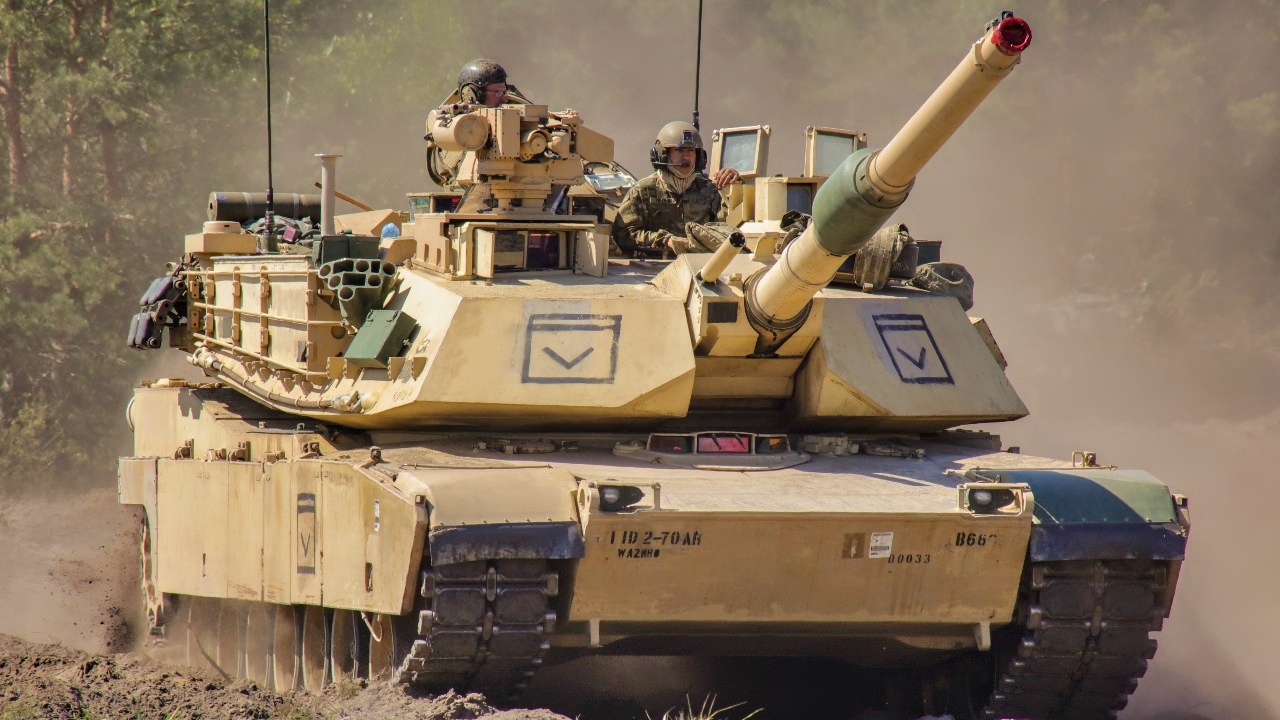
Defense Secretary Pete Hegseth has launched a sweeping six-month review of America’s military posture in Europe.
Immediately cutting several high-end assets while warning allies that deeper reductions could follow.

Eurofighter Typhoon Fighter Training. Image Credit: Creative Commons.
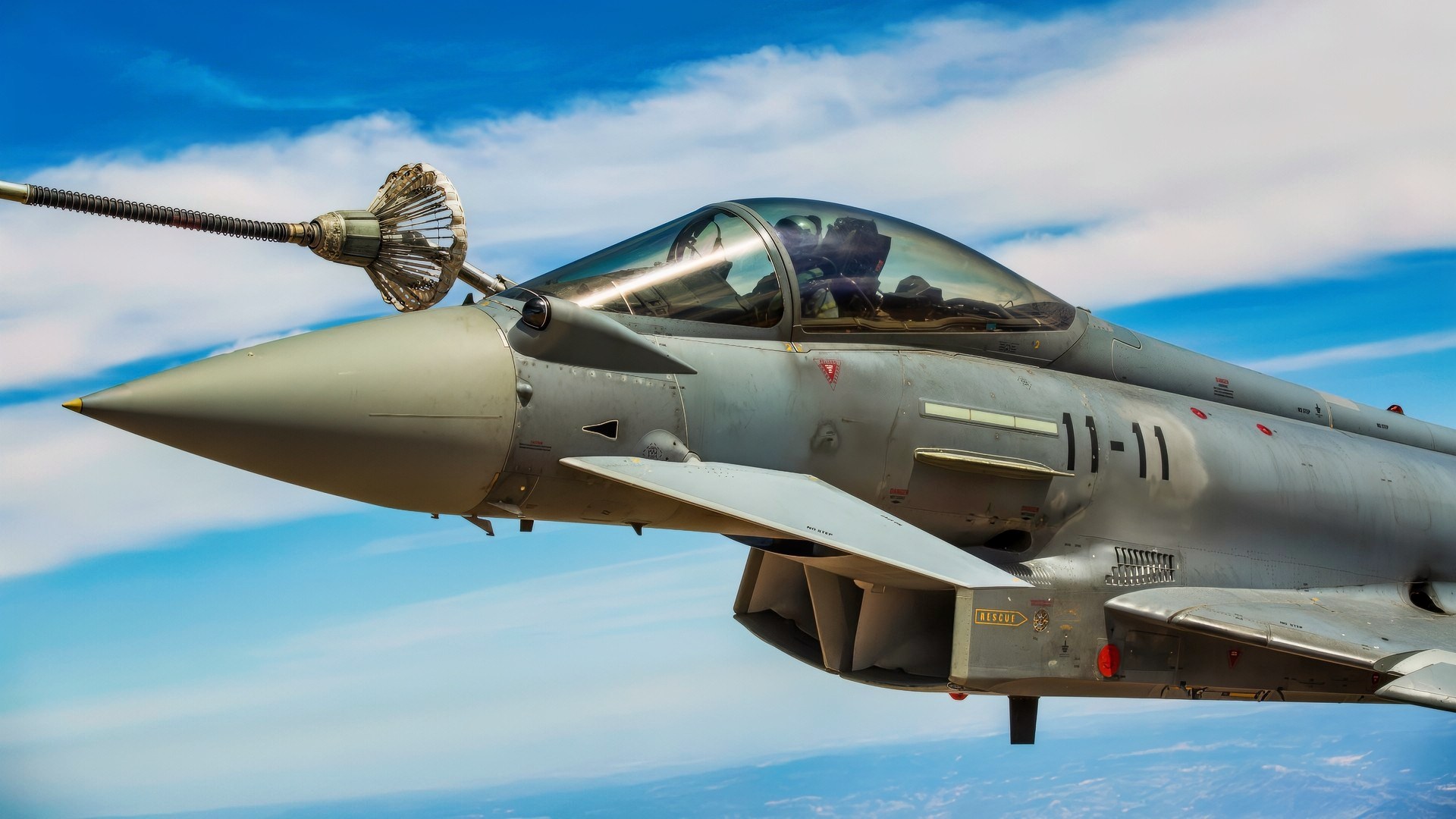
A Eurofighter Typhoon with the Spanish Air Force based out of Morón Air Base, Spain, refuels from a KC-130J Hercules, a first for the Marines from Special-Purpose Marine Air-Ground Task Force Crisis Response-Africa, Aug. 13, in Spain. The U.S. and Spain have been fostering one of the closest defense partnerships around the world for more than 60 years. (U.S. Marine Corps photo by Staff Sgt. Vitaliy Rusavskiy/Released)
Predictably, the announcement has triggered intense debate over whether the US is just pressuring Europe to spend more on defense—or stepping back from the continent.
While the review in and of itself does not mean the US is dramatically reducing its commitment to NATO, it does signal the most serious reassessment of the US role in European security since the Cold War concluded.
The Actual Cuts
The roughly 80,000 US troops currently stationed in Europe will largely remain in place. The immediate reductions affect NATO’s crisis-response pool.
Reported cuts include fighter allocations, which will be cut from roughly 150 aircraft to 100, including reductions in F-16 and F-15E commitments.
Notably, all eight aerial refueling tankers assigned to NATO crisis plans are being removed. And approximately 30 percent of pledged strategic bombers will be reduced.
Meanwhile, P-8 Poseidon aircraft, critical for maritime surveillance, are reportedly being reduced from 26 to 15, while some crisis-response naval allocations are reportedly being cut by half.
The Pentagon is clearly reducing surge capacity rather than abandoning Europe outright.
Why is Hegseth Doing This?
The official explanation: burden sharing.
The administration is arguing that many European allies have relied on American military power for decades while underinvesting in their own defense.
Hegseth’s message is essentially that Europe must carry more of the conventional defense burden itself. The central demand is for movement toward spending 5% of GDP on defense.
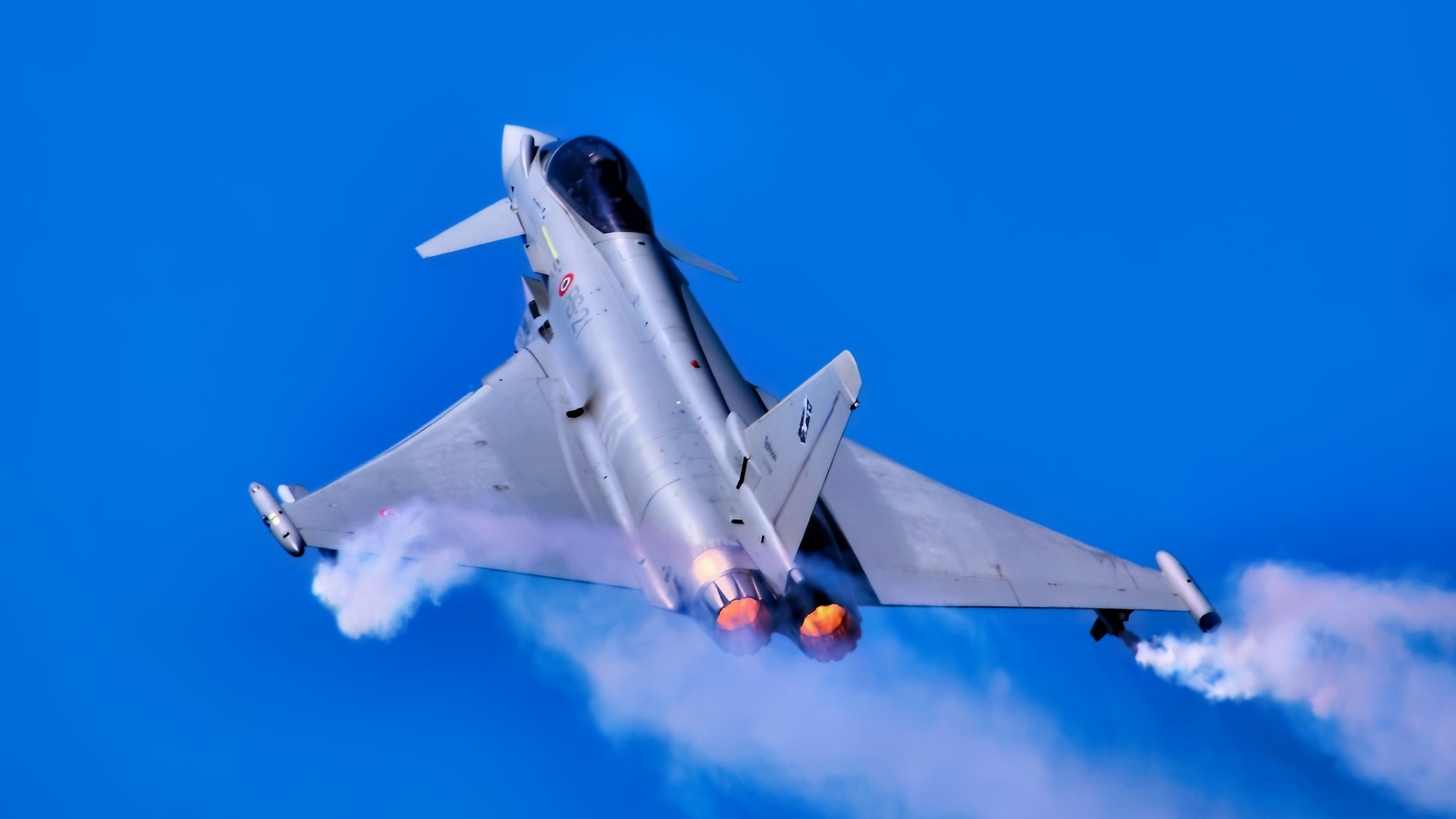
Eurofighter Typhoon Test Flight in 2013. Image Credit: Creative Commons.
The administration believes that NATO should be an alliance of contributors rather than dependents.
While technically unrelated, the Iran conflict appears to have influenced the NATO review.
Hegseth has publicly criticized several allies for refusing or limiting support during US operations.
The administration is frustrated; American forces and resources were heavily committed while some allies declined overflight, basing, or operational support.
So the NATO review is happening in part as an assessment of who contributes and who does not.
The China Pivot
Pentagon planners are increasingly viewing China as the US’s primary long-term challenge. The problem here is that military assets are finite.
Tankers, fighters, aircraft carriers—everything allocated to Europe cannot be allocated to the Pacific.
That arrangement is increasingly becoming unacceptable. Supporters of the NATO review believe that the US must prioritize future competition with China over legacy force structures in Europe. This viewpoint reflects a broader shift in American grand strategy.
What Happens Now?
The six-month review serves as an evaluation period. Countries will be graded on several criteria, including defense spending, force modernization, burden-sharing, and alliance cooperation.
Potential outcomes could include troop reductions, base consolidations, command restructuring, and force relocations.
Nothing is guaranteed, but the possibility of deeper cuts is now explicit.
Supporters of the review are making three primary arguments.
-First, Europe is wealthy enough to defend itself.
-Second, the US military is overstretched globally.
-Third, resources should increasingly be shifted towards Asia.
The case holds that every dollar spent deterring Russia is a dollar unavailable for deterring China.
Therefore, Europe must assume greater responsibility for conventional defense.
Critics, however, see significant risks in the prospective reduction.
The primary concern is perception: namely, that NATO deterrence relies in part on visible American commitment and that even modest reductions may encourage Russian risk-taking.
Command reductions can also create operational friction. US investment bolsters intelligence sharing, planning, logistics, and coordination.
Opponents fear that hollowing out these systems weakens the alliance even if troop numbers remain relatively stable.
The Bigger Debate
Hegseth’s review reflects a larger question.
If NATO was established to counter the Soviet threat, and the Soviet threat no longer exists, what is NATO for in 2026? The traditional answer is to prevent Russian aggression through overwhelming American-backed deterrence.
But increasingly, NATO critics are advocating for a more self-sufficient Europe while the US concentrates on Asia.
The outcome of the review will determine which vision for the alliance prevails.
About the Author: Harrison Kass
Harrison Kass is a writer and attorney focused on national security, technology, and political culture. His work has appeared in Tablet, City Journal, The Hill, The Spectator, and The Cipher Brief. He holds a JD from the University of Oregon and a master’s in Global & Joint Program Studies from NYU. More at harrisonkass.com.


