

On June 3, Germany lost its bid to become a non-permanent member of the U.N. Security Council. In the race, three candidates competed for the two seats reserved for members from the European group.
Germany was edged out by Portugal and Austria. The outcome was not at all a close call. Portugal earned 134 votes and Austria 131, both comfortably surpassing the required threshold of 127 votes, while Germany trailed far behind with only 104.
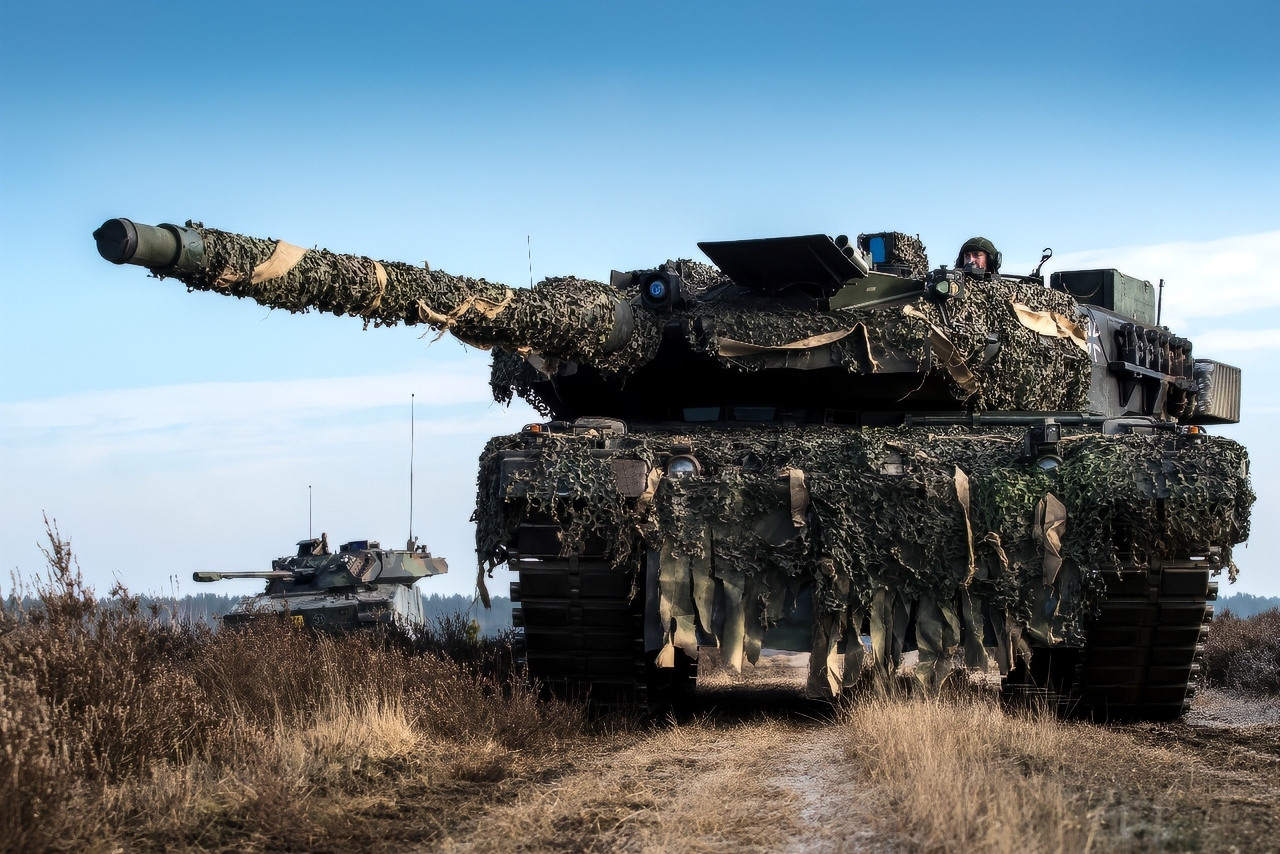
German Leopard 2 Tank. Image Credit: Creative Commons.
Both inside Germany and internationally, the loss has been viewed as a significant blow to Germany’s diplomatic prestige.
This single episode will not change the character of the Security Council or the U.N. in any significant way.
The organization has long suffered from extensive problems, including an inability to act effectively because of the veto powers of the permanent members, expensive administrative bloat, and the ideological distortions evident in the long-standing obsession with Israel or the absurdity of assigning the Islamic Republic of Iran leadership responsibilities in U.N. human rights bodies.
Nonetheless, the German loss provides an important perspective on Germany today, insights into the mood of the General Assembly, and an important lesson for the United States regarding the U.N. and contemporary international relations more broadly.
Germany had previously served on the Security Council for six terms, and as one of the major financial backers of the U.N., it believed it had a claim to a seat.
Its defeat has therefore been all the more bitter, leading to politicized recriminations. A particularly toxic narrative has begun to spread in Germany that the loss was due to Berlin’s support for Israel. Critics on the left argue that if Germany had only been more anti-Israel, it might have bought favor with the majority in the General Assembly.
Yet this facile argument overlooks the fact that Austria, which significantly outpolled Germany in the vote, has been more supportive of Israel than has Germany. For example, Austrian Chancellor Karl Nehammer visited Israel early in the Gaza war, and Austria has often resisted EU criticism of Israel; in December 2023, Austria was one of only two EU states to vote against a General Assembly humanitarian ceasefire resolution (the Czech Republic was the other; Germany abstained).
If the General Assembly vote was a matter of punishing Israel’s supporters, Austria should have lost, and Portugal as we
The German defeat can therefore not easily be attributed to its Middle East policies alone. A more plausible explanation is that Berlin’s strong support for Ukraine may have encouraged active lobbying against its candidacy among states sympathetic to Russia.
In addition, the General Assembly’s reluctance to support Germany may have had to do with other matters. Austria and Portugal had long been campaigning for seats on the Security Council, while Germany, perhaps resting on its laurels, came late to the game.
Moreover, some countries could conclude that Germany is already well represented in important U.N. offices. On June 2, 2025, former German Foreign Minister Annalena Baerbock was elected President of the General Assembly.
Moreover, the unexpected replacement of the widely respected career diplomat Helga Schmid, the initial German candidate, with Baerbock–due to political deals in Berlin–was viewed critically in parts of the diplomatic community and may have complicated Germany’s effort to present its candidacy as a professional rather than partisan undertaking.
The fact that nearly half of the General Assembly refrained from supporting Germany, despite its outsized financial backing of the U.N., is, in any case, significant.
The outcome points to the declining ability of Europe’s traditional powers to convert historical status and economic weight into diplomatic influence.
There is surely also a specific policy dimension to the vote.
Germany’s emphasis on values-based diplomacy and, under Baerbock, its pursuit of a ‘feminist foreign policy’ has often placed Berlin at odds with more socially conservative governments across Africa, Asia, and the Middle East. Whether one regards these initiatives as admirable or misguided, they did not necessarily help Germany build the broad coalition needed for a vote in the General Assembly.
There are important lessons here for the U.S. In this era in which the transatlantic relationship is undergoing recalibration, most explicitly concerning NATO but also in terms of trade and cultural values, Washington should take note of how much the influence of some European countries has waned.
As the geopolitical order undergoes significant reshaping, traditional powers are losing their standing. For Germany, this process is amplified by its weak economy, which has contributed to the political instability associated with the rise of the right-populist AfD.
There is an additional lesson to be learned in Washington. Germany’s loss was due, at least in part, to the fact that it did not try aggressively enough; Austria and Portugal simply invested more time and diplomatic effort to secure votes to get onto the Security Council.
Of course, the U.S. holds a permanent seat, so at least it does not have to chase votes to retain that important status. However, the U.S. does have political interests in the final tally of Council votes, as well as in the many other U.N. bodies that deliberate on a wide range of topics.
If the U.S. wants to win those votes, it has to be present and engage vigorously.
For years, Washington has been deeply frustrated with the U.N., leading to calls to abandon it altogether. The Trump administration has taken steps to withdraw from several individual U.N. bodies pursuant to Executive Order 14199.
In some cases, this may well be a prudent choice, but it is worth proceeding carefully. A decision to reduce American presence across the board can also mean ceding ground to others, including America’s adversaries.
The better alternative is to choose where it makes the most sense to participate to defend U.S. national interests within the U.N.
Germany’s defeat was not inevitable. Austria and Portugal campaigned longer and more effectively, demonstrating that influence in multilateral institutions cannot be taken for granted.
The United States holds a permanent Security Council seat, but it still has vital interests in the outcome of countless votes throughout the U.N. system.
If Washington chooses to remain engaged, it must do so strategically, selectively, and energetically. Otherwise, it risks surrendering influence not to allies but to competitors and adversaries eager to fill the vacuum.
About the Author: Russell A. Berman
Russell A. Berman is a Senior Fellow at the Hoover Institution and a former Senior Advisor on the Policy Planning Staff of the State Department.


geh-geh
June 8, 2026 at 8:37 pm
Merz and macron have decided to end the FCAS project, a decision supported by german industry that believed france was taking germany for a ride.
France cannot be trusted.
France, traditionally, has been known to be fond of running with the hare while hunting with the hounds.
And macron. Macron last year was seen getting whacked in the jaw by his wife right after landing in vietnam.
Europe today is full of macrons, politicians whose wives want to sock them in the jaw every now and then.
Never excluded also are the brits. According to brit politicians, europe is going to war in 2027.
Europe is finished. Given enough time, the moslems will take over control of the continent.
telangpu chuanpu
June 8, 2026 at 10:14 pm
Europe’s powerfully rising NATOist-fascists could push their countries right into the very jaws of ww3, very soon.
That’s because those people think Russia has now become very weak, very ripe for a knock-out punch, and totally ripe for cutting up into pieces.
No doubt that position has been greatly encouraged by the western media, especially outlets like the guardian and BBC, plus the cowardly self-serving stance adopted by Putin as he tries to grapple with the never-say-die nazis.
The Nazis will eventually trick all the euro NATOist-fascists into fighting against Russia.
And the final result ?
Europe smoking from massive ruins caused by nuclear battle, battle fought with nuclear bombs.
Never ever believe even one single word coming out from the mouths of the NATOist-fascists, the Nazis and the western media outlets.
They are the most loyal followers of Asmodeus.
megiddo
June 8, 2026 at 11:52 pm
The old powers of Europe, are now, today, becoming the imperial sickmen of the continent.
And those old past-due-date lousy sickmen are right now being mesmerized, even hypnotized by young energetic rising fascists, like zelenskyy.
That will lead to a really no good end for Europe, especially for all those old lousy sickmen.
It’s called karma.
During the days just before ww1, those old powers were busily eyeing each other with great suspicion and great malice.
The result was several years of mindless slaughter, killing and genocides.
That came to an end after US entered the war, and later helped build the vast cemeteries and necropolis sites that still exist today.
But have they learned anything. They have learned absolutely nothing.
Thus their karma will very soon catch up with them.
zhduny
June 9, 2026 at 12:47 am
European old powers are fast losing their marbles.
The old powers, now struggling very greatly from high energy costs and becoming uncompetitive due to rising prices of raw materials and labor costs.
But those old powers cannot put a finger on the origins or source of all those problems.
They can’t see that the daily shootings, bombings and shellings in Gaza, Lebanon and other places like the persian gulf have caused huge trouble for their economies.
Instead, they are all waylaid by the Ukraine conflict, having being blindsided by false dense nazi propaganda.
It’s vital now, for the old European powers to stop the wars in the middle east, and stop paying attention to false fascist propaganda.
Jerry Syder
June 9, 2026 at 10:59 am
The U.N. should be moved to Europe or some third world nation as its importance has diminished significantly. It’s predominance in world affairs reached a zenith during the Cold War and has now become mostly a circus of third world crackpots. The world is too fragmented politically and culturaly to have a single organization hold sway and control its behavior. The U.N. has stopped working and should live in retirement in Luxembourg or Nigeria.