

Decades before Operation Epic Fury, the United States and Iran fought a one-day naval battle in the Persian Gulf that ended with nine Iranian vessels sunk — the largest naval engagement the U.S. Navy has fought since the end of World War II. Operation Praying Mantis began on April 18, 1988, just four days after an Iranian-laid mine nearly destroyed the Perry-class guided-missile frigate USS Samuel B. Roberts in the Persian Gulf. By the end of the day, U.S. carrier-based aircraft, surface ships, and Marines had sunk the Iranian frigate Sahand, destroyed the Joshan and several fast-attack boats, leveled the Sassan and Sirri oil platforms, and effectively ended Iran’s blue-water naval capability for the rest of the Cold War.
The Iran War Everyone Forgets About: Operation Praying Mantis

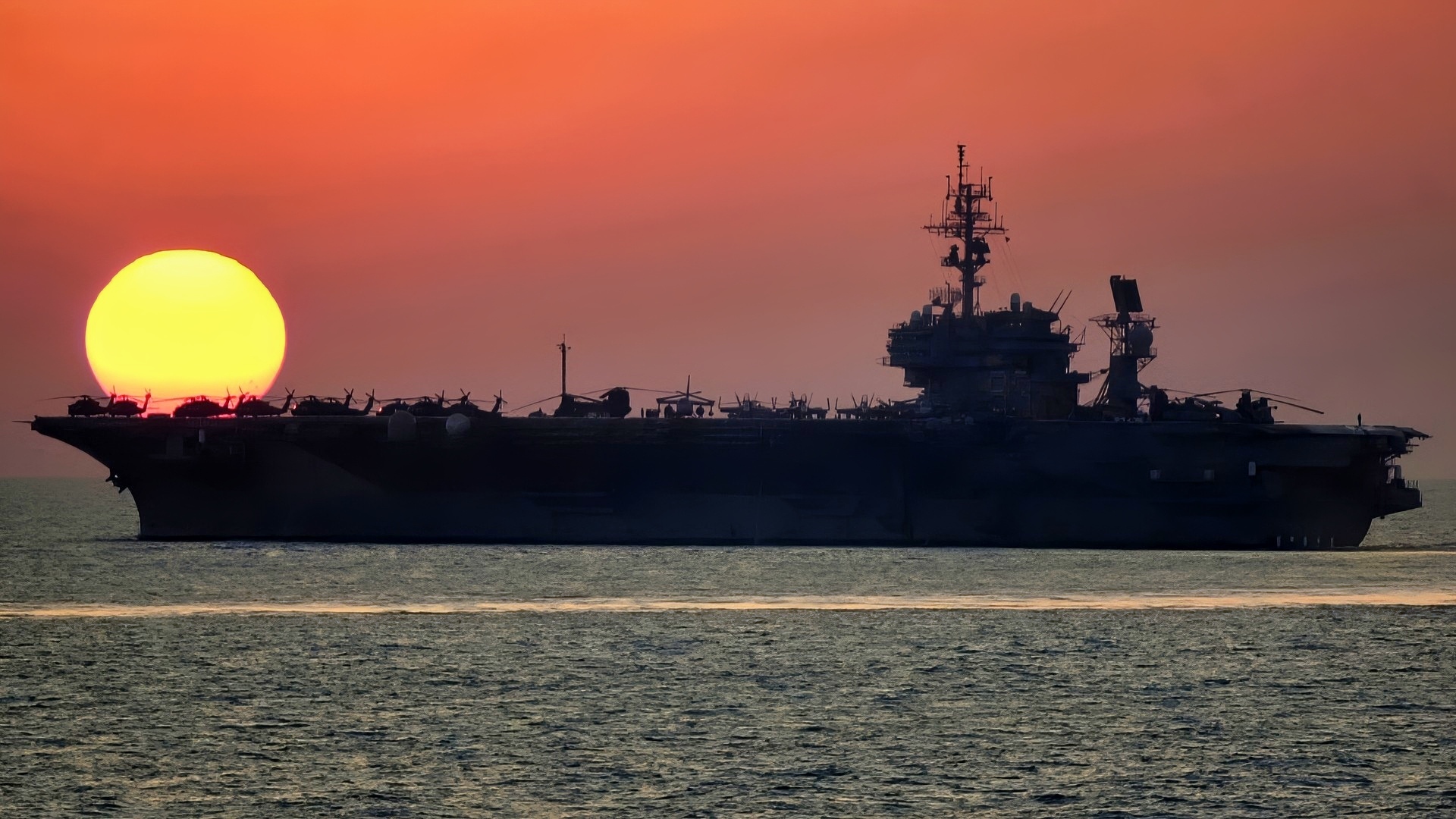
USS Ronald Reagan (CVN 76), USS Kitty Hawk (CV 63), and USS Abraham Lincoln (CVN 72) cruise side-by-side in the Philippine Sea June 18, 2006, during exercise Valiant Shield 2006. The joint exercise consists of 28 naval vessels, more than 300 aircraft, and approximately 20,000 service members from the Navy, Army, Air Force, Marine Corps and Coast Guard. (U.S. Navy photo by Chief Photographer’s Mate Spike Call) (Released)
Unkbenownst to some casual readers, Operation Epic Fury was not the first time the U.S. and Iranian navies confronted each other.
In 1988, in response to Iranian aggression, the U.S. launched Operation Praying Mantis to stop attacks against civilian oil tankers.
The operation lasted only a day but ended with nine Iranian Navy vessels sunk, making it one of the largest naval battles the U.S. Navy has fought since the end of the Second World War and the first time in decades that the Navy had sunk a major surface vessel.
Background: The Tanker War
Prior to the operation, the Iran–Iraq War, which began in 1980, had devolved by the mid-1980s into a brutal stalemate. Both nations sought to weaken each other economically by targeting oil exports, leading to attacks on commercial shipping in the Persian Gulf.
This period became known as the “Tanker War.” Iran relied heavily on asymmetric tactics. Rather than confronting larger naval forces directly, it deployed naval mines, small fast-attack boats, and converted offshore oil platforms into military observation hubs. These tactics proved highly disruptive, threatening not only Iraqi shipping but also neutral vessels and global oil supplies.
The United States, always interested in the flow of free oil, became increasingly involved. In 1987, it initiated Operation Earnest Will, escorting reflagged Kuwaiti oil tankers. This marked a significant military commitment, putting American naval forces directly in harm’s way.
Tensions between U.S. and Iranian forces continued to grow, with frequent encounters and skirmishes in the Gulf. The situation was volatile, and a single incident could trigger a major confrontation.

Iran F-14 Tomcat Fighter. Image Credit: Creative Commons.
The Mining of USS Samuel B. Roberts
That incident occurred on April 14, 1988, when the U.S. Perry-class guided-missile frigate USS Samuel B. Roberts struck a naval mine while operating in the Persian Gulf. The explosion tore a large hole in the ship’s hull, breaking its keel, and nearly causing it to sink.
The ship would have been lost had it not been for the valiant efforts of its sailors, who brought the ship back to safety. The ship had been saved, and no sailors were killed.
Investigations almost immediately linked the incident to Iran. Other mines collected from the area matched those found on an Iranian mining vessel that the U.S. had seized the previous year. The attacks were therefore interpreted as a direct challenge to the U.S. and warranted a strong response. For the Reagan administration, this was the culmination of months of Iranian provocations.
The United States resolved to respond forcefully but carefully, aiming to punish Iran while avoiding a full-scale war. The result was Operation Praying Mantis.
Execution of the Operation
The operation began on April 18, 1988, just four days after the mining incident. It was a coordinated effort involving multiple U.S. Navy surface groups, carrier-based aircraft, and Marine units.
These forces worked together to execute a series of strikes against Iranian military targets. The first phase of the operation focused on destroying Iranian oil platforms in the Persian Gulf. These platforms, in addition to their use as oil rigs, were also being used as military outposts to coordinate attacks on shipping. After issuing warnings to evacuate, U.S. forces attacked and ultimately destroyed the Sassan and Sirri oil platforms.
As the battle unfolded, Iranian forces responded, leading to several direct naval engagements. One of the earliest confrontations involved the Joshan, a Kaman-class patrol boat. Ignoring repeated warnings, the vessel fired a Harpoon anti-ship missile at U.S. ships. The missile failed to hit its target, and U.S. forces responded with a coordinated missile and gunfire attack that destroyed the vessel.
Later in the day, U.S. aircraft and ships engaged the Iranian frigate Sahand. The ship was struck by multiple missiles and bombs, eventually catching fire and sinking. Another Iranian frigate, Sabalan, was also attacked and heavily damaged, though it managed to remain afloat. Several smaller Iranian vessels, including fast attack boats used in earlier harassment operations, were also destroyed during the course of the fighting.
Ending and Aftermath
The operation concluded after a single day and was a resounding success for the U.S. Navy. Although it was relatively small-scale by historical standards, Praying Mantis was the largest naval battle the U.S. Navy has fought since the Second World War.
It was also the first time since World War II that the United States sank major enemy warships in combat. By the end of the engagement, the United States had effectively neutralized a significant portion of Iran’s naval capabilities.
In the aftermath, the Regan Administration downplayed the scale of the battle and denied reports that Iran had used Silkworm missiles to avoid any further escalation. U.S. Naval forces in the region were ordered to stand down to give Iran an off-road route and avoid further combat.
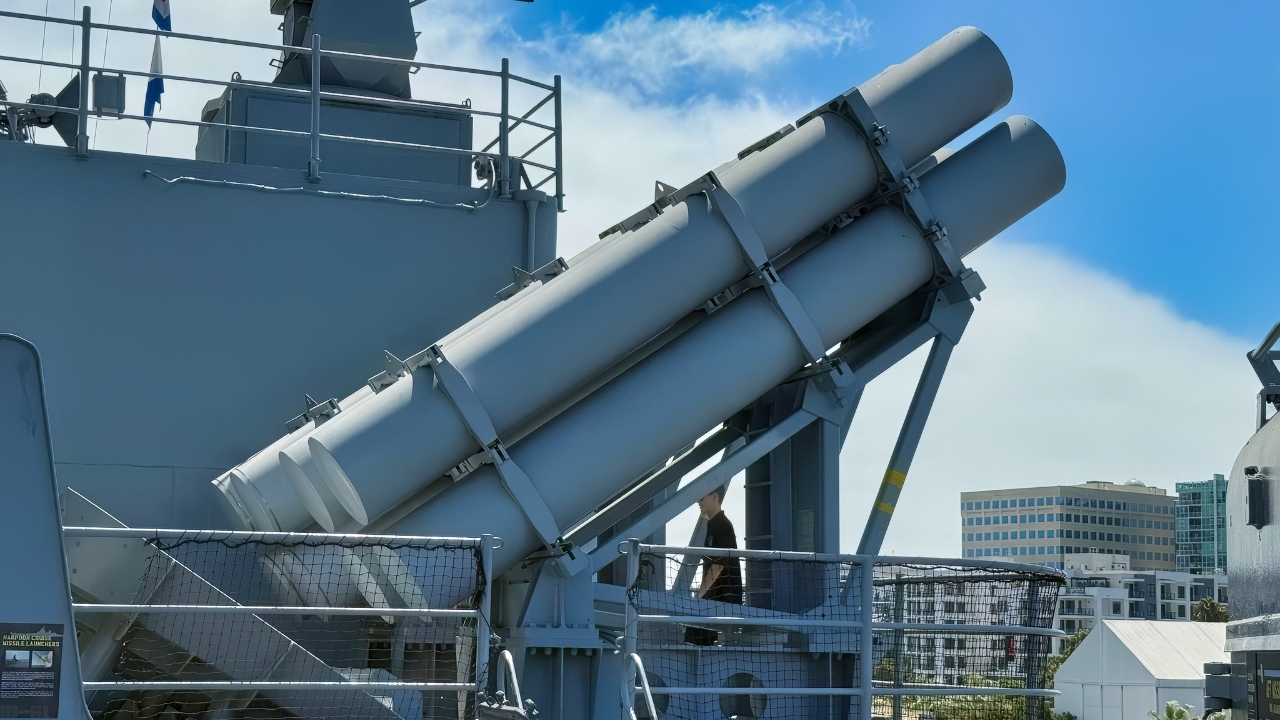
USS Iowa Harpoon Canister. Image Credit: Harry J. Kazianis/National Security Journal.
Iran accepted the offer and ordered its own forces to cease hostilities. The days after the Operation, tensions remained high between the U.S. and Iran, but the fighting had come to an end.
Iran later brought a case against the United States in the International Court of Justice, arguing that the attacks violated the 1955 Treaty of Amity between the U.S. and Iran.
The court ultimately dismissed the claims but still argued that the operation was not essential to securing the U.S.’ security interests.
About the Author: Isaac Seitz
Isaac Seitz, a Defense Columnist, graduated from Patrick Henry College’s Strategic Intelligence and National Security program. He has also studied Russian at Middlebury Language Schools and has worked as an intelligence Analyst in the private sector.


Kevin Curran
May 9, 2026 at 7:13 pm
I had the good fortune to be on the Big E that day! Something I will never forget!!