

Germany is investigating two suspected sabotage attacks on its electricity grid within 24 hours.
Blackouts Averted
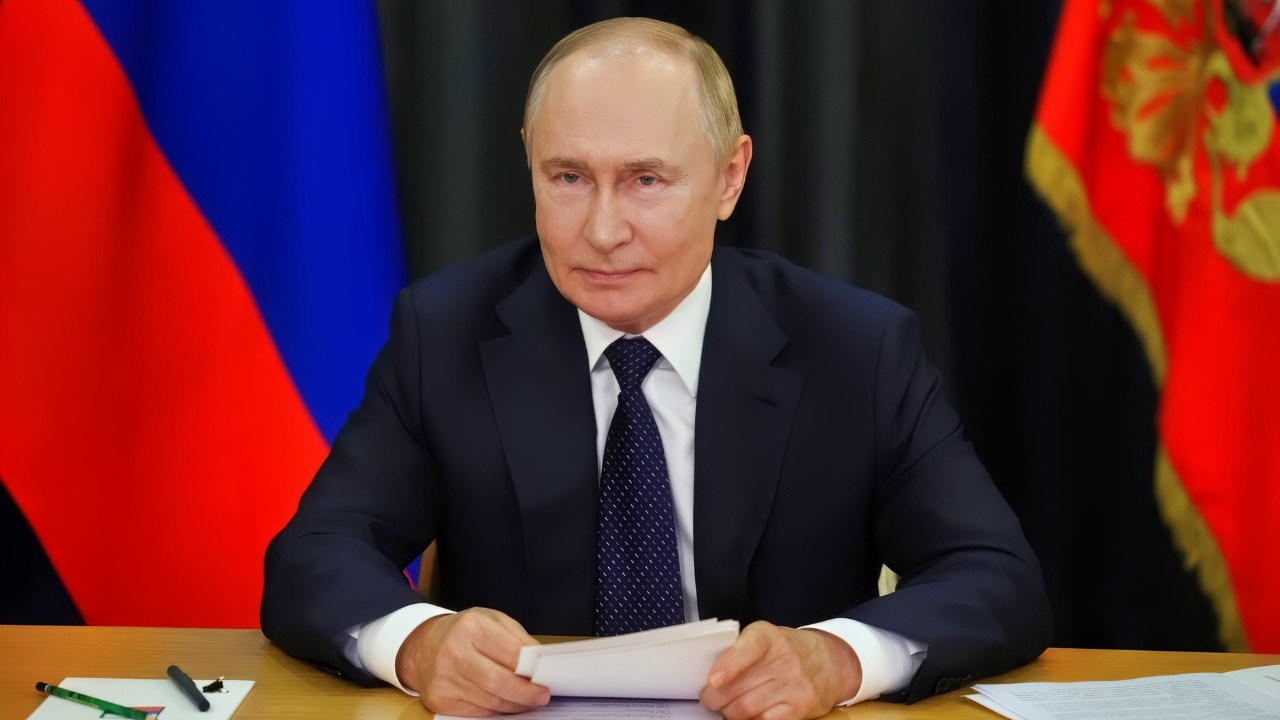
Putin in August 2025. Image Credit: Creative Commons.
Police opened investigations after separate attacks in Brandenburg and North Rhine-Westphalia disrupted power infrastructure Tuesday.
Neither caused widespread blackouts, but the western attack knocked five lignite-fired generating units with a combined capacity of 4,200 megawatts off the grid, according to operator RWE.
At Bergheim, near Cologne, investigators believe perpetrators deliberately interfered with a substation.
In Brandenburg, devices carrying conductive material were fired into high-voltage power lines at Turnow-Preilack, a key node linking the Jaenschwalde power plant to the regional transmission network.
“When it comes to our critical infrastructure, we in Germany are far too vulnerable,” Brandenburg Interior Minister Jan Redmann said.
The grid attacks came as Berlin formally blamed Russia for a separate incident.
Redmann said investigators could not yet rule out either foreign involvement or domestic left-wing extremists.
North Rhine-Westphalia Interior Minister Herbert Reul likewise said officials were examining whether Bergheim was connected to a “foreign state” or left-wing extremism.
“More sabotage, more hybrid attacks – interference like this is not happening far away, it’s happening right on our doorstep,” Reul noted.
Berlin Accuses Moscow of Airport Attack
Last month’s attempted drone attack at Leipzig/Halle Airport also has the hallmarks of Russian interference.
On Tuesday, Berlin formally accused Russia of responsibility for the August incident. Airport workers found a drone carrying explosives and a detonator near the airport, an important civilian freight hub that also supports NATO logistics and hosts Ukrainian Antonov An-124 cargo aircraft.
German Interior Minister Alexander Dobrindt said police work and intelligence had established Russian responsibility.
“Taken together, police investigations, patterns of the offenses and intelligence findings establish Russian responsibility,” Dobrindt said.
Foreign Minister Johann Wadephul called Leipzig part of “a broader pattern of Russian hybrid operations in Europe.” Germany has ordered Russia’s consulate general in Bonn closed and is terminating an agreement with the Russian House cultural center in Berlin.
Moscow rejects the accusation. Russia’s embassy called the German allegations “absurd” and baseless, while President Vladimir Putin accused Berlin of planting evidence to frame Russia, without providing evidence for that claim.
EU: ‘We Won’t Be Divided’
European officials responded in stark terms, with EU foreign policy chief Kaja Kallas stating that the attack bore the hallmarks of “state-sponsored terrorism.”
European Commission President Ursula von der Leyen said Europeans must accept that attacks on infrastructure are becoming “the new normal.”
“Europe and NATO will not just maintain our pressure on Russia; we will increase it,” von der Leyen said alongside NATO Secretary General Mark Rutte.
Rutte said Moscow had grown “increasingly reckless,” pointing to drones and missiles entering NATO airspace as well as malign activity inside alliance states.
“If Russia thinks we will be divided by the threat … they are mistaken,” he said.
Ukraine Says Russia Should Stop Commercial Flights
Meanwhile, Ukraine is pushing its long-range drone campaign deeper into Russia. President Volodymyr Zelenskyy warned airlines and insurers Tuesday that “the Russian sky is becoming completely dangerous.”
“Drone-infested skies are no place for civilian aviation,” Zelenskyy said, while stressing that Ukraine was not threatening civilian aircraft.
The Guardian reported that Ukraine can already launch several hundred long-range drones in a day and is pursuing a target of 1,000, with many Russian refineries, military sites and industrial facilities having already been repeatedly hit.
Putin Accuses Ukraine of ‘Terrorism’
Putin called Zelenskyy’s warning “state terrorism” and promised a response. He also acknowledged that Ukrainian drone attacks had caused real damage inside Russia.
Meanwhile, Russia is intensifying its own infrastructure campaign.
Over 350,000 homes in Ukraine’s Odesa region lost power after missile and drone strikes Wednesday, Reuters reported, while another Russian drone attack wounded nine people in central Kyiv.
The ‘Gray Zone’
Russia is already involved in extensive “gray zone” warfare against NATO members.
“Hostile states have recognized that cyberattacks, influence operations and economic disruption can achieve strategic objectives without crossing the threshold into open conflict,” Craig Watt, senior threat intelligence specialist at Quorum Cyber, recently told the British radio station LBC.
In July, Poland said Russia’s Federal Security Service (FSB) had attempted to launch a major cyberattack on the country’s energy grid.
If the attack had been successful, it could have prompted blackouts across Poland during the winter period.
About the Author: Georgia Gilholy
Georgia Gilholy is a journalist based in the United Kingdom who has been published in Newsweek, The Times of Israel, and the Spectator. Gilholy writes about international politics, culture, and education.


