

Saudi Arabia’s oil sector contracted by a fifth in the third quarter, while the country’s non-oil sector grew. Non-oil activity rose 1.9% from a year earlier, while oil activity fell 20.4%.
Overall, real GDP fell 3.8%, according to preliminary figures from Saudi Arabia’s statistics agency.
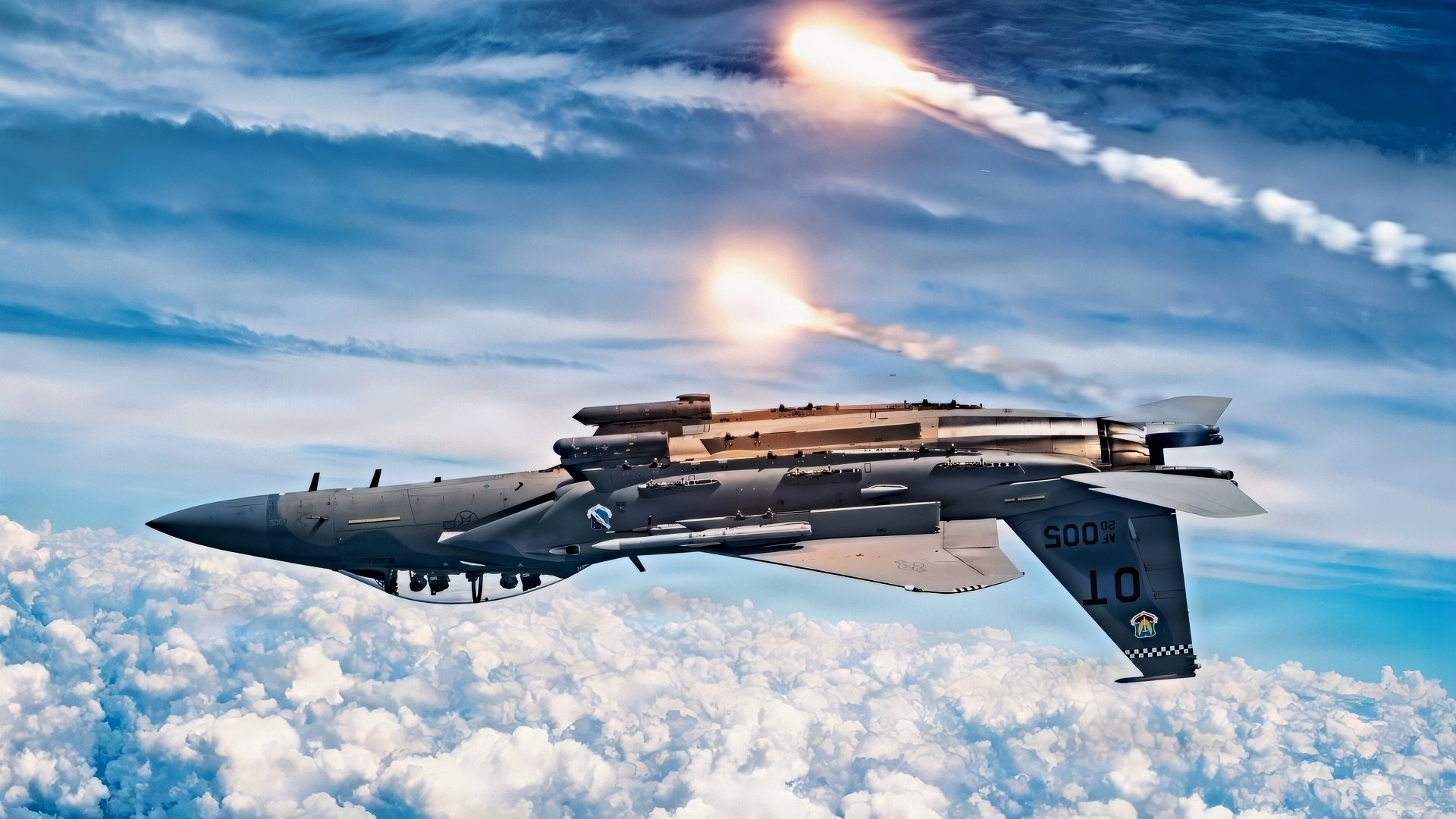
A U.S. Air Force F-15EX Eagle II assigned to Eglin Air Force Base, Florida, releases flares over the Gulf Coast, April 3, 2026. The 96th Test Wing and 53rd Wing perform developmental and operational test series on the platform including next-generation survivability, radars, sensors and networking capabilities. (U.S. Air Force photo by Tech Sgt Thomas Barley)
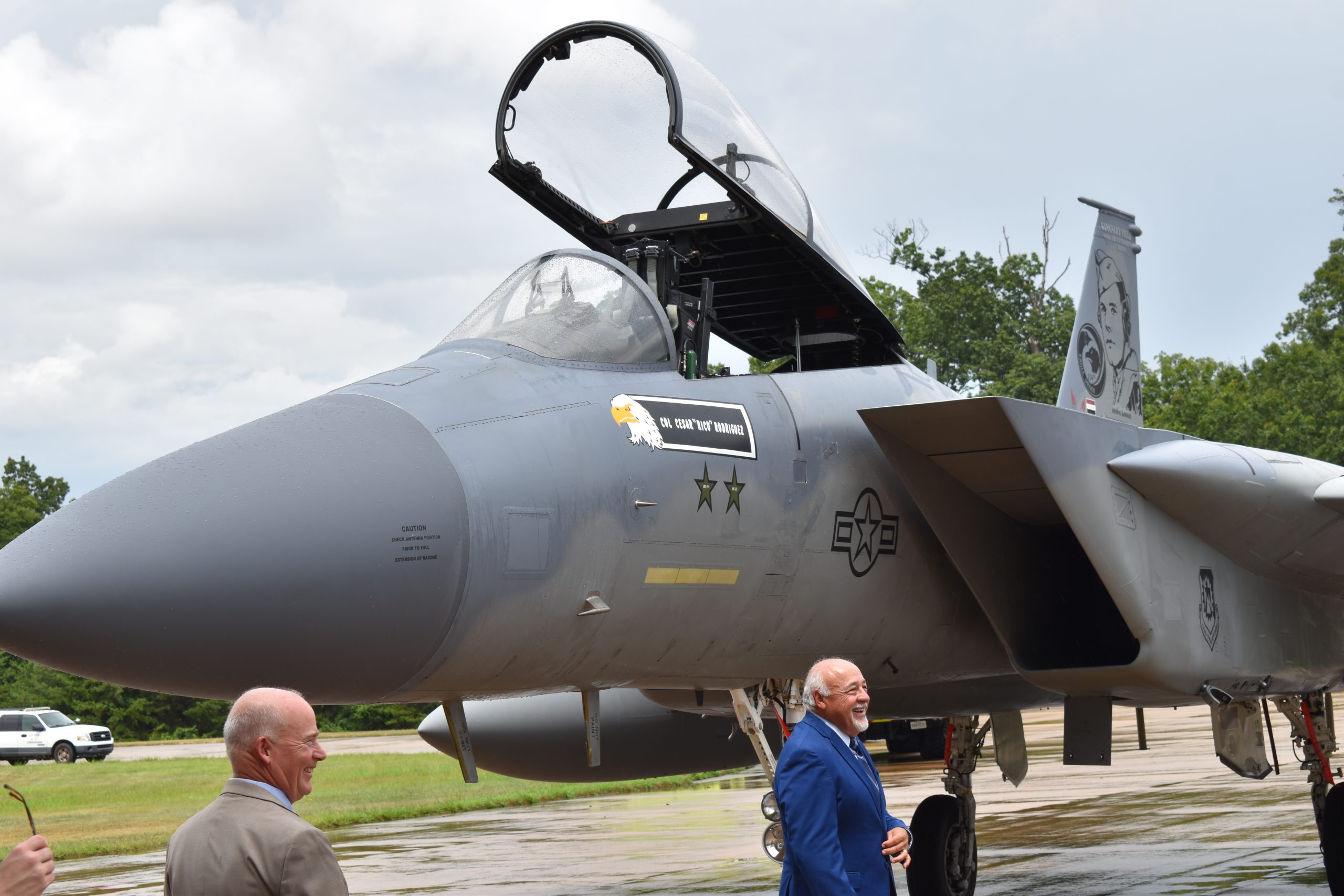
F-15C Fighter. Image Credit: National Security Journal.
The International Monetary Fund (IMF) expects the six Gulf Cooperation Council (GCC) economies to shrink by a combined 4.8% this year.
It had forecast 2% growth in April.
The IMF’s October regional outlook also expects the region’s non-oil output to fall 0.8% in 2026.
Saudi Private Sector Resilience
Saudi Arabia’s non-oil private sector continued to grow in October, though the Riyad Bank purchasing managers’ index fell to 54.0 from 55.3 in September.
A reading above 50 indicates expansion.
Domestic demand supported businesses, but export sales fell sharply. Firms cited shipping disruptions, higher freight and insurance costs, and competition.
Business output “expanded at a robust pace despite a challenging geopolitical environment,” Riyad Bank chief economist Naif Al-Ghaith said.
After Houthi attacks disrupted flights into Riyadh, Riyadh Air began busing passengers between the capital and Al Qassim Airport, about four and a half hours away by road, Skift reported.
Saudi Arabia’s flagship Future Investment Initiative conference, originally scheduled for late October, has been postponed until 2027.
“Tourism, including aviation and hospitality, and real estate have been hit by the confidence shock,” Aurélian Mali, a vice president at Moody’s Ratings, told The New York Times.
Backup Routes Under Attack
Saudi Arabia has been able to mitigate some of the disruption by transporting crude to the Red Sea port of Yanbu, while the United Arab Emirates ships crude through Fujairah.
Both of these routes bypass the persistently disrupted and dangerous Strait of Hormuz.
It has not been plain sailing, as these expensive and slower routes have been subject to a number of attacks.
Flows through Saudi Arabia’s East-West pipeline were paused in September due to damage, according to the U.S. Energy Information Administration.
On Tuesday, Saudi Aramco reported adjusted third-quarter net income of $31.2 billion, up from $28.6 billion a year earlier.
The firm’s CEO, Amin Nasser, has said it is exploring obtaining overseas storage and other export routes.
Another pipeline to Fujairah is under construction in the UAE, aiming to expand export capacity.
“Resilience is a big word. And it has layers, from the barrel that you produce to the destination that you take it,” Energy Minister Suhail al-Mazrouei told a conference on Monday, adding: “You need to be closer to your customers.”
Abu Dhabi National Oil Company CEO Sultan Al Jaber said Monday that nearly a billion barrels of crude had been drawn from inventories since shipping through Hormuz was disrupted.
Logistics now account for more than 30% of the cost of a barrel, up from less than 5% before the disruption, he said. “Capital follows confidence,” Al Jaber said at the ADIPEC energy conference.
Abu Dhabi Dealmaking
At ADIPEC, ADNOC announced a deal with OpenAI and UAE technology company G42 to deploy AI tools across its business. AI “is going to transform the economics of the energy world,” OpenAI CEO Sam Altman said at the conference, Bloomberg News reported.
The tech sector has also been affected by the war. Amazon Web Services said in March that “two of our facilities were directly struck” in the UAE and that a nearby drone strike damaged its infrastructure in Bahrain, Reuters reported.
Apollo announced last week that it would take a minority stake in Abu Dhabi’s Mubadala Capital.
“Mubadala has been a trusted partner in seeding and scaling a number of our strategies over the years,” Apollo Asset Management co-president John Zito said.
IMF Forecasts a Recovery
The IMF expects double-digit contractions in Bahrain, Kuwait, and Qatar this year. Oman, which is less reliant on Hormuz, is the only GCC country forecast to grow, at 4.1%.
The fund projects 9.1% growth for the region in 2027, including 18.8% in Qatar and 7.9% in Saudi Arabia.
The forecast assumes disruptions to energy trade and production will continue through the first quarter of 2027, with flows through Hormuz gradually recovering afterward.
“The most important risk is a more prolonged conflict,” Jihad Azour, the IMF’s Middle East and Central Asia director, said.
U.S. forces struck Iran’s Qeshm Island in the Strait of Hormuz on Monday.
A U.S. official said the strikes appeared limited in scope, Reuters reported.
Qatar said Tuesday that Washington and Tehran were still reviewing proposals from mediators. “There are intensive joint regional efforts underway to avoid escalation,” Qatari Foreign Ministry spokesman Majed al-Ansari told a news briefing.
About the Author: Georgia Gilholy
Georgia Gilholy is a journalist based in the United Kingdom who has been published in Newsweek, The Times of Israel, and the Spectator. Gilholy writes about international politics, culture, and education.


