

As the war in Ukraine rumbles through its fourth year, the tide appears to be slowly turning in Ukraine’s favor. Several factors, including a sophisticated and expanding Ukrainian strike campaign behind the Russian front line and a fuel crunch inside Russia, have converged, giving Kyiv battlefield momentum for the first time since 2023.
An Expanding Front Line

T-64 Tank. Image Credit: Creative Commons.
Taking to X, formerly Twitter, Ukrainian President Volodymyr Zelensky explained that the Ukrainian armed forces “continue to apply Ukrainian long-range sanctions against Russian military facilities and the oil industry.
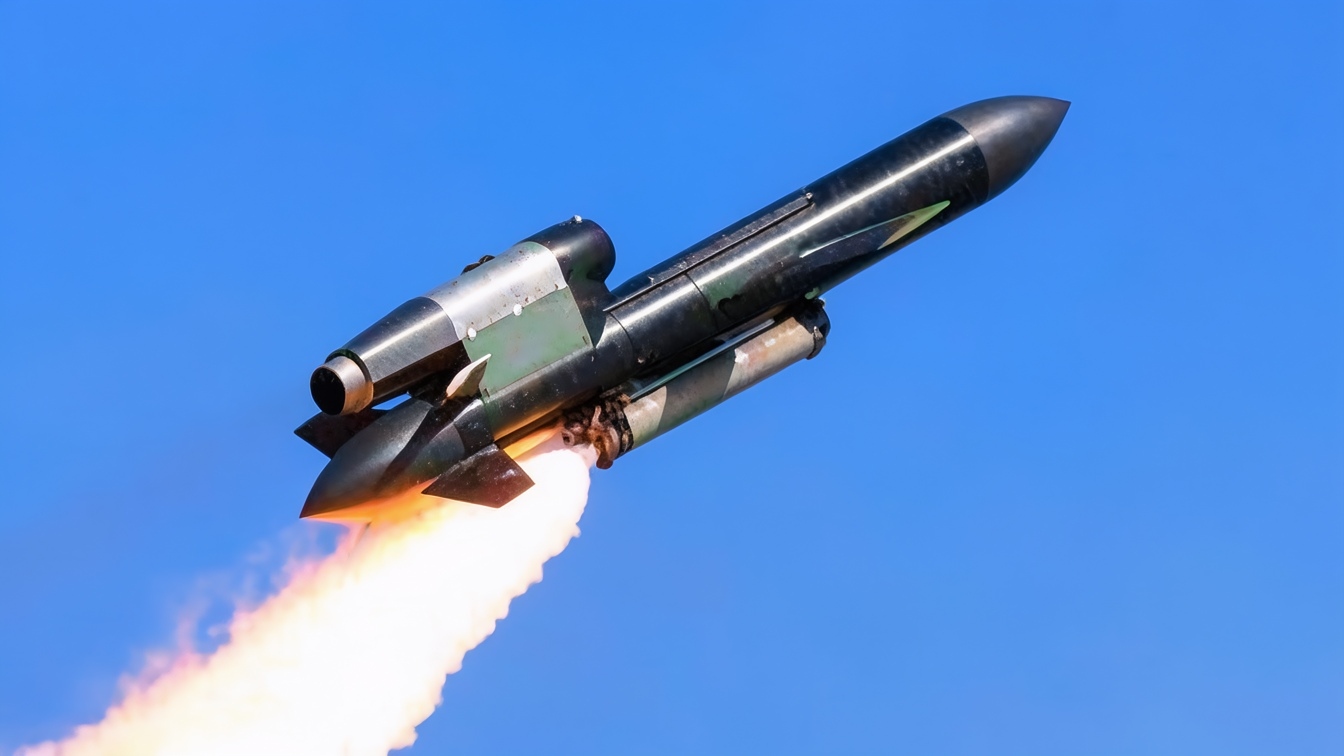
In particular, last night Ukrainian FP-5 Flamingos struck a military plant in Cheboksary that supplies the occupier’s army with components for drones and missiles.” The factory at Cheboksary, the capital city of Russia’s Chuvash Republic, reportedly produces Kometa antennas that help Russian missiles and drones evade Ukrainian air defenses.
Ukraine’s Flamingo cruise missiles have an estimated range of around 3,000 kilometers, or nearly 1,900 miles, and each carries a warhead that weighs over a ton. The Ukrainian attack on the factory in Cheboksary was the second attempt to disrupt operations there and follows an earlier strike against the plant in early May.
While Ukraine has developed its own homegrown electronic warfare system to misguide and disrupt Russian missiles and drones by targeting the Russian kit’s guidance systems, the latest Flamingo missile launches strike at a vital node in the Russian drone and missile manufacturing chain.
Ukraine’s Mid-Range Strike Campaign
Russia’s ground offensive in Ukraine is breaking down, and oil refineries and related energy infrastructure within Russia itself are on fire. The culprit behind both setbacks? Ukraine’s medium-range, one-way attack drones.

Sea Baby Drone Ukraine. Image Credit: Creative Commons.
Although Ukraine’s mid-range strike campaign is certainly exerting new pressures on the Russian war machine, the campaign is unlikely to turn the tide of the war on its own.
Still, Ukraine has managed to claw back small but significant swaths of land from Russian forces, marking some of the largest Ukrainian territorial gains since the 2023 counteroffensive, which culminated with the liberation of Kherson and the pushing back of Russian forces east of the Dnieper River.
The Ukrainian campaign has forced Russia to shuffle its network of air defense assets farther back, assigning some elements of its air defense umbrella well within Russia to protect plants vital to the Russian war effort that manufacture drones, ammunition, and other military kit, and stretching Russian air defense assets.
Russian Forces Pummeled
GCHQ, or Government Communications Headquarters, one of the United Kingdom’s three primary security and intelligence agencies, recently pegged Russian deaths in Ukraine at nearly half a million, a figure that beggars belief.
Though Russia manages to entice new Russian recruits with enormous, life-changing sign-up bonuses, high wages, preferential treatment for universities and loans, as well as significant debt forgiveness for war veterans, Ukraine has seemingly managed to keep the size of the Russian army in Ukraine roughly constant, with about 35,000 Russians killed or wounded in Ukraine per month.
Crimea Squeezed
In tandem with the slowing of Crimean fuel supplies to a trickle, Ukrainian forces are exerting pressure on a key stretch of highway connecting Rostov-on-Don, a Russian city that abuts the Sea of Azov and connects Mariupol, Melitopol, and Crimea, targeting fuel tankers, military vehicles, and other logistics traffic.
The highway, called R-280, is a crucial stretch for Russia and one of the major arteries supplying Crimea, alongside the Kerch Bridge.
One Ukrainian officer, Robert Brovdi, the commander of Ukraine’s Unmanned Systems Forces, explained to The Guardian, a British daily, that traffic along that stretch of road has plummeted by over seventy percent as a result of Ukraine’s mid-range strike campaign.
Targeted Assassination
Earlier this week, a car bomb killed Russian Colonel Damir Davydov, formerly the head of Russia’s artillery and missile ammunition supply directorate.
Davydov had been driving in Moscow during the day when the explosive device ripped through his BMW, killing him.
The killing is thought to be part of Ukraine’s secretive network of operations within Russia and occupied Ukrainian territories, which have assassinated a number of high-ranking Russian military officers and carried out a sabotage campaign about which little is publicly known.
About the Author: Caleb Larson
Caleb Larson is an American multiformat journalist based in Berlin, Germany. His work covers the intersection of conflict and society, focusing on American foreign policy and European security. He has reported from Germany, Russia, and the United States. Most recently, he covered the war in Ukraine, reporting extensively on the war’s shifting battle lines from Donbas and writing on the war’s civilian and humanitarian toll. Previously, he worked as a Defense Reporter for POLITICO Europe. You can follow his latest work on X.


Swamplaw Yankee
June 11, 2026 at 1:36 pm
Even less is known about what intelligence was provided POTUS Obama about Ukraine in 2010-14? Why did POTUS Obama agree in 2014 to facilitate the Balkanization of independent Ukraine?
Got a few books to recommend?
JOSEY WALES
June 14, 2026 at 9:58 pm
AND THE UKRAINIAN ARMY GROUP A IS STILL ADVANCING ON MOSCOW THERE ARE REPORTS FROM ADVANCE RECON UNITS THAT THEY CAN SEE THE SPIRES OF THE KREMLIN.
Chas
June 16, 2026 at 11:53 am
Yah right… Just waiting to read Zelensky dead…