

Summary and Key Points: Canada has started making advance payments tied to “long-lead” components for 14 additional F-35 fighters, framing the move as a way to preserve options and negotiating leverage without committing to the full buy.
-Ottawa remains legally funded and contracted for the first 16 jets, with deliveries staged for training beginning in 2026, followed by additional aircraft in 2027 and 2028, before moving to Canadian bases like Cold Lake and Bagotville.
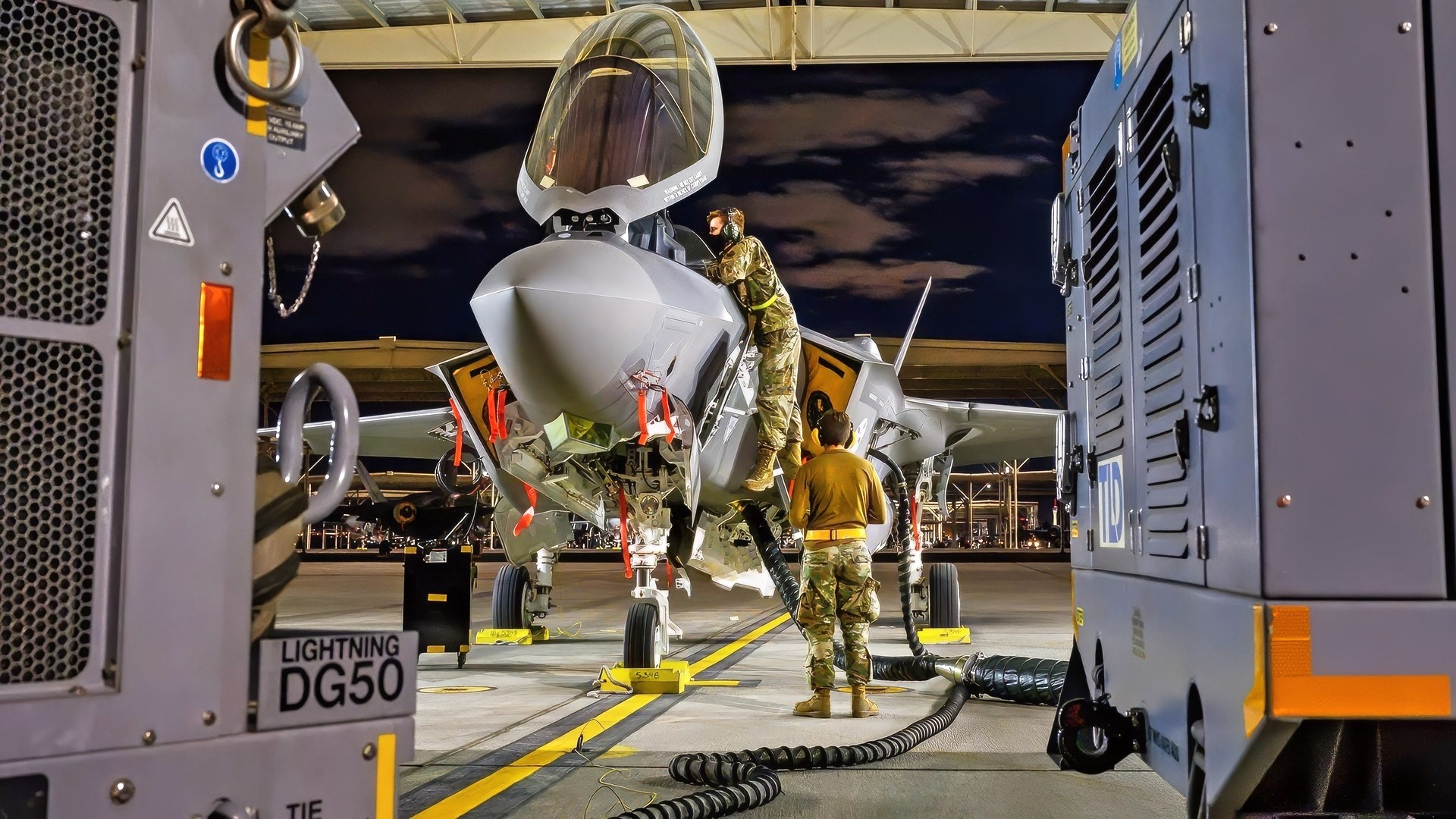
F-35 Fighters Ready. Image Credit: Creative Commons.
-The larger 88-jet plan still exists as policy, but the government is signaling a hedge—potentially pairing more F-35s with a Gripen mixed-fleet approach—despite the cost and logistics penalties of splitting fleets.
Canada Still Won’t Go All in on F-35 Despite ‘Payments’
Canada has begun making advance payments tied to “long-lead” components for 14 additional F-35A fighter jets, a step Prime Minister Mark Carney described in Parliament as paying “a small amount” to preserve options and negotiating leverage – while still declining to confirm whether Ottawa will ultimately buy the extra aircraft. The move, as I have argued before, appears to be an effort by the Canadian government to hedge its bets, keep the door open to expanding its F-35 fleet, and potentially still fielding a mixed fleet of F-35s and Gripens – but with a dozen or so more F-35s on top of its current 16.
Canada, after all, had already committed to acquiring a new fighter fleet under the Future Fighter Capability Project (FFCP) – a plan that involved the purchase of 88 advanced fighter aircraft. The acquisition of 88 Lockheed Martin F-35s was confirmed in January 2023.
As Canada still weighs its options, here’s what you need to know about the current state of play.
What Canada Has and Hasn’t Paid For
Per February 2026 reports, Canada is now paying money tied to long-lead items for 14 additional F-35As – the kinds of components that must be ordered well ahead of final assembly.
Crucially, those payments are not the same thing as exercising the full purchase option. Carney described the spending as a way of ensuring Canada has “options,” and did not present it as a final commitment to moving forward with the original plan of purchasing an entire fleet of 88 F-35s.
The deal that was finalized in January 2023 was valued at approximately $19 billion CAD (approximately $13.2 billion USD), with the United States government and defense contractor Lockheed Martin prepared to replace the Royal Canadian Air Force’s aging CF-18 Hornets with 88 Lockheed Martin F-35A Lightning II aircraft and associated weapons, infrastructure, and training.

F-22 and F-35 and the Flag. Image Credit: Creative Commons.
Under that contract, Ottawa has made a legal commitment of funds for the first 16 aircraft. Those commitments were executed as part of the initial acquisition tranche and are distinct from optional future buys. While the 88-aircraft plan remains government policy, only the first 16 jets are firmly contracted and funded under Canadian law.
Canada’s defense procurement accounts have already covered the long-lead funding for those 16 jets—the upfront “key components” required early in the production schedule to ensure delivery slots in the Joint Strike Fighter production line. These payments are separate from the later full purchase price for each aircraft and are typical in modern fighter procurement to keep Canada’s place in the manufacturing sequence.
Those first 16 aircraft are set to be delivered in a staggered pattern that reflects the production of the aircraft. The initial four fighters are scheduled to arrive for pilot training at Luke Air Force Base, Arizona, in 2026, followed by six aircraft in 2027, and a final six in 2028.
Once delivered to the United States for training and testing, the first jets will undergo crew instruction and operational preparation before being ferried to Canadian air bases such as 4 Wing Cold Lake, Alberta, and 3 Wing Bagotville, Quebec, where sustainment facilities and infrastructure upgrades are already underway.
Why Ottawa Says It Wants “Options”
Canada’s decision to review the planned purchase of 88 F-35 fighter jets has been described as an effort to preserve Canadian sovereignty over its aerospace sector and depend less on the United States. Carney would not agree that the decision was political, but it’s hard to see it as anything but a political response to trade and diplomatic tensions with Washington under the Trump administration.
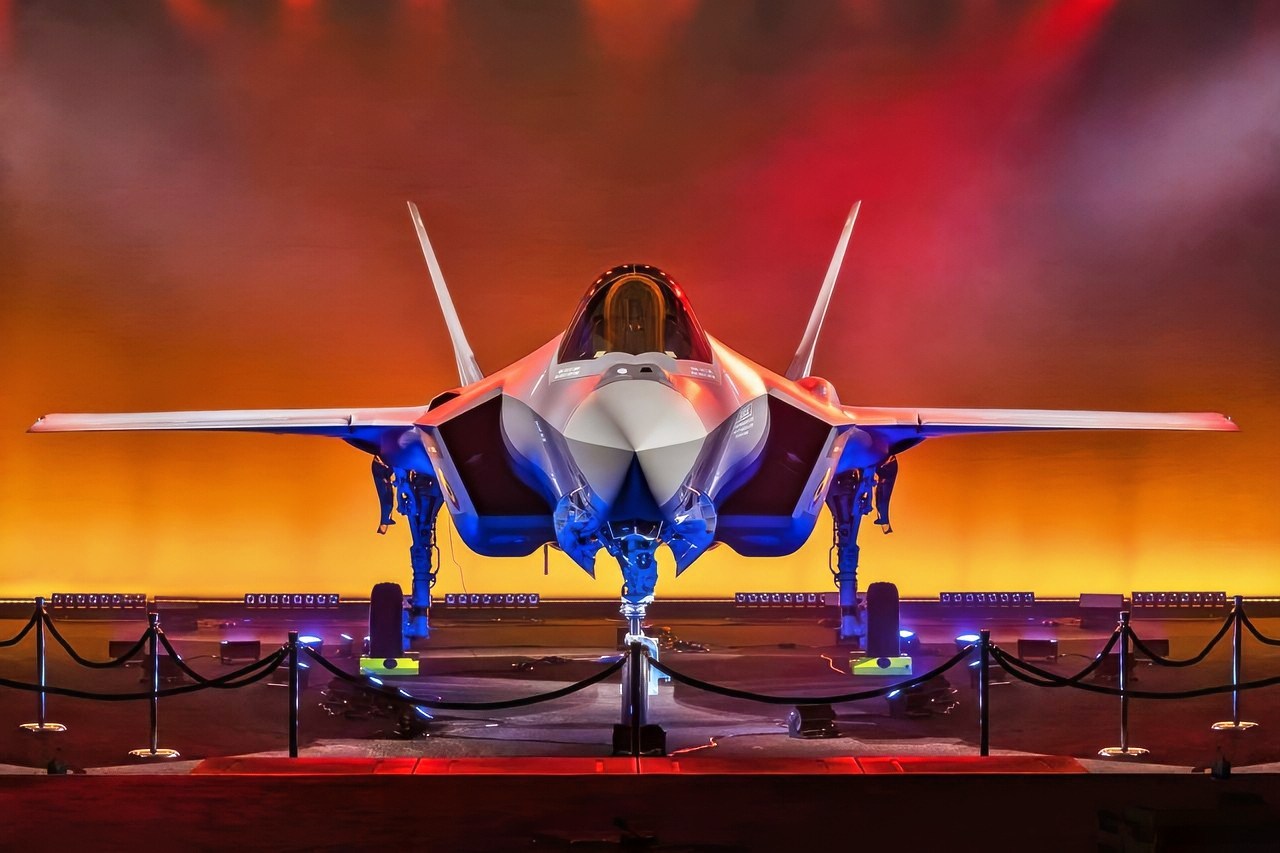
F-35 Fighter in Belgium. Image Credit: Creative Commons.

PHILIPPINE SEA (Dec. 11, 2023) An F-35C Lightning II, assigned to the “War Hawks” of Strike Fighter Squadron (VFA) 97, recovers aboard Nimitz-class aircraft carrier USS Carl Vinson (CVN 70). Vinson, the flagship of Carrier Strike Group ONE, is deployed to the U.S. 7th Fleet area of operations in support of a free and open Indo-Pacific. (U.S. Navy photo by Mass Communication Specialist 2nd Class Benjamin Ringers)
Ottawa appears to be trying to balance two political realities by potentially fielding an additional 14 F-35s and keeping Saab’s Gripen offer on the table. First, the F-35 remains the aircraft that Canada selected after a lengthy competition. The Royal Canadian Air Force told the Canadian government that the aircraft was the best option to comply with NORAD and NATO obligations while also being suitable for Canada’s own defense needs. Second, there is domestic pressure to demonstrate independence from the United States at a time when trade disputes and tariff threats persist.
Keeping the option open on 14 additional jets allows the government to say it has not closed any doors. It also preserves leverage. If Ottawa wants to negotiate industrial offsets or production timelines, for example, maintaining a position in the F-35 queue strengthens its hand.
The Practical Cost of Dragging It Out
Modern fighter procurement is complicated. Production slots are allocated years in advanced and training pipelines must be built around fleet size. Infrastructure at bases like Cold Lake and Bagotville is being upgraded specifically for the F-35 right now.
Canada has already legally committed to the first 16 aircraft. The air force is restructuring itself aroudn the new platforms and pilots are expected to train on it. Maintenance systems will also be built around it. Whether Ottawa ultimately flies 88 aircraft or just the initial 16, the F-35 will ultimately decide Canada’s combat-air capability for decades, because any other jet they choose to field alongside it – should they decide to do that – will be technologically inferior.
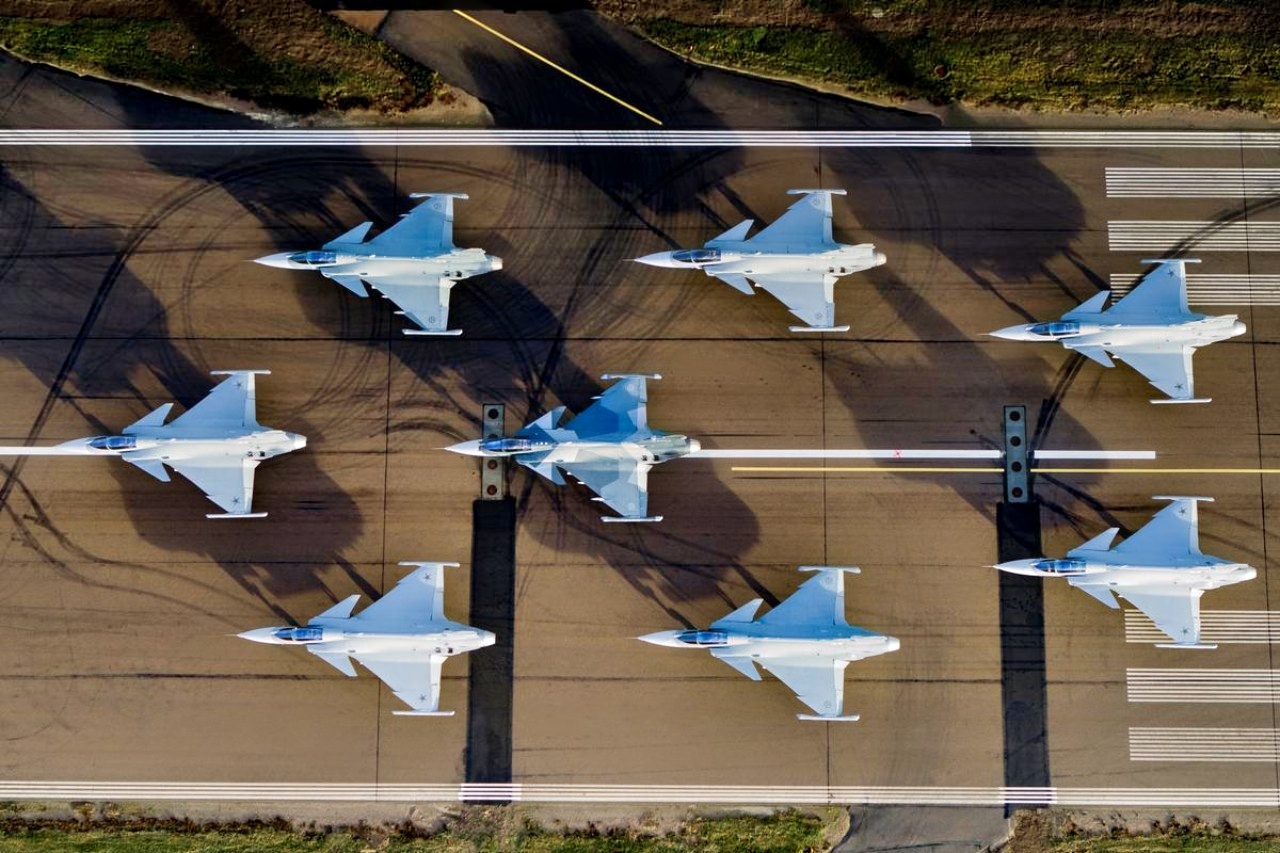
JAS 39 Gripen E Fighters. Image Credit: Creative Commons.

SAAB JAS 39 Gripen Fighter. Image Credit: SAAB.
That’s why prolonging uncertainty like this carries risk. If the government ultimately intends to operate a larger F-35 fleet, delaying a decision on the additional 14 jets may increase costs and complicate scheduling, changing delivery timelines later in the decade and beyond.
There’s also a structural issue. Splitting the fleet with a different kind of aircraft will add cost and complexity in terms of training and logistics – not to mention, sustainment.
About the Author: Jack Buckby
Jack Buckby is a British researcher and analyst specialising in defence and national security, based in New York. His work focuses on military capability, procurement, and strategic competition, producing and editing analysis for policy and defence audiences. He brings extensive editorial experience, with a career output spanning over 1,000 articles at 19FortyFive and National Security Journal, and has previously authored books and papers on extremism and deradicalisation.


Swamplaw Yankee
March 3, 2026 at 8:58 am
OMG!! another op-ed demanding that wealthy Mexico continue adding cost and complexity to its air defence expenditures.
Another op-ed writer demanding that european royalty visit Mexico to not purchase hundreds of F-35 air frames in lieu of some non-USA product.
Stop this madness of ignoring highly populated Mexico and its continuing demand to fund huge purchases of F-35 air frames. Tiny underpopulated Canada has no cash compared to wealthy Mexico.
Canada has just spent a few buicks to geomap its Hecla + Fury northern islands in 2026. This was needed to be done way back in 1939 when the Kremlin Muscovy-NAZI Berlin military giant was married up + ready to attack Canada + the USA.
Mexico wants to fund donations of the F-35 air frames to Iceland + Ireland to help the F-35 fleet that Denmark has funded for purchase to defend Greenland.
The inner beltway is very irritated about the continued whine from Op-ed writers discriminating against Mexican funding + operation of F-35 air frames all across Mexico.