


Key Points and Summary – China’s DF-26B is a road-mobile, intermediate-range ballistic missile (IRBM) specifically designed to function as a “carrier killer.”
-With a range of 4,000 km (approximately 2,500 miles), it can threaten U.S. carriers and bases as far away as Guam.

Souda Bay, Crete, Greece (Feb. 22, 2006) Nimitz-class aircraft carrier USS Theodore Roosevelt (CVN 71) heads to sea following a brief logistics stop on the Greek island of Crete. Roosevelt and Carrier Air Wing Eight (CVW-8) are currently underway on a regularly scheduled deployment supporting maritime security operations. Roosevelt is the fourth ship in the NIMITZ – class of nuclear powered aircraft carriers and is homported in Norfolk, VA. U.S. Navy photo by Mr. Paul Farley
-Unlike traditional ballistic missiles, it is armed with a maneuverable re-entry vehicle (MaRV) and advanced terminal guidance, allowing it to hit moving warships at sea.
-It can hit speeds approaching or over Mach 10 when re-entering the atmosphere to hit a target.
China’s Mach 10 Aircraft Carrier Missile: Meet the DF-26B
As a cornerstone of China’s anti-access/area denial (A2/AD) strategy, the DF-26B’s long reach and mobility pose a significant threat to U.S. naval operations in the Pacific, forcing a reassessment of carrier tactics.
The DF-26B is one of the more recent variants of China’s Dong Feng-26 intermediate-range ballistic missile (IRBM).
It is a formidable weapon that plays a central role in the People’s Liberation Army Rocket Force’s (PLARF) anti-access/area denial (A2/AD) strategy.
Often referred to as one of China’s “carrier killers,” the DF-26B is specifically designed to target high-value naval assets such as U.S. aircraft carriers at ranges that were previously considered safe.
Its development and deployment mark a significant shift in China’s strategic posture in the Indo-Pacific, with profound implications for U.S. naval operations.
Design and Development of the DF-26B
The DF-26B is a road-mobile, two-stage, solid-fueled ballistic missile with a reported range of up to 4,000 kilometers.
This range allows it to strike targets as far away as Guam, which is a critical U.S. military hub in the Pacific.
The missile can carry either conventional or nuclear warheads, with payloads estimated between 1,200 and 1,800 kilograms.
It is launched from a Transporter Erector Launcher (TEL), which enhances its mobility and survivability against preemptive strikes.
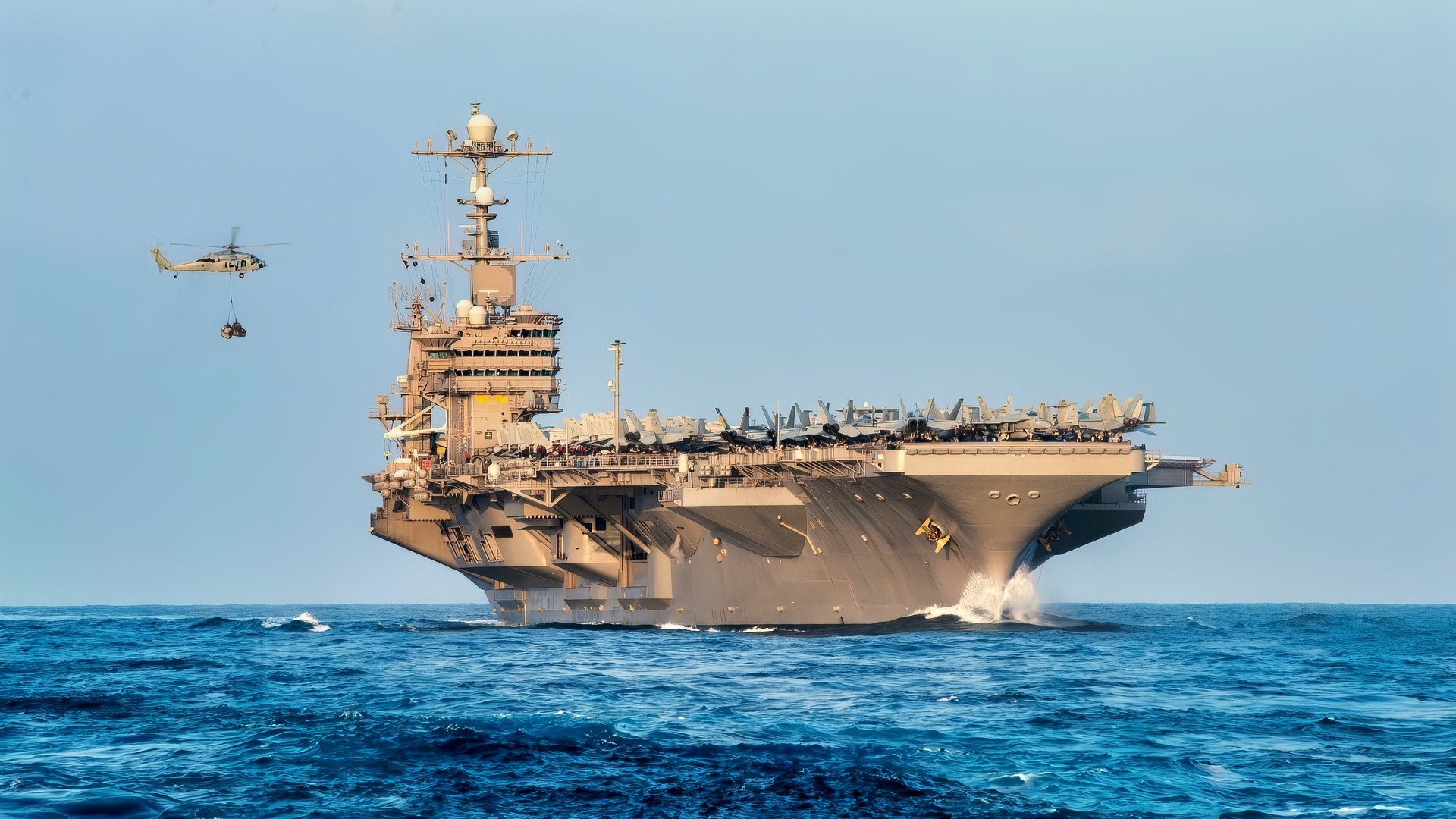
(Aug. 1, 2016) – The Nimitz-class aircraft carrier USS John C. Stennis (CVN 74) receives stores while conducting a vertical replenishment at sea, during Rim of the Pacific 2016. Twenty-six nations, more than 40 ships and submarines, more than 200 aircraft and 25,000 personnel are participating in RIMPAC from June 30 to Aug. 4, in and around the Hawaiian Islands and Southern California. The world’s largest international maritime exercise, RIMPAC provides a unique training opportunity that helps participants foster and sustain the cooperative relationships that are critical to ensuring the safety of sea lanes and security on the world’s oceans. RIMPAC 2016 is the 25th exercise in the series that began in 1971. (U.S. Navy photo by Mass Communication Specialist 2nd Class Ryan J. Batchelder)
The DF-26B is believed to incorporate advanced terminal guidance systems, possibly including active radar homing and maneuverable reentry vehicles (MaRVs).
These features allow it to adjust its trajectory during the final phase of flight, enabling it to strike moving targets like aircraft carriers —a capability once considered extremely difficult to achieve.
China publicly unveiled the DF-26 in 2015, and it entered service around 2016. The DF-26B variant, optimized for anti-ship missions, was reportedly tested in August 2020, when it successfully struck a moving ship in the South China Sea.
This test demonstrated China’s growing capability to target mobile naval assets at sea and marked a significant milestone in the evolution of its missile technology.
The DF-26B is deployed across multiple brigades within the PLARF and is integrated into China’s broader C4ISR (Command, Control, Communications, Computers, Intelligence, Surveillance, and Reconnaissance) network.
This network includes satellites, over-the-horizon radar, and unmanned aerial vehicles (UAVs), forming a multi-layered kill chain capable of tracking and targeting U.S. naval vessels in real time.
Why the DF-26 is a Threat to the U.S. Navy
The DF-26B poses a significant threat to the U.S., its carrier strike groups, and its allies, especially in the context of a Taiwan contingency or broader Indo-Pacific conflict.
Its long range allows it to target carriers operating in the Philippine Sea, well beyond the first island chain, where U.S. forces traditionally maintain standoff positions.
There are several dimensions to the DF-26 that make it especially threatening. First, its extended reach enables China to strike carriers from deep within its mainland, reducing the need for forward deployment and minimizing exposure to U.S. countermeasures. Second, its mobility and road-based launch system make it difficult to detect and target, especially in China’s vast interior, enhancing its survivability in a first-strike scenario.

Pacific Ocean, July 25, 2005 – USS Ronald Reagan (CVN 76) performs a high speed run during operations in the Pacifc Ocean. Ronald Reagan and Carrier Air Wing One Four (CVW-14) are currently underway conducting Tailored Ships Training Availability (TSTA). Official US Navy Photo by Photographers Mate 1st Class James Thierry. (RELEASED)
Third, the missile’s precision strike capability, enabled by terminal guidance and maneuverable warheads, increases the likelihood of a successful hit on a moving carrier. Fourth, the DF-26B is capable of using both nuclear and conventional warheads, which adds a layer of strategic ambiguity and escalation risk, complicating U.S. response options.
Finally, the missile is a cornerstone of China’s A2/AD strategy, which aims to deny U.S. forces access to key maritime zones and deter intervention in regional conflicts, particularly around Taiwan.
What the DF-26B Means for the U.S.
The emergence of the DF-26B has forced the U.S. Navy to reassess its carrier operations, particularly in contested regions like the South and East China Seas. Carrier strike groups, once considered untouchable assets, now face credible threats from land-based missile systems. Carrier strike groups have many measures to deal with missile threats.
These include layered missile defense systems such as the Aegis Combat System, SM-series interceptors, Rolling Airframe Missiles (RAM), and Phalanx Close-In Weapon Systems (CIWS), all designed to intercept incoming threats. Electronic warfare capabilities, provided by aircraft like the EA-18G Growler, offer jamming functions to disrupt missile guidance systems.
However, none of these systems can guarantee 100% protection against China’s missiles. Even one or two well-placed hits on a carrier’s flight deck can render the entire vessel combat-ineffective, even if the aircraft carrier is still afloat.
For the first time in history, experts and analysts are now debating whether the aircraft carrier is obsolete.
How the DF-26B Would Be Used in Conflict
The DF-26B reflects a broader shift in China’s military strategy from a defensive continental posture to a forward-leaning maritime assertiveness.
It signals Beijing’s intent to challenge U.S. naval dominance and reshape the strategic balance in the Indo-Pacific. The missile provides China with a conventional deterrent against U.S. intervention, potentially allowing Beijing to escalate conflicts without crossing the nuclear threshold.
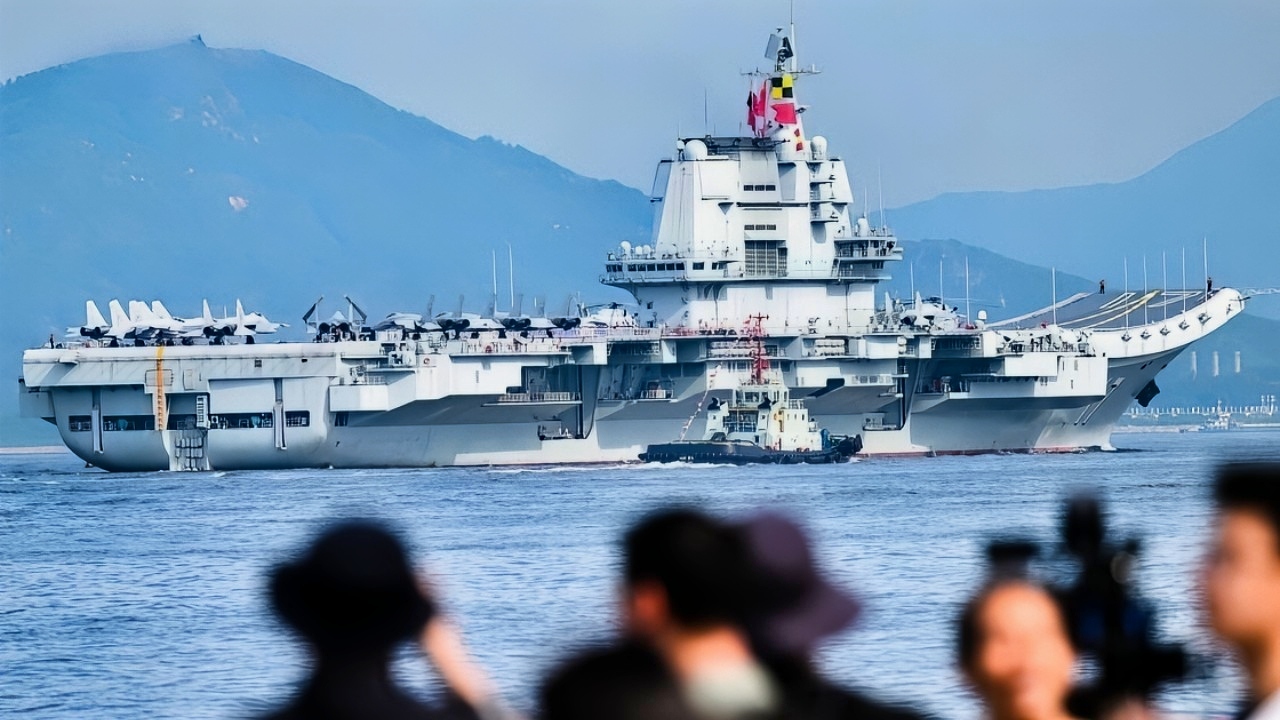
China Aircraft Carrier in Port. Image Credit: Chinese Navy.
In a conflict over Taiwan, for example, the DF-26B could be used to preemptively strike U.S. bases in Guam and deny carrier access, complicating American force projection.
Its capabilities have forced other nations to invest in similar platforms, with neighboring countries and the U.S. investing in missile defense systems, hypersonic weapons, and enhanced ISR platforms.
Moreover, China’s test launches and deployments serve as strategic signals, reinforcing its resolve and deterring adversaries from military action.
About the Author: Isaac Seitz
Isaac Seitz, a Defense Columnist, graduated from Patrick Henry College’s Strategic Intelligence and National Security program. He has also studied Russian at Middlebury Language Schools and has worked as an intelligence Analyst in the private sector.
More Military
Forget the F-35 of F-47: A 7th Generation Fighter Is Possible
$500 Drones are Destroying $10,000,000 NATO Tanks in Ukraine War
The Mach 2.2 F-4 Phantom II Fighter Has a Message for Every Air Force on Earth
China’s White Emperor ‘NGAD’ Stealth Fighter Summed Up in 2 Words


