

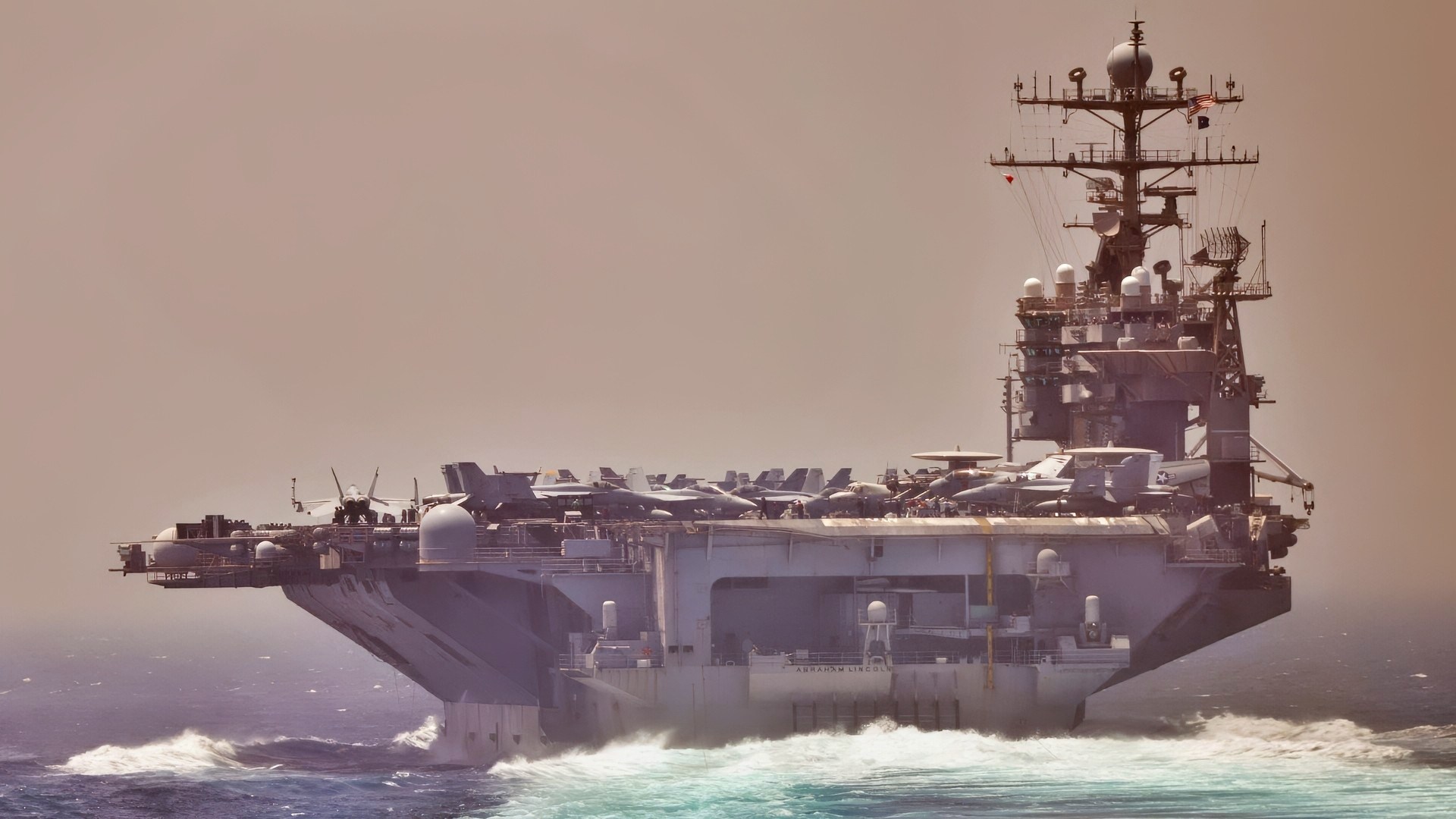
Key Points and Summary – China fields a large and growing mix of anti-ship ballistic, cruise, and hypersonic weapons designed to hold U.S. aircraft carriers strike groups at risk.
-The scary headlines are partly justified: if Beijing can find, fix, and track a carrier, massed salvos could damage or mission-kill it.
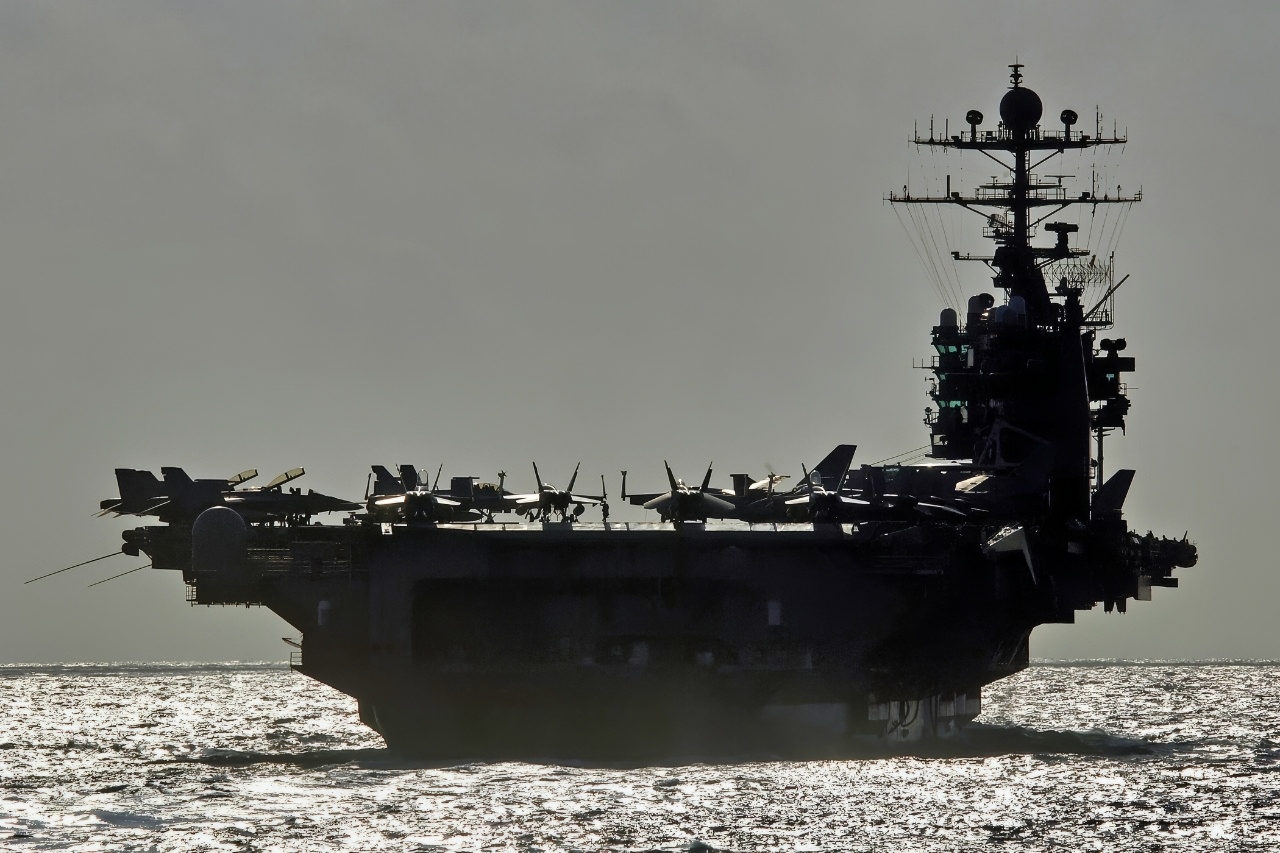
The aircraft carrier USS George Washington (CVN 73) prepares to conduct a refueling at sea with the guided missile cruiser USS Monterey (CG 61) as the two ships operate in the Caribbean Sea on April 20, 2006. The George Washington Carrier Strike group is participating in Partnership of the Americas, a maritime training and readiness deployment of U.S. Naval Forces along with navies of Caribbean and Latin American countries for enhanced maritime security.
(DoD photo by Petty Officer 3rd Class Michael D. Blackwell II, U.S. Navy. (Released))
-But the “sink a carrier at will” narrative oversimplifies a much harder problem.
-The U.S. Navy can break the kill chain with jamming, deception, cyber effects, and long-range sensing; intercept some inbound threats; and fight from farther out using tankers and standoff weapons.
-In a Taiwan or South China Sea crisis, aircraft carriers would adapt, not disappear.
How China Plans to Sink U.S. Navy Aircraft Carriers in 2 Words: Missile Salvos
Every few months a new headline declares the aircraft carrier dead.
The exhibit A is always the same: China’s arsenal of anti-ship ballistic missiles (ASBMs), long-range cruise missiles, and now hypersonic systems that—on paper—can reach deep into the Pacific. There’s truth here.
Beijing has invested for years in missiles meant to keep U.S. forces at bay and complicate any intervention near Taiwan or in the South China Sea.
This very threat has been a concern of mine since the early 2010s, and one of the reasons I returned to college to finish my education and earn a Master’s degree.
But missiles don’t fly in a vacuum. They need a working “kill chain”—the full sequence of finding, tracking, targeting, engaging, and assessing—to turn range rings on a map into hits on a moving target that’s actively hiding, jamming, maneuvering, and shooting back.
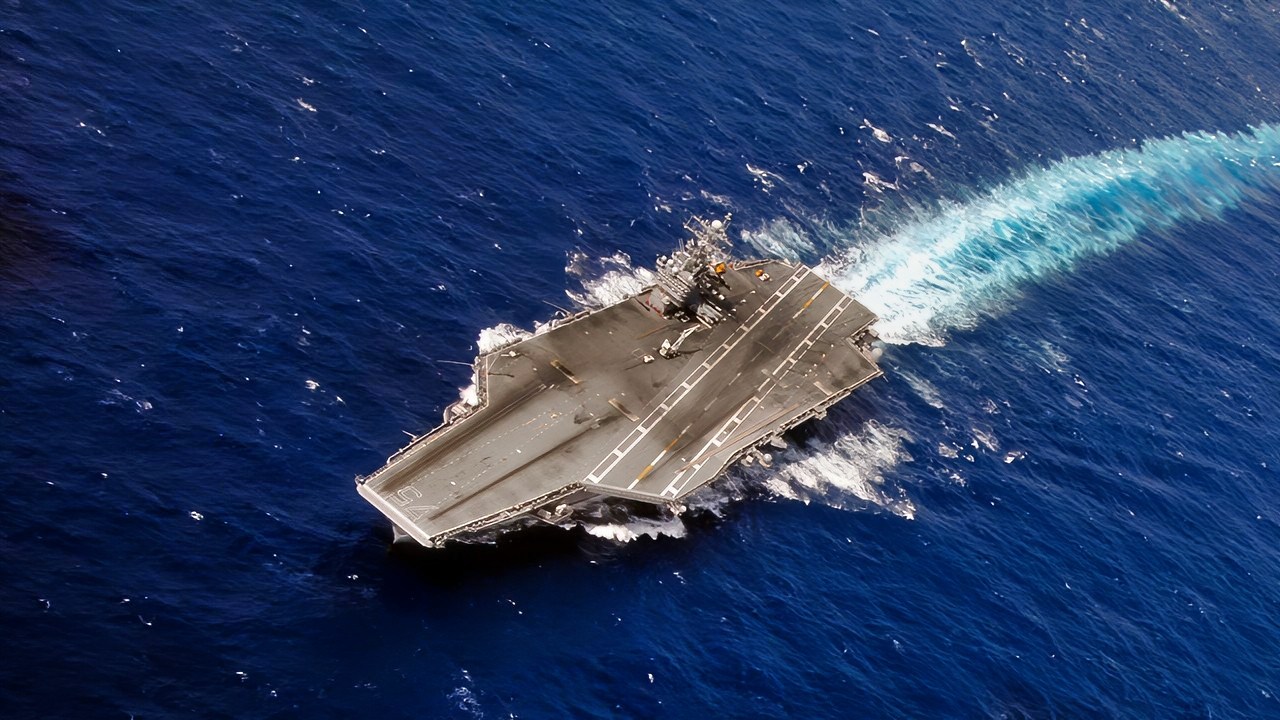
The aircraft carrier USS Harry S. Truman conducts high-speed turns during a rudder check. Truman is conducting carrier qualifications in the Atlantic Ocean.
The real question isn’t whether China has a lot of missiles; it’s whether it can consistently complete that kill chain against a modern carrier strike group that is trying very hard to be somewhere else.
Let’s break the problem down: what China brings, how it would likely use it, how worried the U.S. Navy should be, and what counters already exist.
What China Brings To The Fight
China has built an unusually layered anti-ship portfolio. The core pieces include:
Anti-ship ballistic missiles (ASBMs). The DF-21D, often called the original “carrier killer,” is a maneuvering medium-range ballistic missile designed to threaten large surface ships out past the First Island Chain.
The DF-26 stretches that concept into intermediate-range territory, bringing carriers operating farther east within reach, and can swap conventional and nuclear payloads.
China has also fielded the DF-17, a ballistic missile that carries a hypersonic glide vehicle intended to complicate missile defenses with high-speed, end-game maneuvering.

DF-17 Missile from China. Image Credit: Creative Commons.
Open sources also discuss a longer-range DF-27 variant. None of these are magic bullets—but together they create a deep anti-ship envelope.
Ship- and air-launched anti-ship cruise missiles (ASCMs). Modern PLAN destroyers and cruisers carry long-range ASCMs like YJ-18 (a sub-launched version exists too), while bombers and strike fighters can bring supersonic YJ-12-class weapons into play.
More recently, China unveiled the YJ-21, a high-speed anti-ship missile sized for vertical launch on large surface combatants—another way to sling fast, hard-to-intercept threats from many platforms.
Long-range, high-speed cruise missiles. The CJ-100 (often referenced as DF-100) represents a land-based, very long-range cruise option that, in large salvos, could stress ship defenses and complicate planning.
Quantity. Beijing emphasizes mass. The PLA Rocket Force and PLAN surface fleet have grown quickly, and doctrine anticipates large, multi-axis salvos designed to saturate defenders. Even if each missile isn’t exquisite, numbers can matter.
This adds up to a real problem—especially if those missiles are cued accurately and fired in volume from different directions and altitudes. Which brings us to the step many hot-takes skip: targeting.
How Beijing Would Try To Use Them: The Kill Chain
Hitting a moving aircraft carrier at sea requires more than range.
It demands a stitched-together network that can find and fix the strike group, hold contact through evasive maneuvers and jamming, and feed precise targeting data to shooters in time for long-range weapons to arrive on the right patch of ocean.
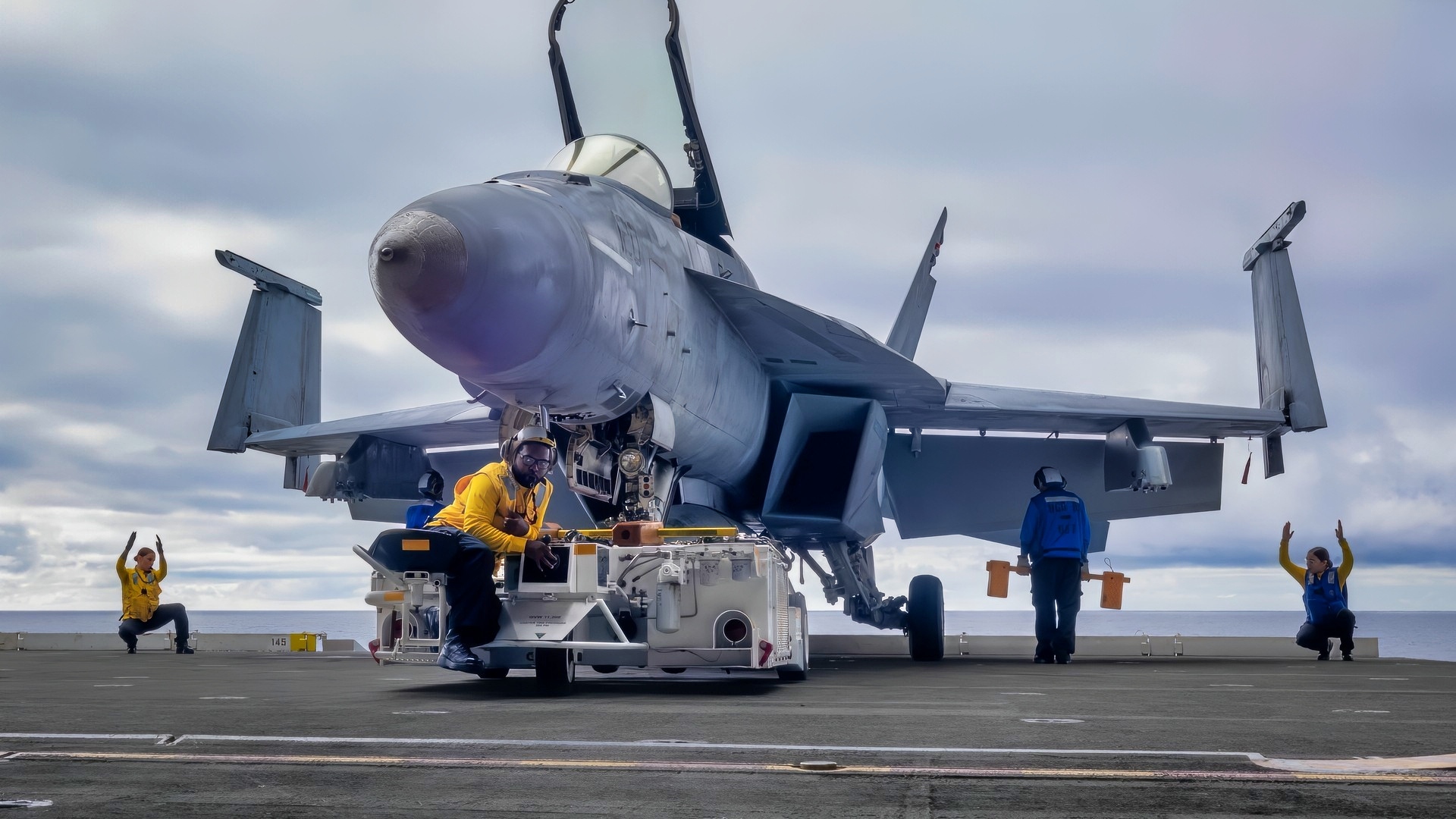
ATLANTIC OCEAN (Aug. 13, 2025) Sailors transport an F/A-18E Super Hornet attached to the “Gladiators” of Strike Fighter Squadron (VFA) 106 onto an aircraft elevator aboard the Nimitz-class aircraft carrier USS George H.W. Bush (CVN 77). George H.W. Bush is underway conducting carrier qualifications and routine operations in the Atlantic Ocean. (U.S. Navy photo by Mass Communication Specialist Seaman Apprentice Kayleigh Tucker)
Expect China to fuse:
Space-based sensors. Constellations of surveillance satellites—electro-optical, synthetic-aperture radar, and electronic intelligence—give wide-area maritime awareness and can revisit key zones quickly.
Over-the-horizon (OTH) radars. Ground-based OTH systems can detect large surface contacts far from shore but with coarse accuracy. They are useful for cueing other sensors rather than providing final targeting.
Airborne and maritime scouts. Long-range maritime patrol aircraft, drones, surface combatants, and even fishing militia can report sightings and help “handoff” track data.
Data links and fire control. Missiles may rely on mid-course updates to hit a carrier that’s been turning hard and sprinting for tens of minutes after launch.
In a crisis, Beijing’s playbook would likely blend all of the above: saturating the maritime picture with surveillance assets, then building composite tracks and firing coordinated salvos—ballistic, cruise, and hypersonic—so U.S. defenders have to solve several problems at once.
So…How Worried Should The U.S. Navy Be?
Worried—just not paralyzed. The danger is real. If China can complete its kill chain and unleash large, multi-axis strikes, a carrier could take serious damage or be mission-killed for a time. But “thousands of missiles” doesn’t translate to automatic kills.
Several factors complicate Beijing’s plan:
Finding a carrier is hard. Oceans are big, carriers are mobile, and strike groups practice emissions control and deception to reduce their signature. Break any link in the kill chain and the salvo gets less accurate—or misses entirely.
Defense is layered. A strike group isn’t a single ship. It brings multiple Aegis destroyers and cruisers, airborne early warning, electronic attack, decoys, and fighters—all orchestrated to see threats earlier and thin salvos before they reach terminal phase.
Missile defense is improving. No one promises perfect protection, especially against massed attacks. But real-world tests show growing ability to engage ballistic-class and “hypersonic-representative” targets, while new radars extend detection and tracking ranges.
Carriers can operate differently. When the threat grows, carriers back off, extend the air wing’s reach with tankers, and rely more on long-range standoff weapons. Survivability isn’t binary; it’s a function of how and where they fight.
Bottom line: in a high-end war, carriers won’t cruise off the enemy coast daring a shot. They’ll fight as part of a wider joint force designed to shred the kill chain, shrink salvo sizes, and strike back from farther away.
The Counters: How A Carrier Strike Group Survives And Fights
Think of the U.S. response in three layers—deny targeting, defeat weapons, and hit the archers.
Deny Targeting: Break The Kill Chain Upstream
The easiest missile to beat is the one never launched or launched at the wrong spot.
Electronic warfare and deception. EA-18G Growlers carrying the Next Generation Jammer can blind or confuse sensors and data links. Nulka active decoys and other shipborne deception tools can pull seekers off real targets in the terminal phase.
Airborne early warning and cooperative targeting. E-2D Advanced Hawkeyes and the Navy’s Cooperative Engagement Capability link ships and aircraft into a shared picture, enabling both better defense and smarter emissions control.
Cyber and space control. In a real conflict, both sides would contest satellites and networks. Even intermittent disruption makes long-range shots riskier.
Defeat Weapons: Layered, Networked Defense
No single system is a silver bullet; the point is cumulative effect.
Smarter radars. New AN/SPY-6 radars on Flight III destroyers dramatically improve sensitivity and discrimination across air-breathing, ballistic, and emerging hypersonic-class threats, buying time and tightening fire control solutions.
Interceptors that can handle speed and maneuver. The Standard Missile-6 family, paired with updated Aegis baselines, has repeatedly intercepted medium-range ballistic targets and, in 2025 testing, engaged hypersonic-representative targets—evidence that sea-based terminal defenses are catching up.
Shorter-range layers. ESSM, SeaRAM, and CIWS still matter for leakers. No glamour here—just last-ditch survival.
Hit The Archers: Standoff Reach And Counter-Strike
Carriers don’t just defend; they punish.
Long-range anti-ship strike. The air wing’s transition to weapons like LRASM means F/A-18E/Fs—and increasingly F-35 variants—can kill the ships and aircraft launching China’s missiles from well outside dense defenses.
Operate from farther out, still reach in. The MQ-25 carrier-based tanker and the F-35C’s sensors extend the air wing’s reach, letting the carrier stay outside the most lethal rings while still contributing decisive effects.
Joint fires. Submarines, bombers, and land-based missiles add more arrows in the quiver, forcing the PLA to defend many axes at once.
Would A Carrier Really Be Sunk?
It’s possible—but far from guaranteed. “Sunk” is also a narrow way to think about combat results. Modern warships are tough, compartmented, and supported by elite damage-control teams. A more likely outcome of a partial salvo getting through is a mission kill—flight deck damage, fires, or sensor hits that sideline flight operations for hours or days. In a campaign, mission kills matter; commanders reposition, repair, and adapt. But that’s not the same as a headline-grabbing loss to the deep.
The U.S. Navy plans around this. It assumes a high-end fight could be bruising and designs operating concepts—Distributed Maritime Operations, integrated air-and-missile defense, long-range standoff—to keep the fight on favorable terms.
What A Taiwan Or South China Sea Fight Might Actually Look Like
In the opening phase of a Taiwan crisis, China would likely unleash a theater-wide firestorm: ballistic and cruise missiles at air bases, logistics hubs, and ports, plus salvos to hold naval forces at risk. Carriers would not charge toward the Strait; they’d operate in broader arcs, contributing long-range air defense, offensive counter-air, and standoff strikes while submarines, bombers, and land-based missiles hunt the launch platforms.
Expect a relentless cat-and-mouse game in the information domain. China will try to keep contact with the carriers; the U.S. will scramble the picture with deception and attrition of sensors. Every successful break in the kill chain reduces the density and quality of incoming fires. The fight becomes a war of salvos and signatures, not just steel versus steel.
How Much Should The Navy Worry?
Enough to keep doubling-down on the things that matter most:
More sensing and sharing. Larger E-2D numbers, better passive sensors on F-35Cs, and resilient networks so that any platform with a good fix can cue any shooter.
More magazine depth. Flight III destroyers with SPY-6 and improved combat systems, plus continued buys of SM-6 and other interceptors, increase the number of arrows available when salvos stack up.
More reach. Tanking (MQ-25), standoff weapons (LRASM, JASSM-ER), and persistent scouting give carriers outsized effects without venturing into the most lethal zones.
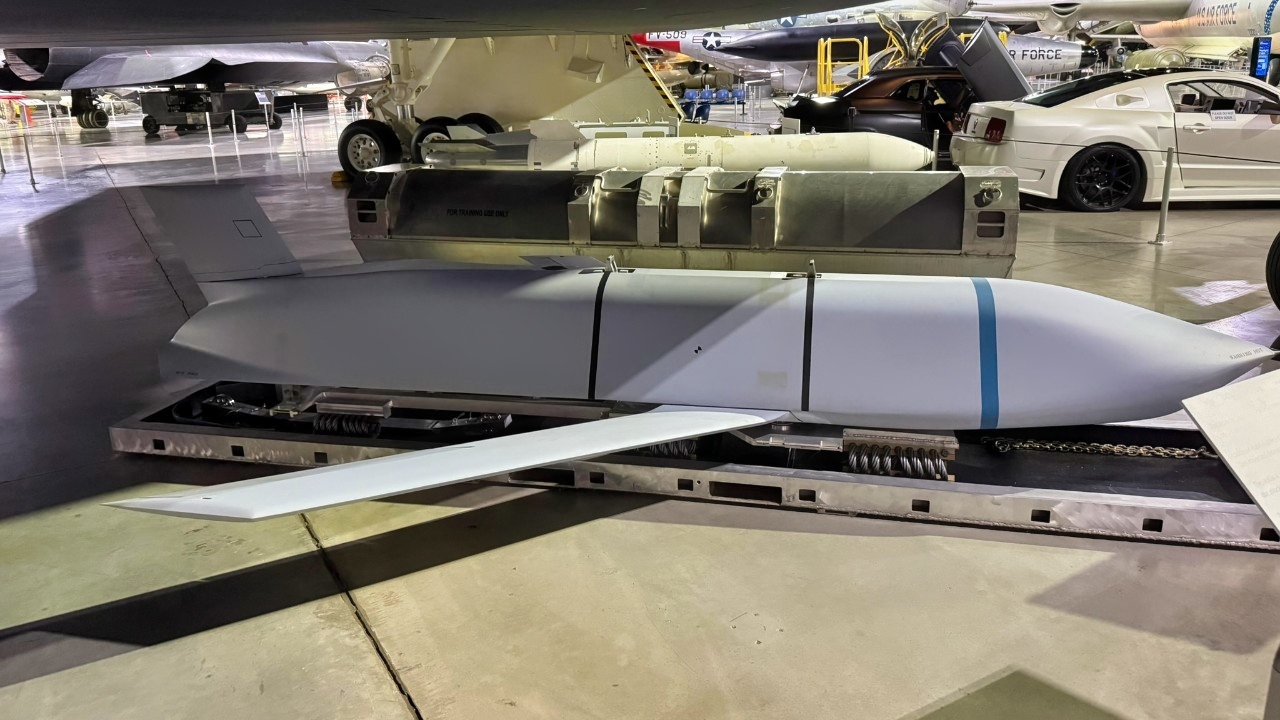
JASSM ‘Stealth’ Cruise Missile. Image Taken by National Security Journal at the U.S. Air Force Museum on 7/19/2025.
More deception. Decoys, emissions discipline, and electronic attack that keep the carrier “off the board” when it counts.
More joint pressure. Subs and bombers that force the PLA to defend wide arcs instead of concentrating on the carrier.
Worry, yes—carriers are not invincible. But the right mix of tactics, tech, and joint fires preserves their relevance. They’re still the most flexible way to project airpower at sea; the job is to employ them smartly, not sentimentally.
The Bottom Line
China’s missile force is built to make a U.S. carrier commander sweat. If Beijing gets clean, timely targeting and can launch big, multi-axis salvos, a strike group could be damaged or mission-killed. That’s the hard edge of the threat—and it’s why the Navy has spent the last decade reinventing how carriers fight.
But the other half of the story is equally real: breaking the kill chain, intercepting a portion of what’s launched, and fighting from ranges and angles that turn a “carrier killer” into an “if you can find me.”
In a shooting war over Taiwan or the South China Sea, survival would hinge less on any single missile or interceptor and more on a dynamic campaign to blind, confuse, and attrit the system that ties China’s missiles to U.S. ships.
Carriers would adapt. That’s what they’ve always done.
About the Author: Harry J. Kazianis
Harry J. Kazianis (@Grecianformula) is Editor-In-Chief and President of National Security Journal. He was the former Senior Director of National Security Affairs at the Center for the National Interest (CFTNI), a foreign policy think tank founded by Richard Nixon based in Washington, DC. Harry has over a decade of experience in think tanks and national security publishing. His ideas have been published in the NY Times, The Washington Post, The Wall Street Journal, CNN, and many other outlets worldwide. He has held positions at CSIS, the Heritage Foundation, the University of Nottingham, and several other institutions related to national security research and studies. He is the former Executive Editor of the National Interest and the Diplomat. He holds a Master’s degree focusing on international affairs from Harvard University.
More Military
The Army’s AbramsX Tank Boils Down to 1 Word
China’s Big Plan To Sink U.S. Navy Aircraft Carriers Comes Down to 4 Words
The New Air Force B-21 Raider Isn’t Just a Stealth Bomber
The F-22 ‘Super’ Stealth Fighter Is Coming
The Real Reason U.S. Air Force Recruiting Numbers Are Surging


