

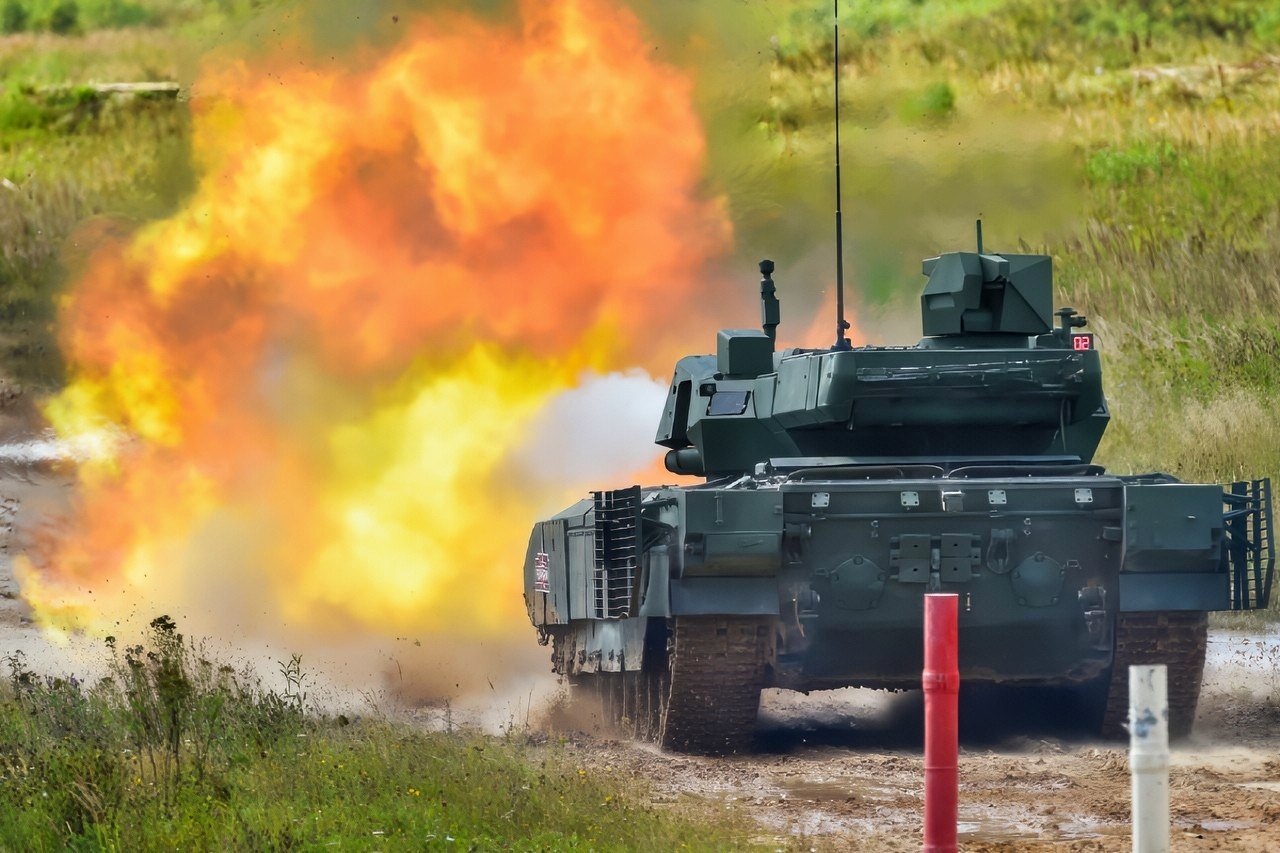
Key Points and Summary – Russia emerges from Ukraine bloodied but adaptive: more drones, EW, glide bombs, and routinized long-range strikes; increased but stressed industrial output; and chronic manpower and leadership gaps.
-Those limits, plus NATO’s expanded geography and U.S. backing, make a full-scale assault improbable.

MiG-31 Russian Air Force. Image Credit: Creative Commons.
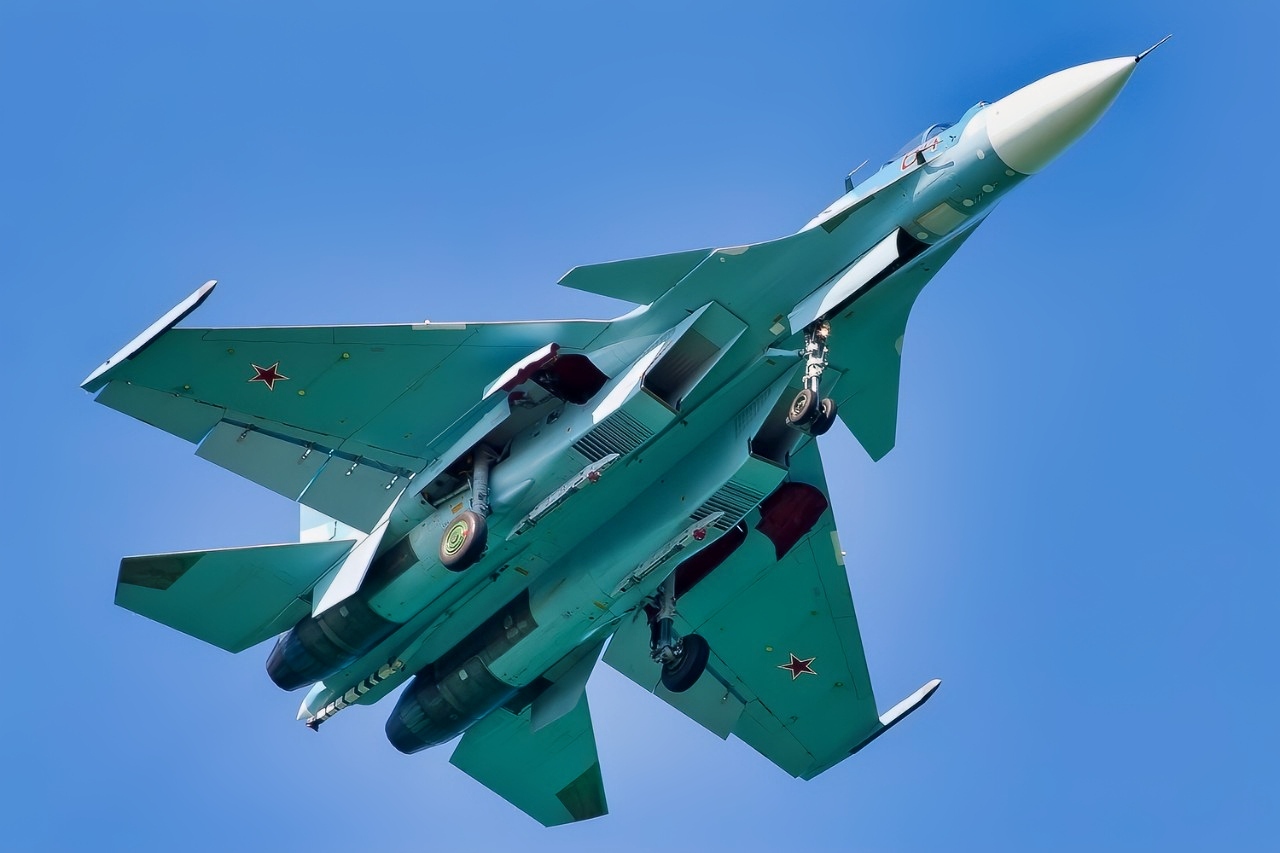
Su-33 Flanker from Russia. Image Credit: Creative Commons.
-Instead, Europe should expect persistent gray-zone pressure—airspace nibbles, probe drones, cable/sanctions games, cyber and legal harassment—designed to expose seams without triggering Article 5.
-Deterrence holds if Europe treats the contest as industrial math: sustain air defense magazines, harden and duplicate critical infrastructure, improve rapid repair at sea and ashore, and keep procurement steady. Pinpricks fade when resilience is routine.
The Russian Military: What Happens After the Ukraine War?
Russia’s performance in Ukraine is complex. Though Moscow’s forces have suffered multiple setbacks on the battlefield—today controlling just under one-fifth of Ukrainian territory—Russian forces have adapted, and Russia remains a potent force, particularly in the context of European militaries.
However, a lackluster performance on the battlefield and a series of constraints pose several significant vulnerabilities.
Russian equipment losses, tracked by the open-source website Oryx, which collates Russian and Ukrainian data based on visually documented confirmations, paint a vivid picture of the extent of the loss.
Russia Struggles to Rebuild Equipment
Much of Russia’s existing stockpiles of vehicles are legacy Soviet kit and far from modern. Much of it has been stored outdoors for decades and, unsurprisingly, has suffered the corrosive effects of exposure to the elements, complicating repair or modernization.
Furthermore, Russia’s defense industrial base is incredibly strained.
Western sanctions on the Russian economy snarl supply chains, particularly for specialized components such as microelectronics and other precision components.
Russia also lacks much of the tooling necessary for building crucial pieces of equipment, such as tank and artillery barrels, which are dependent on specialized Western machinery that Russia has nonetheless been able to secure—even after 2022—from Western companies.
In fact, Russian industrial production of tanks, armored personnel carriers, infantry fighting vehicles, artillery pieces, aircraft, and explosives has actually increased since around the summer of 2023, spurred by the realization that the war in Ukraine would not be quickly won or lost.
Girding for a long fight, Russian industrial output, aided in part by the shadow fleet of unmarked tanker ships and Chinese aid—one analysis called Chinese aid to Russia “immense”—has steadily increased.

Kornet Missile. Image Credit: Creative Commons.
An informative report from the Congressional Research Service, a nonpartisan research service that prepares reports for the US Congress, acknowledged the challenges the Russian military faces. It also highlighted Russian adaptability, arguing that, far from being a spent force, it retains significant offensive potential, albeit an inefficient one.
“The Russian military also has reportedly adjusted its tactics to focus on small unit assaults, upgraded its communication systems and processes, and improved artillery targeting. It has deployed new equipment and tactics to counter UAF operations, including by increasing the use of drones, difficult-to-intercept glide bombs, and electronic warfare,” the report explained.
“Russian logistics also have successfully adapted several times over the course of the conflict in response to improved UAF long-range strike capabilities provided by the United States and other Western allies,” it adds. “Russia also continues its own long-range massed-precision strike campaign targeting key Ukrainian military and infrastructure targets, including much of Ukraine’s energy grid.”
Russia’s ability to mobilize men for its war effort peaked earlier this year. However, the country is still able to lure thousands of men to the front due to a combination of lucrative contracts and sign-up bonuses, coercion, the deployment of reserve forces to Ukraine, and the scouring of Russian prisons and penal colonies for fresh recruits.
One the March Through NATO?
A rash of pronouncements this year and last from the Nordic countries, the Baltics, and other European groups of countries painted a dire picture. Several defense ministry heads asserted that it was not a question of if Russia would attack NATO, but when.
But there is a chasm between what Russian President Vladimir Putin would like to do and what he is able to do. Russia is, in few words, very constrained.
An entire generation of Russian officers has been lost, harming the Russian military’s ability to execute complex maneuvers, including the kind of operations that would be necessary to march on Warsaw, Berlin, or Paris successfully.
Though Russia has demonstrated surprising supply chain and industrial resiliency despite sanctions, generating replacement kit is relatively straightforward. Building a new corps of competent officers, particularly at the non-commissioned level, is significantly more challenging.
In 2025, it remains true that neither the Soviet Union nor today’s Russia has ever attacked a NATO member outright. Coupled with Sweden and Finland’s admittance to the NATO club, both factors are persuasive evidence of the alliance’s strongly deterrent effect. However, that does not preclude a smaller military action along the Russia-NATO border against one or several NATO countries.
Indeed, the recent spate of incursions into NATO airspace by Russian Shahed drones, the penetration of Estonian airspace for nearly 15 minutes by Russian MiG-31s, and the repeated disruption of Baltic undersea cables by ships of unclear flagging are a better preview of Russian capabilities in the future.
Postscript
Russia’s ability to wage war against NATO is constrained by America’s commitment to the alliance, which remains ironclad. Furthermore, despite throwing the entire weight of the Russian war machine (nuclear weapons excepting), the Kremlin’s forces have essentially been fought to a stalemate by Ukraine, a country without a navy and a growing but still token air force.
Would Russia fare better against the combined military might of the 32 NATO member countries? That seems unlikely.
Barring a withdrawal from the alliance by Washington, Russia is exceedingly unlikely to wage full-scale war against NATO for the foreseeable future.
But the country will remain a long-term challenge to European security, even if a Russian army doesn’t sack a European capital.
About the Author: Caleb Larson
Caleb Larson is an American multiformat journalist based in Berlin, Germany. His work covers the intersection of conflict and society, focusing on American foreign policy and European security. He has reported from Germany, Russia, and the United States. Most recently, he covered the war in Ukraine, reporting extensively on the war’s shifting battle lines from Donbas and writing on the war’s civilian and humanitarian toll. Previously, he worked as a Defense Reporter for POLITICO Europe. You can follow his latest work on X.
More Military
Ready, Aim, Fire! The 5 Best Battleships of All Time
The F-35 Stealth Fighter Still Haunts the U.S. Military
Does Russia Even Need a Powerhouse Navy?
The YF-118G Bird of Prey Stealth Fighter Haunts the U.S. Air Force


Jim
October 9, 2025 at 12:07 pm
Russia is ramped up and their military base of production has expanded since the start of the war.
This war continues until Ukraine sues for peace.
Neutrality, equal rights for Russian speakers, limited military, and new elections for whatever is left of Ukraine.
Trump’s desire for Kellogg’s demarcation line with a NATO-ized Ukraine West of the line will not happen.
Strategically, you’d like to see Russia turn off the military spigot and go back to a peace time economy, rather than, by your own actions, drive Russia to continue their military buildup.
Europe needs a new security architecture of indivisible security or mutual security, not taking actions which diminish other’s security.
Europe needs to sit down with Russia and the United States to negotiate such a security system… a hard process to start and bring to a successful conclusion.
Europe is loath to do that, but it’s not in Europe’s interest to get into a military arms race against Russia. Nor is it in the United States interest to get into an arms race with Russia.
The United States will need to help Europe in a post-war environment as its leaders have put themselves in a corner, all the major European leaders (France, Britain, Germany) have deep political problems sitting on top of significant economic problems.
A military buildup as some envision it, will not bring Europe out of their economic crisis.
A determined peace-time economy designed to rebuild their commercial industry is what Europe needs.
Not chasing after its tail attempting to catch up to Russia to reverse the outcome of the present war.
That cow is out the barn door.
Time to realize it and move forward to a better Europe.
It can be done if Europeans put their minds to it.
Swamplaw Yankee
October 9, 2025 at 12:08 pm
The converse is what has to be examined! That is the fallacy of this bogus claim.
How spent is the WEST? The best example is Canada. In 1945 it was 4 in the military world. The Stalin KGB implants in Ottawa reduced Canada to near zero in 2025. -30-
Pingback: Could Trump’s Gaza Deal Unlock Peace in Cyprus—and Even Kurdistan? - National Security Journal