

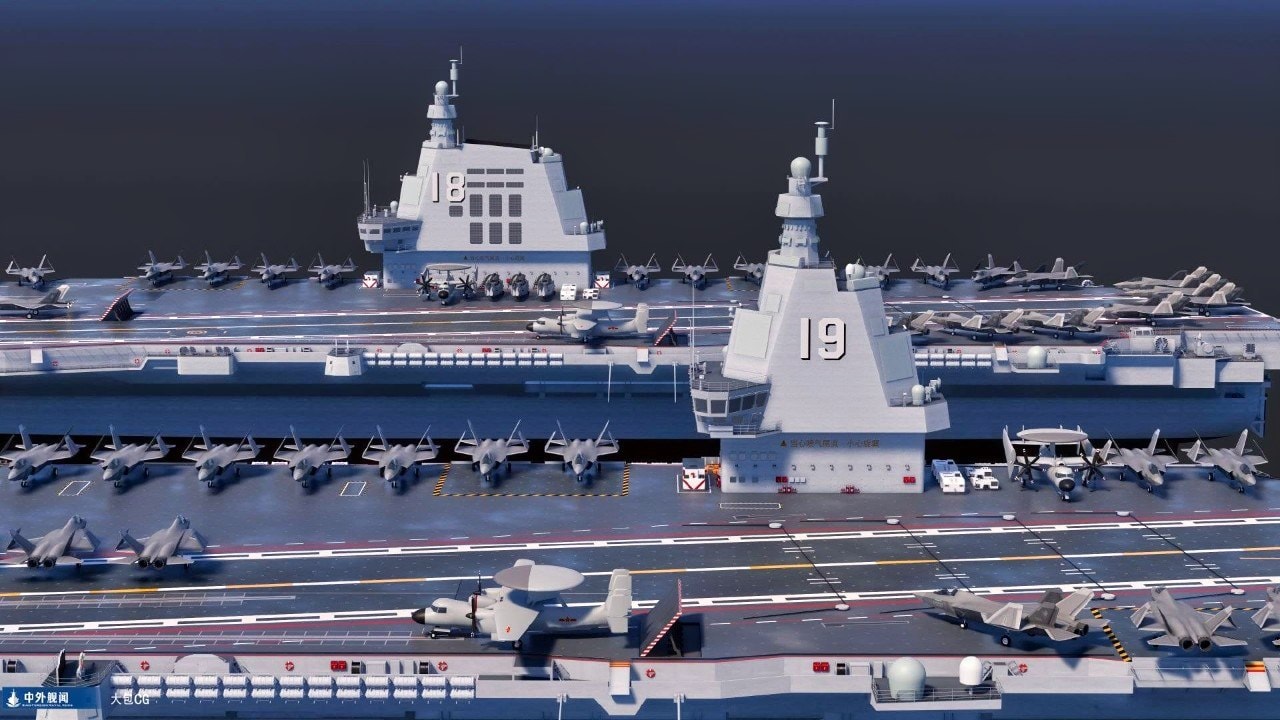
China plans to build six more aircraft carriers over the next ten years to bring its operational fleet to nine, according to U.S. Defense Department reports — a goal that would rival the U.S. Navy’s eleven supercarriers in raw hull count. China’s two main carrier-building shipyards, Jiangnan in Shanghai and Dalian Shipbuilding in Liaoning, have already constructed three carriers (Liaoning, Shandong, and the Type 003 Fujian) and are working on a fourth, with the Type 004 reportedly featuring structural elements consistent with nuclear-reactor compartments. But carrier operations require more than hulls: the People’s Liberation Army Navy has only been operating aircraft carriers since 2012, lacks the trained naval aviators and KJ-600 airborne early warning crews to staff six additional air wings simultaneously, and has only limited overseas naval access points beyond Djibouti to sustain extended global carrier operations.
China and Those Aircraft Carriers: What Does Beijing Want?
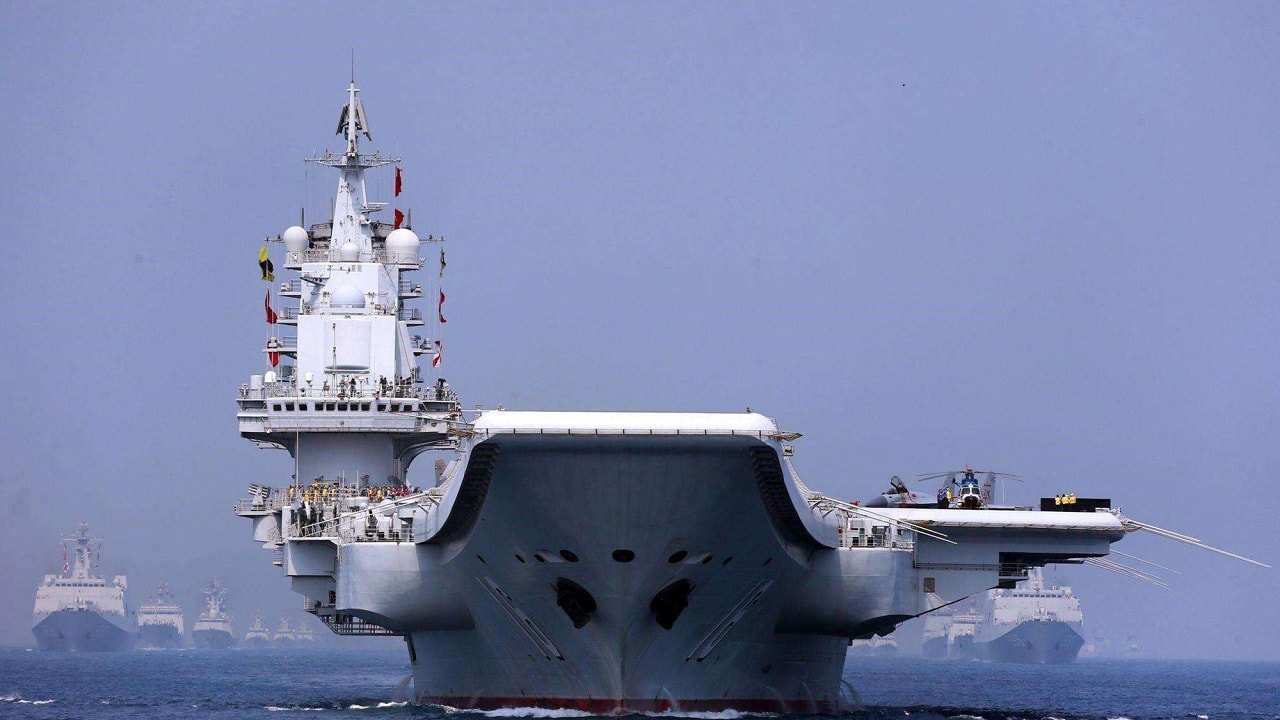
China Aircraft Carrier on the High Seas. Image Credit: Creative Commons.
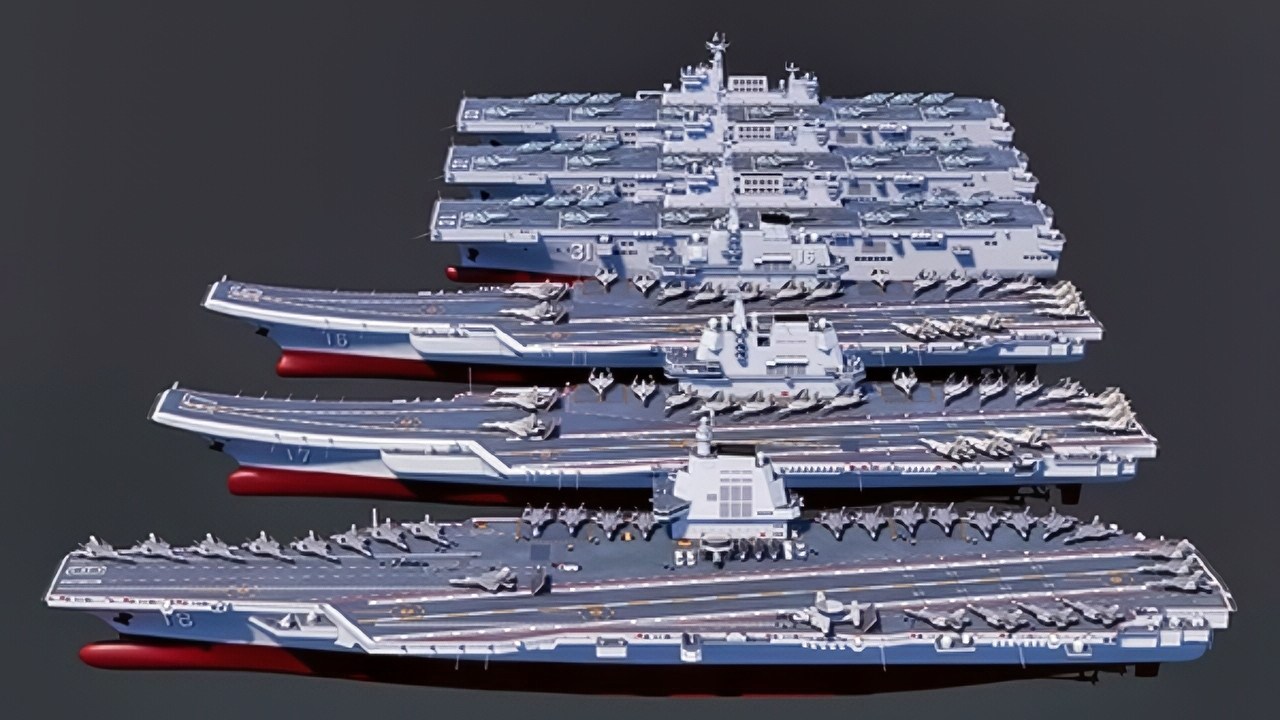
China Aircraft Carriers In Focus. Image Credit: X Screenshot.

China New Carrier Type 003 CCTV Screencap Photo.
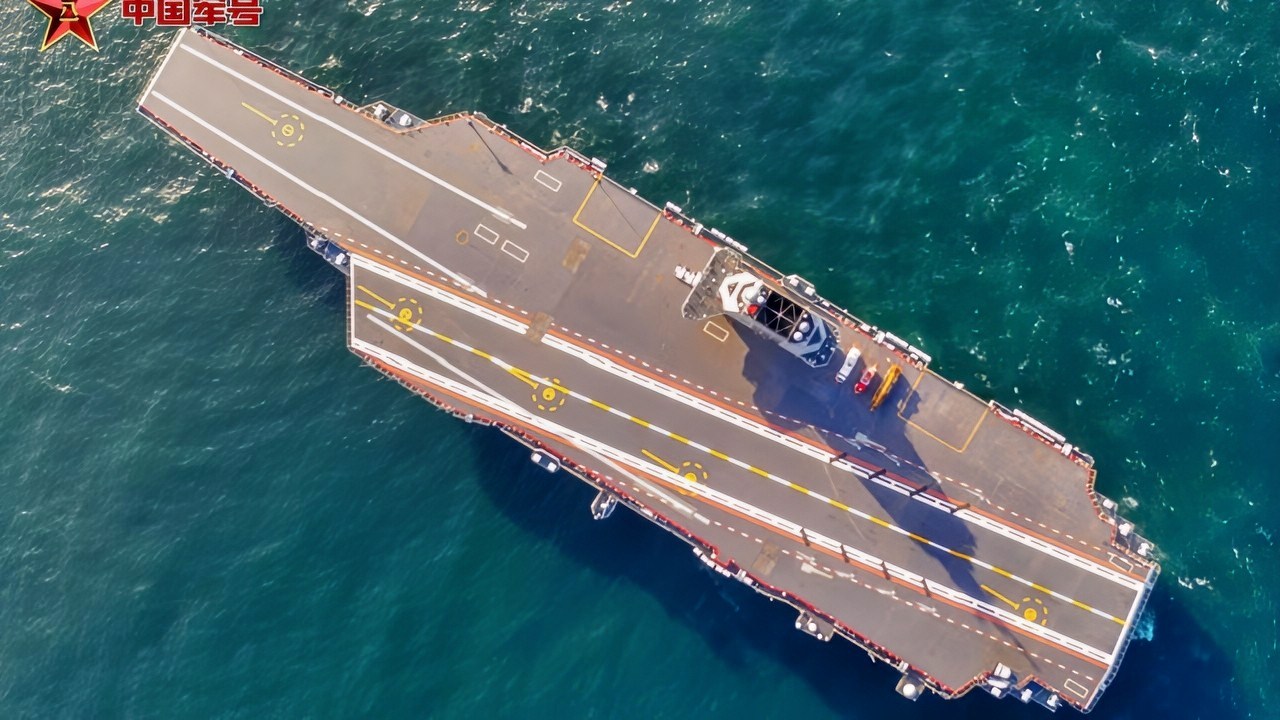
CV-18 Fujian aircraft carrier from China. Image Credit: Creative Commons.
China plans to build six more aircraft carriers in the next decade, bringing its fleet to nine. It has the world’s largest shipyards — but carriers are useless without trained pilots, working nuclear reactors, and ports to operate from.
China Has Big Aircraft Carrier Dreams.
The buildup and modernization of China’s navy are undeniable facts.
While the PLAN is primarily concerned with protecting its own territorial waters, it has gradually become more ambitious in its goals. This can be most clearly illustrated with its planned aircraft carrier fleet.
According to U.S. reports, China plans to acquire six aircraft carriers over the next 10 years, bringing its total fleet to 9. This ambitious goal suggests that China intends to project its naval power well beyond its first island chain.
But can China really build six carriers in ten years, and more importantly, is the PLAN ready to sustain them?
Nine Carriers for China: Can They Do It?
From an industrial standpoint, China is better positioned to build its carrier fleet than any country other than the United States. Its commercial and military shipbuilding base is the largest in the world, and over the last 15 years, Beijing has demonstrated an extraordinary ability to rapidly scale naval production.
Its two main shipyards, Jiangnan Shipyard in Shanghai and Dalian Shipbuilding Industry Company in Liaoning Province, have already constructed two carriers completely from scratch. Jiangnan completed the Type 003 carrier Fujian using modern modular construction techniques, while Dalian refurbished the former Soviet carrier Liaoning and built the indigenous Shandong.
Based on available satellite imagery, Dalian is already working on a fourth carrier, commonly known as the Type 004. Taken together, these indicators show that China is capable of building large, complex warship hulls in parallel.
Purely in terms of steel, docks, cranes, and skilled welders, therefore, building six additional hulls is feasible.
A production rhythm of one carrier every eighteen to twenty-four months is ambitious to be sure, but not impossible, especially when working with similar hull designs. However, hull construction is only one part of carrier development, and it is here where China may encounter some of its biggest roadblocks.
The Difficulties of Manufacturing Nuclear Carriers
Propulsion is one of the biggest hurdles to China’s carrier ambitions. Currently, all of the PLAN’s carriers rely on conventional power plants for their propulsion, including the Type 003 Fujian. Constructing several more conventionally powered carriers of a similar or slightly larger size would pose some challenges, but it would not be too difficult for the CCP to pull off, considering its industrial prowess.
The complication arises from credible evidence that China intends at least one, if not all of its future carriers, to be nuclear-powered.
The alleged Type 004 carrier shows structural features that many suspect to be nuclear reactor compartments, and the Chinese industry has reportedly been testing land-based naval reactor prototypes.
Nuclear propulsion offers a wide range of advantages, including vastly extended endurance, higher sustained speeds, and reduced dependence on vulnerable replenishment ships. However, it also introduces an entirely new set of technical challenges.
China has long operated nuclear submarines, but surface nuclear propulsion is different in scale, complexity, and safety demands. Designing a reactor that can operate reliably for decades and be maintained by a new cadre of nuclear-qualified sailors in such a short amount of time would require cutting some very dangerous corners.
It is plausible that China can field one nuclear carrier by the early to mid-2030s, but producing several nuclear carriers within a single decade would be extraordinarily ambitious even for China.
Building Six Separate Air Wings Takes Time
Even if a nuclear carrier is built, carrier aviation remains the most serious bottleneck in China’s plan. Historically, mastering carrier aviation has proven harder than building the ships themselves. The PLAN has only been operating carriers since 2012, and for most of that period relied on ski-jump decks that restrict aircraft payloads and sortie rates.
The transition to catapult operations aboard Fujian marks a qualitative leap, allowing the launch of heavier fighters, fixed-wing airborne early warning aircraft, and unmanned systems. However, the hardware has been introduced only in the last two years.
Currently, the J-15 remains the staple of China’s naval aviation. Derived from the Soviet Su-27, this heavyweight aircraft has undergone several improvements and is currently one of the most advanced fourth-generation aircraft in China.
The J-35, intended to be a stealth carrier fighter analogous to the U.S. Navy’s F-35C, is still early in its service life, and its integration into carrier operations remains ongoing.
The KJ-600 airborne early warning aircraft is particularly important, as it enables long-range situational awareness and complex air operations, but it is also a new capability for the PLAN. Each of these aircraft requires years of testing, training, and doctrinal refinement before they can support high-tempo combat operations.
Other Logistical Matters
Just as important as its air wing, an aircraft carrier must have a dedicated strike group of naval vessels to escort and protect it at sea.
China has made impressive progress here as well. It now fields large numbers of modern destroyers and frigates, including the Type 055 cruiser-class destroyer, which provides air defense, command facilities, and strike capabilities comparable to those of Western counterparts.
China has also invested heavily in replenishment vessels, acknowledging that logistical support is essential for extended deployments. Even so, sustaining six additional carrier strike groups simultaneously would place a heavy burden on escort availability and maintenance cycles.
In practice, navies are rarely able to keep more than a third to half of their capital ships deployed at any one time, due to training and repair requirements.
Unlike the United States, China lacks a dense network of overseas allies willing to host carrier groups.
Its current overseas access points are limited, with Djibouti among its few ports. As long as most Chinese carriers remain conventionally powered, they will depend heavily on oilers and supply ships, which are both scarce and vulnerable in high-intensity conflict.
Without wider basing access or a predominantly nuclear carrier fleet, sustained global carrier operations will remain constrained, no matter how many hulls China builds.
About the Author: Isaac Seitz
Isaac Seitz, a Defense Columnist, graduated from Patrick Henry College’s Strategic Intelligence and National Security program. He has also studied Russian at Middlebury Language Schools and has worked as an intelligence Analyst in the private sector.


