

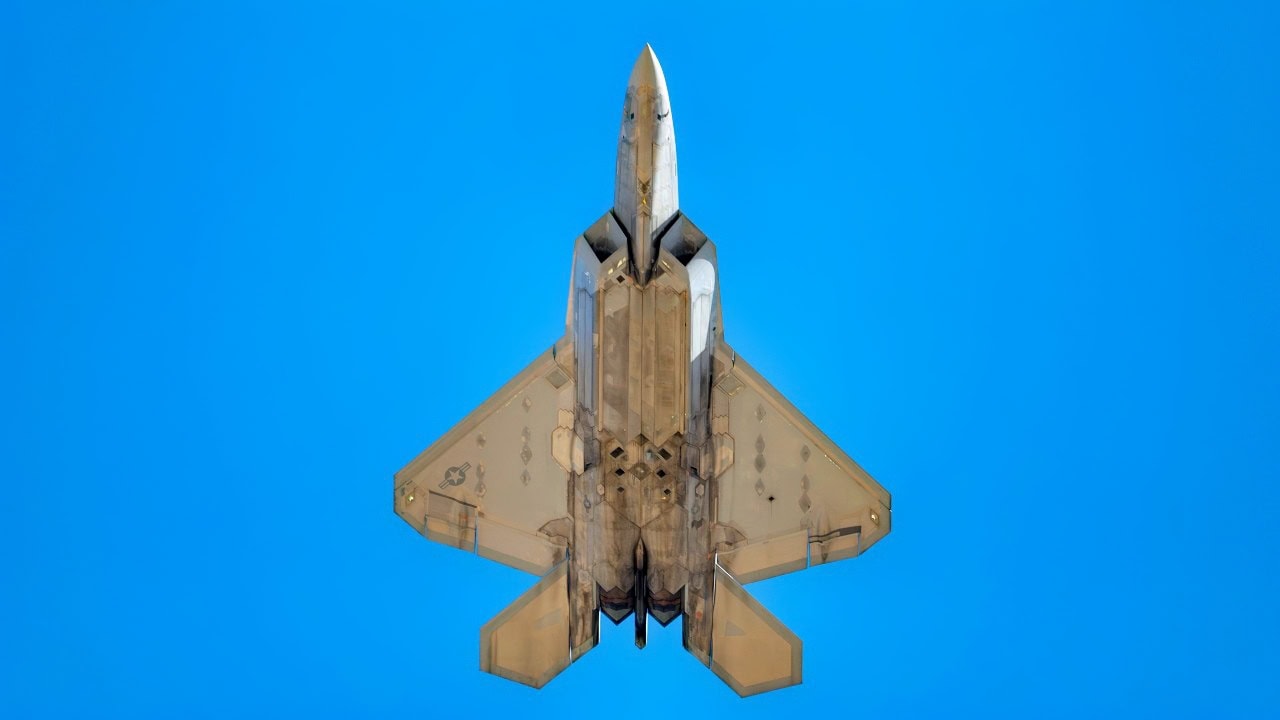
Key Points and Summary – In a one-on-one duel, the F-22 Raptor holds a decisive advantage over China’s J-20.
-The F-22 is a pure air-superiority dogfighter with superior all-aspect stealth and physics-defying agility from thrust vectoring.

J-20 Stealth Fighter in China. Image Credit: PLAAF.
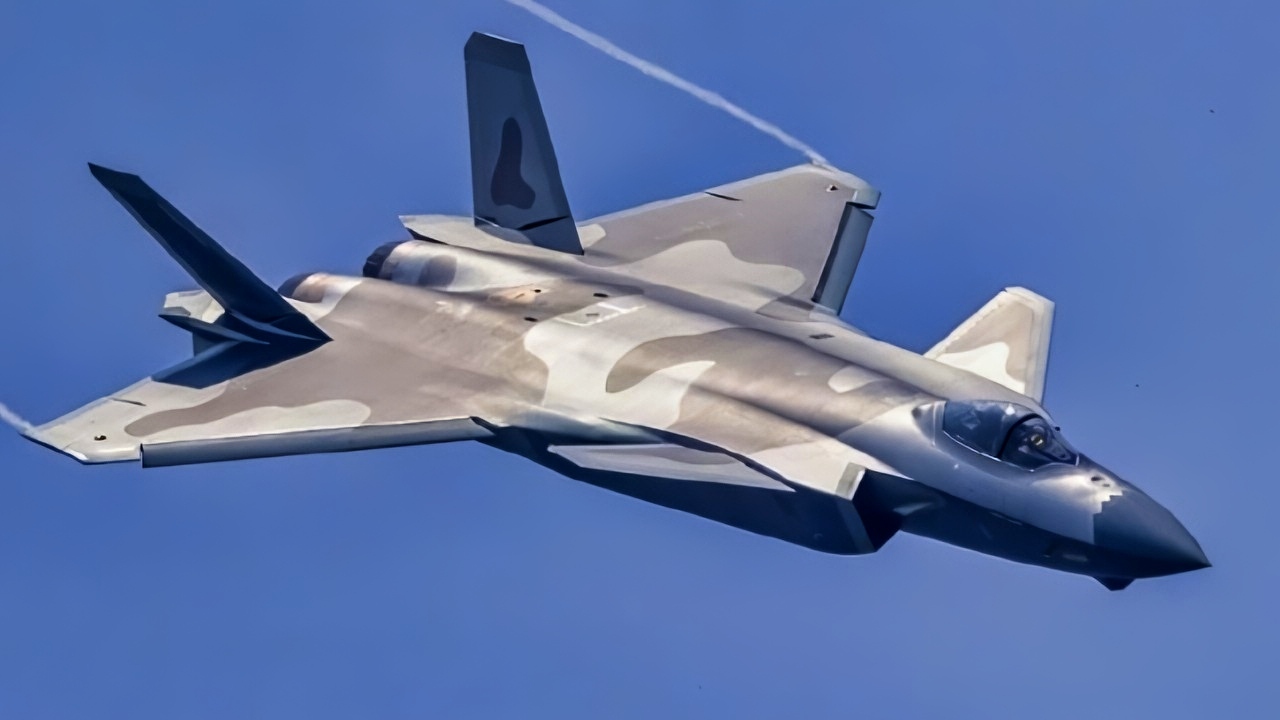
China J-20A Fighter in the Sky. Image Credit: Creative Commons.
-The J-20 is a long-range interceptor built to hunt tankers, and its design has stealth compromises (canards) that are fatal in a dogfight.
-Most importantly, the F-22 is flown by a pilot with 20+ years of institutional training and an autonomous warrior culture, while the J-20 pilot is an inexperienced rookie in comparison.
-The F-22 wins by being a better plane flown by a better pilot.
F-22 vs. J-20 Fighter: Who Wins a Stealth Duel?
Simple question: In a one-on-one duel, who would win between America’s F-22 Raptor and China’s J-20 Mighty Dragon?
It is the ultimate hypothetical matchup, a clash between the reigning king of the skies and the ambitious, rapidly ascending challenger.
The J-20 is a symbol of China’s staggering technological leap, a menacing, stealthy airframe that looks every bit the part of a fifth-generation killer.
On paper, it is a peer competitor, a dragon that has finally arrived to challenge the eagle.
But let’s be very clear: In the brutal, unforgiving calculus of a one-on-one fight to the death, this is a contest the F-22 was born to win.
The J-20 is a powerful and dangerous weapon, but it is designed for a different kind of war. The Raptor is a no-compromise thoroughbred, a machine designed with a singular, obsessive purpose: to hunt and kill other fighters.
This fight would likely be over before the Chinese pilot even knew he was in it.
And even if he survived the first unseen salvo, he would find himself trapped in a close-range “merge” with a superior machine flown by a vastly superior pilot. The J-20 is a dangerous “jack-of-all-trades” interceptor, but the F-22 is a master of one. And in this fight, that one, lethal specialty is all that matters.
A Clash of Purpose: The Brawler vs. The Sniper
To understand why the F-22 holds the decisive edge, you first have to understand the vastly different philosophies that created these two aircraft. They were not designed to do the same job.
The F-22 Raptor is a pure-blooded killer. It was conceived at the height of the Cold War with one mission: to fly deep into Soviet territory, sweep the skies of hundreds of advanced enemy fighters like the Su-27 Flanker, and guarantee total American air dominance.
Everything about its design—its unparalleled stealth, its extreme agility, and its powerful sensors—was optimized for this single, brutal task. There were no compromises. It is, by its very DNA, an air superiority fighter.
The J-20 Mighty Dragon, by contrast, is a long-range interceptor. It was designed to solve a different strategic problem. China’s military planners studied the American way of war and identified our greatest strength—and our greatest weakness: logistics. American airpower in the Pacific depends on a small, fragile, and essential fleet of support aircraft.
We rely on lumbering, non-stealthy tankers (like the KC-135 and KC-46) to refuel our shorter-range fighters, and on “AWACS” (Airborne Warning and Control System) planes to act as the all-seeing eyes of the fleet.
In my opinion, the J-20 was built to kill those. Its primary mission is to use its stealth and long-range missiles to slip past our fighter screens and gut our support network. It is a sniper, designed to take out high-value, low-maneuverability targets from a distance. It was never intended to get into a swirling, close-range knife-fight with a dedicated dogfighter like the F-22. In this one-on-one scenario, the J-20 is a specialist being dragged into a fight that its designers never intended it to win.
The First Look: A Battle of Stealth and Physics
In any modern air battle, the fight is won or lost in the first few seconds. The victor is the one who achieves “first look, first shot, first kill.” And this is where the J-20’s design compromises become a fatal, unfixable flaw.
The F-22 Raptor possesses true “all-aspect” stealth. Its shape, angles, and advanced skin are meticulously engineered to make it a “ghost in the machine” from every direction—front, sides, rear, and below. Its radar cross-section is reportedly the size of a steel marble. This means it can approach or be tracked by a target from any angle and remain invisible.
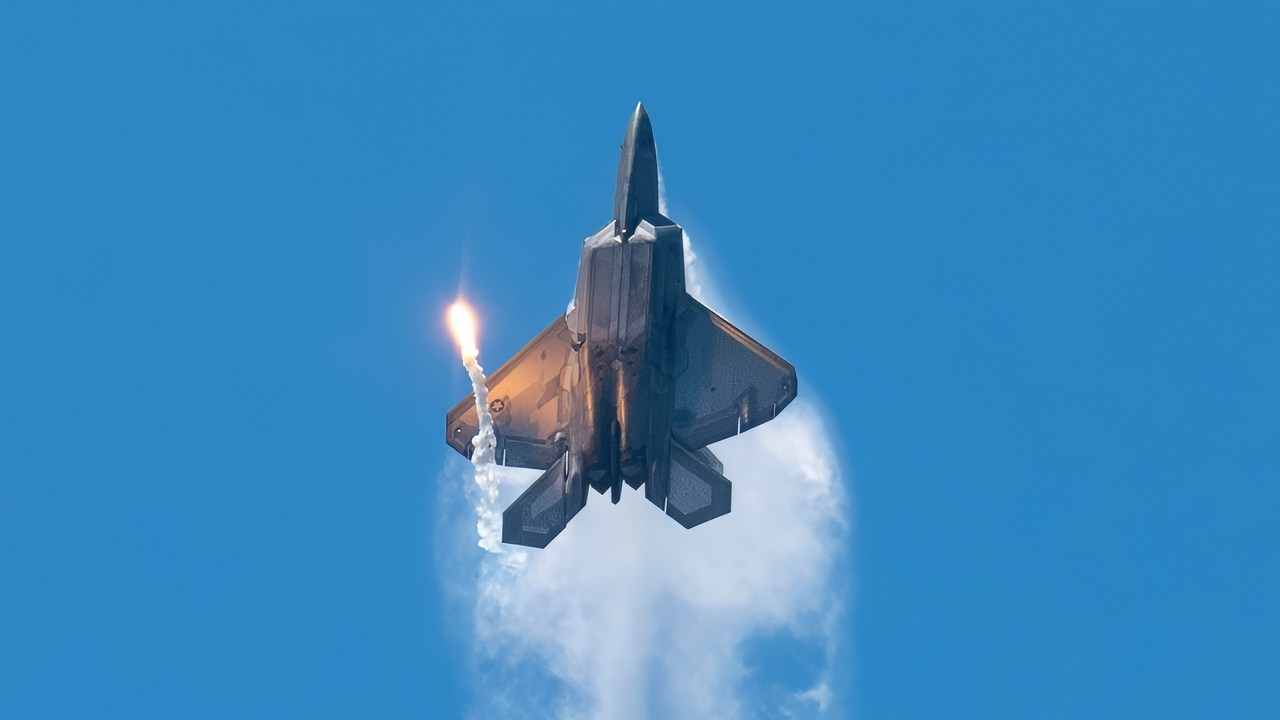
An F-22 Raptor assigned to the 1st Fighter Wing F-22 Demo Team, performs an aerial routine during the Wings Over Wayne Air Show at Seymour Johnson Air Force Base, North Carolina, May 20, 2023. Wings Over Wayne provides an opportunity for North Carolina residents and visitors from around the world to see how SJAFB builds to the future of airpower and displays a history of aircraft innovation and capabilities. (U.S. Air Force photo by Senior Airman Kevin Holloway)
The J-20 cannot. While it has excellent “frontal” stealth, its design includes two features that are a nightmare for low-observability: canards and conventional engine nozzles. Those small wings near the cockpit —the canards —are great for agility in a non-stealthy jet, but they are notorious for creating radar “hotspots” that reflect signals, making the plane visible. In a swirling, high-G dogfight, as the J-20 turns and banks, it will inevitably expose these flawed surfaces to the F-22’s radar.
The F-22, on the other hand, has no bad angles. The Raptor’s pilot will almost certainly see the J-20 first. He will have time to position himself, plot a firing solution, and launch his AIM-120 AMRAAM missiles long before the Chinese pilot even knows he is in danger. In all likelihood, the fight is over right here. The J-20 dies without ever seeing its attacker.
The “Merge”: Why Agility Is Still King
But let’s wargame this out. Let’s say, by some miracle, the J-20 survives the beyond-visual-range (BVR) onslaught and the two jets “merge” into a visual-range dogfight. This is the last place the Chinese pilot wants to be. This is where the F-22’s second unassailable advantage comes into play: kinematics.
The F-22 is the most agile large fighter ever built. Its secret weapon is two-dimensional thrust vectoring. In plain English, the nozzles on its two powerful engines can pivot up and down, allowing the pilot to perform maneuvers that seem to defy the laws of physics.
The Raptor can point its nose (and its weapons) in one direction while the aircraft itself is still moving in another. It can “post-stall,” remaining in complete control when any other jet would have fallen out of the sky.
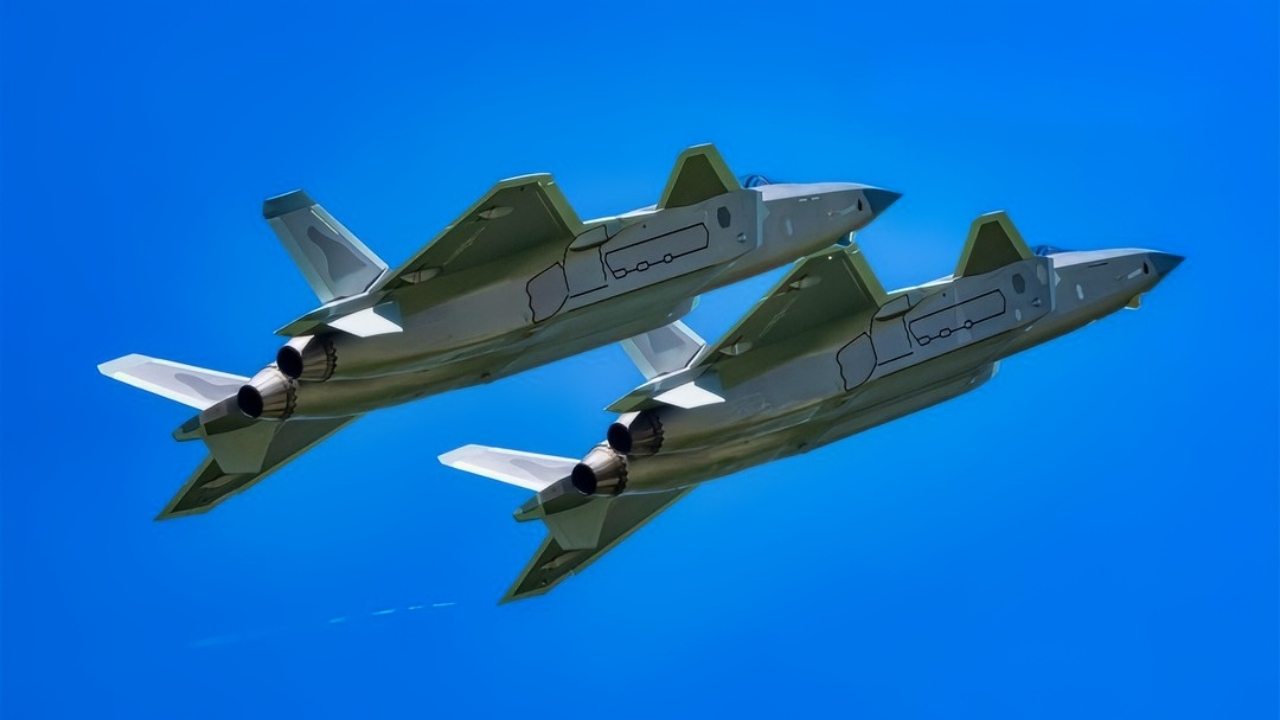
J-20 Fighter In Formation PLAAF Photo
The J-20 has no answer to this. It is a large, heavy aircraft, and its operational models lack the thrust-vectoring engines of the F-22. In a close-in turning fight, it is a bus, and the F-22 is a sports car. The Raptor will get on the J-20’s tail, lock on with its AIM-9X Sidewinder missile, or line up a shot with its internal 20mm cannon, and the fight will end, this time with brutal, close-range finality. The J-20 was built to sprint in a straight line; the F-22 was built to dance.
The Final Trump Card: The Human in the Cockpit
Now, let’s assume the impossible. Let’s assume the two planes are perfectly equal. The same speed, the same stealth, the same agility. Even in this fantasy scenario, the F-22 still wins, and it’s not even close. Why? Because the most decisive weapon in this fight is not the airframe. It’s the pilot.
The American F-22 pilot is the 1% of the 1%. They are the product of a decades-long ecosystem of brutal, realistic training and a warrior culture that is unmatched anywhere in the world. They are trained from day one in a philosophy of aggressiveness, autonomy, and “debrief-to-win.”
An American pilot flies in “Red Flag” exercises —massive, chaotic simulated battles in which they are relentlessly hunted by adversaries who know all their tricks. When they land, they go into a debriefing where their peers mercilessly tear apart their performance, finding every mistake. They are forged in this fire.
More importantly, they have nearly 25 years of institutional and operational experience in using a fifth-generation fighter. They know its limits, its tricks, and its capabilities in a way that no one else on Earth does.
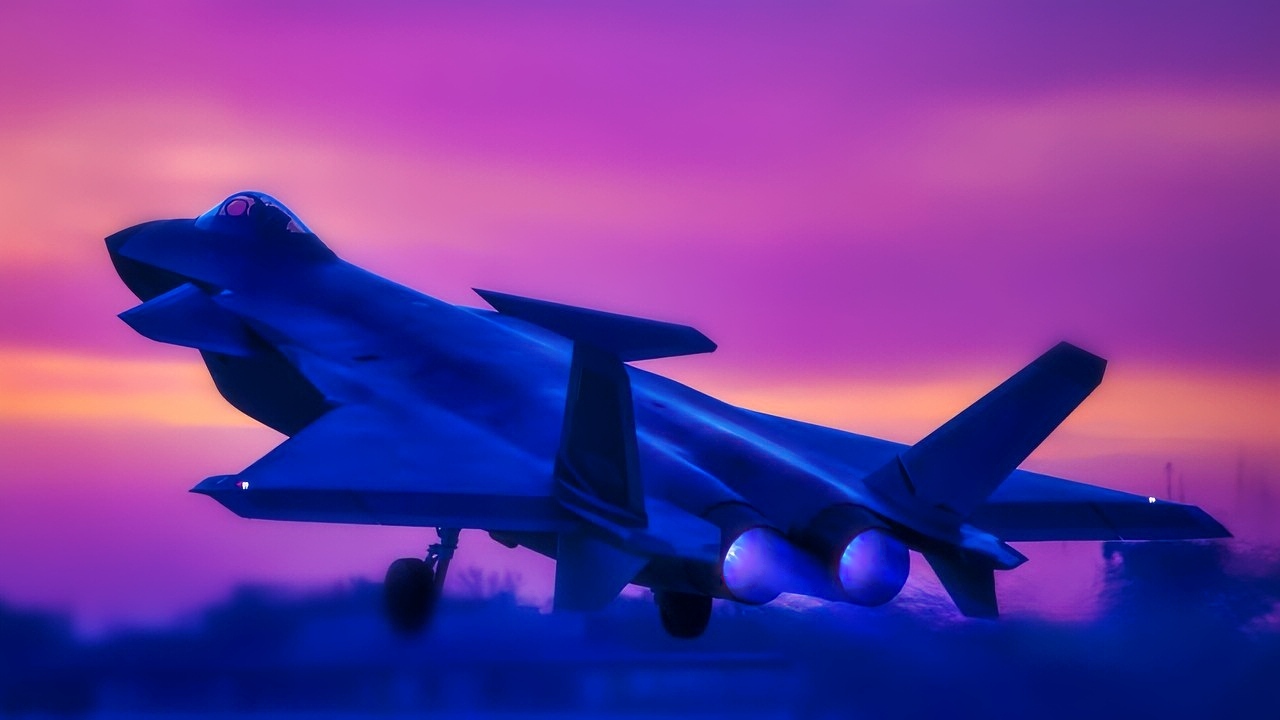
J-20 Fighter from China. Image Credit: PLAAF.
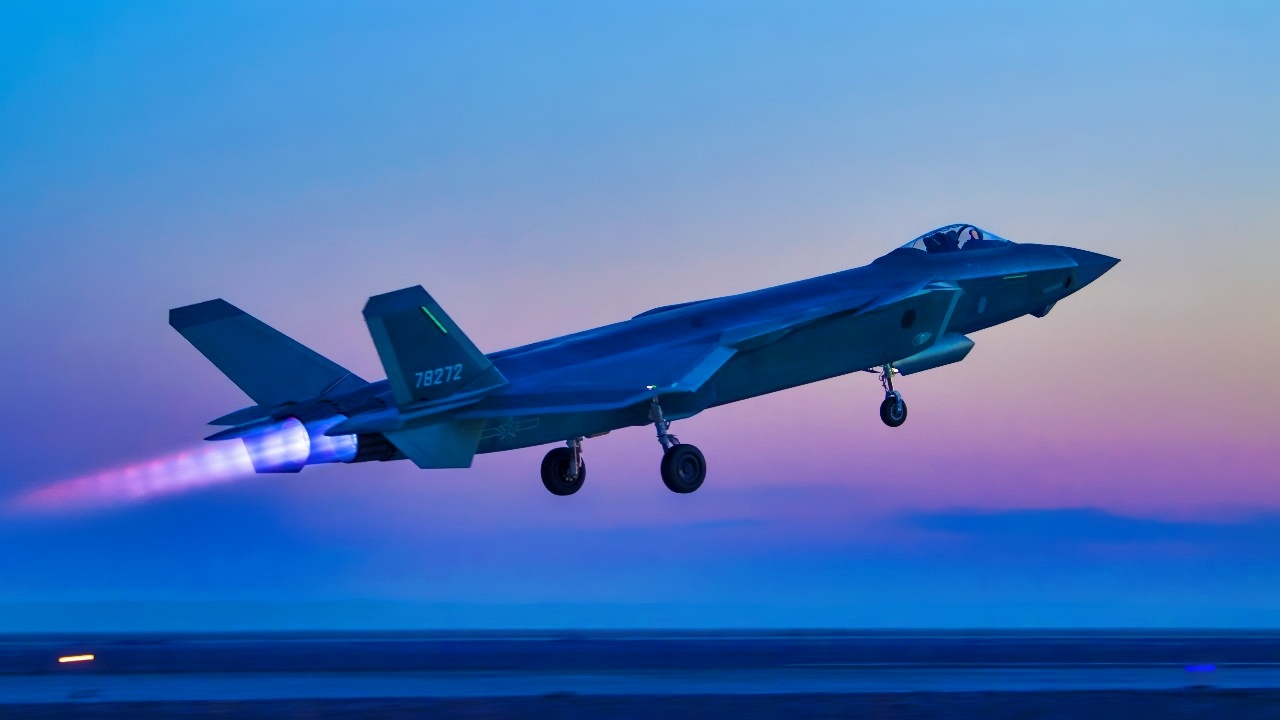
China J-20 Amazing Colors. Image Credit: PLAAF.
Now, consider the Chinese pilot. They have zero combat experience. Their training doctrine is notoriously rigid, according to open-source reports, a relic of Soviet-style “ground-controlled intercept,” in which pilots are often micromanaged by a controller on the ground. They are taught to fly a script, not to think creatively in the chaos of a 3D merge. They have no institutional knowledge of fifth-generation warfare. They are, in this fight, a rookie.
In the split-second, high-G, adrenaline-soaked chaos of a one-on-one dogfight, the fight will be won by the pilot who can think and adapt faster. The F-22 pilot will be acting and reacting, already two steps ahead. The J-20 pilot will be trying to remember his training. This isn’t a skill gap; it’s a chasm in experience and philosophy.
In 4 Words: F-22 Has the Edge
This is not to say the J-20 is a paper tiger. It is not. It is a profoundly dangerous weapon, and it represents a grave threat to the American way of war. In a large-scale conflict, a fleet of J-20s could very well succeed in its primary mission: slipping past our defenses and killing our tankers, dooming our shorter-range F-35s and F-18s to fall from the sky, out of gas.
But that is a different war. In this specific, hypothetical duel—the pure, one-on-one contest for air supremacy—the J-20 is simply, and completely, outclassed. The F-22 Raptor is a total package: a superior stealth platform, a more agile kinematic brawler, and, most importantly, a tool wielded by a pilot who has been trained from day one to be the most lethal warrior in the sky.
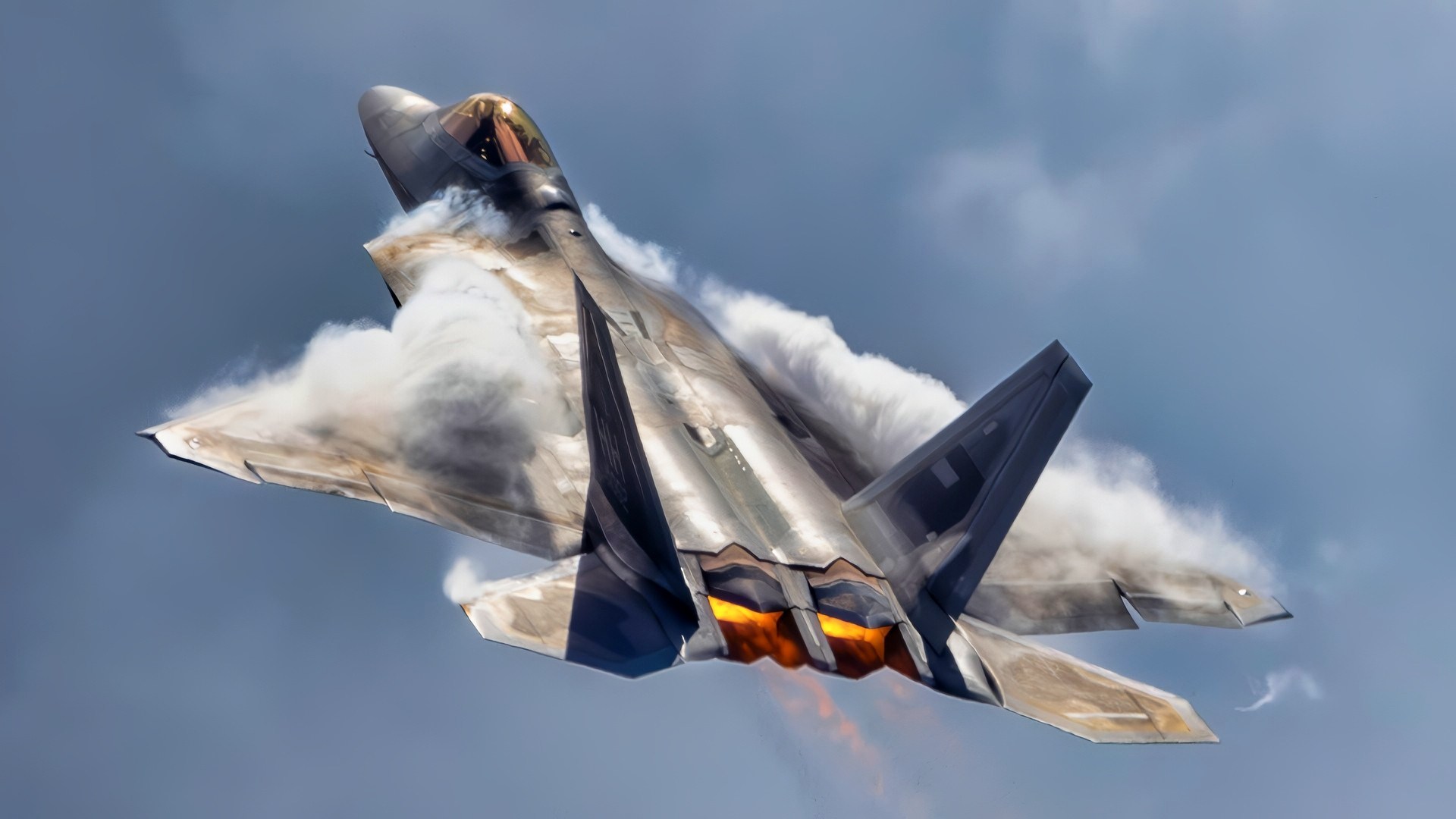
An F-22 Raptor performs an aerial demonstration at Marine Corps Air Station Kaneohe Bay, Hawaii, Aug. 8, 2025. The rapid change in angle of attack causes visible vapor to form around the aircraft, giving spectators a clear view of the jet’s aerodynamic performance. This demonstration highlights the unique thrust-vectoring capabilities of the F-22, allowing it to achieve extreme agility unmatched by other fighter aircraft. (U.S. Air Force photo by Staff Sgt. Lauren Cobin)
The Raptor is still the king.
About the Author: Harry J. Kazianis
Harry J. Kazianis (@Grecianformula) is Editor-In-Chief and President of National Security Journal. He was the former Senior Director of National Security Affairs at the Center for the National Interest (CFTNI), a foreign policy think tank founded by Richard Nixon based in Washington, DC. Harry has over a decade of experience in think tanks and national security publishing. His ideas have been published in the NY Times, The Washington Post, The Wall Street Journal, CNN, and many other outlets worldwide. He has held positions at CSIS, the Heritage Foundation, the University of Nottingham, and several other institutions related to national security research and studies. He is the former Executive Editor of the National Interest and the Diplomat. He holds a Master’s degree focusing on international affairs from Harvard University.
More Military
Europe and Canada Are Finally Saying No to the F-35 Stealth Fighter
The Exact Day Navy Battleships Became Obsolete Is Clear
The X-44 Manta Has a Message for Every Air Force on Earth


bis-biss
November 9, 2025 at 7:36 am
In Today’s world, getting to f-22 from the f-15C is sort of like going from win 3.11 to win 95.
Though, the two-seater F-15EX is now like win 10 to win 11.