

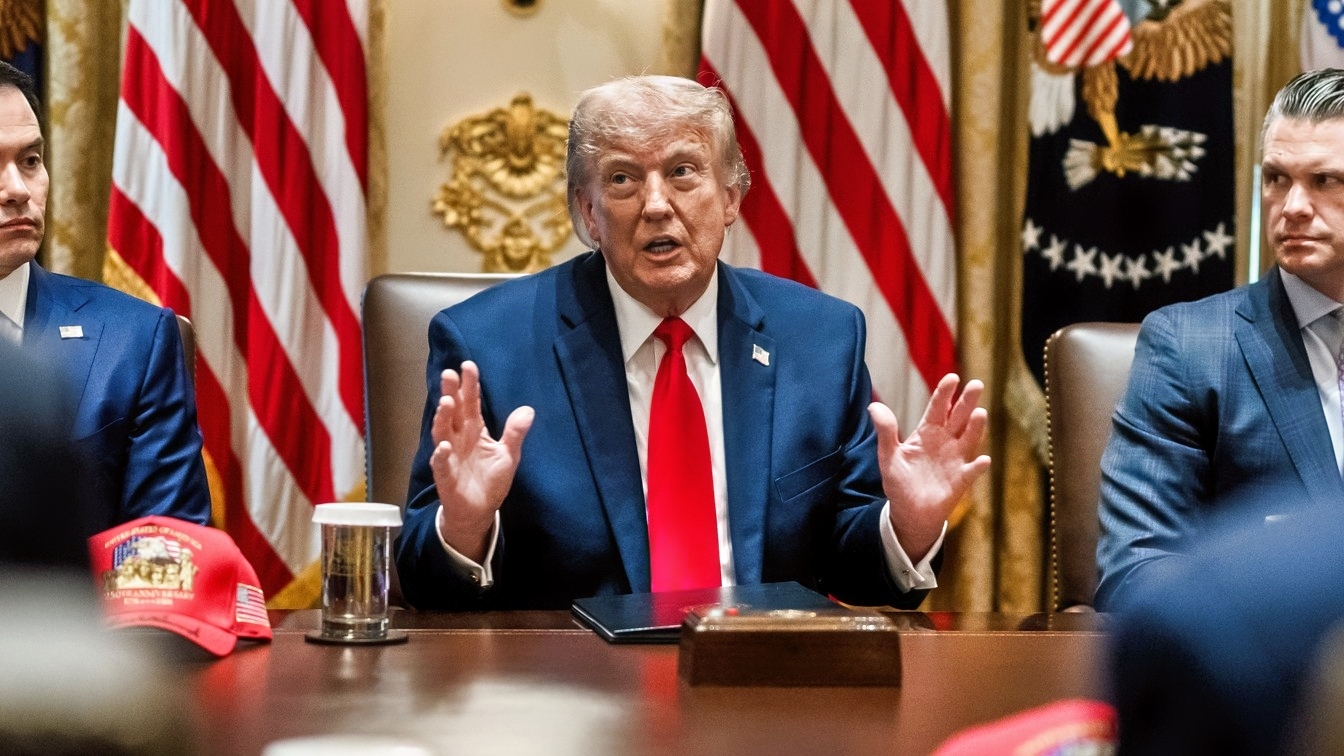
President Trump faces a potentially serious political problem ahead of November’s midterm elections: the voters who elected him in 2024 appear significantly less enthusiastic about voting in the upcoming election.
New Reuters/Ipsos polling published October 8 found a substantial enthusiasm gap between supporters of Trump and former Vice President Kamala Harris.
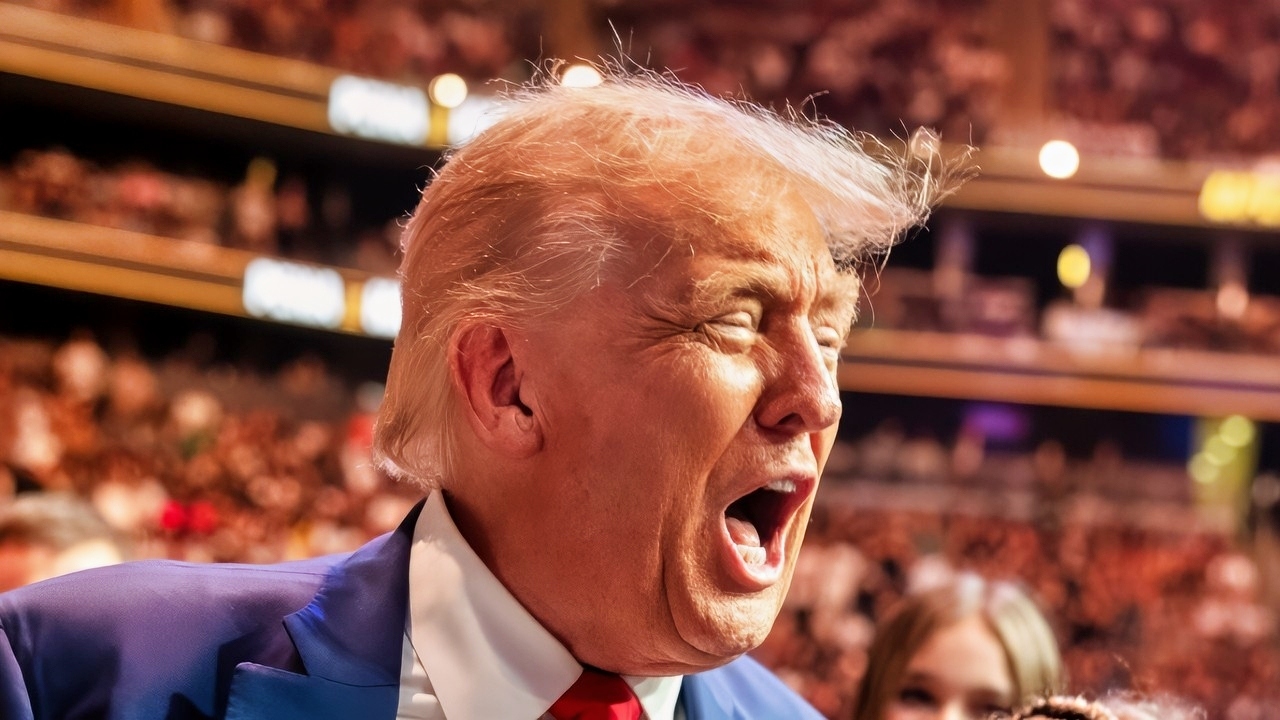
President Donald Trump congratulates Kayla Harrison after her victory during UFC 316 at the Prudential Center in Newark, NJ., June 7, 2025. (Official White House Photo by Daniel Torok)
Among 2024 voters, 48 percent of Harris supporters say they’re very enthusiastic about voting November 3.
But just 30 percent of Trump supporters say the same.
That’s an 18-percentage-point advantage for Democrats’ 2024 coalition.
And with control of the House and Senate at stake, voter enthusiasm could have real consequences.
So Trump’s problem may run deeper than persuading voters to vote Republican; it may be convincing his existing supporters to vote at all.
Inverse Enthusiasm
Enthusiasm is only one relevant measurement here.
Reuters/Ipsos also asked respondents how likely they are to vote.
The results showed that 76 percent of Harris voters said they’re almost certain to vote, while only 63 percent of Trump voters said the same.
That’s another 13-point gap.

AOC. Image Credit: Creative Commons.
This matters because the midterm elections generally attract lower turnout than presidential elections. Voters who participate in presidential elections don’t necessarily return two years later.
Republicans therefore face the potential problem of having less motivated supporters.
The polling also found that 13 percent of Trump voters remain undecided about their congressional vote, while only seven percent of Harris voters say the same.
This suggests the Democratic coalition may currently be more politically engaged and more settled in its preference. Then again, a stated intention to vote isn’t the same as actually voting; it’s just a predictive metric.
The Trump Effect
One of the more revealing findings shows that many Democratic voters derive their enthusiasm from topposingTrump.
Among respondents who expressed enthusiasm, 62 percent said they were motivated by opposition to Trump and 36 percent by support for him.
This suggests, unsurprisingly, that the midterms are becoming a referendum on the president.
Opposition voters appear more energized than Trump supporters.
AOC. Image Credit: YouTube Screenshot.
Historically, the midterms tend to favor the opposition party because its voters are motivated to check the incumbent president.
And Trump’s polarizing political style may intensify that dynamic. For Democrats, disapproval of Trump still provides a stirring political motivation.
Losing Ground With Men
One of the poll’s most important findings concerns male voters.
Men were crucial to Trump’s 2024 electoral coalition. According to Pew Research Center analysis cited by Reuters, Trump won male voters by approximately 12 percentage points in 2024.
But Reuters/Ipsos now finds men favor Democratic congressional candidates.
In hypothetical congressional matchups, 43 percent of men prefer Democrats while 39 percent prefer Republicans.
That’s a four-point Democratic advantage.
Reuters meanwhile reports the widest Democratic lead among men during Trump’s second term.
Men generally favored Republicans throughout 2025, and since August 2026, they’ve mostly favored Democrats.
This shift could be consequential because Trump’s electoral success depends, in part, on outperforming previous Republican candidates among male voters.
If Democrats can reduce or reverse the advantage among male voters, Republicans will face a difficult national voting environment.
Sinking Approval
The poll finds that Trump’s overall job approval is just 32 percent.
This matches the previous record low.
Concerningly for Trump, Reuters reports that approval has fallen across every major demographic group since Trump returned to office in January 2025.
Double-digit declines have been recorded among Hispanic voters, men, rural voters, suburban voters, voters without college degrees, and evangelical Christians.
These groups clearly represent an important part of Trump’s electoral coalition.
This is all particularly troubling for Republicans, because some of these constituencies helped deliver Trump his 2024 victory.
Indeed, Trump’s standing has deteriorated among Americans who helped him win in 2024.
Some Upsides
But the poll isn’t entirely negative for the GOP. Republicans retain a narrow advantage among voters aged 50 and older.
Forty-four percent lean Republican, while 42 percent lean Democratic.
Older voters have historically participated at higher rates in midterm elections.
But that advantage has shrunk, with Reuters reporting that Republicans led among voters 50 and older by eight points in December.
That lead is now down to two points.
About the Author: Harrison Kass
Harrison Kass is a writer and attorney focused on national security, technology, and political culture. His work has appeared in Tablet, City Journal, The Hill, The Spectator, and The Cipher Brief. He holds a JD from the University of Oregon and a master’s in Global & Joint Program Studies from NYU—more at harrisonkass.com.


