

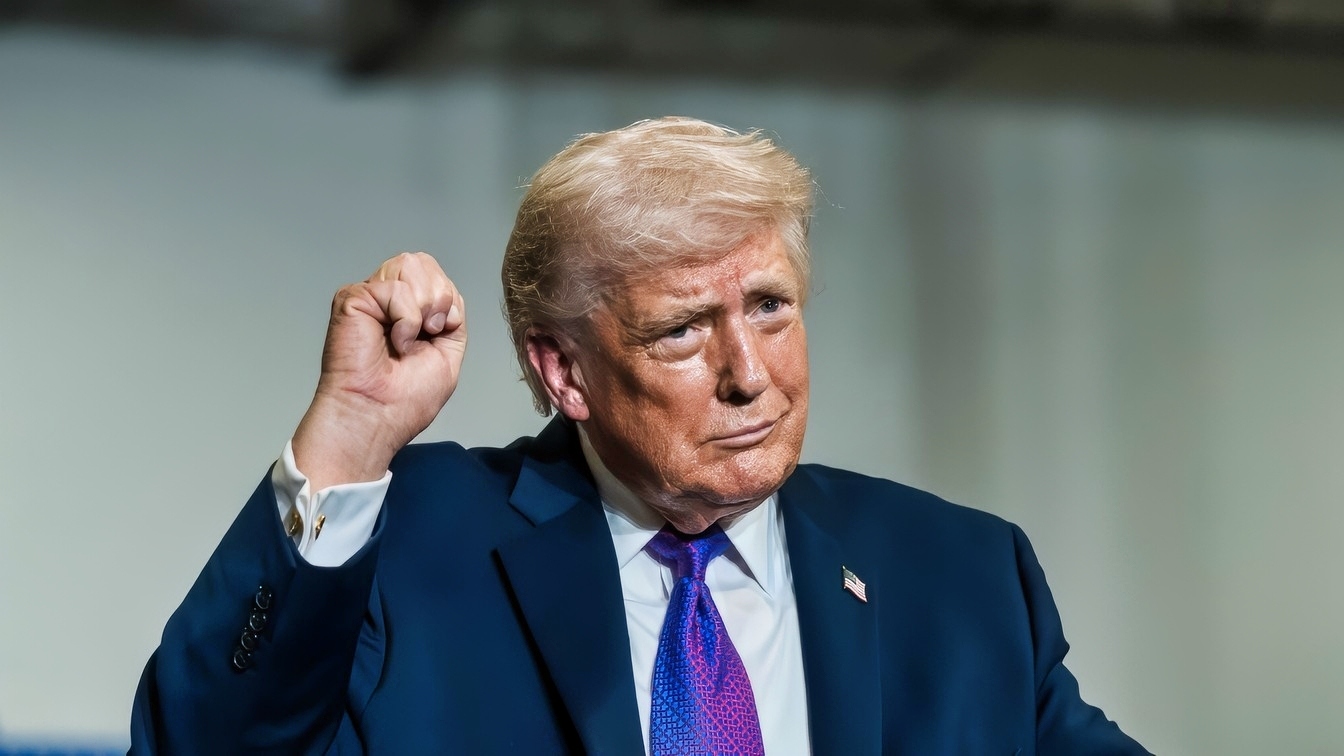
President Donald J. Trump has kept the world on a knife’s edge for months since the major hostilities between the Islamic Republic of Iran and the United States (and Israel) slowed down.
There are, of course, still major tensions between the three sides.
Trump WH Creative Commons Photo
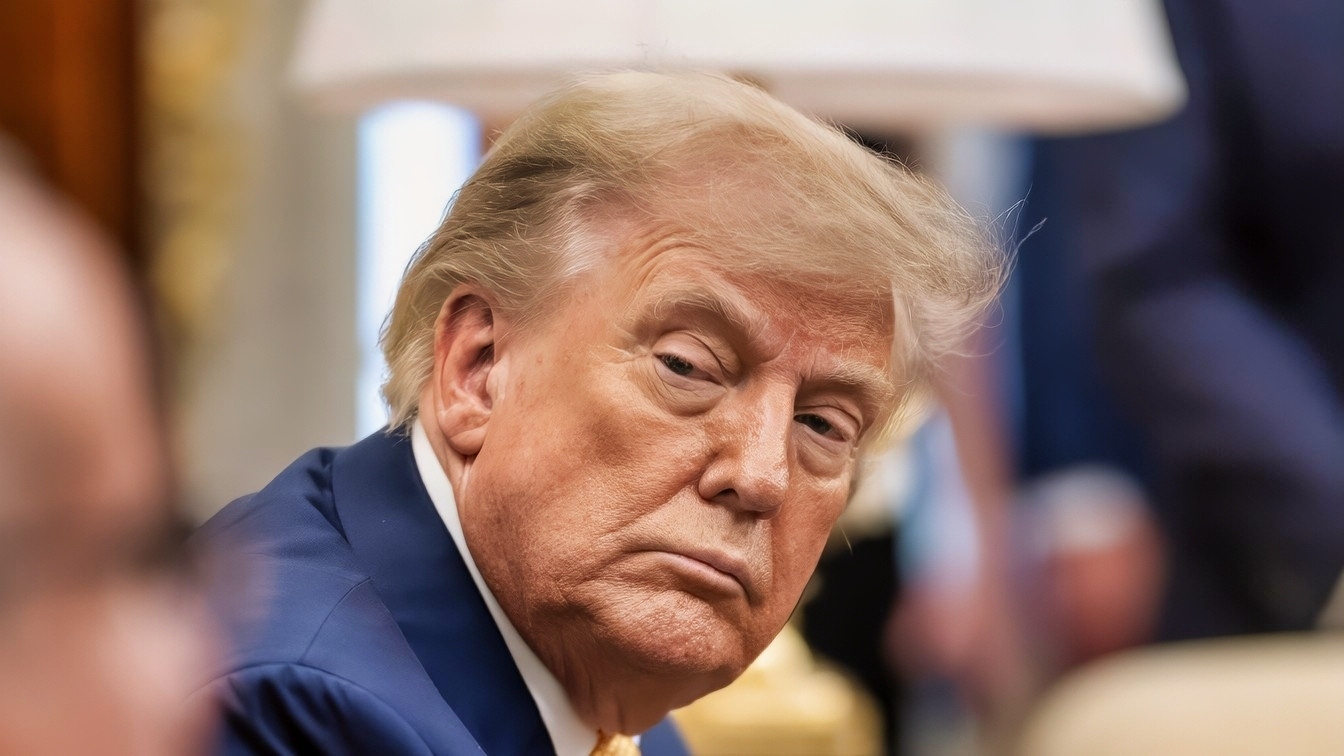
President Donald Trump hosts a bilateral meeting with Prince Salman bin Hamad Al Khalifa, Prime Minister of Bahrain, Wednesday, July 16, 2025, in the Oval Office. (Official White House Photo by Daniel Torok)
And the president has maintained a blockade that has done significant damage to the Iranian economy, and has spent the last several months exchanging intermittent missile and drone attacks with the Islamic Republic.
A Frozen Conflict
Despite this, major combat has not resumed between the Americans and Iranians.
Trump has repeatedly threatened that he would restart the war after the Midterms.
But the Midterms have come and gone. The Republican Party lost in a generational defeat.
This came at a time when the president assumed he’d lose the House of Representatives but maintain some lead in the Senate.
That assumption was destroyed on election night, meaning the entire political calculus in Washington changed virtually overnight.
The day after the election, Vice President JD Vance, who had been opposed to the war from the start (but kept that opposition out of the press as much as possible to preserve his working relationship with Trump), wrote a lengthy X post explaining that it was the unpopular Iran War that caused the generational defeat in the Midterms for the GOP.
Trump even agreed publicly with those claims.
However, weeks later, unconfirmed press reports suggest the president is having second thoughts about his original statements blaming the unpopularity of his war of choice.
Of course, Trump and Vance remain cordial, indicating that perhaps the unconfirmed media reports are exaggerated and part of a larger movement to divide the president and vice president by people who badly want a war.
Anyway, the president has publicly sent mixed signals about his next move. On the one hand, he has threatened to finish Iran.
On the other hand, especially after he meets with Russian President Vladimir Putin and Chinese President Xi Jinping, Trump has indicated he will not seek escalation until January.
Meanwhile, the president has ordered the USS George Washington and its attendant battle group to sail out of the Middle East and return to the PACOM area of responsibility, slightly degrading US forces’ capabilities in the region for a potential restart of the conflict.
Draining Arsenals Dictate Next Moves
Then there’s the oft-cited arsenal depletion. THAAD and Patriot defensive interceptors are at historic lows. Given the operational tempo of the last time the war was in full swing, the Americans will have depleted the critical stockpiles of those two defensive systems in a couple of weeks, leaving US forces and bases throughout the region defenseless.
The Navy can try to backstop the loss of those interceptors with its own sea-based systems. Still, they will not be as effective for the American bases in the region (or the critical infrastructure in the Gulf Arab states) as the ground-based interceptors.
As for offensive munitions, such as the precision-guided standoff systems, these arsenals are depleting, too.
Again, looking at the operational tempo of the first phase of the war–which any escalation would mirror–critical systems would be drained, forcing the Americans to attack at closer ranges, exposing US warplanes and warships to devastating Iranian counterattack.
That’s a massive political risk for Trump, who will already be under immense pressure come January when the new Democratic majorities in the House and Senate are sworn in.
Only One Choice: Trump Is Done With the War
The United States has exhausted all options for military escalation. What will Trump do?
Risk depleting our critical interceptors and key standoff systems, leaving US forces exposed elsewhere (notably in the Pacific, where China continues its rapid military expansion and modernization efforts), especially when even the most generous estimates say most of these systems won’t be replenished until the 2030s?
Trump might not care about anyone other than himself, but he does care about his legacy.
Leaving America vulnerable to real attacks from China or North Korea because he got bogged down in a quagmire with Iran is not something he wants to leave as his legacy.
At this rate, Trump is likely to huff and puff but not escalate significantly.
Instead, Trump will try to keep things between Iran and the US frozen until a later date when he can quietly reduce the US military footprint in the region, and essentially leave the war with neither a victory nor a defeat.
About the Author: Brandon J. Weichert
Brandon J. Weichert is the Senior National Security Editor. He also manages The Weichert Brief on Substack. Weichert is the co-host of The Mario Nawfal Show on Twitter/X. He is the author of four bestselling national security books, most recently A Disaster of Our Own Making: How the West Lost Ukraine (Encounter Books). His next book, Fortress Americas: A New Monroe Doctrine (Tucker Carlson Books), is due out December 8. Follow him via Twitter/X @WeTheBrandon.


