


Ukraine Is Forcing Russia to Hide Aircraft, Move Ships and Defend Refineries. The Pentagon Faces the Same Drone Problem: Ukraine has turned exposed Russian aircraft, ships, fuel facilities, and transportation links into recurring targets, forcing Moscow to build shelters, relocate naval units, disperse aircraft, and spread air defenses across a growing number of sites. A Washington Post assessment published July 20 argues that the campaign in occupied Crimea gives U.S. military planners a current case study in how inexpensive unmanned systems can impose large costs on a much richer force.
The physical evidence is visible at Saki Air Base. Satellite imagery reviewed by The War Zone after Ukrainian attacks in early July showed damage to six of seven hardened aircraft shelters, including four with doors blown onto nearby taxiways. The imagery could not establish whether aircraft were inside, but it showed that even newer protective structures can be damaged and require repair.
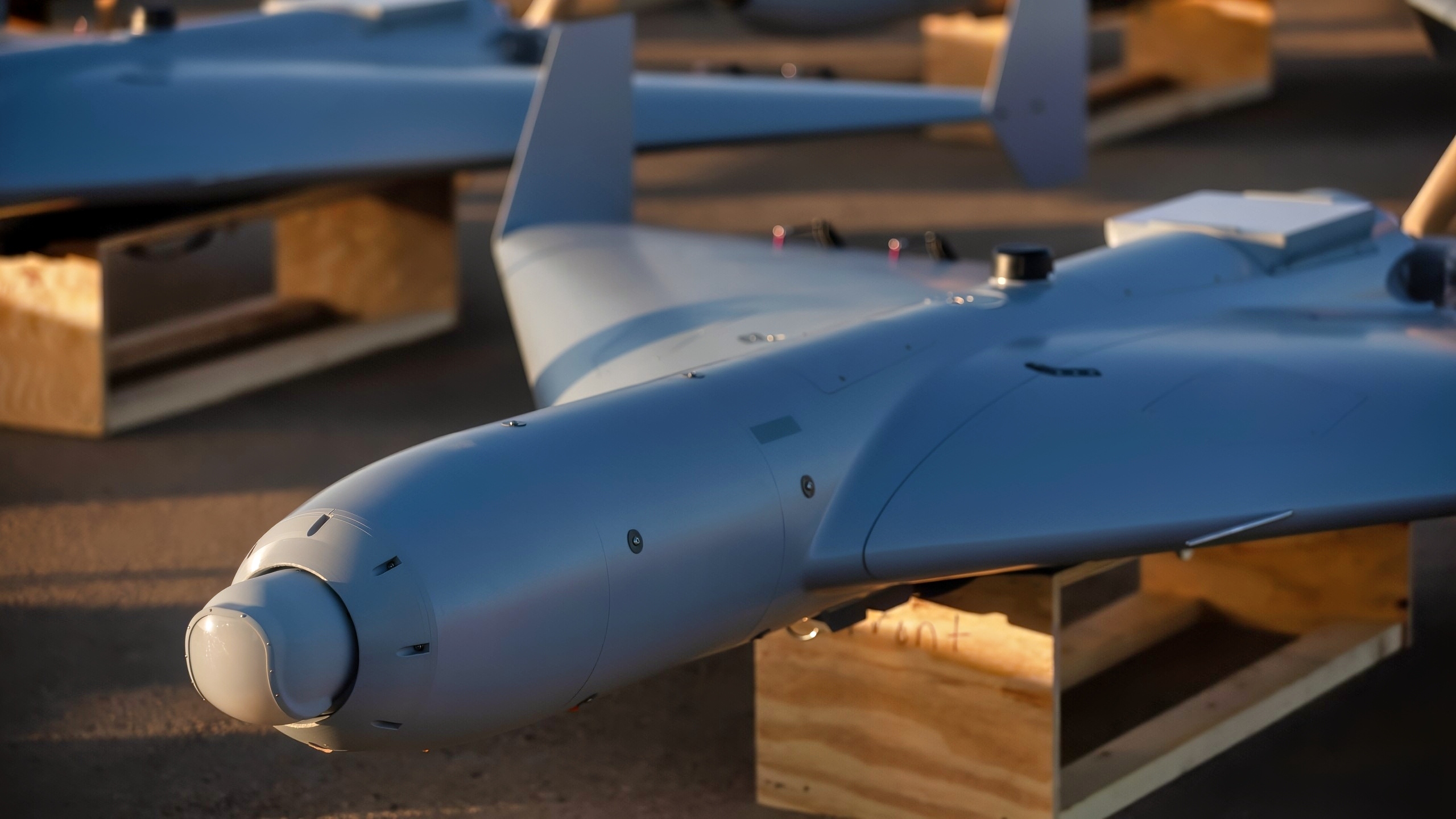
U.S. CENTRAL COMMAND AREA OF RESPONSIBILITY (Nov. 23, 2025) Low-cost Unmanned Combat Attack System (LUCAS) drones are positioned on the tarmac at a base in the U.S. Central Command operating area, Nov. 23. Costing approximately $35,000 per platform, LUCAS drones are providing U.S. forces in the Middle East low-cost, scalable capabilities to strengthen regional security and deterrence. (Courtesy Photo)
Ukraine demonstrated a different method during Operation Spiderweb in June 2025. Reuters verified footage and satellite imagery showing several Russian strategic bombers destroyed or badly damaged after 117 small unmanned aircraft were launched from containers positioned close to multiple air bases. The operation bypassed much of Russia’s long-range warning network because the aircraft began their final approach from inside Russian territory.
The United States has already received its own warning. Air & Space Forces Magazine reported that an E-3 airborne-warning aircraft was damaged during an Iranian attack on a Saudi base, while a KC-135 tanker and MQ-9 aircraft also suffered ground losses or damage during the 2026 conflict. The Pentagon now describes inexpensive, weaponizable drones as a direct and growing threat to installations, personnel, and missions at home and abroad.
Ukraine Is Forcing Russia to Spend More on Protection
Russia’s response has included new shelters, greater aircraft dispersal, coastal patrols, electronic warfare, and the relocation of major naval units. Ukraine’s use of missiles and sea drones has pushed much of the Black Sea Fleet away from Sevastopol and toward Novorossiysk, while continued pressure has made Crimea a more expensive military position to supply and defend.

Switchblade Drone. Image Credit: Industry Handout.
The same logic applies far from the peninsula. Ukrainian aircraft have reached industrial targets 1,500 miles from the border, and repeated strikes on refineries, depots, and Moscow-area logistics facilities force Russia to divide air defenses between the front and domestic infrastructure. Moscow can protect many sites. It cannot provide the same layered defense to every one of them.
The Pentagon Is Moving, but the Cost Problem Remains
The Pentagon’s Joint Interagency Task Force 401 released guidance in January built around three measures: harden, obscure, and extend the perimeter. The official guidance recommends concrete walls, hardened roofs, overhead netting, tensioned cables, camouflage, decoys, and wider security zones. These measures are less sophisticated than missiles or electronic-warfare systems, but they can disrupt flight paths, make targets harder to identify, and reduce damage from small drones.
Active defenses remain essential. The economic balance is still difficult when a low-cost aircraft forces the defender to launch a scarce interceptor or keep radar crews on continuous alert. The United States also operates concentrated air and naval facilities across the Indo-Pacific that would face Chinese missiles and unmanned aircraft in a regional conflict. Several major installations remain lightly hardened against a large opening attack. Shelters cannot make those bases invulnerable, but dispersed aircraft, protected fuel systems, decoys, and rapid runway repair can prevent a small number of hits from closing an installation.
The United States Is Learning Offense Faster Than Defense
U.S. Central Command formed Task Force Scorpion Strike in December 2025 and deployed the military’s first one-way-attack drone squadron in the Middle East. CENTCOM says its Low-cost Unmanned Combat Attack System aircraft cost about $35,000 each and can launch from catapults, mobile vehicles, or rocket-assisted systems. That program shows the Pentagon understands the offensive value of cheap, scalable unmanned aircraft.
Russia’s experience shows that acquiring similar weapons addresses only part of the problem. The United States also needs protected maintenance areas, redundant power and communications, repair materials, spare parts, trained engineering units, and enough defensive ammunition to absorb repeated attacks. A damaged aircraft shelter, fuel pump, substation, or port crane can interrupt operations even when the main platform survives.
Ukraine’s Main Lesson Is About Exposure
Ukraine has not eliminated Russian airpower, naval power, or energy production. Russia continues launching missiles, moving oil, and operating warships from safer locations. Kyiv has still made those activities more expensive by targeting fixed assets that Moscow cannot move easily and by forcing valuable platforms farther from the front.

CH-7 Drone from China. Image Credit: Creative Commons.
The Pentagon has begun changing its counter-drone guidance and fielding its own low-cost attack aircraft. The next test will appear in construction plans, base budgets, dispersal exercises, repair capacity, and interceptor inventories. Ukraine has already shown what happens when a military waits until exposed aircraft, ships, and infrastructure are under regular attack before making those investments.
About the Author: Harry J. Kazianis
Harry J. Kazianis (@Grecianformula) was the former Senior Director of National Security Affairs at the Center for the National Interest (CFTNI), a foreign policy think tank founded by Richard Nixon based in Washington, DC. Harry has over a decade of experience in think tanks and national security publishing. His ideas have been published in the NY Times, The Washington Post, The Wall Street Journal, CNN, and many other outlets worldwide. He has held positions at CSIS, the Heritage Foundation, the University of Nottingham, and several other institutions related to national security research and studies. He is the former Executive Editor of the National Interest and the Diplomat. He holds a Master’s degree focusing on international affairs from Harvard University.


