


Synopsis: China’s rapid conversion of the YU-20 cargo fleet into strategic tankers marks a critical shift in the Pacific balance of power. By successfully demonstrating in-flight refueling for J-15 and J-20 fighters, the PLA is effectively doubling the combat radius of its air wing, directly challenging the 5th-generation overmatch currently held by US Navy F-35s.
-Furthermore, the integration of domestic WS-20 engines enables the Y-20 to airlift Type 99 main battle tanks, thereby significantly shortening deployment timelines for amphibious assaults.
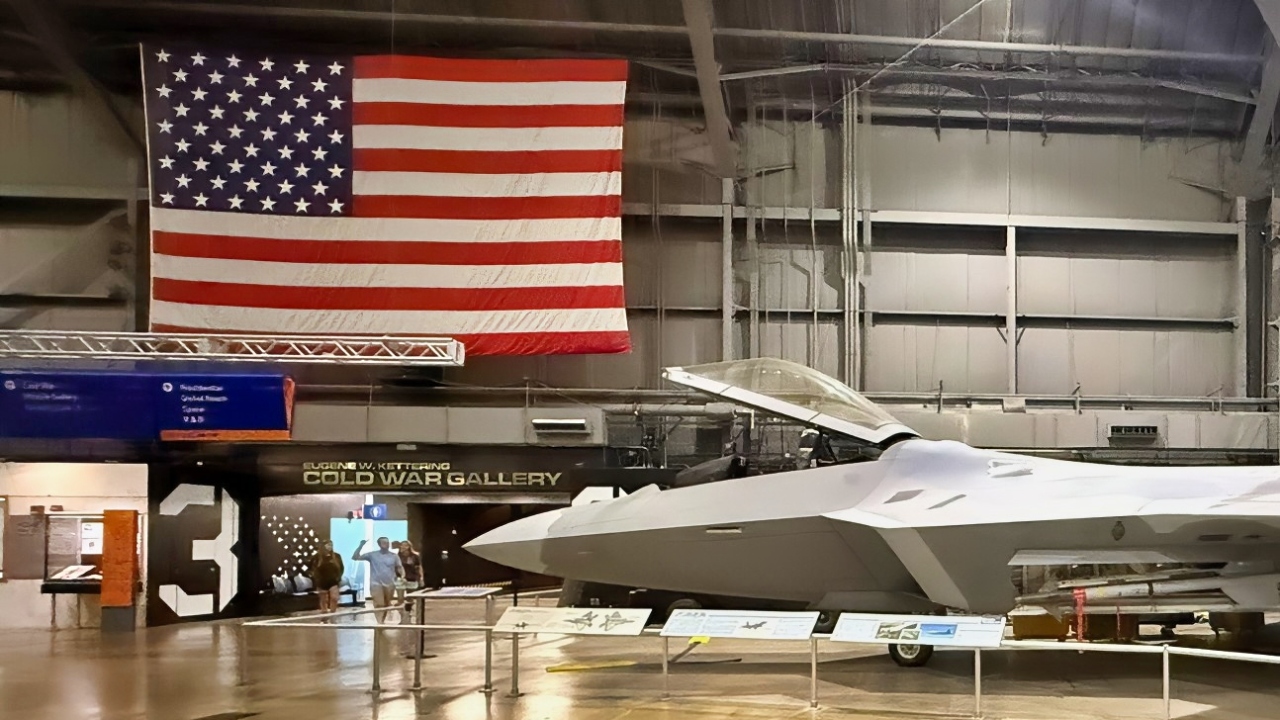
F-22A Raptor in the Air Force Museum NSJ Photo.
-This dual-threat capability forces a major reassessment of tactical dominance across the South China Sea and beyond.
BONUS: This essay included photos from an F-22 Raptor visit we completed at the National Museum of the Air Force back in July of 2025.
How China’s J-20 and J-35 Could Double Their Combat Range
For many years now, the Chinese People’s Liberation Army Air Force has been converting its fleet of emerging YU-20 cargo planes into tankers, an effort that could greatly expand the PLA’s air combat reach.
As part of this growing equation, the PLA has demonstrated the reconfigured Y-20 cargo planes’ ability to refuel both land- and carrier-launched J-15 aircraft.
A Chinese newspaper announced this capability several years ago, suggesting it is likely far more advanced now.
“A YU-20 tanker aircraft of the Chinese People’s Liberation Army (PLA) Air Force and a J-15 carrier-based fighter jet of the PLA Navy have conducted their first in-flight refueling exercise…. This exercise has displayed the systematic integration among different PLA services and will enhance the capabilities of Chinese aircraft carriers,” the Chinese-backed Global Times newspaper reported a few years ago.

F-22 Raptor Sitting in AF Museum National Security Journal Photo. Image Credit: Harry J. Kazianis
This development, should it continue to mature in the coming years and expand into a larger PLA tanker fleet, could begin to erode the massive US air superiority advantage in the Pacific.
With forward-deployed US Navy amphibs, each capable of carrying as many as 20 F-35B, and carrier-based F-35Cs, it has not been unrealistic to posit that the US Navy and its allies might be positioned to counter, destroy, or entirely stop a Chinese amphibious assault on Taiwan.
The USS America, for instance, the Navy’s first America-class amphibious assault ship, has already deployed with as many as 13 F-35Bs. This is particularly true if the US uses its advanced fleet of attack submarines, and Japan and South Korea can also marshal an F-35 force.
China Fighter Deficit
Japan has, in recent years, made a massive, multi-billion-dollar F-35 buy, and both Singapore and South Korea are F-35 customers as well.
Therefore, if the US Navy is sufficiently forward-deployed, the US and its allies are likely to establish air superiority quickly.
The presence of networked 5th-generation US Navy and allied aircraft would be well-positioned to achieve overmatch above the PLA Navy and Air Force in the air.
Chinese J-20s can only be launched from land, and the J-35 carrier-launched 5th-generation aircraft does not exist in sufficient numbers.

F-22 Raptor Stealth Fighter. Image Credit: National Security Journal Original Photo.
Therefore, the PLA would likely have trouble establishing sufficient air support above an amphibious attack. This is likely why the US Navy continues to increase its forward presence in the Pacific through dual-carrier operations and regular multinational combat training and preparation in the Pacific theater.
However, all of this context is critical to this key development, should China succeed in closing its air-power deficit in the Pacific theater. The Y-20 has existed for years, yet it is only in more recent years that the Chinese have been converting them into tankers.
This means that, should this tanker fleet grow quickly and the carrier-launched 5th-generation J-31 emerge in larger numbers, the PLA may be able to present a credible challenge to US and allied air superiority in the Pacific.
Specifically, if J-20 land-launched 5th-generation aircraft, which exist in sufficient numbers, can double their range and challenge US and allied air power over the ocean, the balance of air superiority could change.
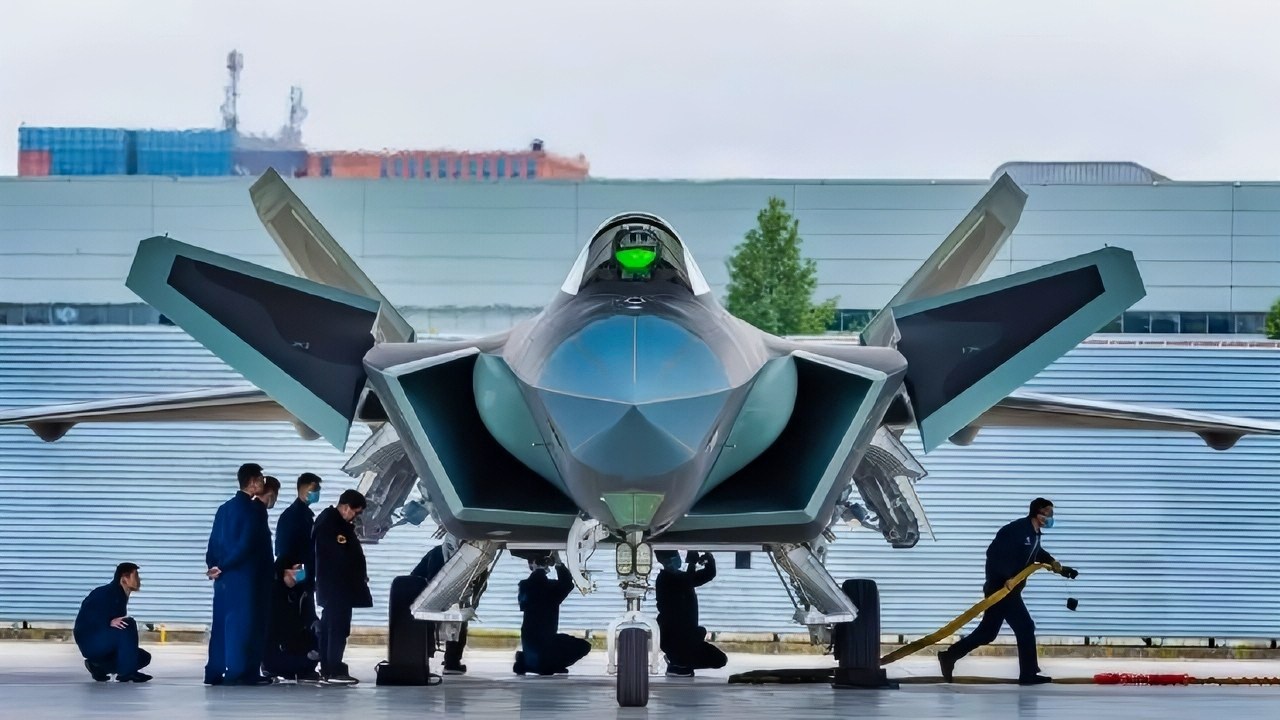
J-20 Fighter Fueling Up. Image Credit: Chinese Weibo.

J-20 Fighter Weibo Image Screenshot
Indeed, it will take a while for China to close this deficit; however, the PLA is known to manufacture weapons platforms very quickly through its civil-military fusion and industrial base, so the US air power advantage may close, or at least be more quickly threatened, depending on Chinese progress.
This would only be true if Chinese J-20 and J-35 aircraft are truly capable of challenging US 5th-gen aircraft, which is not yet known or fully established.
Nevertheless, China’s emerging tanker fleet and fighter jet range are likely to be taken very seriously by the Pentagon, as they could significantly impact tactical and strategic circumstances in the Pacific and the overall balance of power in the region.
A tanker aircraft, such as a Y-20, could double the reach of land-launched J-20s, carrier-launched J-35s, and Chinese land and carrier-launched 4th-generation aircraft, a circumstance capable of rivaling US allied air dominance in the
Y-20 Cargo Plane Can Also Transport Chinese T99 Tanks
With the arrival of the Y-20, the People’s Liberation Army will soon be able to airlift full-scale Chinese Main Battle Tanks on board an upgraded Y-20 cargo plane, an aircraft now being outfitted with a first-of-its-kind domestically built engine.
A new WS-20-equipped Y-20 would, according to the Chinese government-backed Global Times newspaper, be able to operate with much greater thrust and fuel, and take off and land on shorter runways.
An increased ability to operate in more austere circumstances certainly increases the tactical scenarios in which a Y-20 could help deploy troops, equipment, supplies, weapons, and even large platforms such as tanks.
The new plane can reportedly air-transport China’s T99 main-battle tank, a possibility which greatly exacerbates current threats to Taiwan.
The aircraft was slated to appear at a European Air Show in Austria, Airpower22, as reported by the Chinese government-backed Global Times newspaper.
Y-20 Cargo Plane Can Also Transport Chinese T99 Tanks
The ability to transport a Type T99 main battle tank would be highly significant for any ground war effort, especially since U.S. Army M1 Abrams tanks must deploy overseas by sea.
Air deployment of a massive tank would exponentially shorten deployment attack timelines and enable a heavy mechanized force to strike on a vastly different timetable.
“With the domestically made engines, the Y-20 can become capable of long-range or intercontinental flight while carrying heavy equipment like main battle tanks without stopping at a transit airfield for refueling,” a Global Times report from several years ago states.
About the Author: Kris Osborn
Kris Osborn is the President of Warrior Maven – Center for Military Modernization. Osborn previously served at the Pentagon as a highly qualified expert in the Office of the Assistant Secretary of the Army—Acquisition, Logistics & Technology. Osborn has also worked as an anchor and on-air military specialist at national TV networks. He has appeared as a guest military expert on Fox News, MSNBC, The Military Channel, and The History Channel. He also has a Masters Degree in Comparative Literature from Columbia University.


