
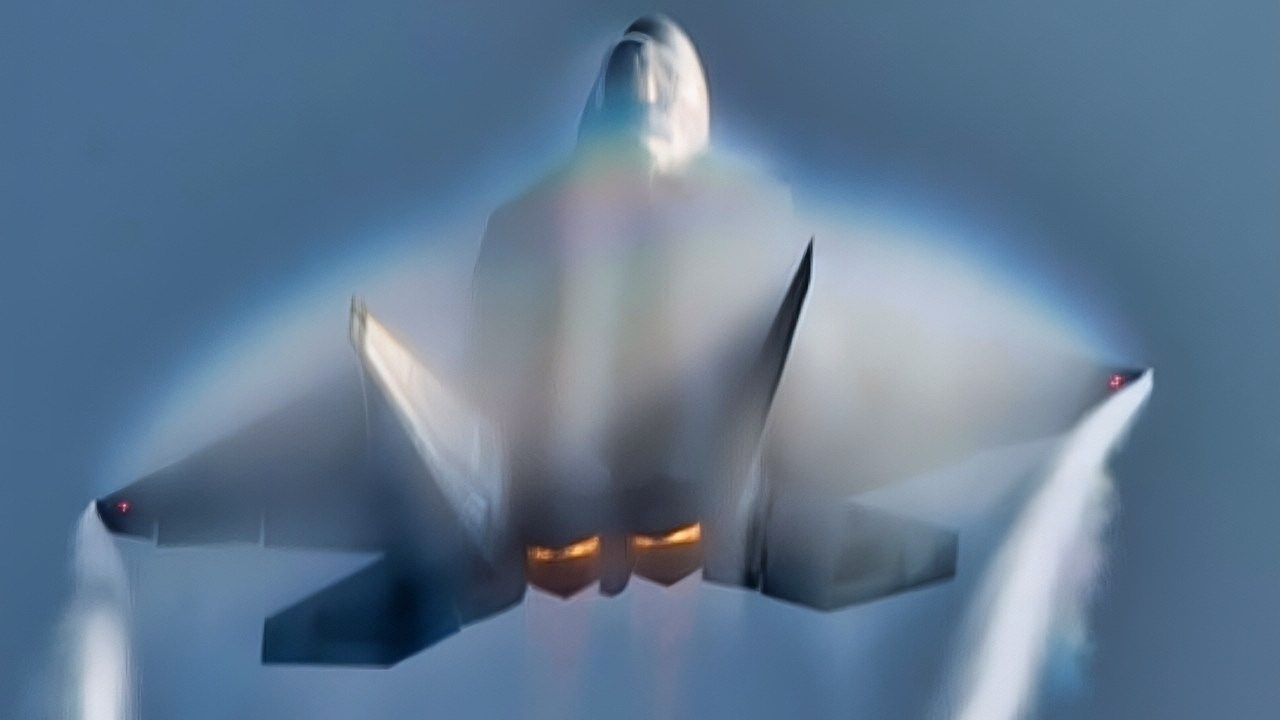
The “Brutal Truth” About China’s J-20 and J-35 Stealth Fighters
-China is rapidly expanding its fleet of Chengdu J-20 “Mighty Dragon” and J-35A stealth fighters, aiming to challenge U.S. air dominance in the Indo-Pacific.
-While Beijing’s industrial capacity allows for mass production of these advanced airframes, a “brutal truth” remains: hardware is not enough.

J-20 Fighter Firing Missile. Image Credit: PLAAF Photo/Public Domain.
-The People’s Liberation Army Air Force (PLAAF) severely lacks the “soft” power of modern air warfare—specifically, the decades of combat experience, sensor fusion, and joint doctrine that the U.S. Air Force has mastered.
-Without these critical systems and human factors, China’s stealth fleet remains untested and potentially inferior in a sustained peer conflict.
Forget the J-20 “Mighty Dragon”: China’s Air Force Is Still decades Behind the U.S.
Coverage of China’s expanding fleet of (and plans for) stealth fighters, including the Chengdu J-20 “Mighty Dragon” and the upcoming J-35A, continues to inspire debate about the future of air dominance in the Indo-Pacific.
Chinese state media have covered the public debut of multiple fifth-generation combat aircraft through 2025, coinciding with Beijing’s efforts to field the platforms across its People’s Liberation Army Air Force (PLAAF) and Navy Aviation units.
Through open-source information and state media releases, it’s clear that China is becoming increasingly competent at developing and producing stealth jets in large numbers and adapting supporting systems – including aerial tankers – to expand reach.
And as these developments continue, it has become increasingly evident that China is better positioned than ever to challenge American aerial superiority.
But with that being said, some brutal truths for Beijing mean that even if it fields advanced fifth-generation aircraft, it will take more time to catch up to American capabilities – and would likely require the U.S. to make mistakes along the way.

China J-20 Fighter 2025. Image Credit: Weibo.

J-20 Fighter In All Yellow. Image Credit: Creative Commons.
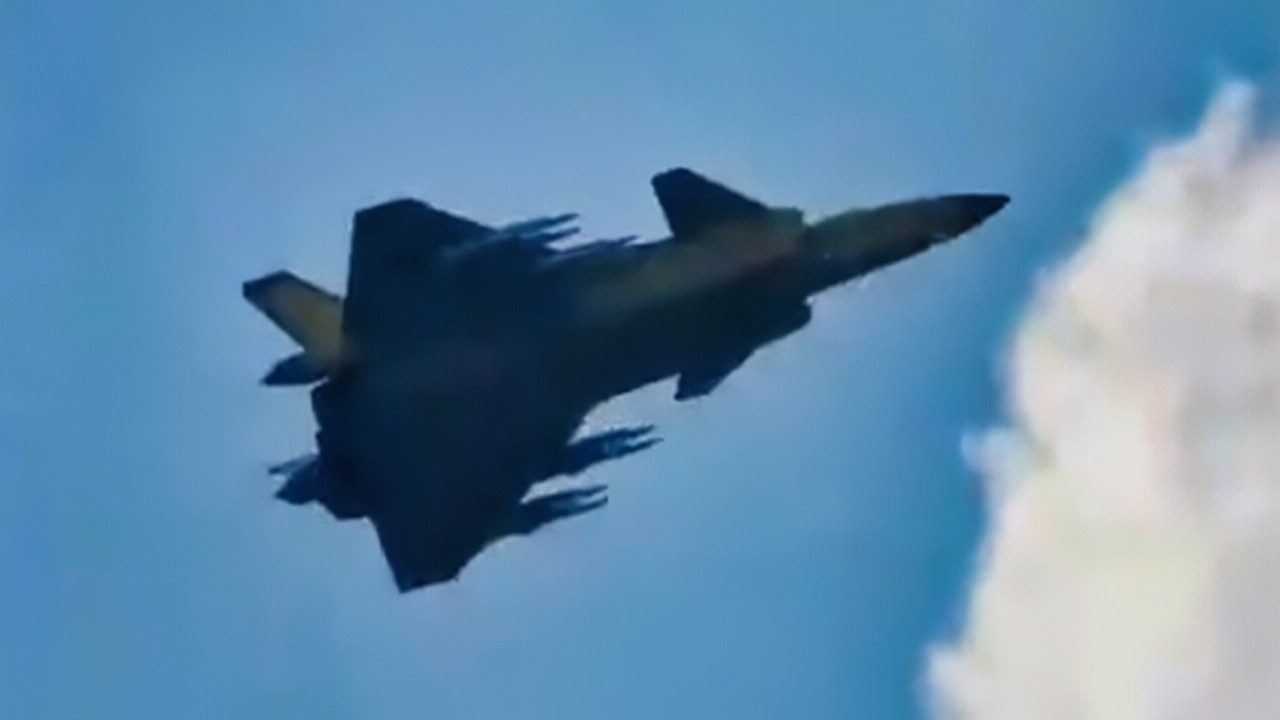
China J-20 Fighter in Beast Mode. Image Credit: X Screenshot.
A closer analysis of force structure, operational experience, and established doctrine reveals just how far China still needs to go to challenge the U.S. Air Force fully.
China’s acquisition of advanced airframes certainly reflects impressive growth in industrial capability. Still, new aircraft and rapidly increasing production rates alone do not equate to an air force capable of matching U.S. capabilities honed over decades of combat experience, sustainment, and joint operations.
While drone capabilities and automation will one day serve as an equalizer – and that day could come sooner than many think – it is presently the case that 21st-century airpower is less about numbers and capability and more about systems: sensor fusion, interoperability, logistics, experience, and networked warfare.
Sorry, J-20 and J-35A: China’s Stealth Push Has Inherent Limits
Beijing’s apparent obsession with rapidly fielding fifth-generation fighters is part of a broader military modernization strategy that has reshaped – and continues to affect – China’s defense posture.
The Chengdu J-20 entered PLAAF service in 2017 and has since been integrated into multiple combat brigades across China’s theater commands, with both single-seat and twin-seat variants now in service. At the same time, the Shenyang J-35A has moved from prototype stage to low-rate production – confirming China’s ambition to deploy a family of new stealth platforms.
And not only is Beijing proving it can develop systems that can challenge those in operation with the U.S. Air Force and Navy, but it is also proving that it can produce them at scale – potentially delivering more airframes per year than the United States. That means China is, in some ways, well on its way to competing with the United States.
China’s stealth designs have so far focused heavily on extending range and payload – traits useful in the Western Pacific’s vast distances. Comparisons of open-source information about the J-20 with U.S. fifth-generation fighters reveal larger internal fuel capacity and sensors tailored for long-range detection.
Beijing has also pursued the development of supporting assets, including tanker conversions of the Y-20 transport and others, thereby expanding the operational reach of its air fleets.
But despite the advances, some significant structural limitations affect Beijing’s claims. Unlike the USAF, the PLAAF’s fifth-generation programs lack operational combat experience; neither the J-20 nor J-35 has been tested in a sustained high-intensity conflict against a peer adversary.
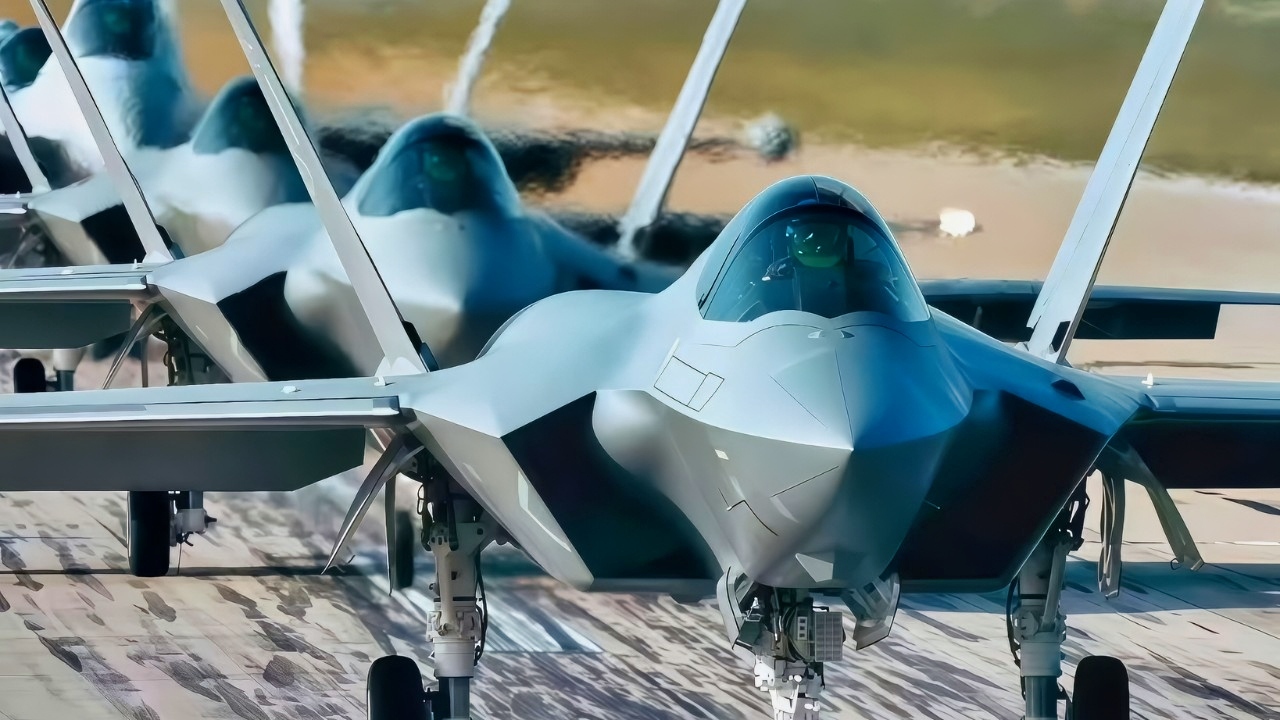
J-35 Fighter In Elephant Walk PLAAF Photo.
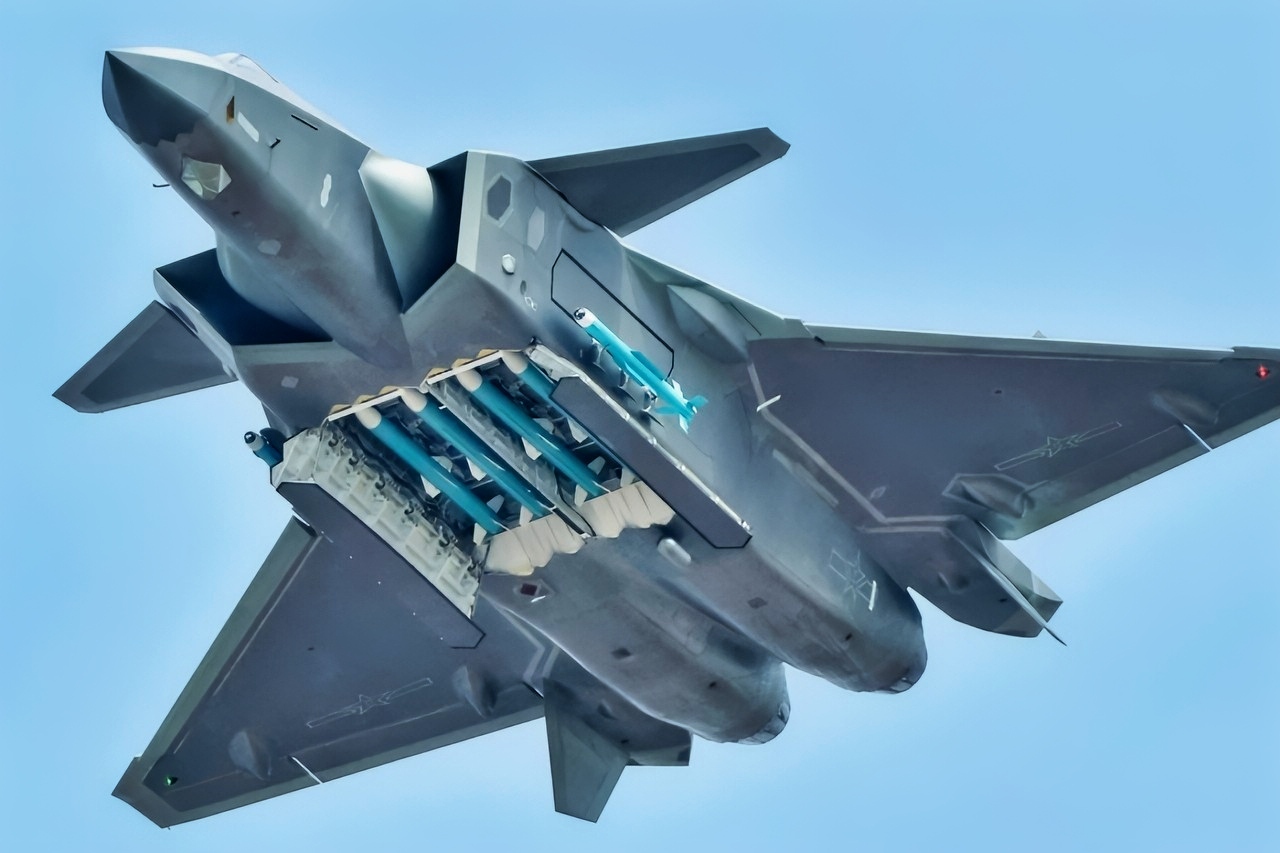
China J-20 Fighter with Missiles. Image Credit: Chinese Weibo.

J-20 Fighter from Chinese PLAAF. Image Credit: Creative Commons.
That’s not to say they don’t work, but operational experience matters in this context.
Furthermore, production numbers – while growing – do not fully capture the quality and systems integration that define modern American platforms. Stealth characteristics, avionics integration, and electronic warfare tools are still areas where the U.S. remains at a dramatically higher maturity level.
Training and doctrine matter, too. China’s aircrew training and mission command philosophy are still more rigidly structured than that of the United States, not to mention less tested in joint and coalition operations than the U.S. For American forces, capability has been shaped through repeated participation in multinational exercises, combat rotations, and real-world combat.
That experience is difficult to replicate, and while China may engage in exercises, it will take decades or longer to catch up with the U.S. Air Force experience – if that is even possible at all.
What Happens Now?
Ultimately, if China is to close the gap, it must sustain production at scale while somehow accelerating the slow, unforgiving progress of building operational experience and command maturity.
That will take years and will likely require the United States to stumble through development delays or make strategic missteps along the way. For now, China remains behind – and is likely to stay there until automation meaningfully reduces the value of human experience. But even then, automation itself must be trained on real combat data, which is an advantage the U.S. still overwhelmingly holds.
About the Author:
Jack Buckby is a British author, counter-extremism researcher, and journalist based in New York who writes frequently for National Security Journal. Reporting on the U.K., Europe, and the U.S., he works to analyze and understand left-wing and right-wing radicalization, and reports on Western governments’ approaches to the pressing issues of today. His books and research papers explore these themes and propose pragmatic solutions to our increasingly polarized society. His latest book is The Truth Teller: RFK Jr. and the Case for a Post-Partisan Presidency.


