

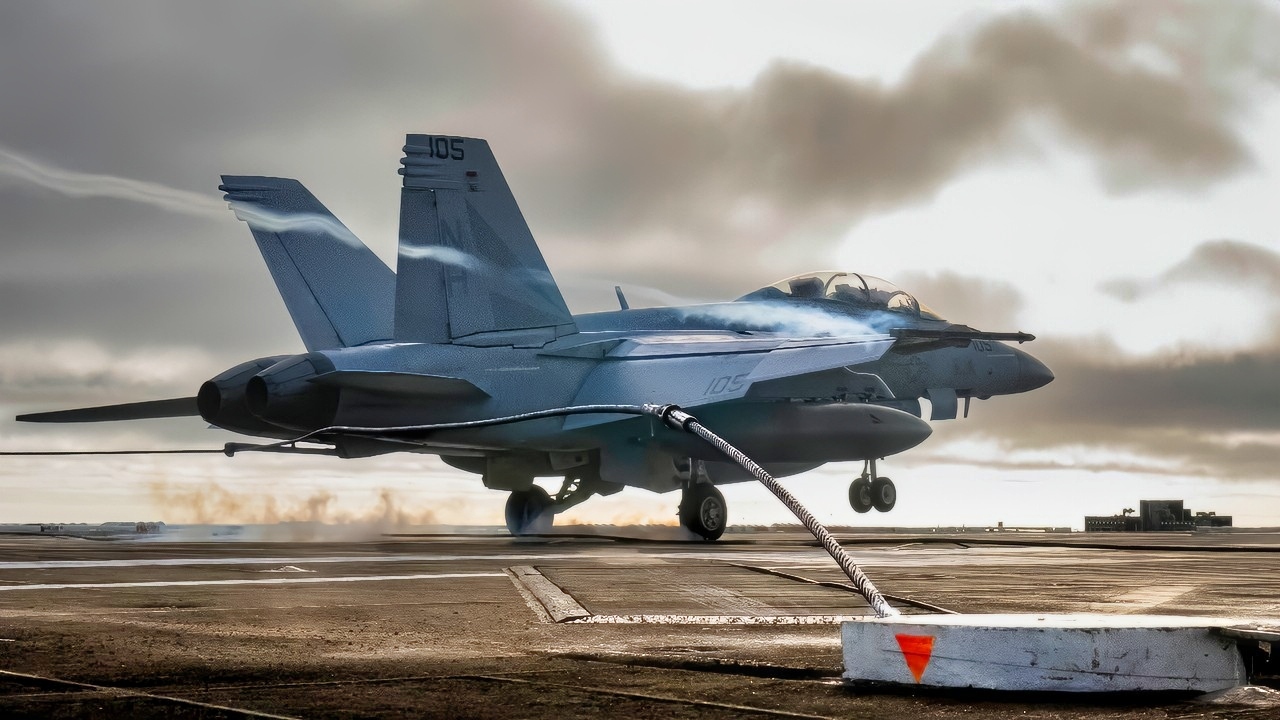
Key Points and Summary – The U.S. Navy’s F/A-XX 6th-generation stealth fighter program has been effectively defunded, with its budget “slashed to the bone” as the Pentagon prioritizes the Air Force’s competing F-47 NGAD program.
-Top naval officials are warning this decision jeopardizes future air superiority, leaving multi-billion dollar aircraft carriers vulnerable to peer adversaries like China.

F/A-XX U.S. Navy Fighter. Image Credit: Creative Commons.
-With its current F/A-18s aging and the F-35 lacking sufficient range, the Navy is now left with difficult options, such as attempting to adapt the Air Force’s F-47 for carrier use—a solution historically fraught with problems.
What Are The Options For The Navy With The FA/X-X Defunded?
The Navy and the Air Force are engaged in a dispute over funding – and it could have some big consequences.
That is nothing new. Ever since the Air Force came into being, they’ve had a turf war over cash with the Navy.
However, the fight over the new F/A-XX sixth-generation stealth fighter now has significant implications.
And the Navy’s new fighter could be shot down before it had the opportunity to get off the ground.
This could have significant implications for the Navy’s carriers. Not just at a faraway time in the future but in the next few years.
Background on The F/A-XX Program:
The F/A-XX program, the Navy’s planned sixth-generation stealth fighter, is facing significant uncertainty and potential delays due to a shift in Pentagon priorities and concerns about the defense industrial base’s capacity.
While the Navy still seeks funding for the program, the Department of Defense is currently prioritizing the Air Force’s F-47 NGAD sixth-generation fighter program. This has led to a debate about whether the Navy should pursue its fighter or potentially adopt a naval version of the F-47.
The Trump administration is reportedly prioritizing the Air Force’s F-47 program, citing concerns that the industrial base can’t handle two sixth-generation fighter programs simultaneously.
This administration “strongly supports reevaluating the F/A-XX program due to industrial base concerns of two sixth-generation programs occurring simultaneously,” the White House wrote in a statement.

U.S. Air Force Maj. Melanie “Mach” Kluesner, pilot of the F-35A Demonstration Team, performs aerial maneuvers at the Sun ‘n Fun Airshow in Lakeland, Florida, April 4, 2025. The demonstration team showcases the skill and precision U.S. Air Force pilots and aircraft are capable of. (U.S. Air Force photo by Senior Airman Nicholas Rupiper)

A U.S. Air Force F-35 Lightning II from the 48th Fighter Wing approaches a KC-135 Stratotanker from the 100th Air Refueling Wing during an aerial refueling mission as part of combat readiness inspection Skyway Chariot over the North Sea, May 8, 2025. Skyway Chariot was designed to assess how effectively the 100th ARW could operate under constrained conditions in the face of a potential threat. (U.S. Air Force photo by Airman 1st Class Aidan Martínez)
“Awarding the F/A-XX contract as written is likely to delay the higher-priority F-47 program, with low likelihood of improving the timeline to field a Navy sixth generation fighter.”
F/A-XX Funding Slashed To The Bone:
The Navy’s F/A-XX program is facing potential cuts, with the Pentagon suggesting a focus on the F-47 and allowing the Navy’s program to mature further.
The Navy’s budget request for the 2026 Fiscal Year includes just $74 million for F/A-XX, which would allow the service to complete ongoing design work but not proceed with further development and acquisition of those aircraft.
The Navy desperately needs a sixth-generation fighter to replace its aging and obsolescent F/A-18 Super Hornets in order to maintain its air combat capabilities. The Navy asked for $1.4 billion for the F/A-XX in its Unfunded Priorities List.
“I think, as it comes to next-gen fighters, as I said before, we’re looking at the full composition of the Air Wing of the Future, and so we have to focus on the capabilities and technologies for years to come that are going to win,” Secretary of the Navy John Phelan told the House Armed Services Committee back on June 11. “That includes manned and unmanned platforms that we have to look at.”
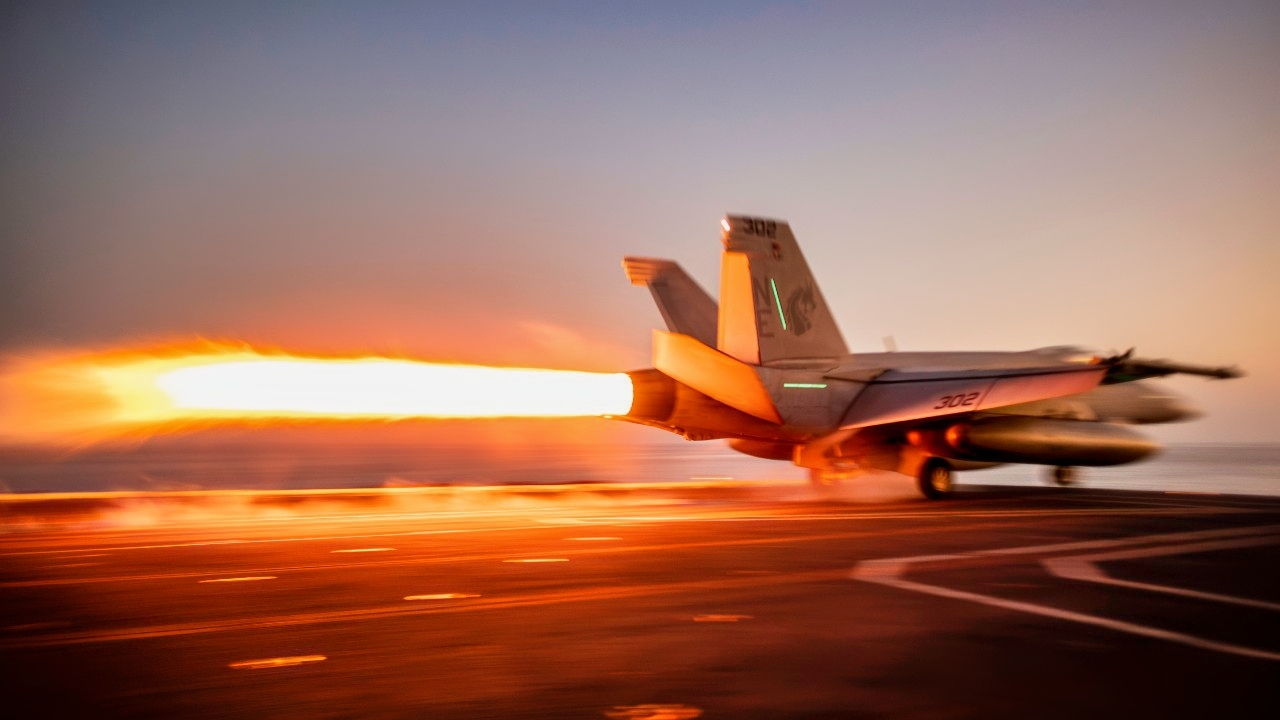
250429-N-FS097-1154 U.S. CENTRAL COMMAND AREA OF RESPONSIBILITY (April 28, 2025) An F/A-18E Super Hornet, attached to Strike Fighter Squadron (VFA) 192, launches from the flight deck of the Nimitz-class aircraft carrier USS Carl Vinson (CVN 70) in the U.S. Central Command area of responsibility. (Official U.S. Navy photo)
“I do not have a lot of confidence – all of our programs are in trouble. We have a number of companies that are not performing. We’ve got to get those done,” Phelan added.
“So I think, looking at this system, sixth-gen is important, and it’s important to the admiral (James Kilby, Chief of Naval Operations) that he should always give you his best military advice. I think we’re looking at the whole panacea of what we’ve got and then how we can – what makes the most sense to use in the future. And so I think we have to get more confidence in the [industrial] base.”
Bad News For The Navy’s Carriers?
The fifth-generation F-35s lack the range to adequately cover the carriers, especially in the Indo-Pacific, where an increasingly bellicose China is attempting to challenge US dominance at sea with its Navy (PLAN).
The Navy was supposed to make a decision on a prime contractor for the F/A-XX back in March. After Lockheed Martin was eliminated from the competition, the choice came down to Boeing (which produces the F-47) and Northrop Grumman.
However, the Pentagon decided to concentrate on the F-47 and slow the development of the F/A-XX.
One possible outcome is the Navy adopting a naval version of the F-47, which would feature folding wings and a tail hook. But without ever even seeing an F-47, there isn’t any way to judge if the aircraft would even be carrier-compatible.

A Sailor directs an F/A-18E Super Hornet from the “Kestrels” of Strike Fighter Squadron (VFA) 137 on the flight deck of the aircraft carrier USS Nimitz (CVN 68) in the South China Sea, May 12, 2025. Nimitz is underway in the U.S. 7th Fleet area of operations on a scheduled deployment, demonstrating the U.S. Navy’s unwavering commitment to a free and open Indo-Pacific. (U.S. Navy Photo by Mass Communication Specialist Seaman Apprentice Franklyn M. Guage)
Converting aircraft designed for the Air Force to Navy versions can be fraught with issues, as it often results in strange versions of the aircraft that aren’t suitable.
The defense industrial base’s ability to handle multiple, simultaneous sixth-generation fighter programs is a key concern driving the current debate. And if the Pentagon decides on a naval version of the F-47, wouldn’t that put even more strain on Boeing’s production lines?
Future Uncertainty For the F/A-XX:
The ultimate fate of the F/A-XX program remains unclear, with a final decision pending. However, with numerous other new programs on the horizon for the Pentagon, the budget is becoming increasingly stretched thin.
MORE: Why China Can’t Win a War
Does the fate of the F/A-XX program tie in to the ultimate fate of America’s carriers? At this time…no. The US is far too entrenched in our carrier philosophy just to begin retiring them now.
And despite carriers becoming more vulnerable in today’s modern warfare due to the abundance of missiles and drones, their power projection remains valuable, as China aggressively pursues the construction of more carriers.
The Navy needs new fighters to protect the carriers, but they aren’t coming anytime soon. And that is not good news.

U.S. Navy Aviation Boatswain’s Mate Aircraft Handling 2nd Class Kyle Darmanin, from Mooresville, North Carolina, assigned to air department’s flight deck crash and salvage division, signals an F/A-18E Super Hornet, attached to Strike Fighter Squadron (VFA) 27, on the flight deck of Nimitz-class aircraft carrier USS George Washington (CVN 73) while underway in the Timor Sea in support of Talisman Sabre 2025, July 14, 2025. Talisman Sabre is the largest bilateral military exercise between Australia and the United States advancing a free and open Indo-Pacific by strengthening relationships and interoperability among key allies and partners, while enhancing our collective capabilities to respond to a wide array of potential security concerns. (U.S. Navy photo by Mass Communication Specialist 2nd Class Tyler Crowley)
About the Author: Steve Balestrieri
Steve Balestrieri is a National Security Columnist. He served as a US Army Special Forces NCO and Warrant Officer. In addition to writing on defense, he covers the NFL for PatsFans.com and is a member of the Pro Football Writers of America (PFWA). His work was regularly featured in many military publications.
More Military
We Almost Touched the F-117 Stealth Fighter


