


Key Points and Summary – This list details the five worst aircraft carriers in history, based on design flaws, reliability, and combat records.
-The Japanese supercarrier Shinano is included for being sunk by a submarine on its maiden voyage.
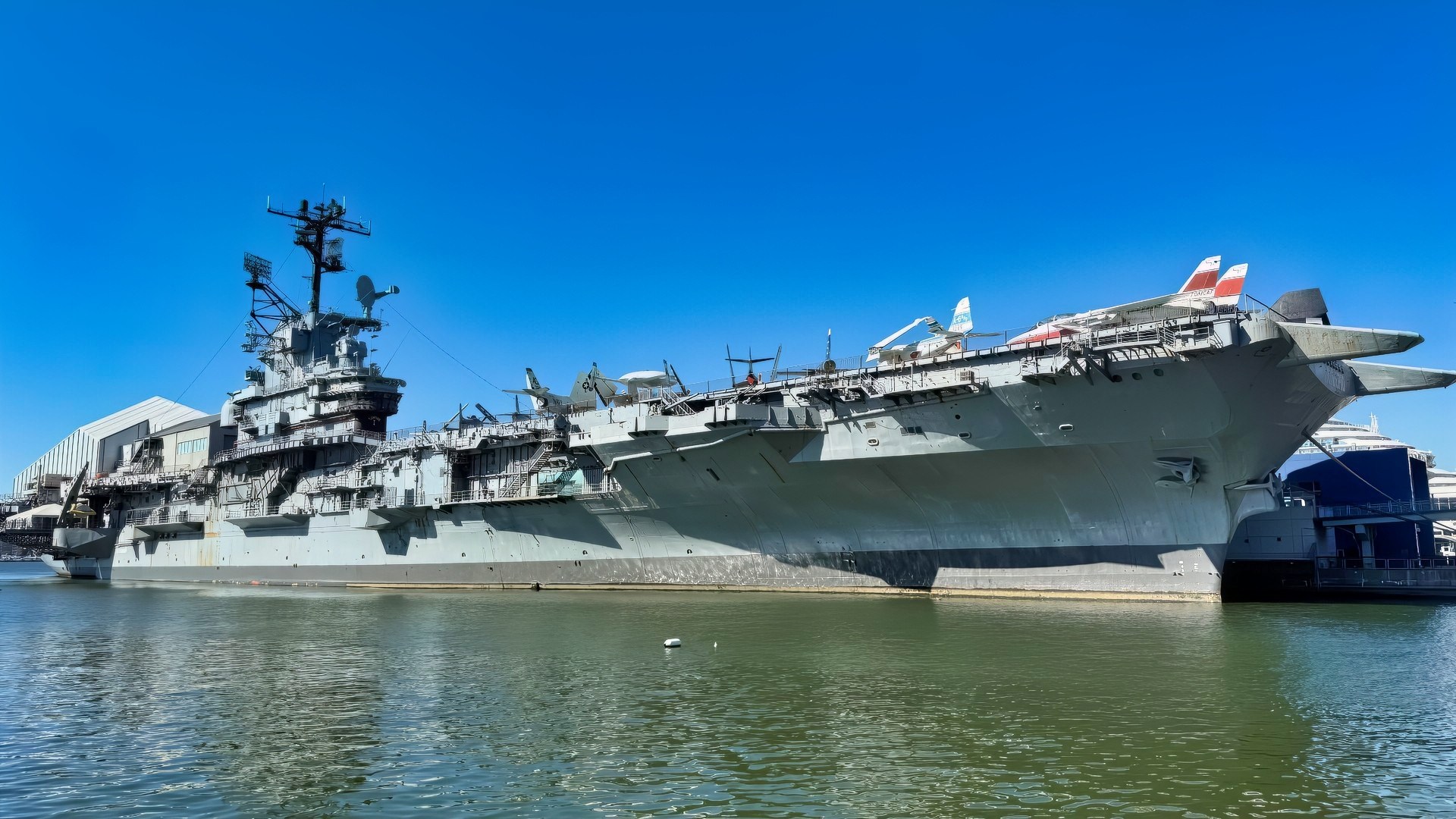
Essex-Class USS Intrepid Aircraft Carrier. Image Credit: National Security Journal.
-The UK’s new Queen Elizabeth class makes the list for being plagued by systemic mechanical failures, poor quality control, and low operational availability.
-Nazi Germany’s Graf Zeppelin is cited as a failure because it was never completed or made seaworthy.
-Russia’s lone carrier, the Admiral Kuznetsov, is included for its infamous history of fires, breakdowns, and a sunken dry dock.
-Finally, India’s INS Vikramaditya (a former Soviet ship) is listed due to its own pattern of fatal fires and toxic gas leaks.
The 5 Worst Aircraft Carriers of All Time
During the Second World War, aircraft carriers replaced battleships as capital ships—the primary instruments of naval power projection.
However, not all flattops are created equal. National Security Journal now endeavors to define the five worst carriers of all time.
Though this is admittedly a subjective list, we will apply some objective criteria, such as inherent design flaws, crew competence, and combat record.
Without further ado, and in no particular order, let’s begin.
#1: The Shinano (Imperial Japanese Navy)
Named after the ancient Shinano Province (now known as Nagao Prefecture), the Shinano started off as a battleship. She was the sister ship to the supremely powerful battlewagons Yamato and Musashi.
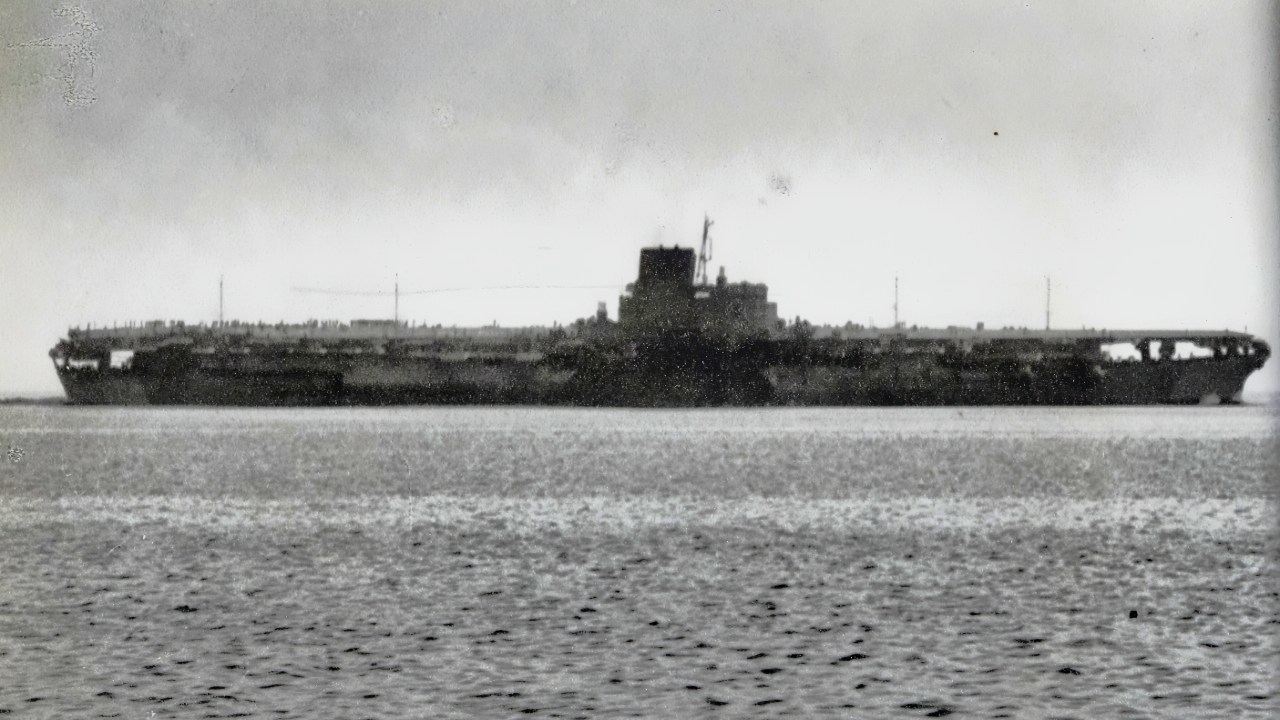
Shinano Aircraft Carrier. Image Credit: Creative Commons.
She was then converted into the world’s first supercarrier, only to be sunk on November 1944 during her sea trials near Yokosuka Naval Base. The American submarine USS Archerfish (SS-331) delivered three torpedo strikes to take her down. The death toll rose to 1,435, including officers—among them the skipper, Capt. Toshio Abe—enlisted seamen, and civilians.
#2: The Queen Elizabeth class (British Royal Navy)
This would be considered a two-way tie, since there are two ships in the class, namely the HMS Queen Elizabeth (Pennant No. R08) and the HMS Prince of Wales (Pennant No. R09).
They are indeed the only carriers that the Royal Navy operates, which just goes to show how the once-mighty Royal Navy has lost its former greatness in fleet size and power projection.
To make matters worse, the ships have experienced numerous technical difficulties.

HMS Prince of Wales Royal Navy (Queen Elizabeth-Class Aircraft Carrier). Image Credit: Royal Navy.

ATLANTIC OCEAN (Aug. 8, 2017) The Royal Navy aircraft carrier HMS Queen Elizabeth II sails in formation alongside the Nimitz-class aircraft carrier USS George H.W. Bush (CVN 77) during exercise Saxon Warrior 2017, Aug. 8. Saxon Warrior is a United States and United Kingdom co-hosted carrier strike group exercise that demonstrates interoperability and capability to respond to crises and deter potential threats. (U.S. Navy photo by Mass Communication Specialist 3rd Class Tristan B. Lotz/Released)
They have suffered major failures due to issues with their propeller shaft couplings, resulting in extended, costly repairs and alarmingly low operational availability.
Investigations have placed the blame on poor quality control and construction errors.
This is a significant source of embarrassment for the Ministry of Defence, considering that this is a £9 billion ($11.9 billion) program.
#3: The Graf Zeppelin (Nazi German Kriegsmarine)
For all of the fearsome feats pulled off by the battleships, battlecruisers, surface raiders, and Unterseeboote (U-boats) of the Kriegsmarine during World War II, the accomplishments of its lone aircraft carrier were nothing to be proud of.
On-paper, the Graf Zeppelin was yet another marvel of Teutonic engineering. She was commissioned on Dec. 8, 1938, but by 1943, the Graf Zeppelin still hadn’t attained seaworthy status.
The vessel’s fate was sealed when the 67-year-old Adm. Erich Raeder was pushed aside by der Führer as commander-in-chief of the Kriegsmarine.
His replacement, Adm. Karl Dönitz, did not believe in the strategic importance of aircraft carriers and put the kibosh on any further work on the German flattop.
At the end of the war, she was sunk by the Germans in the River Oder, only to be raised by the Soviets, who in turn sank her for good as a target ship on Aug. 16, 1947.
Which brings us to the Soviets.
#4: The Admiral Kuznetsov (Soviet Navy/Russian Navy)
So much ink has been spilled about the problems plaguing Russia’s lone carrier that it seems a virtual no-brainer to include her on this list.
Her full name is Admiral Flota Sovetskogo Soyuza Kuznetsov. She was named for Nikolai Gerasimovich Kuznetsov, though her initial name was Tbilisi and she was launched in 1985 as the Leonid Brezhnev.

Admiral Kuznetsov back in 2011. Image Credit: Royal Navy.

Admiral Kuznetsov. Image Credit: Creative Commons.

Admiral Kuznetsov Russia Aircraft Carrier. Image Credit: Creative Commons.
The Kuznetsov was commissioned in 1990, the year before the Soviet Union collapsed, thus bringing about the end of the Cold War. Between 1991 and 2015, this star-crossed ship completed only six patrols at sea.
To name just a few of the maladies cursing the Kuznetsov:
-Dependence on an noxious, tarry, ultra-thick black substance called Mazut as its power source.
-A sunken dry dock in 2018.
-An onboard fire in 2019 that cost 300-350 million rubles ($3,6 million–4,3 million) in damages.
To make matters worse, there appears to be no proverbial light at the end of the tunnel. As noted in July by Nicholas Slayton of Task & Purpose, the “’ship of shame’” may soon be scrapped.
#5: The INS Vikramaditya (Indian Navy)
Though the Admiral Kuznetsov is the only carrier currently in the Russian fleet, she wasn’t the only flattop built by the Soviet Union.
The Vikramaditya started off her service life in 1987 as the Soviet Navy’s Admiral Gorshkov. India purchased her from post-Soviet Russia in 2004 for the equivalent of $2.35 billion and made her the Indian Navy’s flagship.

INS Vikramaditya Aircraft Carrier. Image Credit: Creative Commons.
One must wonder whether the following flagship follies have given the Indian government a major case of buyer’s remorse:
-In 2016, a toxic gas leak during maintenance work in the vessel’s sewage treatment plant compartment resulted in two fatalities.
-In April 2019, a boiler room fire resulted in the death from smoke inhalation of Indian Navy officer Lt. Cdr. DS Chauhan.
-In May 2021, a second fire occurred while the ship was undergoing a refit. Luckily, no casualties resulted this time.
–Yet another fire occurred in July 2022, this time while the Vikramaditya was operating off the Karnataka coast. Again, thankfully, no casualties resulted, but a disturbing pattern was emerging.
The pattern goes to show that Soviet-designed carriers continue to be plagued with reliability issues even after changing ownership, which proves the proverb that “A leopard cannot change its spots.”
About the Author: Christian D. Orr, Defense Expert
Christian D. Orr is a Senior Defense Editor. He is a former Air Force Security Forces officer, Federal law enforcement officer, and private military contractor (with assignments worked in Iraq, the United Arab Emirates, Kosovo, Japan, Germany, and the Pentagon). Chris holds a B.A. in International Relations from the University of Southern California (USC) and an M.A. in Intelligence Studies (concentration in Terrorism Studies) from American Military University (AMU). He is also the author of the newly published book “Five Decades of a Fabulous Firearm: Celebrating the 50th Anniversary of the Beretta 92 Pistol Series.”
More Military
The Army’s AbramsX Tank Boils Down to 1 Word
China’s Big Plan To Sink U.S. Navy Aircraft Carriers Comes Down to 4 Words
The New Air Force B-21 Raider Isn’t Just a Stealth Bomber
The F-22 ‘Super’ Stealth Fighter Is Coming
The Real Reason U.S. Air Force Recruiting Numbers Are Surging


