
Key Points and Summary – Repeated naval war games have revealed an uncomfortable truth: quiet diesel-electric submarines can routinely “sink” billion-dollar aircraft carriers.
-From Sweden’s AIP-equipped HMS Gotland slipping through USS Ronald Reagan’s screen in 2005 to Canada’s older HMCS Okanagan scoring a simulated kill on USS Dwight D. Eisenhower in 1981, exercises keep exposing gaps in carrier antisubmarine warfare.

(September 24, 2021). The navy’s only forward deployed aircraft carrier USS Ronald Reagan (CVN 76) transits the South China Sea. Reagan is attached to Commander, Task Force 70/Carrier Strike Group 5 conducting underway operations in support of a free and open Indo-Pacific. (U.S. Navy Photo by Mass Communication Specialist 1st Class Rawad Madanat)
These results aren’t predictions of real battles but hard data on how even modest subs can exploit detection blind spots.
-As China expands its Yuan-class AIP fleet, these lessons now shape U.S. Navy tactics, hardware choices, and how carriers, subs, and drones will be used in future high-end conflict.
Why Diesel Submarines Keep Sinking Aircraft Carriers
Modern naval forces routinely conduct large-scale exercises and scripted wargames to test how their fleets perform under different combat scenarios.
This is a long-established process for most militaries, and these simulations – many of which are now computer-driven but also carried out at sea with live units – are designed to expose weaknesses, validate planned tactics, and demonstrate how different platforms interact under pressure.
One recurring focus on modern exercises is how capable aircraft carriers and their escorts are in detecting and countering submarines – particularly modern diesel-electric boats that are optimized for silence and coastal operations.
Within these controlled exercise scenarios, submarines are often instructed to defend a carrier strike group – something that is increasingly relevant as surface vessels grow vulnerable to modern drone technology and burgeoning long-range missile industries to the east.
When submarines manage to reach positions where, under real conditions, they could fire torpedoes with a reasonable chance of hitting the carrier, the exercise will log it as a simulated “kill.” These results aren’t treated as predictions of future battles, obviously.

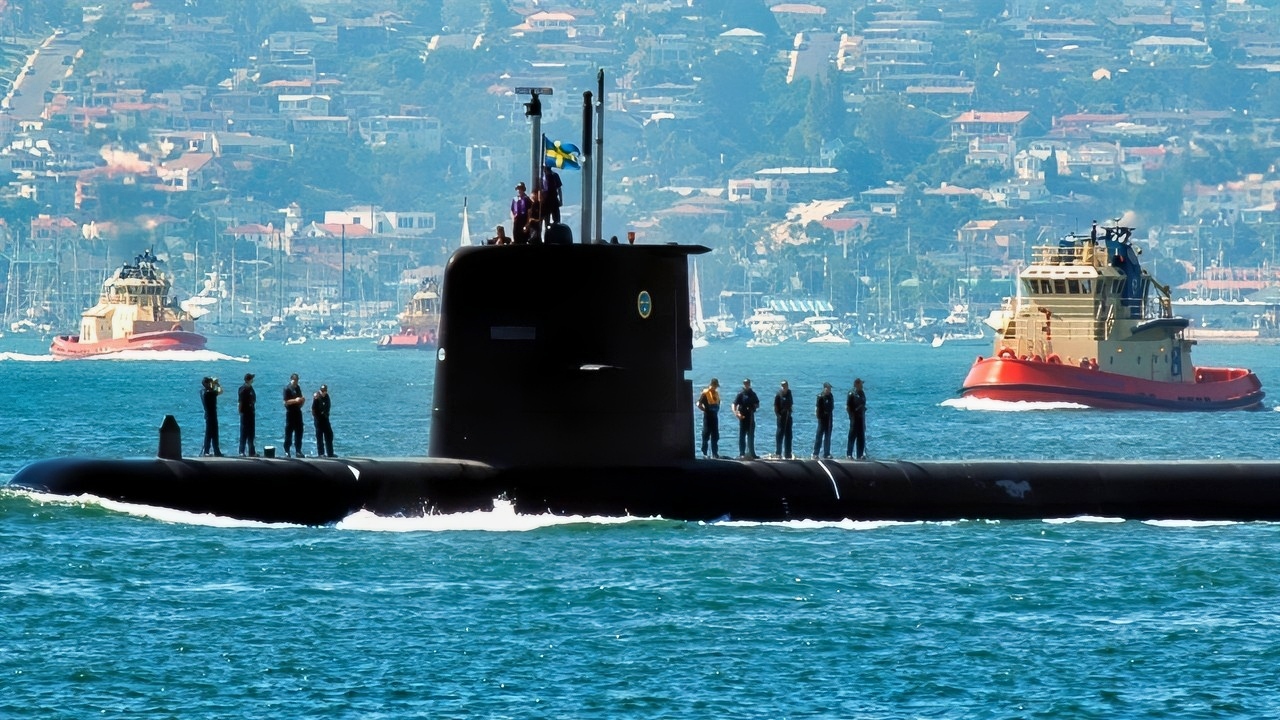
BALTIC SEA (March 13, 2016) Swedish submarine HSWMS Halland surfaces in preparations for a small-boat transfer during exercise BALTOPS, June 7, 2016. BALTOPS is an annual recurring multinational exercise designed to improve interoperability, enhance flexibility and demonstrate the resolve of allied and partner nations to defend the Baltic region. (U.S. Navy photo by Lt. Daniel Foose/Released)
Instead, they provide commanders and planners with valuable data on where detection gaps may exist, how submarine crews could exploit them, and how ASW tactics need to adapt.
Two well-documented cases – one involving a Swedish AIP-equipped submarine and another involving a Canadian diesel-electric boat during a NATO exercise – illustrate how these simulations work and why they continue to inform naval training and planning to this day.
HMS Gotland vs USS Ronald Reagan
In 2005, during a U.S.-hostile model war game that took place off Southern California, the Swedish submarine HMS Gotland – a diesel-electric boat fitted with an air-independent propulsion (AIP) system – reportedly penetrated the defensive screen around the nuclear-powered carrier USS Ronald Reagan and registered multiple virtual torpedo hits, effectively “sinking” the multi-billion-dollar vessel.
Gotland’s ability to remain submerged, silent, and completely undetected – thanks to its low acoustic signature – allowed it to exploit gaps in such a way that it proved it could take out a vastly superior vessel in terms of size and firepower.
The submarine exploited gaps in the carrier group’s antisubmarine defenses, which included destroyers, helicopters, patrol aircraft, and sonar arrays. And the exercise stunned the world; the submarine, after all, cost an order of magnitude less than the carrier it “sank.”
It may sound alarming, but these kinds of exercises are necessary for naval forces to be adequately prepared.
The result forced a reevaluation of ASW training within the U.S. Navy and ensured that future carrier strike groups would be better prepared.
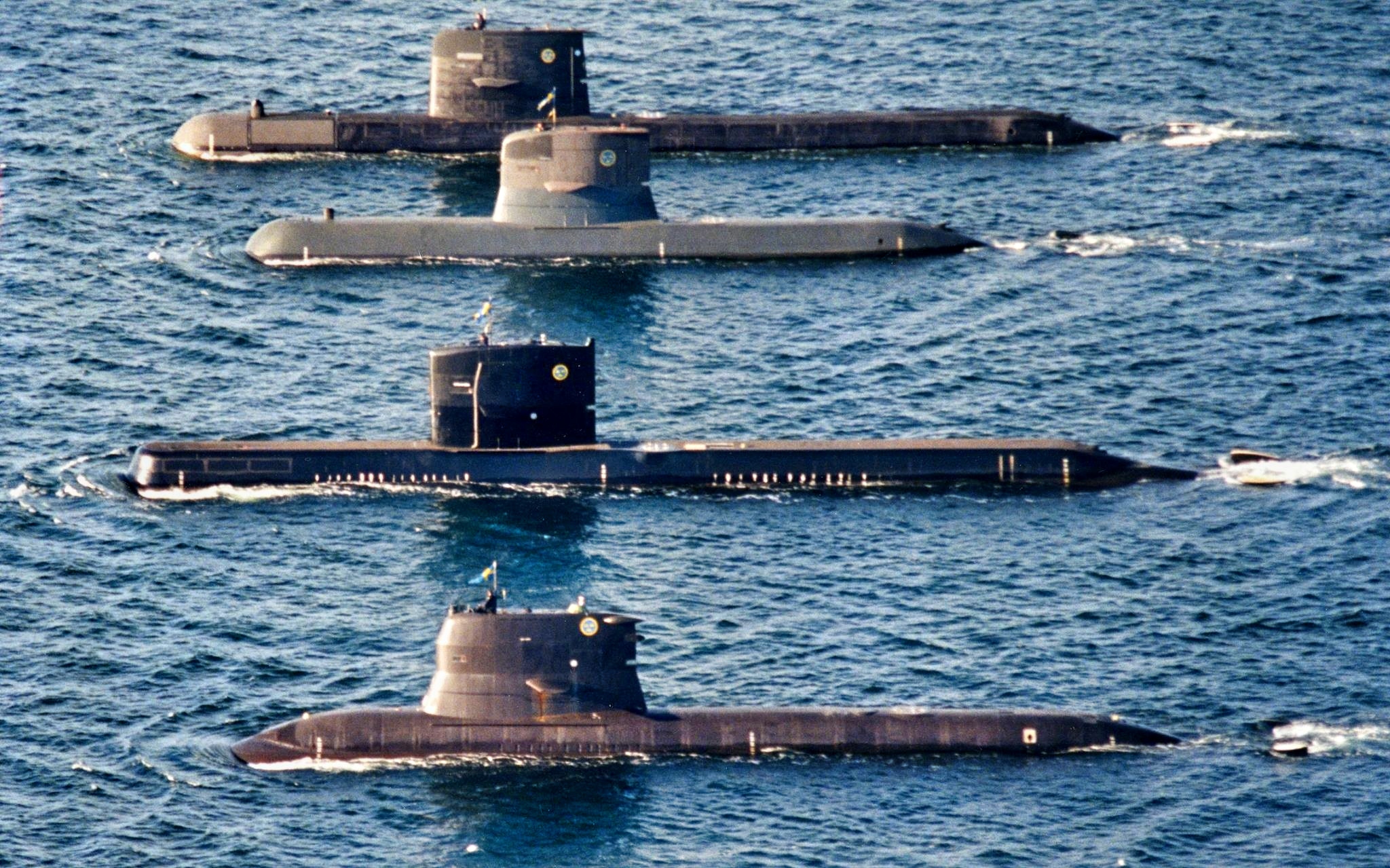
Gotland-Class Submarines. Image Credit: Creative Commons.
But this matters now: AIP-equipped diesel-electric submarines now proliferate globally because they’re cheaper to build and operate than nuclear boats. The Gotland case today remains a cautionary tale, and one that won’t be forgotten any time soon.
HMCS Okanagan vs USS Dwight D. Eisenhower
This example is remarkable for a different reason: it proved that even older subs can penetrate modern carrier screens.
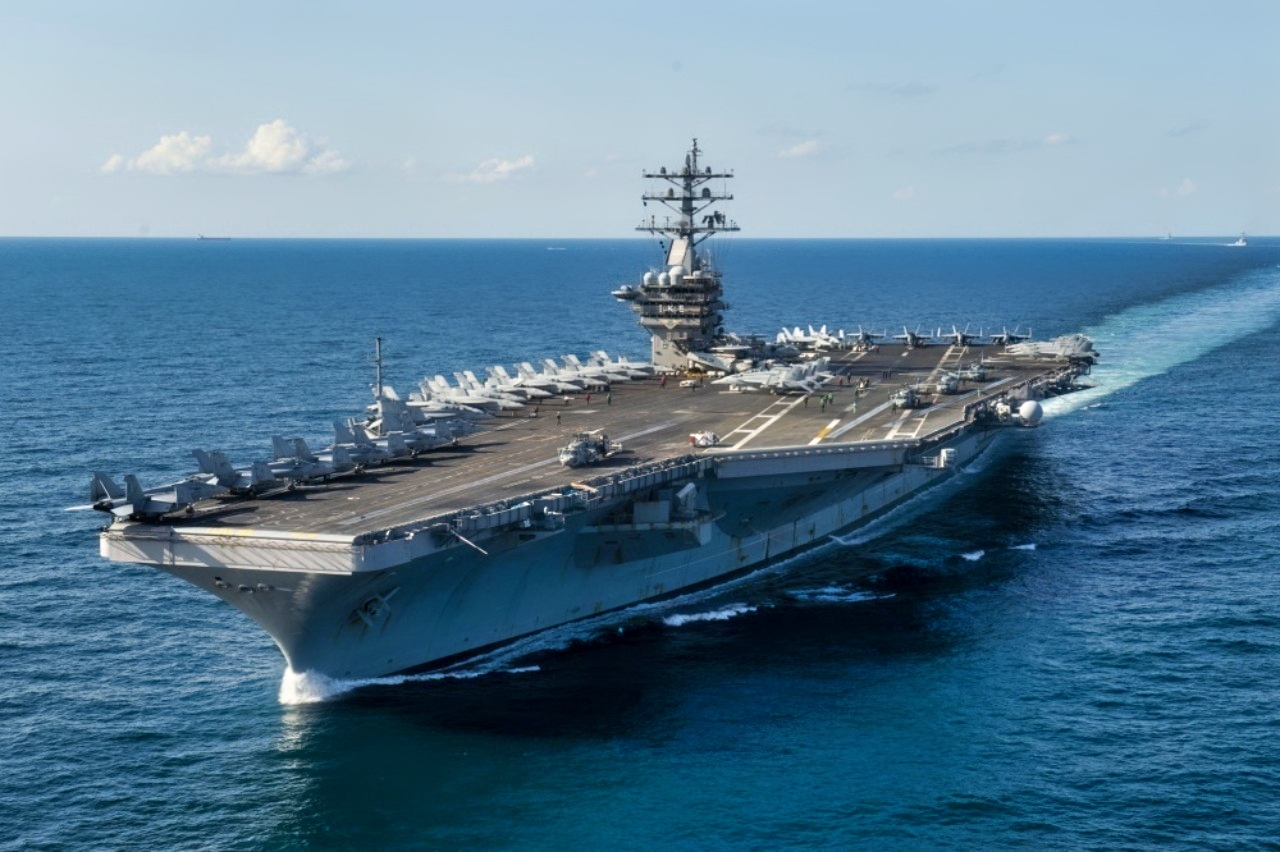
During a 1981 NATO exercise in the Atlantic/North Atlantic region, a conventional diesel-electric submarine of Canada’s Oberon-class managed to slip through the escort screen protecting USS Dwight D. Eisenhower and register a successful simulated torpedo strike – effectively “sinking” the carrier.
Despite being older, legacy submarine technology – in this case from the 1960s/70s – the Oberon-class submarine proved capable of exploiting detection gaps and acting upon that information.
It raised serious questions about over-reliance on technology rather than tactics, meaning that despite the West having the best hardware and technology, smaller forces could exploit those gaps and cause significant damage.
190928-N-YZ751-8022
ATLANTIC OCEAN (Sept. 28, 2019) The aircraft carrier USS Dwight D. Eisenhower (CVN 69) transits the Atlantic Ocean with ships assigned to Carrier Strike Group (CSG) 10 and aircraft assigned to Carrier Air Wing (CVW) 3 during a photo exercise to conclude Tailored Ship’s Training Availability (TSTA) and Final Evaluation Problem (FEP) as part of the basic phase of the Optimized Fleet Response Plan. (U.S. Navy photo by Mass Communication Specialist 1st Class Tony D. Curtis/Released)
It proved, as did many other simulations, that the threat is not limited to the latest generation of stealth boats and that larger forces were always vulnerable.
Older, less glamorous submarines can still be extremely dangerous under the right conditions. And for naval strategists, the lesson was clear: ASW defense cannot take its technological superiority for granted and must always anticipate adversaries employing every tool at their disposal to undermine it.
Undersea Forces Expand
Today, these scenarios carry relevance as several navies expand their undersea forces, most notably China’s ongoing push to field more advanced Yuan-class AIP submarines.
The Pentagon is well aware that Beijing is increasing both the quality and quantity of its submarine fleet, and that this trend will only continue and further complicate carrier operations in the western Pacific over the next decade.
Exercises like the Gotland and Oberon cases are therefore essential reference points for planners looking to determine the next steps for the U.S. Navy.
It may be a change in tactics, but it also may mean a change in hardware. And as great-power competition intensifies at sea, all sides will ultimately be forced to change how they use their carriers, submarines, and drone technologies in maritime environments.
About the Author:
Jack Buckby is a British author, counter-extremism researcher, and journalist based in New York who writes frequently for National Security Journal. Reporting on the U.K., Europe, and the U.S., he works to analyze and understand left-wing and right-wing radicalization, and reports on Western governments’ approaches to the pressing issues of today. His books and research papers explore these themes and propose pragmatic solutions to our increasingly polarized society. His latest book is The Truth Teller: RFK Jr. and the Case for a Post-Partisan Presidency.
More Military
The Army’s AH-64E Apache Helicopter Can Destroy Drones with Missiles
U.S. Navy Iowa-Class Battleship USS New Jersey’s ‘Comeback’ Is Now Complete
Blaze of Glory: The SR-71 Blackbird Retired Hitting Mach 3.21


