

Key Points and Summary – Germany is war-gaming a mass-casualty scenario—up to 1,000 wounded soldiers per day—amid Russian airspace violations and warnings of possible conflict by 2029.
-Surgeon General Ralf Hoffmann says Ukraine’s drone-saturated battlefield is reshaping injuries toward blasts and burns, complicating evacuation and forcing longer stabilization times.
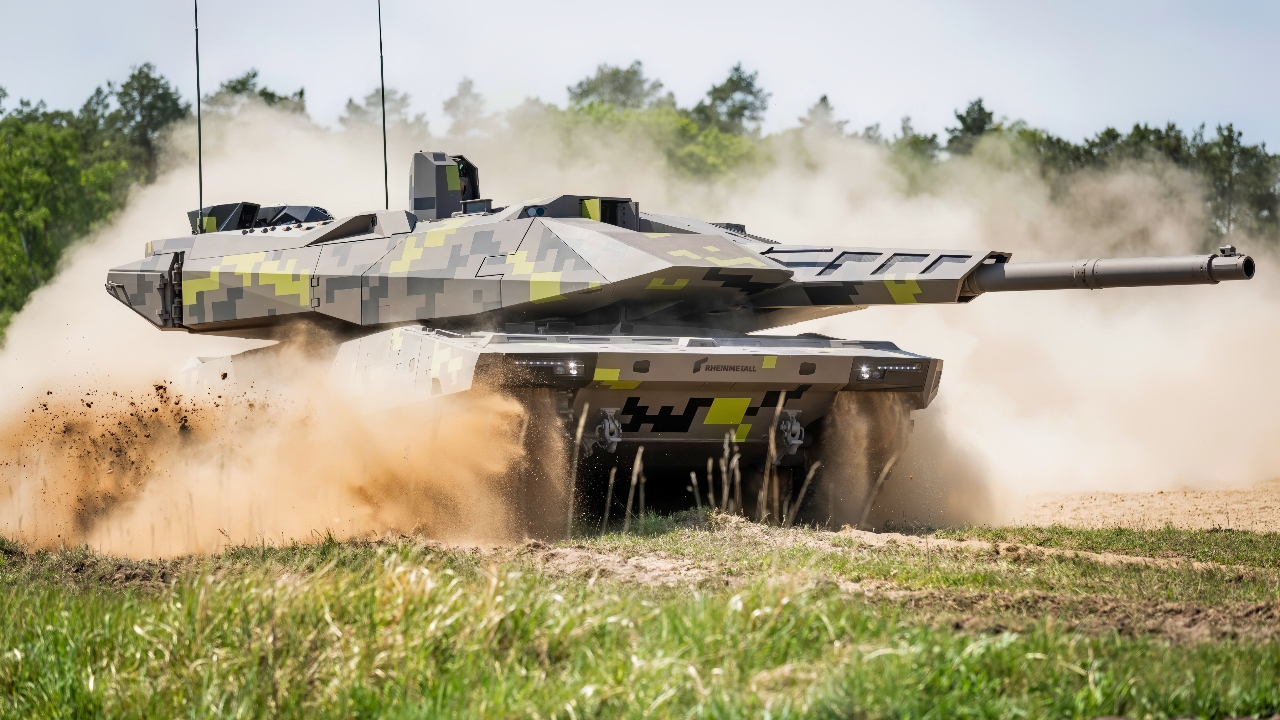
Germany Rheinmetall Panther KF51 Tank. Image Credit: Creative Commons.
-Berlin is evaluating hospital trains, buses, and expanded aeromedical lift, while boosting its 15,000-strong medical service and earmarking roughly 15,000 hospital beds from a 440,000-bed capacity.
The planning reflects NATO’s urgency: if Moscow rebuilds after a Ukraine cease-fire, Germany intends to have the logistics, transport, and clinical throughput to absorb high daily casualties.
Germany Fears What a War with Russia Would Look Like
WARSAW, POLAND – Germany’s armed forces are projecting up to 1,000 wounded military personnel per day in the event of a war between NATO and Russia.
Until recently, a real force-on-force, full-scale armed conflict in Europe beyond the borders of Ukraine—where fighting has raged for three years and 7 months—seemed too hypothetical.
It was deemed too unlikely; many thought there was little cause for concrete, preventive measures to be taken.
The recent violations of Polish, Romanian, and Estonian airspace have brought the specter of such a conflict far closer to reality than before, causing military authorities in Germany to start asking serious questions about whether or not the nation is prepared for the eventuality of a full-scale conventional war.
Germany’s armed forces are therefore developing plans for how they would treat up to as many as 1,000 wounded troops per day in the event of a large-scale conflict between NATO and Russia.
This planning also takes place with two years’ worth of warnings from other alliance members in the background—adding to a sense of urgency.
These are warnings that Russia would most likely attack NATO anytime from 2029 onwards. Some of these warnings have even come from Germany’s own defense minister.
Most of these estimates are based on a calculus that, should Moscow sign a peace deal and agree to lines of demarcation in Ukraine, Russian President Vladimir Putin might immediately reconstitute his military.
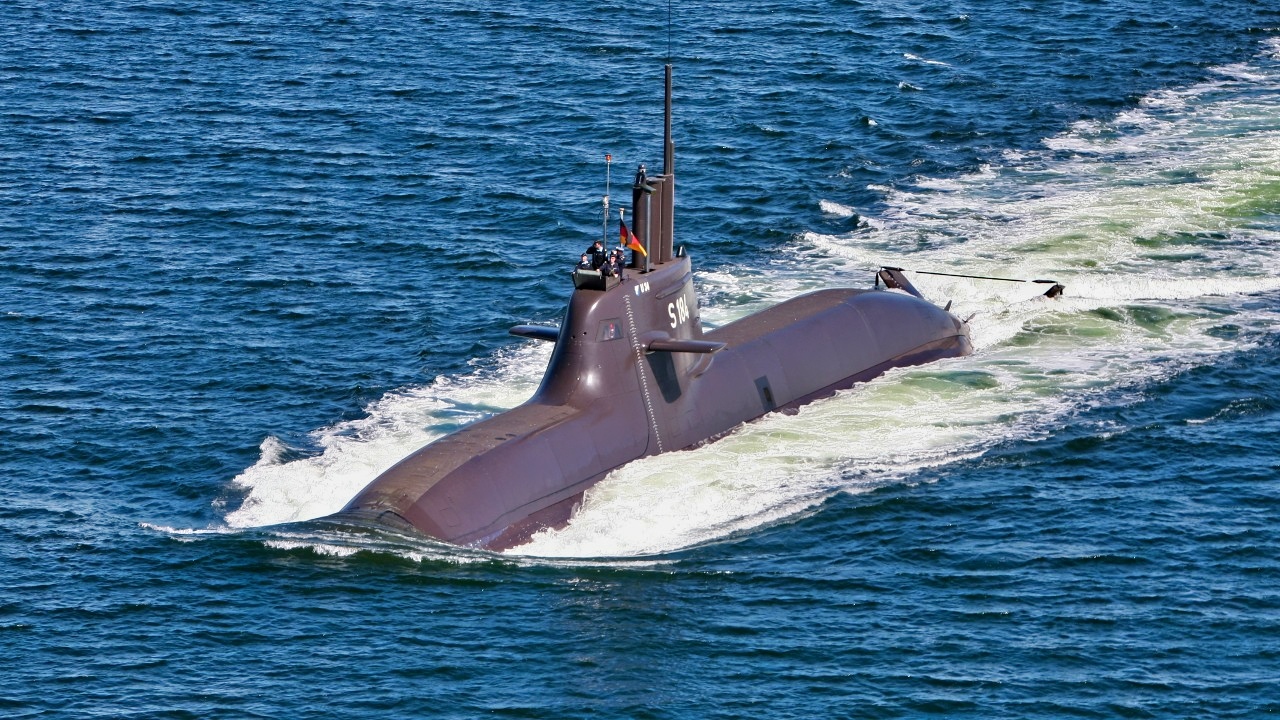
Type 212A. Image Credit: Creative Commons.
He would then prepare for an assault on the alliance, and according to this line of thinking, he would require no more than 4-5 years to do so.
Sound of the Jets
Moscow has denied that it has any intentions of launching a war with the Western military alliance. But the latest incursions of Russian jets and drones into NATO alliance member nations’ airspace have raised concerns that Moscow may no longer be exercising the restraint it has to date.
Germany’s Surgeon General, Ralf Hoffmann, told media outlets that the number of wounded troops in a potential conflict would depend on the level of intensity on the battlefield, as well as the type of military units involved.
“Realistically, we are talking about a figure of around 1,000 wounded troops per day,” he told the Reuters news agency in an interview.
For months now, European military establishments have been planning for their medical service divisions to be prepared to treat a rapid influx of casualties.
“It goes without saying that these preparations are based on the eventuality of a conflict with Moscow,” said a former US military officer who was previously assigned to duty here in Poland.
“And obviously, the level of anxiety that has precipitated that planning is Russia’s full-scale invasion of Ukraine that began in February 2022. But these incidents involving Poland, Romania, and Estonia—plus these ‘mystery drone’ appearances over Copenhagen and Oslo—make it look like Moscow has upped the ante in the gamesmanship they are engaging in,” he continued.
Preparing for a New Kind of War
The Ukraine War is Europe’s largest since World War II, and it is a significantly different war than any other previous conflict. Germany is also closely monitoring the hostilities and continually adapting its medical training. The most important part of that process, according to German military officials, is to incorporate lessons learned from the war into the process.

An AH-64 “Apache” attack helicopter assigned to 1st Battalion, 211th Aviation Regiment, flies overhead during Training Exercise Hydra on Utah Test and Training Range, Utah, May 7, 2025. Exercise Hydra is a Utah National Guard-led, joint, multi-domain combat training exercise designed to simulate real-world operations across air, land, and cyber domains. The exercise brings together the 151st Wing (KC-135), 419th Fighter Wing (F-35), 19th Special Forces Group, 65th Field Artillery Brigade, and multiple Army and Air Force elements to test joint targeting, rapid insertion, battlefield communication, and dynamic problem-solving.
(Utah Army National Guard photo taken by Spc. Dustin B. Smith)
“The nature of warfare has changed dramatically in Ukraine,” Hoffmann said, referring to the impact this has had on the more typical type of battlefield wounds. The once common gunshot injuries are now less common and more often than not soldiers “are now suffering blast wounds and burns caused by drones and loitering munitions.”
Ukrainian soldiers characterize the drone-infested corridor that exists from 10 km on either side of the frontlines as the “kill zone.” They use this description, reads the Reuters coverage of the story, “because remotely piloted unmanned aerial vehicles (UAVs) deployed by both sides can swiftly spot and neutralise targets.”
The constant drone coverage overhead means “the Ukrainians often cannot evacuate their wounded fast enough because drones are buzzing overhead everywhere,” Hoffmann said.
The implication is that the difficulty of finding a “safe window” for moving wounded creates a need for prolonged periods to stabilize the condition of injured soldiers. This requires keeping these personnel safe and their vital signs normal for what sometimes can be hours.
Hoffmann also stated that flexible transport options were necessary for wounded troops, citing Ukraine’s use of hospital trains. The German military is thus now examining the feasibility of hospital trains and buses, as well as expanding its use of air medical evacuation, he said.
The German military’s 15,000-strong medical service would be expanded to meet future demands, he added.
He also estimated that approximately 15,000 hospital beds from Germany’s total capacity of up to 440,000 would be required in the event of war.
About the Author: Reuben F. Johnson
Reuben F. Johnson has thirty-six years of experience analyzing and reporting on foreign weapons systems, defense technologies, and international arms export policy. Johnson is the Director of Research at the Casimir Pulaski Foundation. He is also a survivor of the Russian invasion of Ukraine in February 2022. He worked for years in the American defense industry as a foreign technology analyst and later as a consultant for the U.S. Department of Defense, the Departments of the Navy and Air Force, and the governments of the United Kingdom and Australia. In 2022-2023, he won two awards in a row for his defense reporting. He holds a bachelor’s degree from DePauw University and a master’s degree from Miami University in Ohio, specializing in Soviet and Russian studies. He lives in Warsaw.
More Military
The F-35A Stealth Fighter Is Also a Stealth Bomber
Mach 2.65 F-111 ‘Aardvark’ Strike Fighter Has a Message for the U.S. Military
Russia’s MiG-29 Fulcrum Fighter Has a Message for NATO
The X-40A Space Plane Has a Message for the U.S. Military
The Mach 6.7 X-15 Space Plane Has a Message for the U.S. Air Force


Jim
September 25, 2025 at 3:27 pm
Considering the state of readiness and capability the German army had fallen to, it’s appropriate for Germany to bring their readiness and logistics up to a higher level of preparedness. Fine.
Chancellor of Germany, Friedrich Merz, has an approval level according to the latest poll, an INSA survey, released in late September found that only 26% of respondents approved of Merz’s work.
To have that level of approval this early in his Chancellorship is a red flag in anybody’s political playbook.
Why might that be? Germany is in an economic crisis and has been in recession for three years and most Germans are concerned about Germany’s economy, not the Ukraine war.
But the Ukraine War is all Merz seems to talk about and focused on. Germans’ are left wondering why and dissatisfied.
To the extent Chancellor Merz obsesses about Ukraine and leaves Germans in the lurch economically, his polls will go further down.
Fact: it’s not in Germany’s interest or the United States interest to see war between Germany and Russia.
Germans understand the logic, but apparently not Friedrich Merz. He’s caught up in war fever and also being “part of the club” of European leaders obsessed with Ukraine.
Hint, all the Big Three, France, Britain, and Germany’s leaders have low approval numbers.
Wonder why?
There’s a sucking sound and it’s the Ukraine War sucking the life blood from these leader’s approval numbers.
Maybe, it’s time to wise up… Ukraine is poison.
Swamplaw Yankee
September 29, 2025 at 3:27 am
The Merkel poison was injected into Germany for years. Will Germany ever even start to recover from her vile poison inserted into every city and town.
Putin can mobilize another 1 0r 2 million conscripts at will. They will be uniformed and armed in 2-4 weeks. What will Germany do in that time? Zip.
And, march the 2 million armed conscripts into europe, perhaps thru Germany + Orban land. Orban is cuddling with Putin for another 7 months. Actually, other than Poland, zip, zero state in the EU can even identify a drone let alone stop millions of Putin controlled drones/missiles from blowing up all armour and every soldier. Easily. There are no Ukrainian front line experienced drone fighters around to save their exposed to drone butts!! -30-