

The United Kingdom (UK) has been one of the strongest supporters of Ukraine in its war against Russia.
Former Prime Minister Boris Johnson was the first major Western head of state to visit Kyiv and declare his support for Ukraine shortly after the February 2022 invasion.

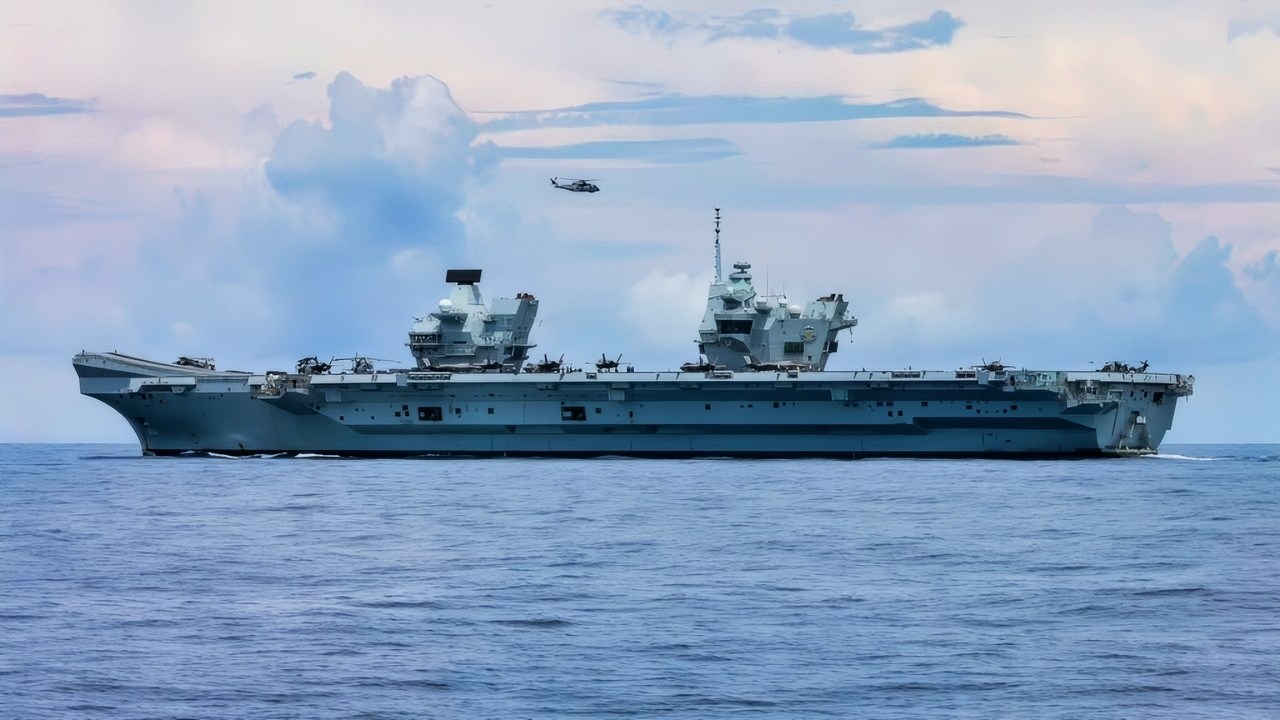
HMS Prince of Wales. Image Credit: Royal Navy.
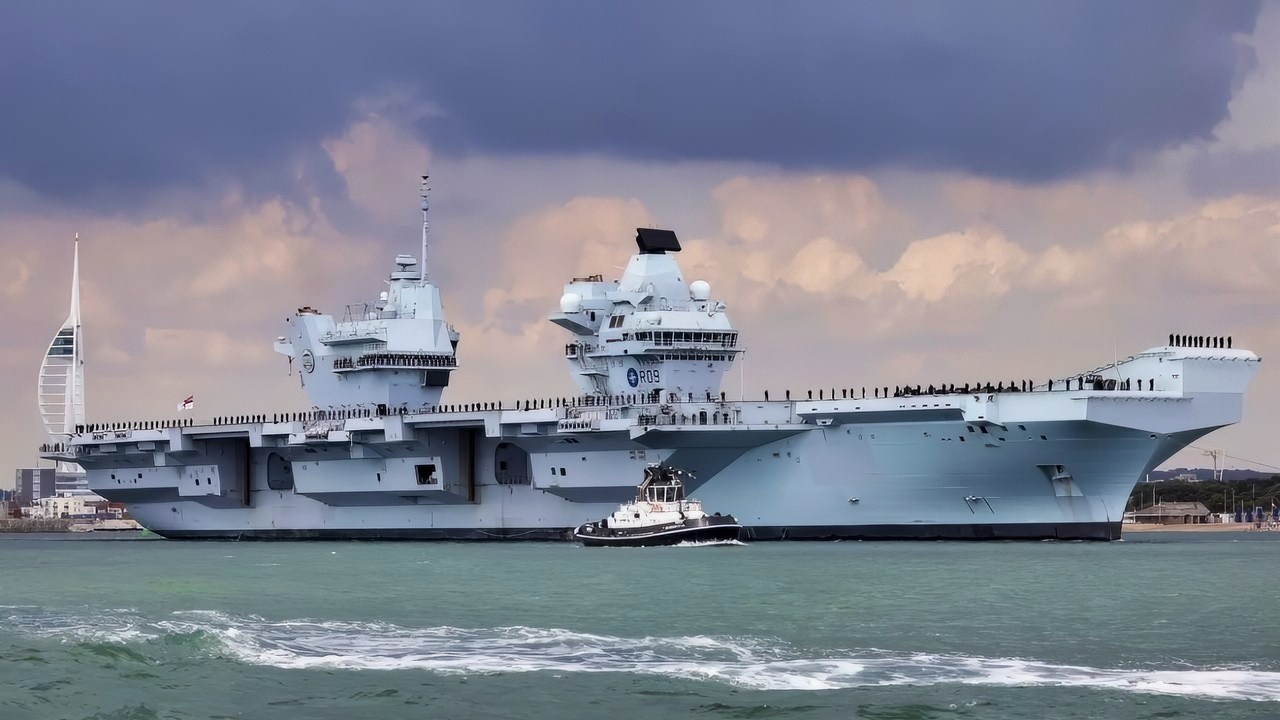
HMS Prince of Wales Aircraft Carrier. Image Credit: Royal Navy.
The UK has served as a training ground for thousands of Ukrainian soldiers.
It has also supplied numerous weapon systems to Kyiv – namely, the famous NLAW anti-tank guided missile, which was used in the early days of the war.
But the UK’s diplomatic support and willingness to aid Ukraine in the international arena have not been matched by its defense spending, which falls short of the NATO goal for all nations to eventually reach 5 percent of GDP in defense outlays.
Britain risks “global irrelevance” unless it rebuilds its military and meets those NATO spending goals, the Polish foreign minister has warned in an interview with the London Daily Telegraph on 23 June.
Poland’s Radosław Sikorski has strongly called for the UK Government to put forward a credible defence plan at next month’s NATO summit, which will be held in Ankara, Turkey.
He has pointedly stated that Britain would lose its voice on the world stage if it failed to match its rhetoric and diplomatic muscle with a larger, modernized military establishment.
“If you want to be a global player, you need to back up your diplomacy with force,” he told The Telegraph in an interview. “Either you pay for it, or it will wane”.
Britain has unique convening power, a global outlook, first-class intelligence, and all that. But, when push comes to shove, you either have the ships to send to the Gulf or the brigades to deploy to Ukraine, or you don’t.”
The NATO Summit and Defense Spending
The UK’s defense establishment has undergone no small amount of turbulence this month. The previous Labor Defense Secretary, John Healey, resigned on 11 June, with his deputy following suit the following day.
In his resignation letter, he accused then-Prime Minister Keir Starmer of putting Britain in harm’s way by submitting a defense investment plan that would only raise UK defense spending to 2.68 percent of GDP by 2030.
This is a parlous 0.08 percentage points higher than next year’s planned level.
All of these and other issues, with the Ukraine war hovering in the background, are expected to break into the open at next month’s NATO summit.
The issue of how to reach the required level of defense outlays also became markedly more complicated with Sir Keir Starmer’s resignation as the UK’s PM this past Monday.
Sikorski’s warnings about the UK and its defense planning reflect growing alarm among alliance members in Europe about Britain’s future commitments and role in the global security balance.
With two aircraft carriers, a major partner in the F-35 stealth fighter program, and a project with the US to build nuclear submarines for Australia, the UK is one of the few nations still able to project power around the world.
Poland Passing Up Britain
Sikorski, an Anglophile who was educated in Britain, lived in the country and held UK citizenship at one point, has concrete concerns about the Ukraine war and increasing hostility and aggression from Russia – a nation with which Poland has an unhappy history.
The problems the UK has had in coming to terms with its defense budgeting have sent waves of concern all the way to Warsaw.
Poland, in contrast, is also NATO’s fastest-arming military power. The country has more than doubled its defense spending since Russia’s full-scale invasion of Ukraine in 2022.
This year, Poland will spend 4.8 percent of its GDP on defense, the highest level in the alliance. Last year at the NATO summit in The Hague, alliance members pledged to increase defense spending to 3.5 percent of GDP by 2035.
This is bound to be a difficult topic of discussion among the allies at the gathering in Ankara, since the UK falls well short of this mark and shows few signs of making any significant increases soon.
Sikorski said the UK needed to assure its allies that it remains committed to meeting those goals. “We now all have to do what we pledged ourselves to do at the Hague summit,” he said.
“We don’t need to do anything heroic – we just have to do what we declared we would do,” he continued. “Some countries risk falling foul of the Sikorski principle that ministers and heads of governments at NATO meetings should have one minute of speaking time for every one per cent of GDP their country spends on defense.”
About the Author: Reuben F. Johnson
Reuben F. Johnson has thirty-six years of experience analyzing and reporting on foreign weapons systems, defense technologies, and international arms export policy. Johnson is the Director of Research at the Casimir Pulaski Foundation. He is also a survivor of the Russian invasion of Ukraine in February 2022. He worked for years in the American defense industry as a foreign technology analyst and later as a consultant for the U.S. Department of Defense, the Departments of the Navy and Air Force, and the governments of the United Kingdom and Australia. In 2022-2023, he won two awards in a row for his defense reporting. He holds a bachelor’s degree from DePauw University and a master’s degree from Miami University in Ohio, specializing in Soviet and Russian studies. He lives in Warsaw.


Erik Knight
June 26, 2026 at 2:40 pm
So we don’t like the Americans (they are leaving), the French want to have a European Army (led by the French), the British Army is tiny and the British Royal Nave only has 11 warships (old too). The Russians may be dumb and unsophisticated but they are good at brute force. Putin has boasted the Russian Army could be at the English Channel in two weeks. If he avoids Poland he could be right.