


In 1966, Lockheed test pilot Bill Weaver became the only man in history to survive an SR-71 Blackbird disintegrating around him at Mach 3.18 and 78,000 feet. He never even pulled the ejection handle—the aircraft broke apart so violently that it hurled him out, and his pressure suit, similar to an astronaut’s spacesuit, kept him alive long enough to fall fifteen miles into denser air.
SR-71 Blackbird: The Legend Has Many Stories to Tell

SR-71. Image Credit: Creative Commons.
In 1966, the impossible happened: a man “ejected” from an aircraft at Mach 3. William “Bill” Weaver was a test pilot for Lockheed Martin.
In the mid-sixties, he was assigned to test-fly a certain highly classified supersonic aircraft, the SR-71 Blackbird.
During one test flight, Weaver conducted an in-flight stress test on the aircraft, flying it at a neck-breaking Mach 3.18 and an altitude of nearly 79,000 feet.
During this flight, the aircraft experienced a catastrophic mid-air break-up, ejecting Weaver.
Against all odds and seemingly against the laws of physics, he survived.
Bill Weaver and the SR-71 Blackbird
After leaving active military service, Bill Weaver joined Lockheed’s Skunk Works in 1956, a move that placed him among a small group of pilots tasked with turning radical aeronautical concepts into flyable machines.
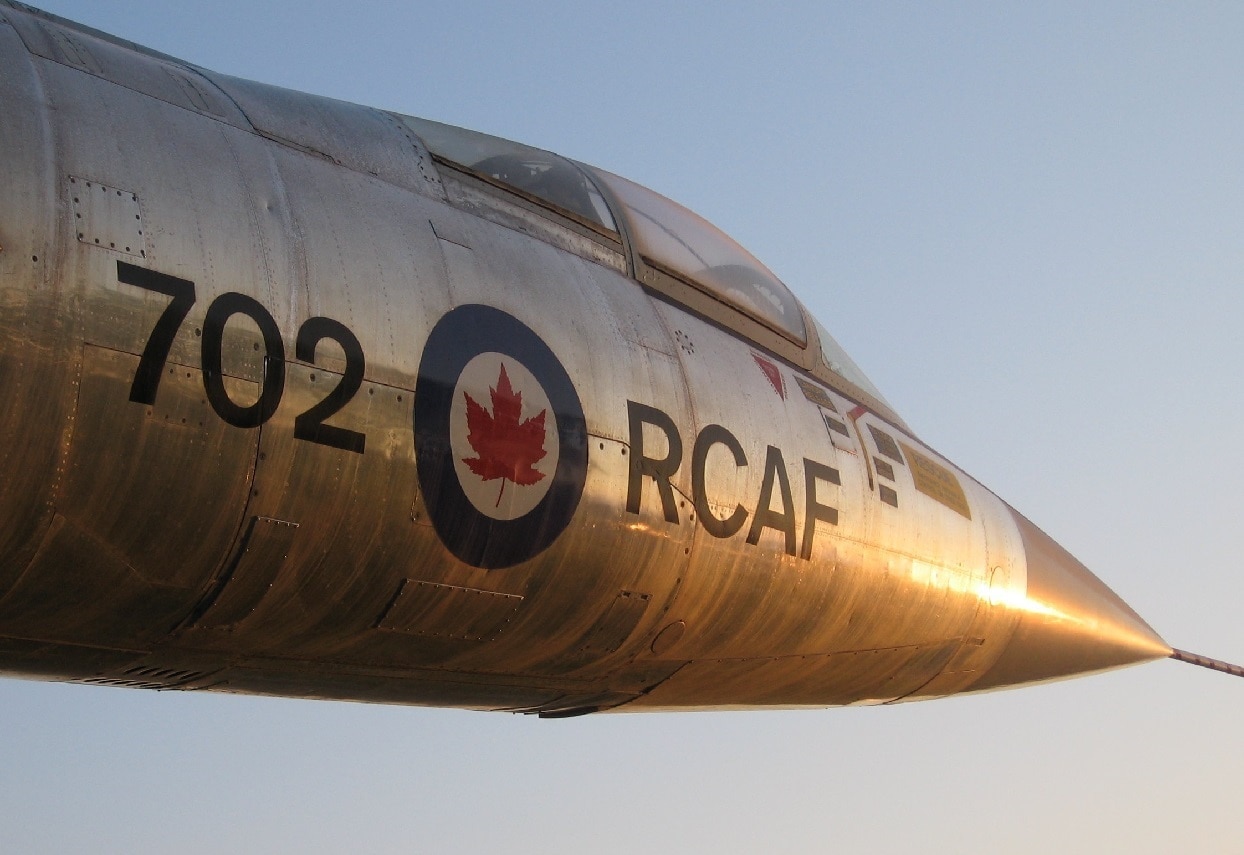
F-104. Image Credit: Creative Commons.
Over the next three decades, he would flight-test some of the most demanding aircraft ever built, including the Mach 2 F-104 Starfighter and the Mach 3-class Blackbird family.
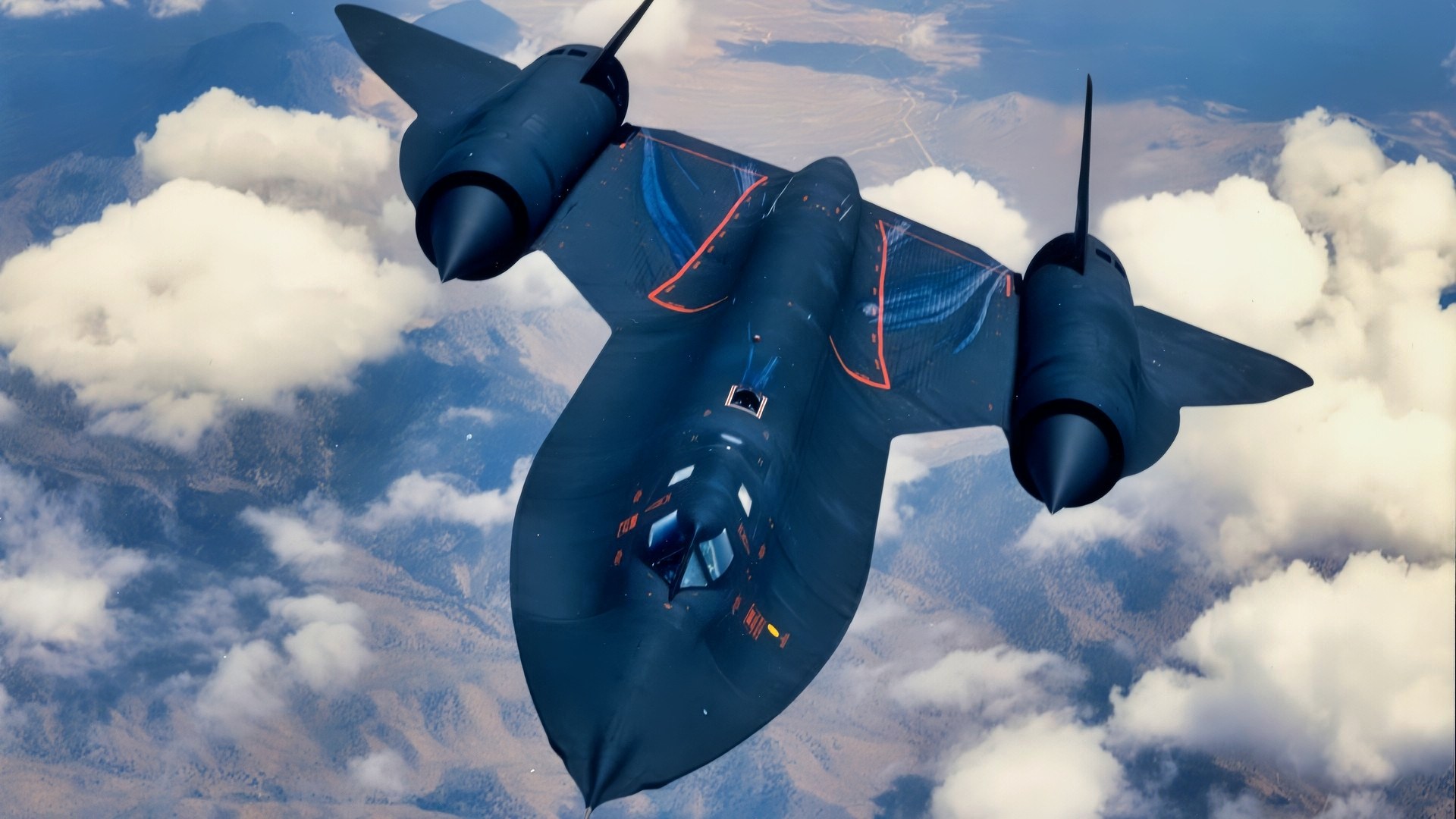
SR-71 Spy Plane in the Sky. Image Credit: Creative Commons.
These programs demanded not only exceptional flying skill but a deep understanding of aerodynamics, propulsion, and systems behavior in extreme flight conditions.
By the mid-1960s, the SR-71 was still in its developmental phase, and many of its defining characteristics were being refined through flight testing.
The Blackbird’s performance depended heavily on its variable geometry inlets, which managed shock waves to slow supersonic airflow to subsonic speeds before it entered the engines.
At Mach 3, those inlets generated most of the aircraft’s usable thrust, and even small disturbances could instantly create violent yawing or rolling moments.
Unstarts, events in which the shock wave was expelled from an inlet, were known hazards, but the program was still learning how to manage them safely under all conditions.
The Test Flight: Where it All Went Wrong
The flight of January 25, 1966, was designed to push the aircraft to its limits. Weaver was flying with Jim Zwayer, a Lockheed flight test reconnaissance and navigation systems specialist, seated in the rear cockpit.
Their mission was to evaluate procedures to improve high-Mach cruise efficiency by shifting the aircraft’s center of gravity aft. Doing so reduced trim drag and promised performance gains, but it also reduced the airplane’s inherent stability. In theory, the configuration was manageable, but in practice, it left very little margin of error if something went wrong.
After taking off from Edwards Air Force Base and completing an aerial refueling, Weaver accelerated the SR-71 to approximately Mach 3.2 and climbed to around 78,000 feet. Several minutes into the cruise, the automatic system controlling the right engine inlet malfunctioned, requiring Weaver to move that inlet to manual control. This, by itself, was no emergency. Unstarts were unpleasant but generally survivable, provided they could be quickly recaptured. The real danger lay in what happened next.
Things Go from Bad to Worse
As Weaver entered a planned right-hand bank, the right inlet suffered a severe unstart. The thrust on that side collapsed instantaneously, and the resulting asymmetric forces caused the airplane to yaw, roll, and pitch up violently.
Weaver applied full opposite control, but the combination of reduced stability, extreme aerodynamic loads, and asymmetric thrust pushed the aircraft beyond its controllable envelope. Within seconds, structural loads exceeded their design limits.
Weaver later recalled that the entire sequence unfolded so quickly that there was no meaningful opportunity to diagnose or recover. Communication with Zwayer was attempted but cut short due to massive g-forces building up.
The SR-71 did not crash in the conventional sense. It disintegrated in mid-air.
Portions of the structure failed almost simultaneously under the combined bending and torsional loads, and the aircraft essentially came apart around its crew.
Weaver blacked out during the breakup. It is a bit inaccurate to say that Weaver ejected himself from his aircraft.
He never actually pulled the ejection handle. Instead, it is more accurate to say that the aircraft broke apart so violently that it hurled him out.
How Weaver Survived the SR-71 “Ejection”
Bill Weaver’s survival was not caused by luck but a crucial piece of engineering: the SR-71 pressure suit. At altitudes approaching 80,000 feet, the atmosphere is too thin to sustain consciousness, let alone life.
Rapid decompression at such speeds normally causes immediate incapacitation. However, the suit provided full pressure and oxygen, similar to that of an astronaut’s spacesuit. While the forces involved should have been lethal, the suit preserved Weaver long enough for his body to survive the fall into denser air.
Weaver descended approximately fifteen miles. His parachute deployed automatically during the fall, and he eventually landed in New Mexico. He suffered serious injuries, including a dislocated shoulder and significant trauma from windblast and deceleration, but he was alive.
Jim Zwayer, tragically, did not survive. Investigations later concluded that Zwayer was killed almost instantly during the structural failure.
Aftermath and Lessons Learned
At Edwards Air Force Base, the loss of radar contact led flight controllers and program officials to assume that both crew members had been killed. That assumption was thankfully disproven when, hours later, the base received a collect phone call from a hospital in New Mexico. Bill Weaver, presumed dead, was on the line, much to the relief of the base.
The incident prompted an immediate investigation and provided the design team with valuable lessons. The team at Lockheed determined that performance optimization, particularly operating with an aft center of gravity, had eroded stability margins too far for certain flight regimes.
The incident accelerated improvements to the SR-71’s design, improving its safety and stability at higher speeds.
Weaver eventually returned to flying and continued his career at Lockheed, working on programs including the L-1011 TriStar and later serving as Lockheed’s chief test pilot and Division Manager of Commercial Flying Operations.
Over a career spanning more than thirty years, he flew hundreds of test missions, many of them in aircraft that pushed well beyond the comfort zone of contemporary aviation science.
Bill Weaver lived until his passing on July 28, 2021.
About the Author: Isaac Seitz
Isaac Seitz, a Defense Columnist, graduated from Patrick Henry College’s Strategic Intelligence and National Security program. He has also studied Russian at Middlebury Language Schools and has worked as an intelligence Analyst in the private sector.


