

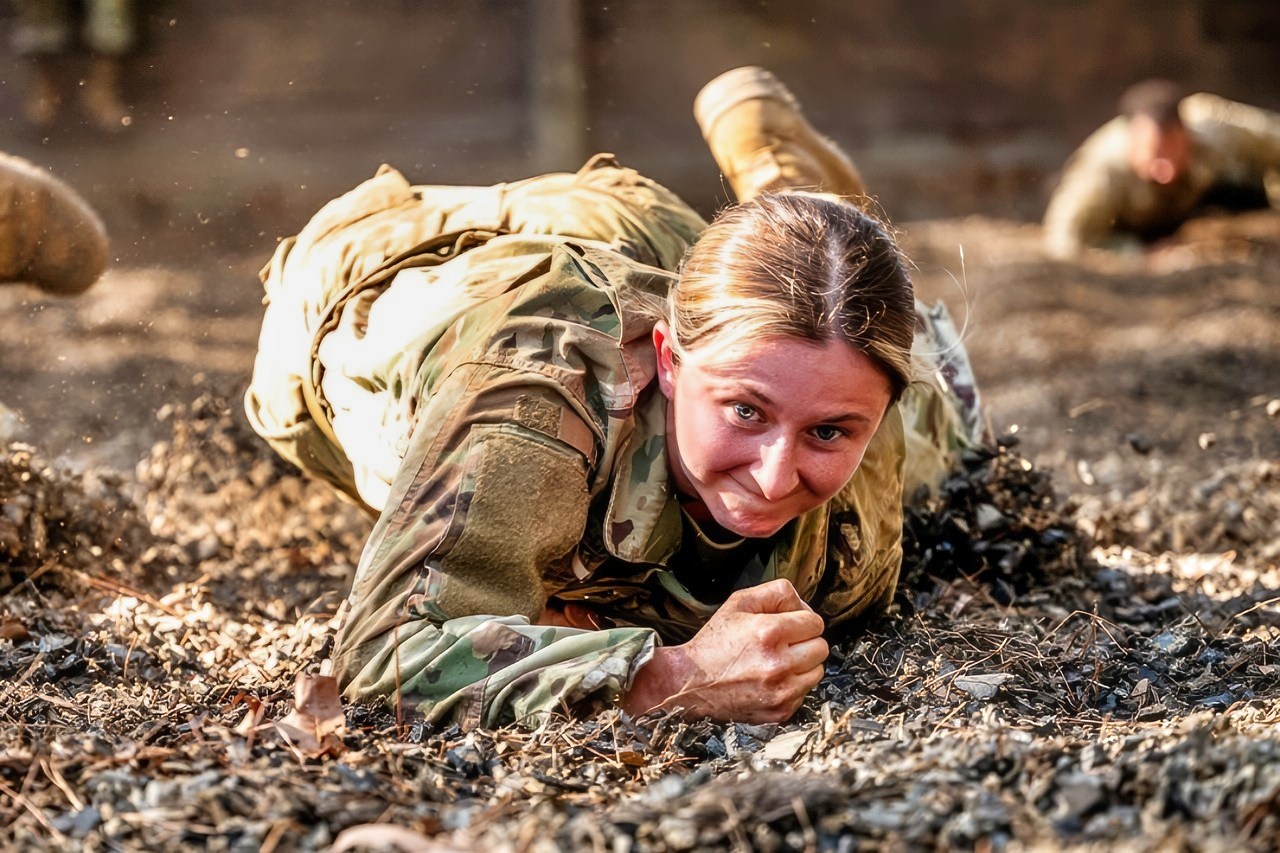
Key Points and Summary – A U.S. ground invasion of Venezuela is highly unlikely—but if it happened, the real war would start after Maduro fell.
-Expert Steve Balestrieri argues that America’s poor track record in counterinsurgency, from Vietnam to Iraq and Afghanistan, would collide with Venezuela’s size, dense cities, and fractured politics.
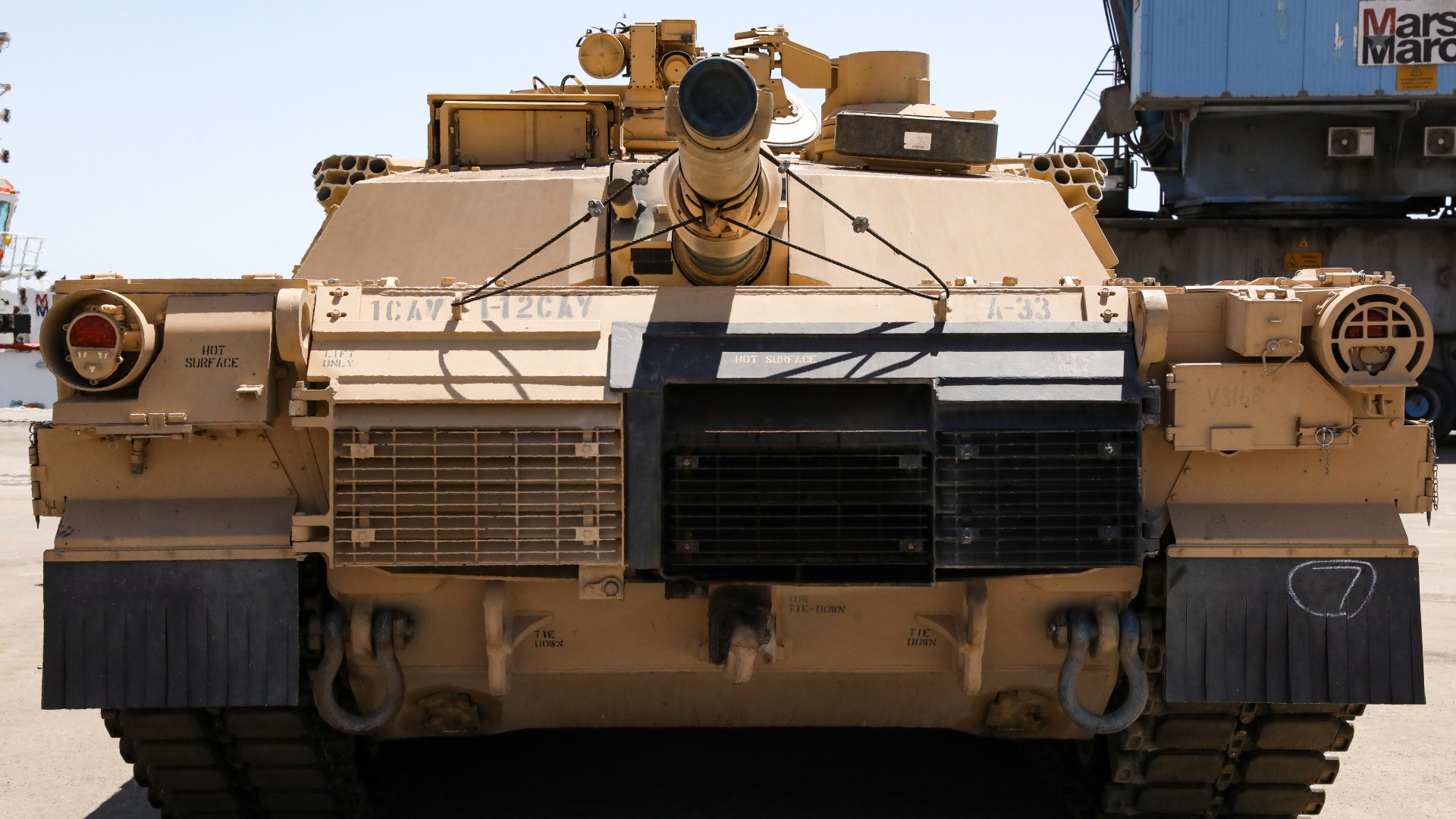
A U.S. Army M1A3 Abrams Tank from the 1-12 Cavalry Squadron, 1st Cavalry Division waiting to be guided onto a loading vehicle and secured for transport at the Port of Agadir, June 3, 2022, Agadir, Morocco. African Lion 2022 is U.S. Africa Command’s largest, premier, joint, annual exercise hosted by Morocco, Ghana, Senegal and Tunisia, June 6 – 30. More than 7,500 participants from 28 nations and NATO train together with a focus on enhancing readiness for U.S. and partner nation forces. AL22 is a joint all-domain, multi-component and multinational exercise, employing a full array of mission capabilities with the goal to strengthen interoperability among participants and set the theater for strategic access. (U.S. Army photo by PFC Donald Franklin)
-Any invasion would likely trigger urban combat, rural guerrilla warfare, and resistance from criminal gangs protecting lucrative smuggling and mining networks.
-Russia, Cuba, and Iran would feed the conflict with intelligence, advisors, and logistics. Latin America would rally against Washington, leaving the U.S. isolated in a long, bloody, and unnecessary quagmire.
In 1 Word: Insurgency
What Would An Insurgency In Venezuela Look Like?
The prospect of a U.S. ground invasion of Venezuela is extremely unlikely. The logistical costs in personnel and material would be extremely high, and it would be highly unpopular with the U.S. population and Congress.
It would then entail another long, expensive nation-building operation—precisely the type that U.S. President Donald Trump has publicly stated he wants to avoid—and is not in the interests of the United States.
But Trump has left open the option of a ground invasion for political purposes, to try to force strongman Nicolas Maduro from power.
But if the U.S. did invade Venezuela, it would generate a large counterinsurgency campaign in response. And Venezuela is four times the size of Iraq, making it even harder from a counterinsurgency standpoint.
The US Isn’t Good At Counterinsurgency:
The United States military is not good at counterinsurgency (COIN) for a couple of reasons.
The U.S. has a preference for conventional warfare, technological fixes, and a focus on “body counts” over population protection, leading to cultural insensitivity, impatience with long-term political solutions, and alienation of local populations.
The way the U.S. tried to fight in Vietnam, Iraq, and Afghanistan—conflicts during which military actions often ignored underlying political issues and failed to build trust with the people—is not a recipe for winning.
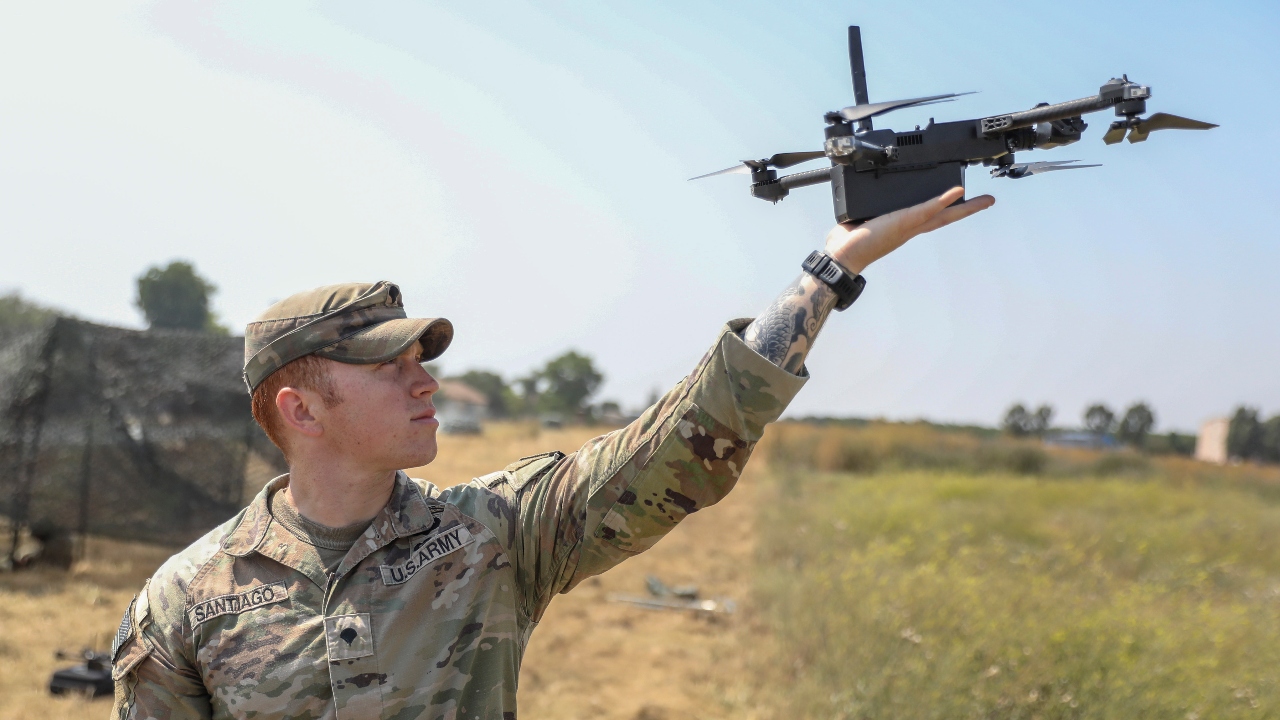
U.S. Army Spc. Harry Santiago IV, assigned to the Multi-Functional Reconnaissance Company, 2nd Brigade Combat Team, 101st Airborne Division (Air Assault), launches a Skydio X2D drone on Mihail Kogalniceanu Air Base, Romania, July 09, 2025. V Corps provides essential support to multinational training and exercises of robust and evolving complexity, scope, scale, rigor, and operational conditions and provides targeted security force assistance alongside national and multinational corps and divisions. (U.S. Army photo by Spc. Breanna Bradford)
U.S. military doctrine prioritizes large-scale, technologically advanced battles, which are ill-suited for irregular warfare during which the enemy blends with the population.
A fundamental COIN principle is to protect the population, but U.S. forces often inadvertently alienate them through large-scale operations or a focus on enemy kills rather than securing civilians.
The U.S. often separates war from politics and lacks the cultural empathy and patience for complex, long-term nation-building required to win “hearts and minds.”
Failure to effectively use information and communication technology to connect with local populations often leaves this space open to insurgents’ propaganda.
Insurgency In Venezuela Would Exacerbate These Issues
An insurgency in Venezuela would likely be a messy, multi-faceted conflict involving urban unrest, rural guerrilla tactics, and significant foreign involvement. It would be characterized by state repression, militias, criminal gangs, disgruntled military personnel, and refugee crises.
External powers such as Russia and Cuba are backing the Venezuelan government, and their support could turn the conflict into a low-intensity civil war with widespread civilian suffering. Iranian influence in Venezuela also has been growing for decades.
There wouldn’t be a traditional, unified rebellion, but a breakdown of state control, leading to power vacuums and a chaotic mix of actors.
Carl von Clausewitz wrote a cautionary tale that the U.S. has frequently ignored: “The first, the supreme, the most far-reaching act of judgment that the statesman and commander have to make is to establish by that test the kind of war on which they are embarking; neither mistaking it for, nor trying to turn it into, something that is alien to its nature.”

An M1A2 Abrams tanks, assigned to 1st Battalion, 16th Infantry Regiment, 1st Armored Brigade Combat Team, 1st Infantry Division, maneuver into fighting position during a battalion live-fire range during Agile Spirit 19 at Orpholo Training Area, Georgia, August 9, 2019. AgS19 is a joint, multinational exercise co-led by the Georgian Defense Forces and U.S. Army Europe which incorporates a command post exercise, field training and joint multinational live fires. (U.S. Army photo by Staff Sgt. True Thao)
Urban & Rural Warfare
After a dedicated air campaign to hammer Venezuela’s air defenses, a conventional campaign would quickly smash their conventional forces, which are ill-trained and equipped for a traditional fight.
But a U.S. invasion would automatically turn a large segment of the population that opposes Maduro against the U.S. instead. They would rally around their sovereignty rather than oust a corrupt dictator who ran a once-prosperous country into the ground economically.
Urban warfare would break out. The United States’ tremendous advantage in military might would be mitigated by terrain favoring defenders, difficulty supporting troops, diminishing high-tech advantages, civilian presence complicating targeting, and the lack of a dedicated doctrine.
Cities offer defenders cover and concealment, nullifying some U.S. mobility and firepower advantages.
Tanks get bogged down or become vulnerable; conventional assets struggle, requiring infantry-heavy, complex operations, as seen in Fallujah.

The 1-148th Field Artillery Regiment is the latest unit in the Idaho Army National Guard to upgrade its combat capability as modernization efforts across the U.S. Army and Army National Guard take shape.
Urban combat is highly lethal and resource-intensive, consuming far more troops and supplies than anticipated, with high casualty rates.
Insurgent groups could range from organized opposition militants to criminal syndicates, and even disillusioned military defectors lacking unified command.
Foreign Interference Will Be Common
Russia and Cuba would likely provide intelligence, logistics, and electronic warfare support to the government, while external powers might back opposition factions, escalating conflict.
Iran provides military advisors, training (including drone operations at a joint facility), and potentially arms, using Venezuela as a logistical hub for regional operations and intelligence gathering.
Venezuela serves as Iran’s key partner in Latin America, expanding its diplomatic and commercial influence and challenging U.S. hegemony in the region.
Criminal Gangs Will Fight To Protect Their Interests:
Venezuela is rife with criminal gangs. Illicit drug trade, illegal mining, and smuggling has proliferated thanks to the complicity of Maduro’s regime.
While they have no loyalty to Maduro, save for the blind eye that the government has turned toward their activities, these groups will fight to preserve their interests, especially against a foreign occupying power. They know the terrain and could intimidate the population.

U.S. Soldiers assigned to the 2nd Armored Brigade Combat Team, 1st Cavalry Division supporting the 4th Infantry Division maneuver an M1A2 Abrams tank and M2 Bradley Fighting Vehicle past a simulated opposing force’s Leopard 2A6 tank during exercise Arrow 23 in Niinisalo, Finland, May 5, 2023. Exercise Arrow is an annual, multinational exercise involving armed forces from the U.S., U.K., Latvia, Lithuania and Estonia, who train with the Finnish Defense Forces in high-intensity, force-on-force engagements and live-fire exercises to increase military readiness and promote interoperability among partner nations. (U.S. Army National Guard photo by Sgt. John Schoebel)
Latin America Would Galvanize Against A US Invasion:
Maduro is not a popular dictator. And, as recent elections have shown in Honduras and elsewhere, he’s losing allies. No one would miss him if he’s ousted.
But Latin American politics is strewn with memories of U.S. interventions, and an invasion would turn every country against the United States. Any South American involvement in a post-invasion stabilization of the country would be extremely limited, leaving the U.S. to shoulder the burden.
So, getting rid of Maduro would be the easy part. The aftermath is where the quagmire might begin.
A Venezuelan insurgency would be a complex, prolonged internal conflict growing from deep roots in political and economic crisis. It would be heavily influenced by international actors and result in immense human suffering and regional instability.
It is a war the United States does not need and should not start.
About the Author: Steve Balestrieri
Steve Balestrieri is a National Security Columnist. He served as a US Army Special Forces NCO and Warrant Officer. In addition to writing on defense, he covers the NFL for PatsFans.com and is a member of the Pro Football Writers of America (PFWA). His work was regularly featured in many military publications.


Huapakechi
December 16, 2025 at 9:44 am
The U.S. armed forces can win any conflict when our hands are not tied by political spinelessness and corruption.