

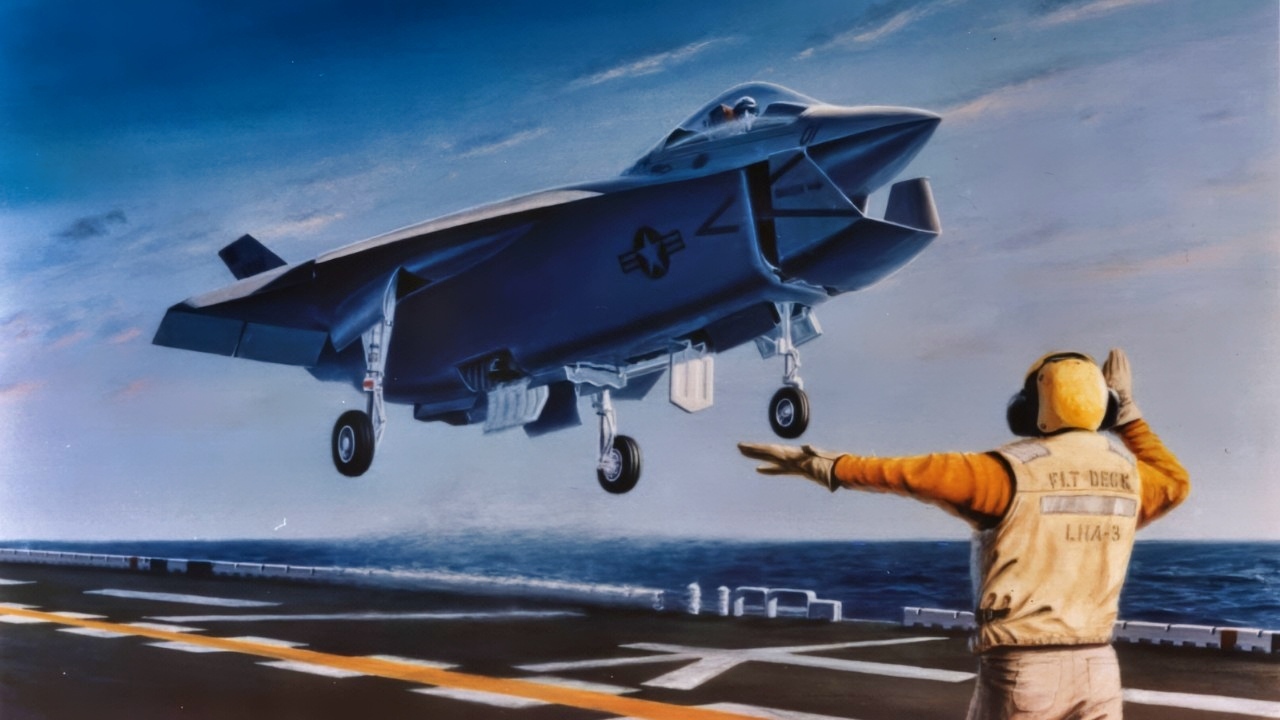
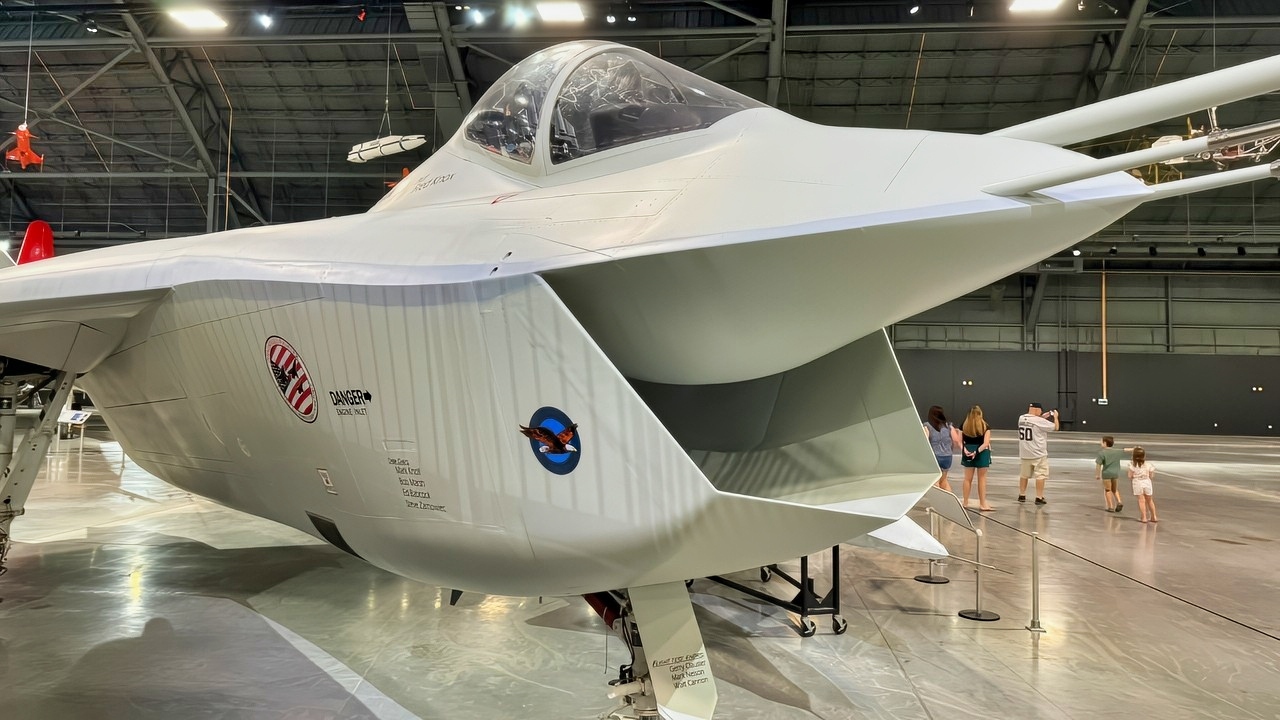
Last year, National Security Journal traveled to see both of the two Boeing X-32 aircraft that still exist. One sits indoors in the Research and Development gallery at the National Museum of the United States Air Force at Wright-Patterson Air Force Base near Dayton, Ohio. The other sits outdoors on the flight line at the Patuxent River Naval Air Museum in St. Mary’s County, Maryland, where the salt air and the sun have not been kind to it. We have photos and video of both airframes, and they appear throughout this article.
Standing next to the X-32 in person, the first thing that strikes you is how strange it looks.
The aircraft has been compared to Tow Mater from the Pixar film Cars, and the comparison is not unfair.
The enormous chin intake, the one-piece delta wing, and the gaping smile of the air inlet give the jet a cartoonish quality that the sleek F-35 never had.
Five Ways Boeing’s X-32 Could Have Beaten The F-35
But the aircraft that lost the Joint Strike Fighter competition in 2001 was a far more serious contender than its looks suggest, and the test pilots who actually flew it came away impressed.
Here are five ways the X-32 could have beaten the airplane that became the F-35.
One: It Would Have Been Cheaper And Simpler To Build
The entire point of the Joint Strike Fighter program was affordability. The Pentagon wanted one airframe that could serve the Air Force, the Navy, and the Marine Corps while keeping development and production costs under control.
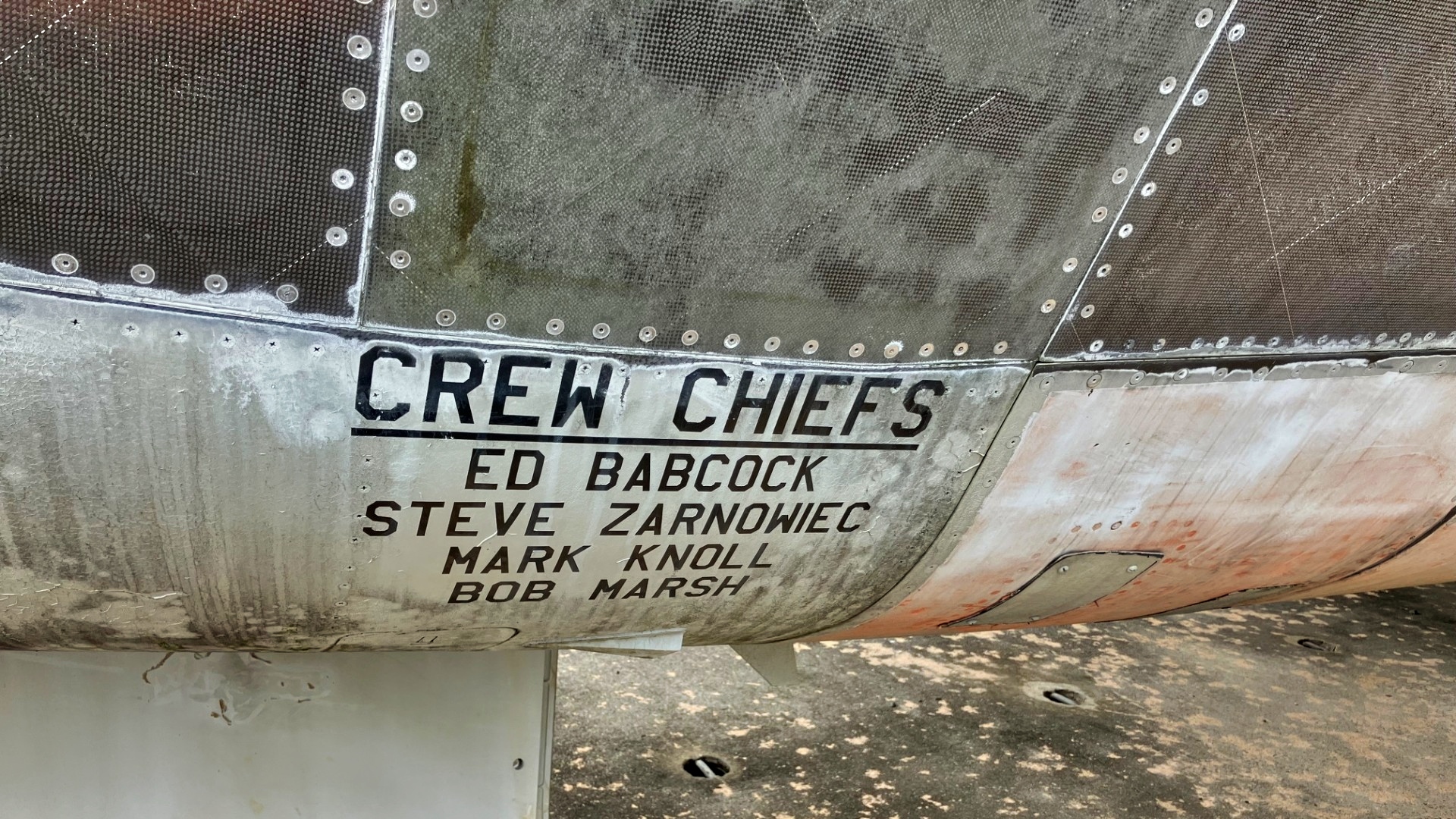
Boeing X-32 NSJ Original Image. Credit: Christian D. Orr.
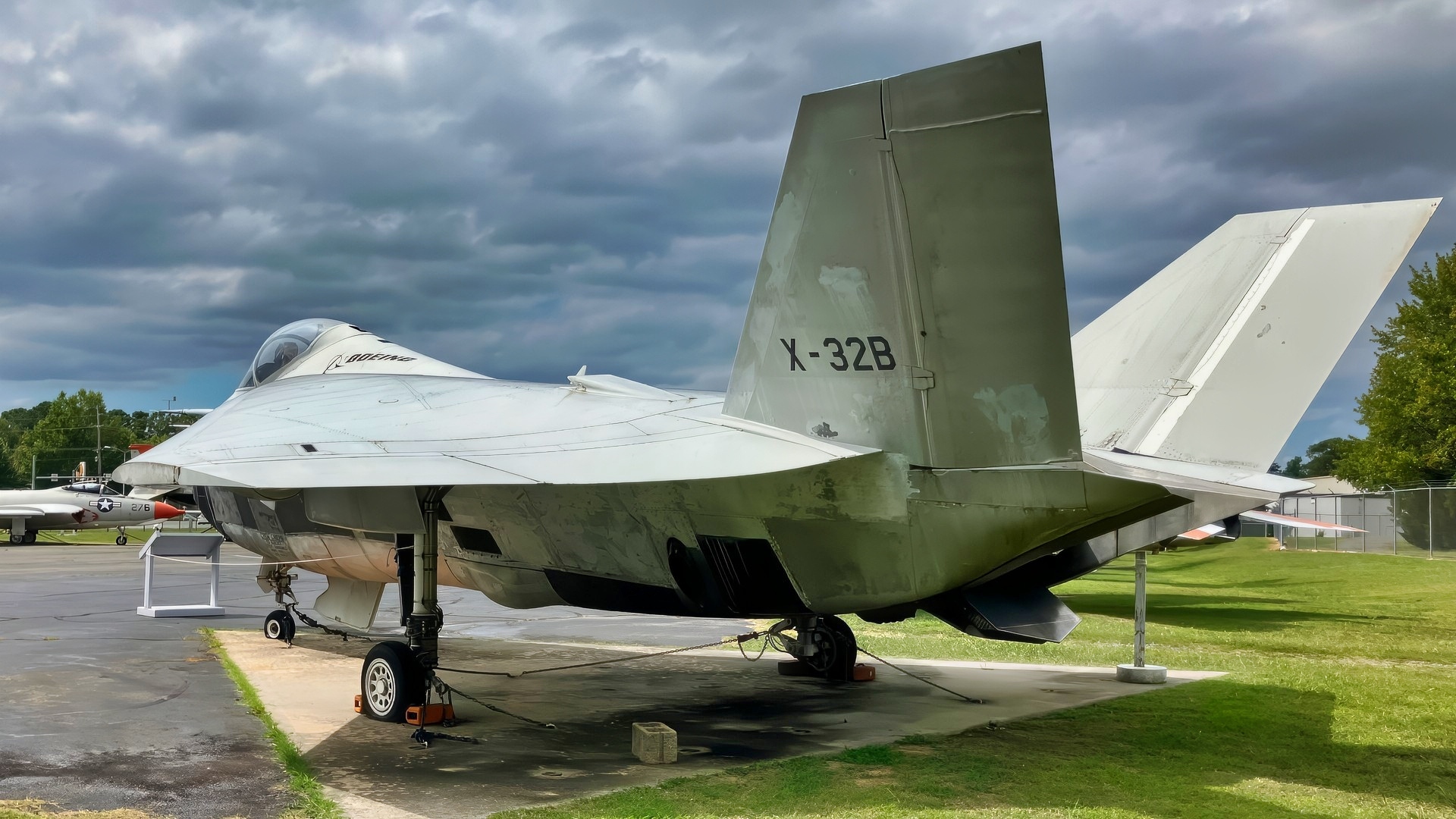
Boeing X-32 Stealth Fighter in Maryland. Image Credit: National Security Journal.
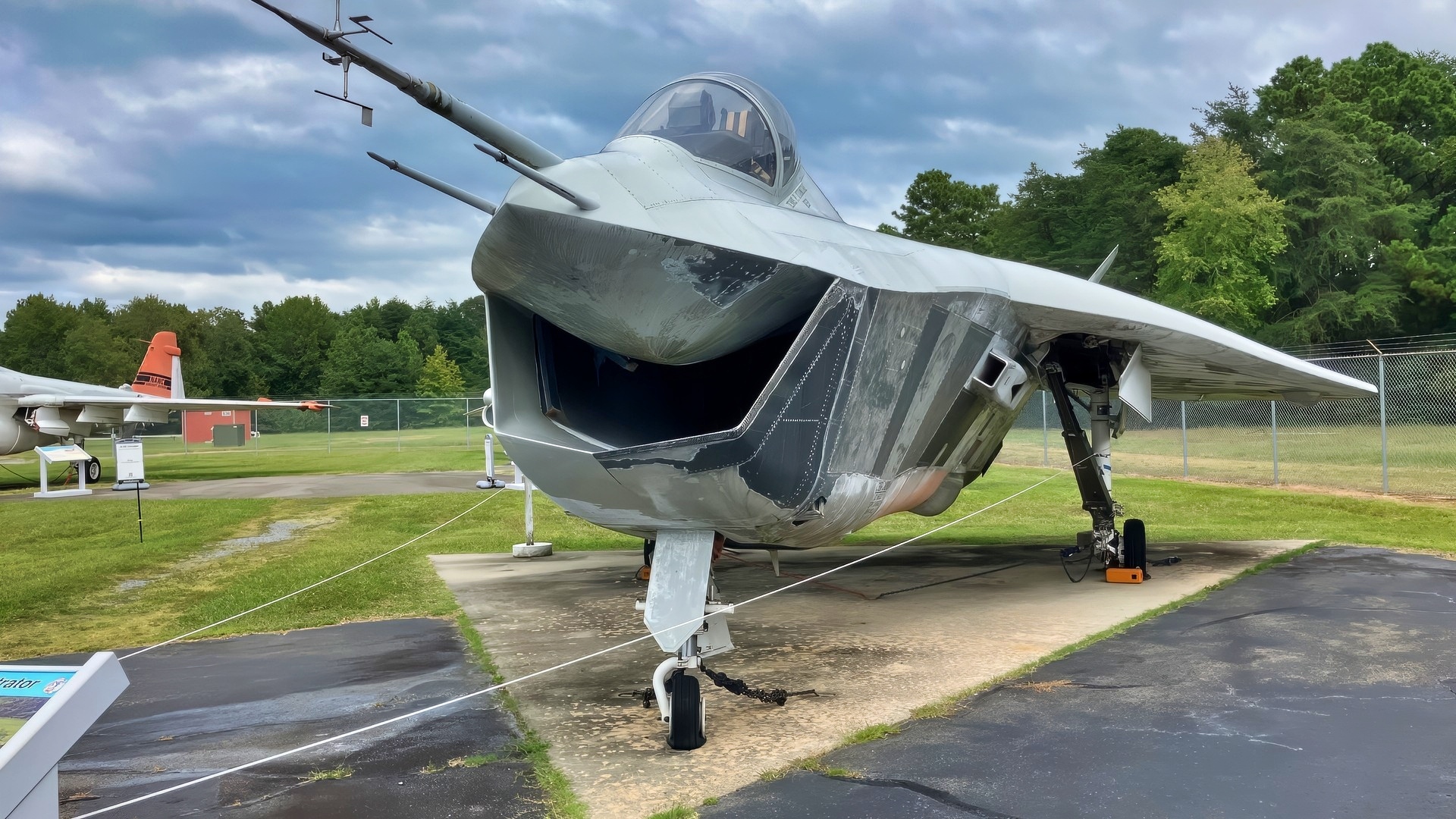
Boeing X-32 in Maryland NSJ Image September 2025. Image by Christian D. Orr.
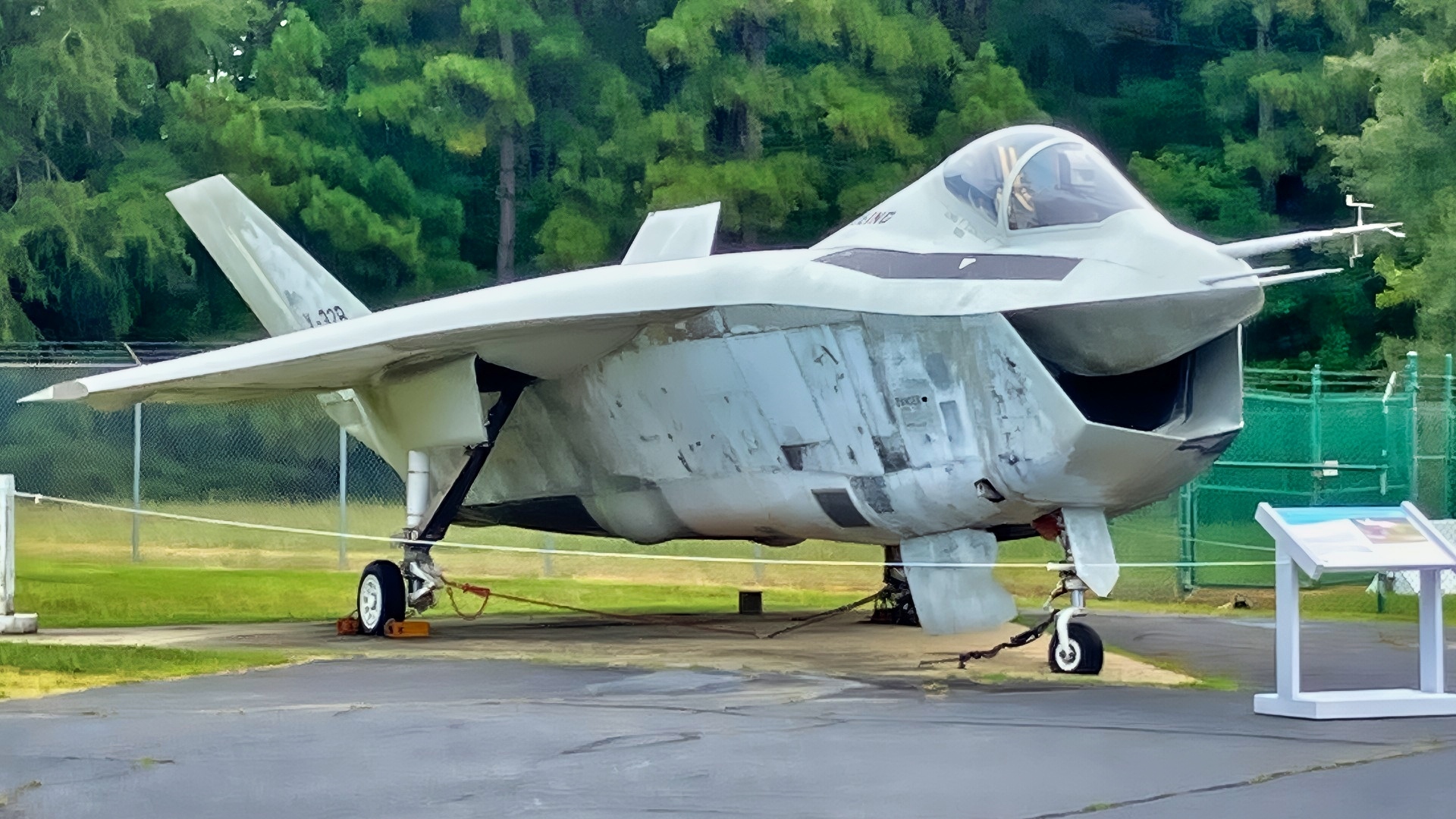
Boeing X-32 in Maryland National Security Journal Photo. Image Credit: Christian D. Orr.
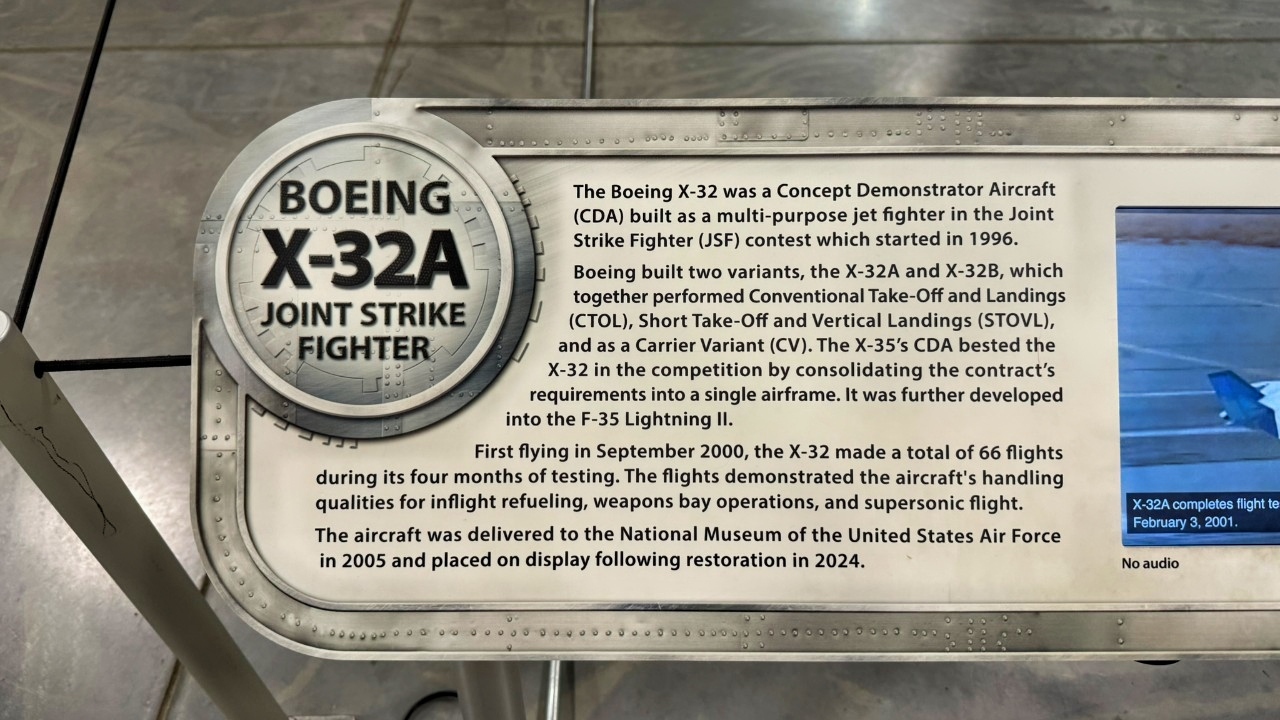
Boeing’s design philosophy was built directly around that goal. The X-32 used a less complex, more manufacturable approach than Lockheed’s entry, with a one-piece carbon-fiber delta wing that required dramatically fewer parts and far less labor to assemble. Fewer parts meant lower cost, faster production, and simpler maintenance over the life of the aircraft.
The F-35 program, by contrast, became the most expensive weapons program in human history, with a lifetime cost projected past $2 trillion and combat readiness rates across the fleet that have frequently struggled to climb out of the 50 percent range.
Boeing’s simpler airframe was arguably better attuned to the program’s original promise: a fighter the services could actually afford to buy in quantity and keep flying.
Two: Test Pilots Loved How It Flew
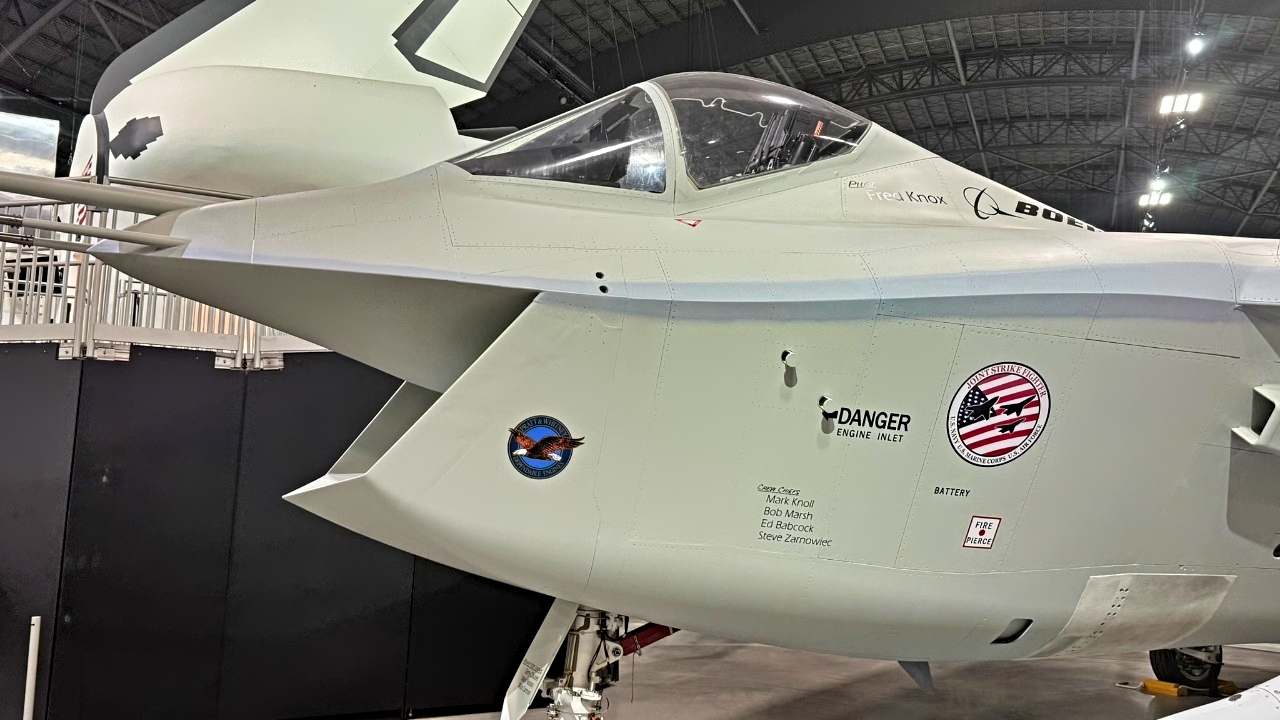
The X-32 earned genuine praise from the people who actually strapped into it. Boeing’s JSF chief test pilot, Fred Knox, flew the aircraft on its first flight and remarked that it was a pleasure to fly.
During that first climb, the F/A-18 Hornet flying in chase needed a great deal of afterburner just to keep pace with the X-32 as it climbed out toward altitude.
The praise was not limited to one pilot. The aircraft’s handling drew comparisons to the F/A-18, one of the most respected fighters Boeing ever built. And X-32 test pilot Phil “Rowdy” Yates, a retired Navy commander, was so confident in the aircraft that he declared he would take it to an aircraft carrier the very next day if asked.
When the Marine Lieutenant Colonel who worked on the program spoke at the X-32B’s museum induction ceremony, he summed up the affection the team felt for the airplane: it was not the most beautiful thing, but it was a wonderful beast.
Boeing X-32 Fighter at USAF Museum July 2025. Image Credit: National Security Journal.
Boeing X-32 Fighter at USAF Museum July 2025. Image Credit: National Security Journal.
Boeing X-32 Near Space Shuttle. Image Credit: National Security Journal.
Three: Its Speed And Climb Impressed Everyone Who Saw It
The X-32 was fast.
The chase-plane afterburner anecdote from the first flight was not an isolated event, because the aircraft’s thrust and acceleration repeatedly drew attention during the test program.
The single Pratt and Whitney F119-derivative afterburning turbofan at the heart of the design produced more than 42,000 pounds of thrust with afterburner, giving the jet a strong thrust-to-weight ratio and impressive climb performance.
The aircraft demonstrated supersonic flight, in-flight refueling, and weapons bay operations across 66 flights during roughly four months of testing for the conventional and carrier-approach demonstrator.
For an aircraft that looked like a flying catfish, the X-32 moved with a briskness that its appearance never advertised. The performance was real, and it was one of the reasons the program office could not simply dismiss Boeing’s entry on the basis of looks alone.
Four: A Single-Piece Wing Built For Long Range And Heavy Payload
The X-32’s most distinctive feature, the enormous one-piece delta wing, was not just a manufacturing convenience. The large wing carried a substantial internal fuel load and offered the lift needed to haul a meaningful weapons payload over long distances.
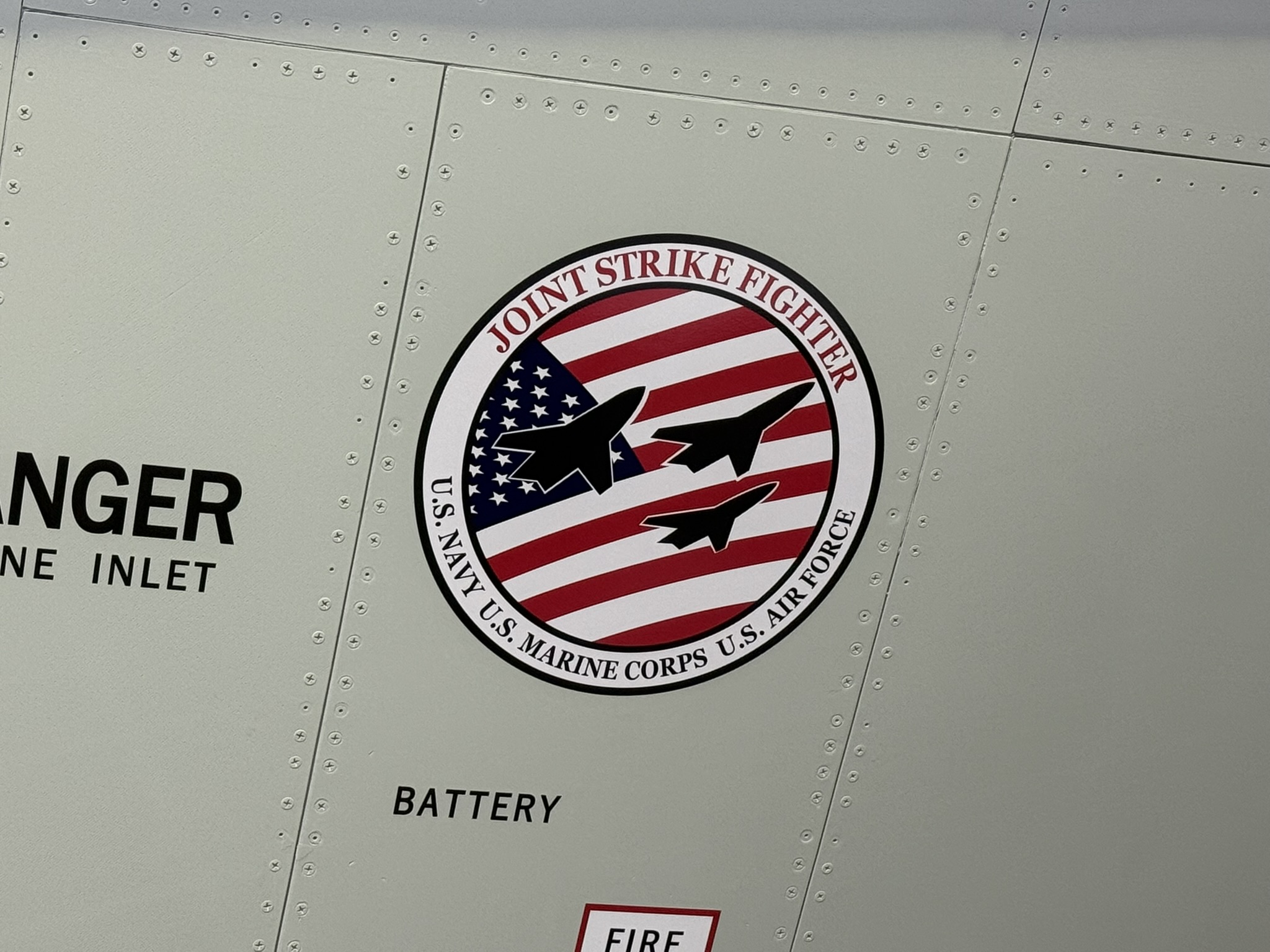
Boeing X-32 National Security Journal Photo. Taken on 7/19/2025.
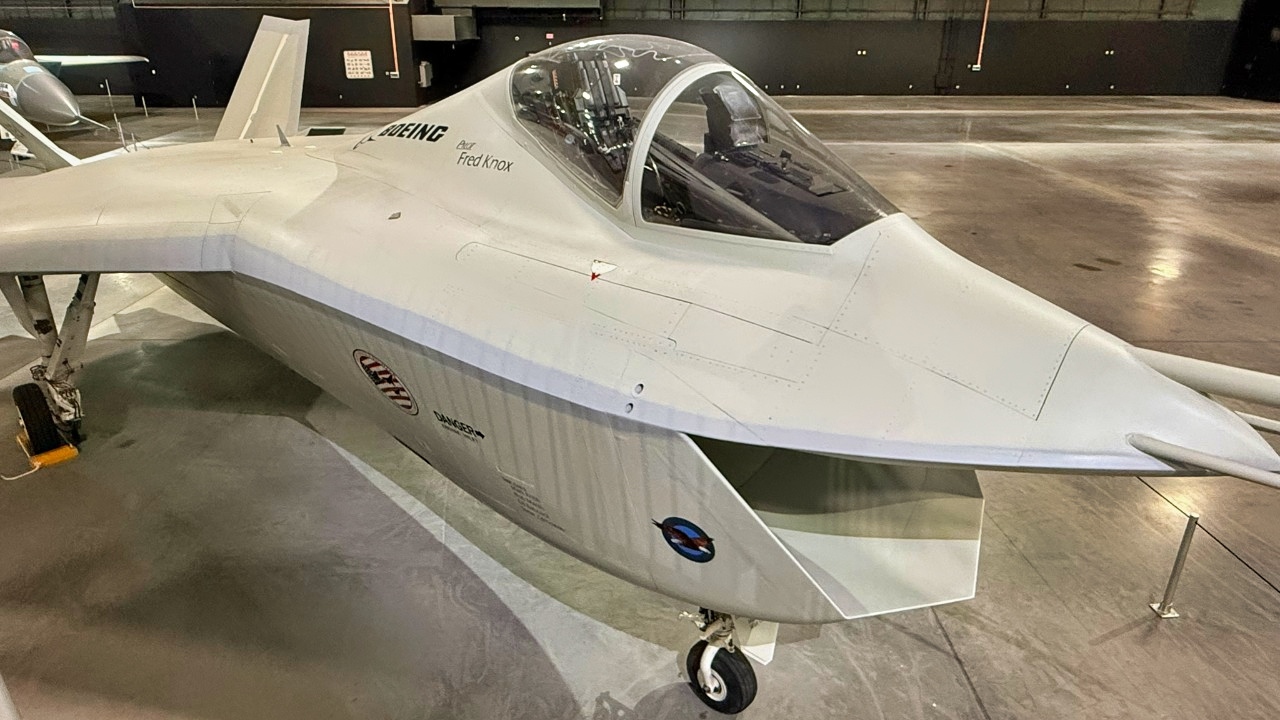
Boeing X-32 Stealth Fighter. Image Credit: National Security Journal.
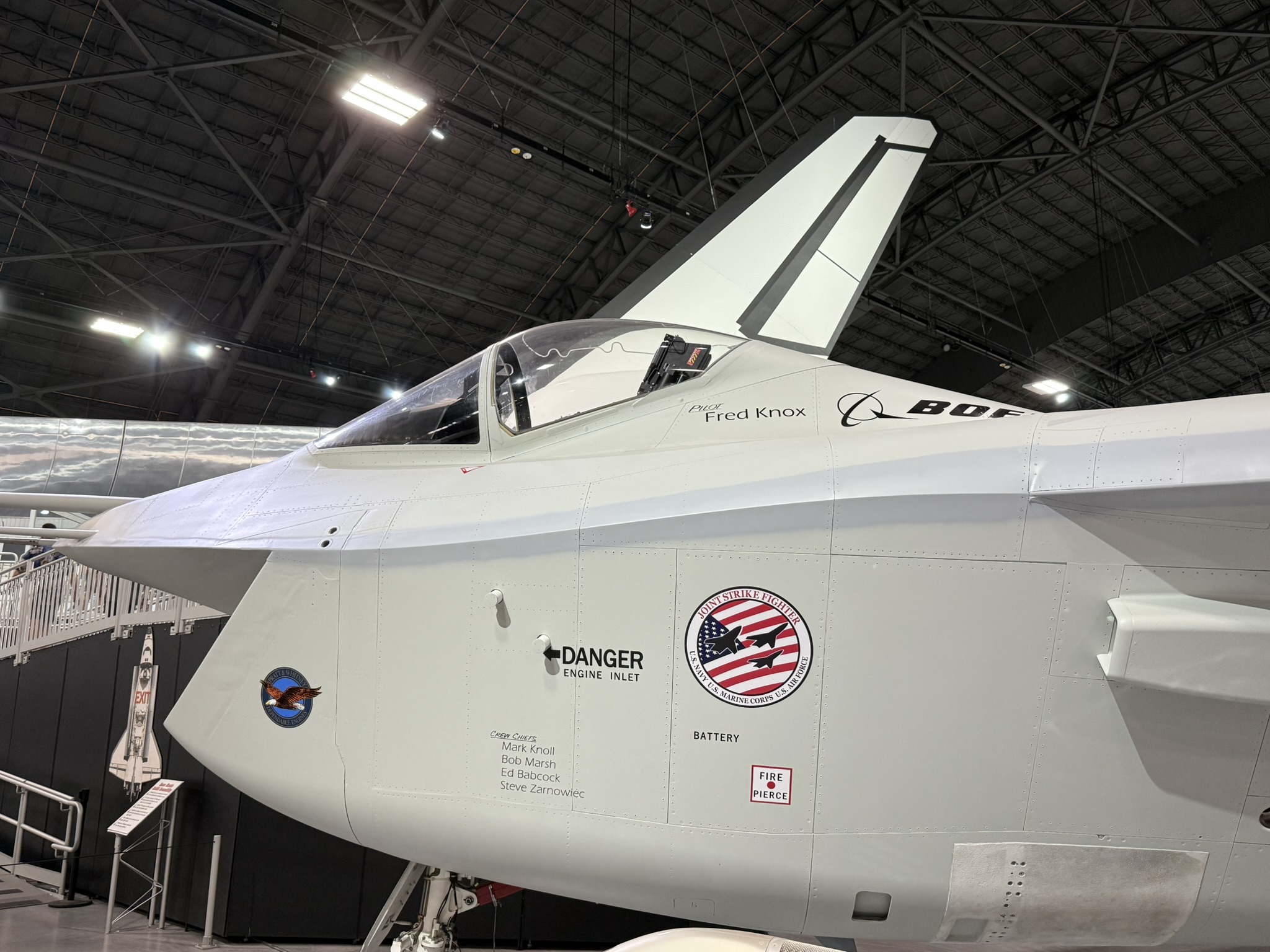
Boeing X-32 National Security Journal Photo. Taken on 7/19/2025.
The original Boeing design concept emphasized range and persistence, the ability to loiter over a contested area and carry the fuel and ordnance needed to stay in the fight rather than turning for a tanker.
In the vast distances of the Pacific theater that now dominates American defense planning, range is among the most valuable traits a tactical aircraft can have. The delta-wing configuration Boeing chose was, in concept, well suited to the kind of long-reach mission that the F-35’s relatively short combat radius has struggled to satisfy.
Boeing later proposed dropping the one-piece delta in favor of a more conventional configuration with a horizontal tail in the production F-32, but the underlying emphasis on fuel and payload capacity ran throughout the entire design.
Five: A Quiet, Cool-Running Design Built For Survivability
Survivability in modern air combat is not only about radar stealth.
The X-32 drew notice for an unusually quiet acoustic profile and a relatively low infrared signature, both of which matter enormously in a battlefield saturated with heat-seeking missiles and acoustic and infrared sensors. An aircraft that runs cooler and quieter is harder to detect and harder to kill across the full spectrum of threats, not just radar.
The aircraft’s restoration history underscores how close it came to surviving as a serious contender.
The X-32A sat outside for years after the competition ended before the Air Force Museum brought it indoors and restored it over roughly three months, while its STOVL sibling, the X-32B, first flew with Boeing lead STOVL test pilot Dennis O’Donoghue at the controls before moving to Patuxent River for the bulk of its vertical-landing testing.
Why Lockheed Won Anyway
The X-32 lost the competition primarily on its short takeoff and vertical landing design. Boeing used a direct-lift system that redirected engine thrust downward for hovering, causing hot exhaust air to recirculate into the engine intake, weakening thrust and risking overheating during the hover.
The problem was serious enough that Boeing’s STOVL demonstrator needed the thicker, denser air at Patuxent River in Maryland to generate enough margin to hover safely, while Lockheed’s X-35 executed a single demonstration flight in which it took off short, accelerated to supersonic speed, and landed vertically, all in the same sortie. Boeing’s aircraft also required a team of mechanics to physically reconfigure it between STOVL and supersonic modes on the ground, while Lockheed’s design could switch between the two in flight.

Boeing X-32 National Security Journal Photo. Taken on 7/19/2025.
That difference decided the competition. The Air Force chose the X-35, which became the F-35 Lightning II, now flying with the United States and more than 20 allied nations. The F-35 became the most advanced fighter in the world, and recent combat operations suggest the choice was defensible.
But standing next to the two surviving X-32 airframes in Ohio and Maryland, looking at an aircraft that test pilots genuinely loved and that promised to be cheaper, faster, and longer-legged than the jet that beat it, the question lingers. The X-32 was the ugly airplane that lost.
It was not the worst airplane, and a few different engineering decisions on the hover problem could have sent the last 25 years of American airpower down an entirely different runway.
About the Author: Harry J. Kazianis
Harry J. Kazianis (@Grecianformula) was the former Senior Director of National Security Affairs at the Center for the National Interest (CFTNI), a foreign policy think tank founded by Richard Nixon based in Washington, DC. Harry has over a decade of experience in think tanks and national security publishing. His ideas have been published in the NY Times, The Washington Post, The Wall Street Journal, CNN, and many other outlets worldwide. He has held positions at CSIS, the Heritage Foundation, the University of Nottingham, and several other institutions related to national security research and studies. He is the former Executive Editor of the National Interest and the Diplomat. He holds a Master’s degree focusing on international affairs from Harvard University.


