
Iranian Attacks in Hormuz Reach Record Highs – After a period of elevated oil exports out of the Middle East, with Washington touting some daily averages higher than pre-war levels, Iranian attacks on commercial ships through the Strait of Hormuz have now reached record highs. Maritime security data shows that strikes on tankers and cargo vessels have reached their highest levels since the United States and Israel launched the first strikes against Iran in February.
The latest round of Iranian attacks has damaged and sunk commercial ships, left sailors missing in some cases, and severely disrupted oil shipments yet again ahead of the November 3 midterm elections.

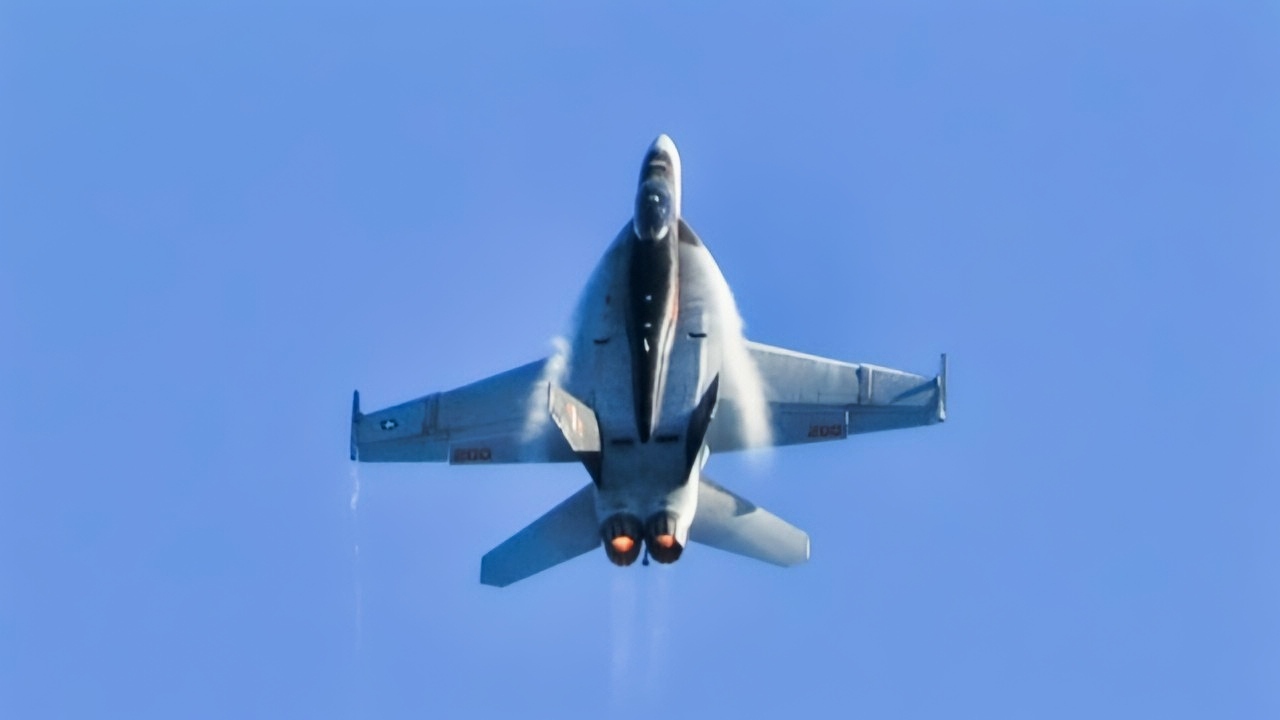
A U.S. Air Force F-16 Fighting Falcon flies over the U.S. Central Command area of responsibility Oct. 14, 2020. The F-16 Fighting Falcon is a compact, multirole fighter aircraft that has proven itself in both air-to-air combat and air-to-surface attack. (U.S. Air Force photo by Senior Airman Duncan C. Bevan)
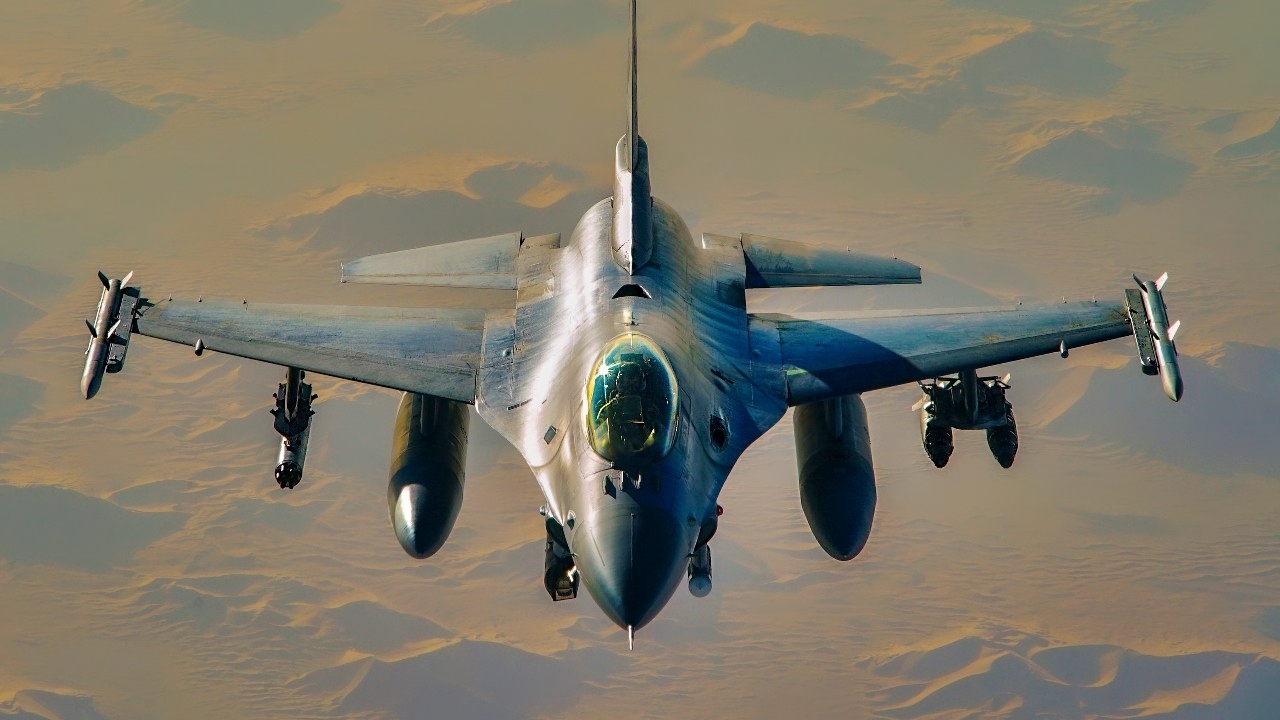
A U.S. Air Force F-16 Fighting Falcon based in the Central Command area of operations conducts armed aerial patrols in Somalia in support of Operation Octave Quartz, Jan. 9, 2020. The F-16s support to OOQ demonstrates the U.S. military’s reach and power projection across vast distances to hold adversaries such as al-Shabaab at risk with flexible, precise and lethal force that is capable of rapidly responding anywhere on the globe. The mission of OOQ is to reposition U.S. Department of Defense personnel from Somalia to other locations in East Africa. (U.S. Air Force photo by Staff Sgt. Taylor Harrison)
Of course, all of this has a massive impact on oil prices, with Brent Crude Oil briefly hitting $110 per barrel.
The Attacks Iran Won’t Stop
According to a Lloyd’s List investigation published on October 15, at least 26 attacks or maritime security incidents were recorded in the first half of October, exceeding every previous monthly total since the war started in February.
A separate analysis by BBC Verify, which reviewed British maritime security reports, found that 12 vessels were attacked between October 5 and 11. It is the highest weekly total to be recorded by the United Kingdom Maritime Trade Operations agency since the conflict started.
The attacks also appear to be expanding beyond oil tankers, with Iranian forces now increasingly launching strikes against container ships and other commercial vessels attempting to use shipping routes through the waterway that Tehran deems “illegal.”
Iran Launches Record Number of Attacks
Iran appeared to step up its attacks on ships moving through the Strait of Hormuz in late September, shortly after shipping data showed that oil exports through the waterway, and out of the Gulf more generally, had recovered substantially.
Iran began to deploy new tactics to identify and strike ships, working around the damage caused by U.S. strikes on its communications and monitoring infrastructure on its coastlines.
Reuters reports that maritime security organizations recorded at least 12 attacks on vessels carrying oil and other petroleum products between September 29 and October 5, and the situation later deteriorated.
On Sunday, October 11, attackers hit six vessels in one day, setting a new record. Attackers then hit four additional ships on October 13.
The Joint Maritime Information Center, led by the United States Navy, has now assessed the threat to commercial shipping operating in the waterway as “severe,” citing ongoing Iranian drone activity and repeated attempts to intimidate civilian vessels of various kinds.
The attacks continue with the support of Iranian service members using small boats to identify ships visually.
Container Ships Sink
One of the most significant recent incidents occurred on October 13, when the Singapore-flagged container ship GFS Pride was struck by an unidentified projectile while operating near the Strait of Hormuz. The vessel then caught fire and sank, but all 21 crew members evacuated safely.
Iran claimed the strike, too. The Islamic Revolutionary Guard Corps claimed that the vessel struck a naval mine while traveling through a route Tehran considers illegal.
However, U.S. Central Command disputed the account and said that an Iranian projectile had struck the vessel before it sank while it was being towed to shore.
On October 13, two additional container ships linked to the same UAE-based shipping operator were also attacked; the GFS Giselle sustained hull damage but reached safe anchorage. The Al Saadiyat also suffered minor damage and continued on its voyage.
The Cape Dao, another cargo vessel, sank after an earlier attack that involved two projectiles on September 23, with the incident killing one crew member.
Hormuz Oil Shipments Fall Again
The intensifying Iranian strikes are producing the desired effect for Tehran, significantly reducing shipments after recent spikes.
In September, Gulf producers restored oil shipments to more than 80% of pre-war levels and even exceeded some daily figures.
The U.S. Navy supported that recovery by escorting ships through the waterway. Shippers also used a tanker-to-tanker oil shipment system that reduced risk for some larger vessels waiting outside the Strait of Hormuz to receive their cargoes.
That recovery, however, is now under threat as Iran continues to ramp up its attacks.
According to Kpler data, just 2.9 million barrels of oil passed through the Strait of Hormuz on October 11, compared to 20.8 million barrels on October 8. Before the war began, daily averages sat at around 17 million barrels.
Iran Changes Tactics
Iran has proven it is capable of escalating and maintaining pressure on the Strait of Hormuz even after U.S. strikes on its military infrastructure. And it’s happening because of a change in tactics.
On October 14, Reuters reported that an Iranian official had confirmed Iranian forces were using new tactics against vessels violating its restrictions, and that the aim is to influence the November midterm elections. The U.S. military has also reported that Iranian forces are now using small civilian-style boats as observation platforms to identify potential targets moving through the strait.
About the Author: Jack Buckby
Jack Buckby is a British researcher and analyst specializing in defense and national security, based in New York. His work focuses on military capability, procurement, and strategic competition, and he produces and edits analysis for policy and defense audiences. He brings extensive editorial experience, with a career output spanning over 1,000 articles at National Security Journal, and has previously authored books and papers on extremism and deradicalization.


