

Is Iran Dragging The US Into A Long Conflict Against Its Will? President Donald Trump’s attempts to settle the Iran conflict continue to be hit with roadblocks due to Iran’s attacks on three ships in the Strait of Hormuz and the latest exchange of retaliatory attacks between the two sides, leaving the US with limited options.
Trump declared that the interim agreement to end the conflict, the “Memorandum of Understanding,” was “over” and ordered fresh air strikes early Wednesday, hitting 90 targets according to the US Central Command (CENTCOM), after Iran targeted U.S. military sites in Bahrain and Kuwait following the U.S. bombing of 80 Iranian targets in response to the attacks on tankers in the Strait of Hormuz.
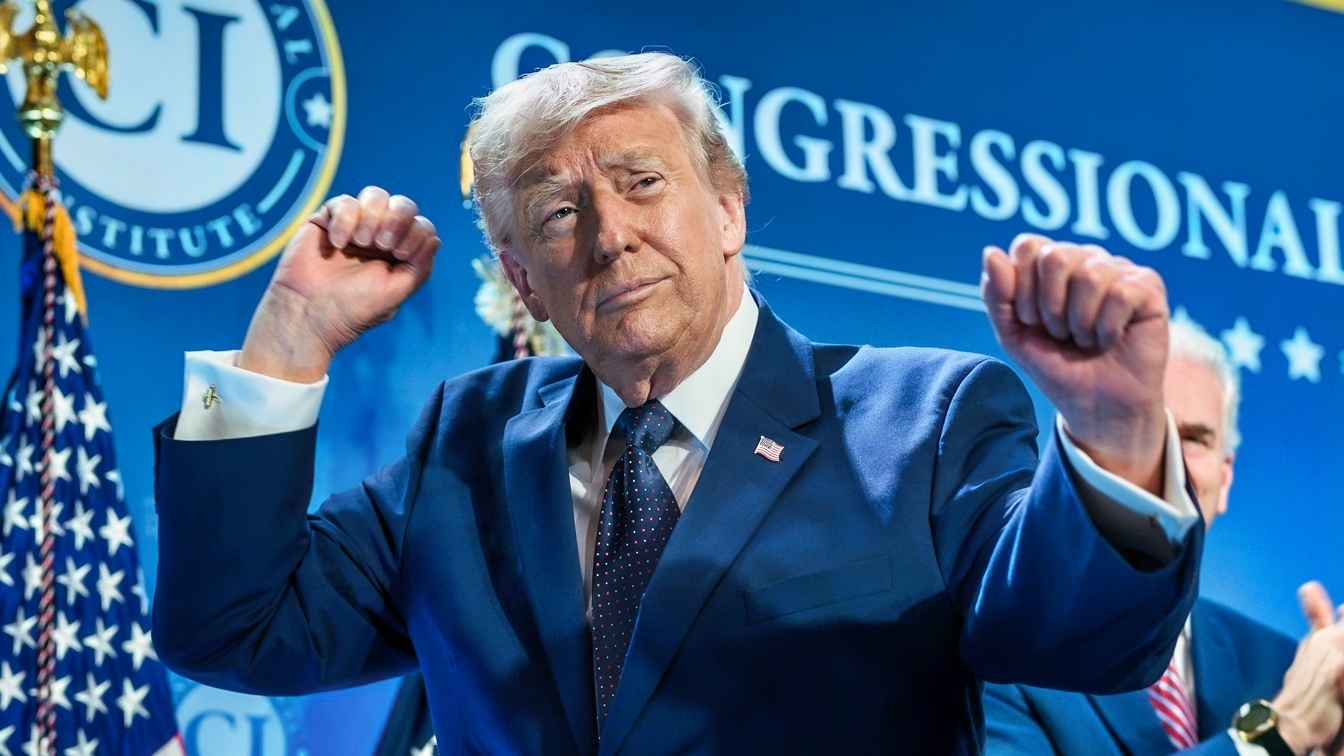
President Donald J. Trump delivers remarks at the Republican Members Issues Conference at Trump National Doral Miami, Monday, March 9, 2026, in Miami, Florida. (Official White House Photo by Molly Riley)
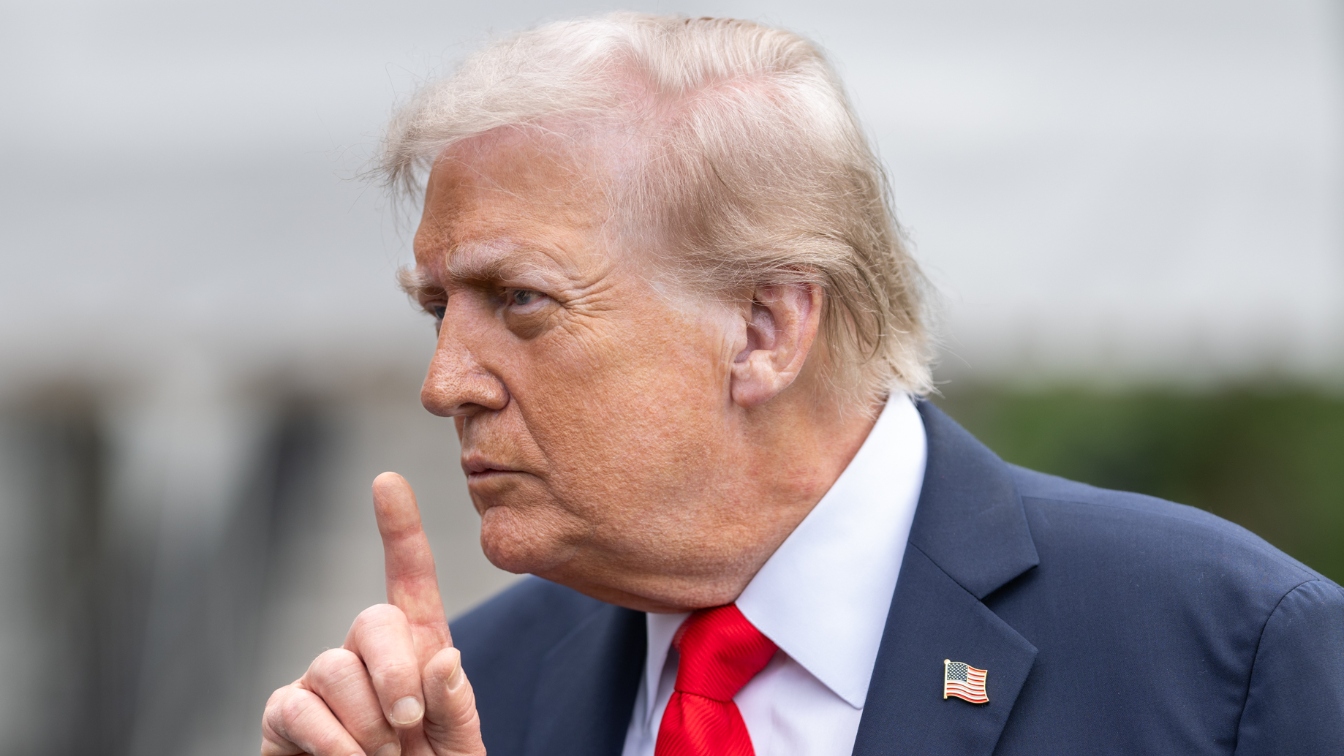
The President departs the White House and gaggles with the press on the South Lawn before boarding HMX-1 to begin traveling to the United Kingdom on Tuesday, September 15th, 2025. (Official White House Photo by Harrison Koeppel)
Is Iran Dragging The US Into A Long Conflict?
In a recent editorial in the AP, it said that the US is being drawn into a long war with Iran, against its will.
It pointed out that Iran was forcing the issue and attacked three ships transiting the Strait of Hormuz over the ships using the “Omani route” through the strait.
This is a US-endorsed maritime corridor that hugs Oman’s coast and involves international coordination.
Iran insists that all shipping in the Strait coordinate with its recently created Persian Gulf Strait Authority (PGSA) and then use a second northern route that passes along the Iranian coast and is closely monitored and controlled by Iran.
Although the Strait is narrow, it is too wide for Iran to maintain control over both routes without the use, or threatened use, of force. And despite Tehran agreeing to a 60-day window of unfettered access for shipping in the Strait, they fired on three ships earlier this week.
A Test Of Will, And Differing Strengths
Iran sees itself as in a stronger political position and is playing the long game by waiting out the United States. They believe that the midterm elections in the US will force America out of the conflict.
The Iranians see the United States as having weak resolve, unwilling to put boots on the ground, and seeking an exit ramp to end the fighting.
The prospect of a long conflict, despite the destruction of much of its military and the loss of its people, is of no consequence.
And it is willing to endure the worsening economic hardship that is threatening its economy. To circumvent the US naval blockade, Iran relies on informal land-border trade routes, indirect routing, and opaque shipping practices.
However, one of those land-border trade routes was targeted on Wednesday night. The Fars news agency said one U.S. strike had hit a rail bridge used for trade with Russia and China.
It is convinced it will not only survive but come out stronger than ever before. The creation of the PGSA and the charging of tolls for ships to pass through the Strait have never been done before, but the regime sees it as its right.
Five Gulf nations (Bahrain, Kuwait, Qatar, Saudi Arabia, and the United Arab Emirates) formally rejected Iran’s establishment of the Persian Gulf Strait Authority (PGSA).
In a letter distributed by the International Maritime Organization, the Gulf coalition instructed commercial vessels not to engage with the Iranian authorities or utilize Iranian-designated transit corridors.
Can The Iranian Regime Weather The Economic Storm
Iran’s economy faces a grueling path to recovery. Decades of crushing sanctions and the recent devastating U.S.-led naval blockade and airstrikes have caused over $270 billion in damages and pushed millions into poverty.
The regime is prioritizing core security funding over broad societal living standards. Real GDP is projected to shrink by 6.1 percent, and the Iranian rial has faced catastrophic devaluation following the naval blockades.
Iran’s economy has struggled for years with local corruption and mismanagement. Massive demonstrations in January resulted in tens of thousands killed by regime forces.
According to a report by the Statistical Center of Iran for Khordad, the third month of the Persian calendar, which ended on June 21, inflation increased by 88.6 percent compared with the same month of the previous year.
Food inflation has risen by 134 percent, Fortune reported that inflation on some food items had risen by 400 percent.
Iran’s Water Crisis Is Underreported, and It Is Drying Up
Iran is facing a severe “water bankruptcy” driven by climate change, dam construction, and over-pumping of aquifers for agriculture. Years of multi-year droughts and recent conflict have pushed supplies to critical lows.
Cities like Tehran and Mashhad have faced near-“day zero” scenarios, forcing the government to consider relocating the capital late last year. That crisis was averted, but the situation has not improved.
Keveh Madani, a former deputy head of the country’s environment department and now director of the United Nations University’s Institute of Water, Environment and Health, said that “The government blames the current crisis on a changing climate [but] the dramatic water security issues of Iran are rooted in decades of disintegrated planning and managerial myopia.”
One perhaps overlooked factor in the bombing campaign by the US and Israel has been the targeting of desalination plants, water pipelines, and other civilian infrastructure. One factor in the January protests, and others in 2021, centered on water issues in the country.
Will The Fighting Continue Unabated?
Jonathan Panikoff, a former deputy U.S. national intelligence officer for the Middle East, believes the tit-for-tat strikes on both sides will continue for the present as each side tries to jockey for a better negotiating position.
“The situation is not going to revert to full-scale war,” said Panikoff. “But the default setting is now managed instability – recurring violence with no permanent off-ramp.”
MORE – Patriot Missiles Might Be Soon Made in Ukraine
About the Author: Steve Balestrieri
Steve Balestrieri is a National Security Columnist. He served as a US Army Special Forces NCO and Warrant Officer. In addition to writing on defense, he covers the NFL for PatsFans.com and is a member of the Pro Football Writers of America (PFWA). His work was regularly featured in many military publications.


