

If accurate, parts of what could be an Iran deal are coming out, and they don’t look so good for the Trump Administration.
According to a source inside Iran’s government that is being reported in many outlets, Fars News states that Iran will allow ships to pass through the Strait of Hormuz free of charge for only 60 days, after which the country intends to provide security, maritime, environmental, and insurance services to crossing vessels and use the ‘revenues’ for its economic development. Yes, that sounds like a toll.
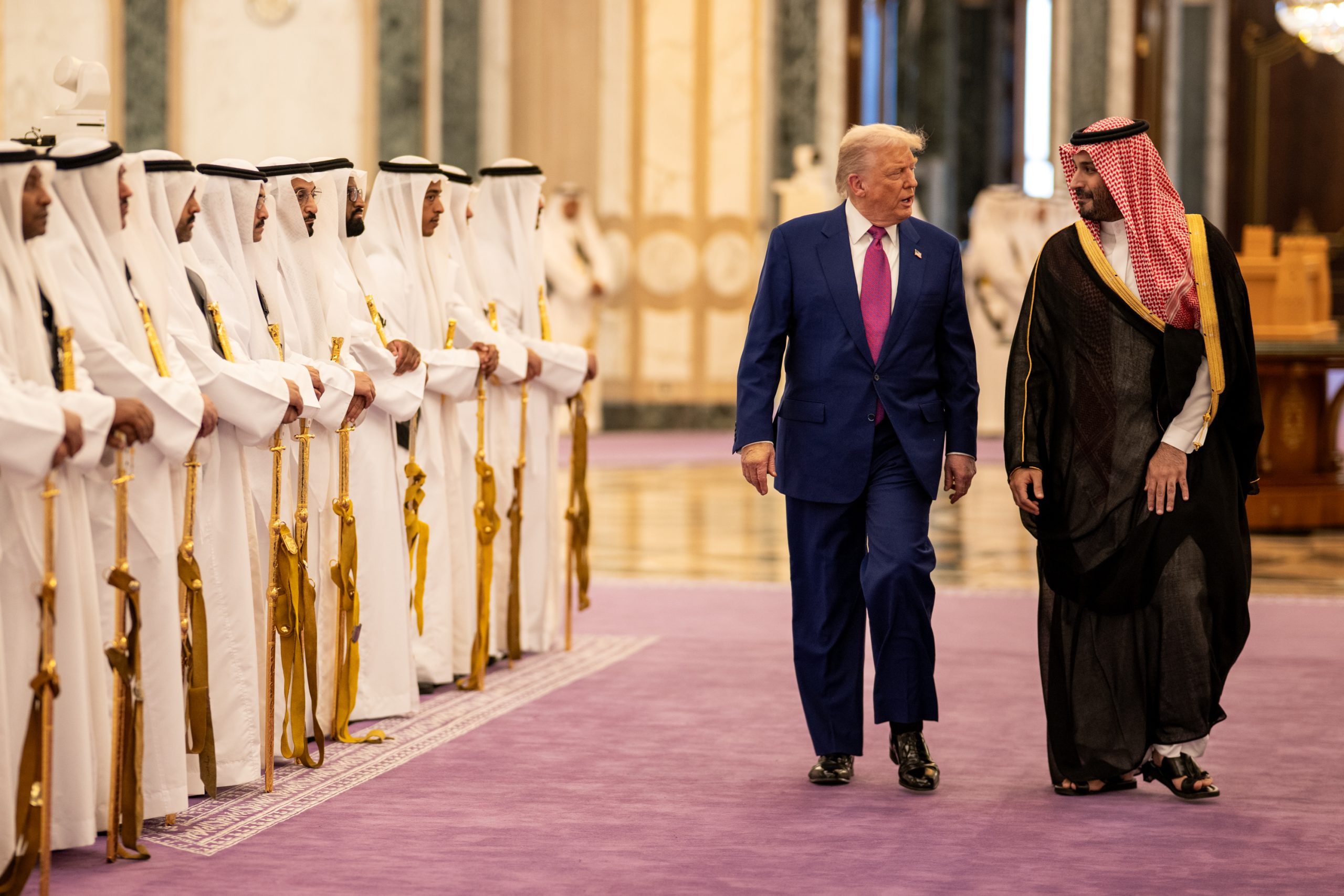
President Donald Trump participates in a welcome ceremony with Saudi Crown Prince Mohammed Bin Salman Al Saud at the Royal Court Palace in Riyadh, Saudi Arabia, Tuesday, May 13, 2025. (Official White House Photo by Daniel Torok)
Fars’ source added that Iran and Oman will decide on the future management of maritime services in the strait. Again, that seems to point to some sort of fee for using the Strait of Hormuz. What has been floating around in outlets for days now is some sort of ‘service fees’.
From here, it gets worse. Iran’s IRGC also reported that Iran will receive half of the $24 billion in frozen assets before any final negotiations take place during the 60-day window.
The US has stated, and Vice President J.D. Vance confirmed on Fox News by phone, that Iran would receive nothing until it complied with the deal’s demands.
The challenge is, who is telling the truth? At the moment, here is a rundown of what is being reported.

President Donald Trump delivers remarks before signing an executive order creating a task force for the 2028 Los Angeles Olympics, Tuesday, August 5, 2025, in the South Court Auditorium of the Eisenhower Executive Office Building at the White House. (Official White House Photo by Joyce N. Boghosian)
Official Statement By Iran’s Security Council
Pakistani Prime Minister Shehbaz Sharif said that both parties will sign a peace deal on Friday in Geneva, Switzerland.
Iran’s Supreme National Security Council said the deal includes an immediate suspension of military operations on all fronts, including in Lebanon.
“Based on the agreements reached, the war and military operations on all fronts, including Lebanon, will end immediately and permanently as of tonight, and in addition, the naval blockade against Iran will end immediately and completely,” it said on Sunday in a statement.
The US has not yet responded to Fars’s reporting as of this morning.
But a response might be coming soon. President Trump on Friday minced no words when confronted with past deals being leaked to the press he didn’t like, calling out Iran’s press for what he said were very inaccurate descriptions of the peace proposal in an earlier Fars report and other Iranian news agencies that basically reported that the US had capitulated to Iran’s demands.
“The terms that Iran leaked out to the Fake News have NOTHING to do with the terms that were agreed to, in writing,” Trump posted on his Truth Social account.
“What they said, including their weak and pathetic statement on having a deal, bears no relation to the truth,” he added. “Very dishonorable people to deal with. With them, there is no such thing as dealing in good faith.”
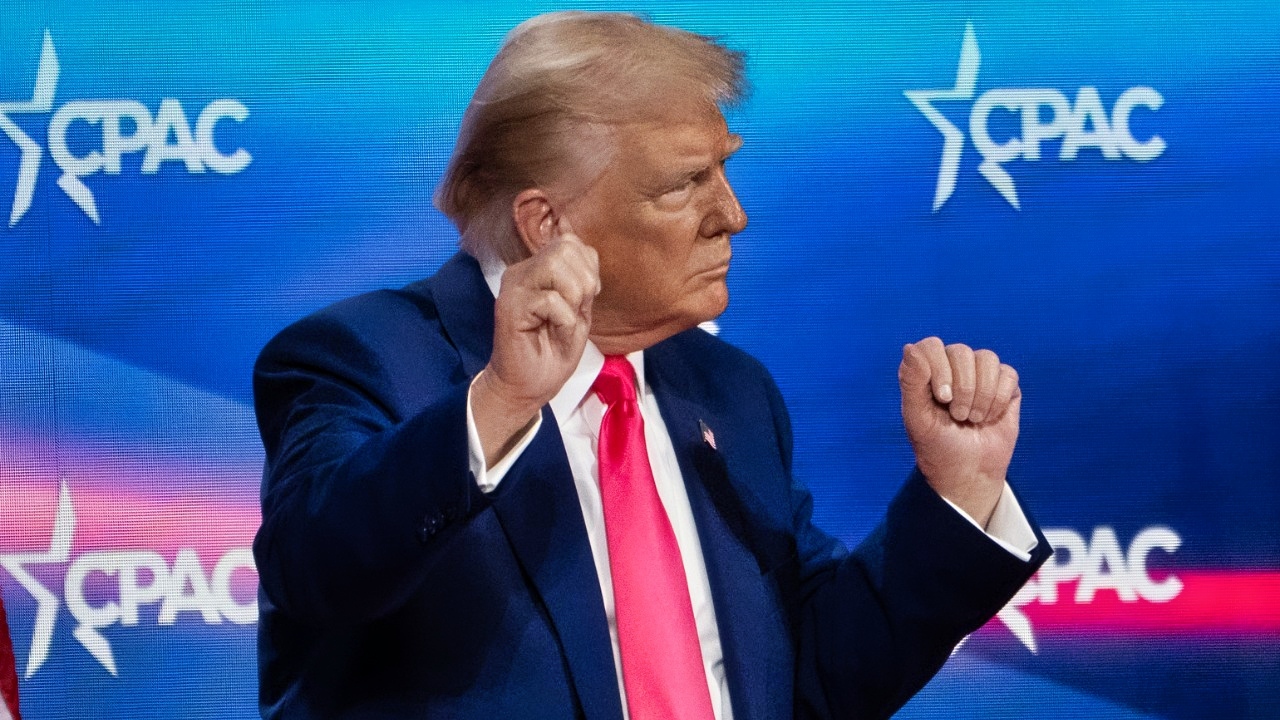
Trump Doing the Trump Dance. White House Image.
Questions Remain…Especially In Lebanon
Misleading or even outright lies by Iranian media aside, and that might be what the above actually is, there are questions that will need to be answered as time moves on.
Iran specifically mentioned Lebanon in its official statement. Iran’s proxy, Hezbollah, tried to derail the peace deal on Sunday by launching rockets at Israel. The Israelis responded, much to the chagrin of President Trump, by taking out another senior Hezbollah commander with an airstrike in Beirut.
Critics of Prime Minister Benjamin Netanyahu criticized the airstrikes in Beirut, claiming that they only weakened Israel’s position.
However, since March, Hezbollah’s rockets, supplied by Iran, have killed more than 3,000 Israelis and have displaced more than one million people from northern Israel. The Israelis invaded southern Lebanon in an attempt to stop Hezbollah from further attacks.
Despite the agreement on the peace deal, Israeli government officials are warning Israeli citizens not to rush back to their homes in the northern area of the country.
Israel Excluded From Negotiations…And That Was A Mistake
The agreement reportedly (according to Iranian sources) covers the end of hostilities everywhere, including Lebanon.
But Israel was excluded from the negotiations, and the United States and Iran’s talks directly affect Israel, Lebanon, and the peace deal overall. Although the US reportedly consulted with Israel on this, not involving them directly was a mistake.
Israel has stated that, not being a party to the negotiations, it is not bound by the U.S.-Iran agreement to end its fight with Hezbollah or to pull its forces out of Lebanon.
The Strait Of Hormuz Still “A Risky” Transit?
Transiting the Strait of Hormuz remains highly risky. Despite a preliminary U.S.-Iran agreement to reopen the waterway following the conflict, shipping associations like BIMCO and maritime security firms are urging extreme caution.
Jakob Larsen, chief security officer at BIMCO, said in a statement that the parties to the peace agreement “do not offer sufficient information regarding key aspects such as timings and safe routes” for the tankers to safely navigate.
“We believe the security situation for the shipping industry remains volatile, and we still consider it very risky for ships to commence transits at this point,” he added.
Large segments of the strait were mined during the conflict. Mine-clearance operations will take time, and the threat of floating mines remains a significant hazard.
Vessel traffic through the Strait of Hormuz remains a small fraction of pre-war levels. Shippers are adopting a wait-and-see approach, wanting to ensure the ceasefire holds and safe routes are demonstrably established.
Next will be the US response to reports from Iranian news agencies. It is bound to be vastly different, much like it was after Friday’s news reports.
About the Author: Steve Balestrieri
Steve Balestrieri is a National Security Columnist. He served as a US Army Special Forces NCO and Warrant Officer. In addition to writing on defense, he covers the NFL for PatsFans.com and is a member of the Pro Football Writers of America (PFWA). His work was regularly featured in many military publications.


Joel Bowling
June 15, 2026 at 10:56 am
Trump is a narcissistic f00l and an embarrassment 😳