
Peace With Iran? Current State of Talks & the Chance It All Goes Wrong: After months of war, threats, and a failed ceasefire, the United States and Iran look like they may finally be closing in on an agreement that could see the Strait of Hormuz opened and the fighting in the Gulf region come to an end.
But even now, with mediators claiming that the memorandum of understanding (MOU) is nearly finished, the deal remains unsigned, and it remains entirely possible that the regime in Tehran will return to the delay tactics it has used to derail talks before.
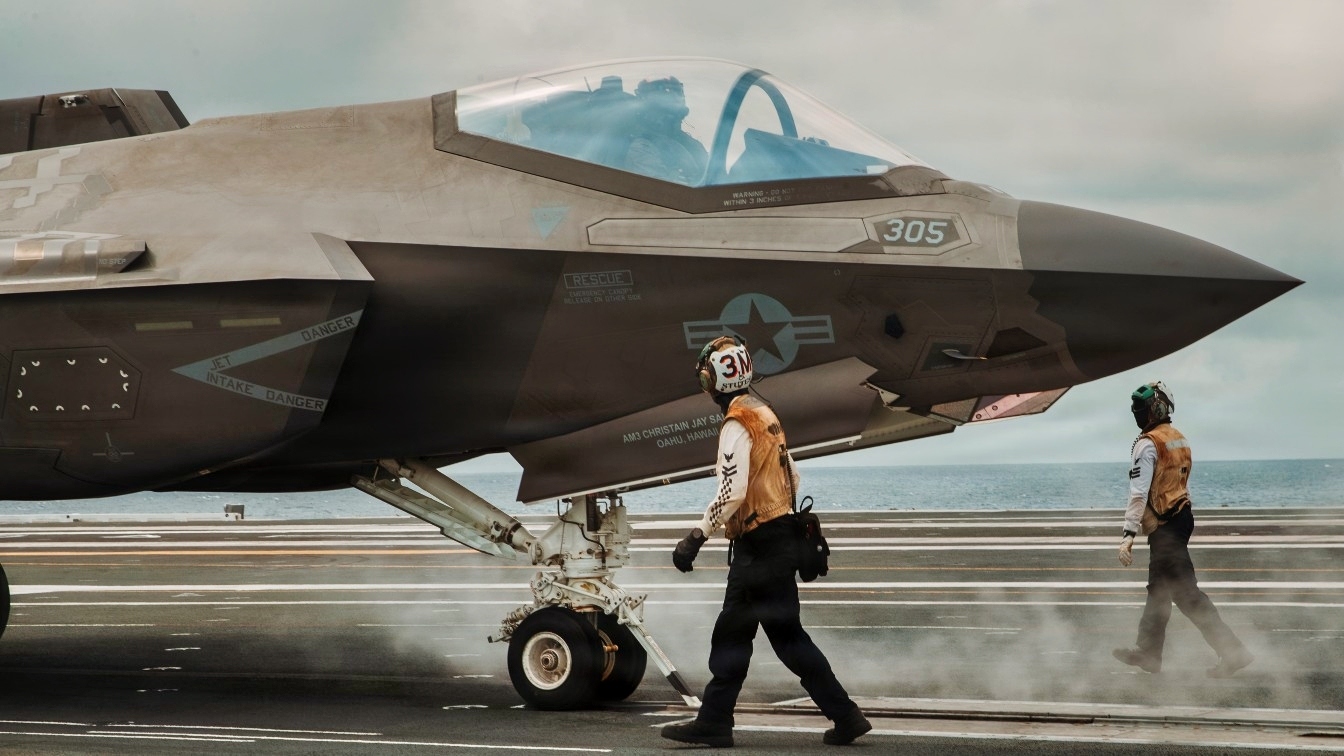
An F-35C Lighting II, attached to Strike Fighter Squadron (VFA) 147, prepares to take off from flight deck of Nimitz-class aircraft carrier USS George Washington (CVN 73) while underway in the Philippine Sea, May 25, 2026. The George Washington Carrier Strike Group (GWACSG) is operating in the U.S. 7th Fleet area of operations. George Washington is the U.S. Navy’s premiere forward-deployed aircraft carrier, a long-standing symbol of the United States’ commitment to maintaining a free and open Indo-Pacific, while operating alongside allies and partners across the U.S. Navy’s largest numbered fleet. (U.S. Navy photo by Mass Communication Specialist Seaman Estrella Velarde)
A Deal Is Close, But It Isn’t Done
Pakistan’s Prime Minister Shehbaz Sharif said on Friday that a “final, agreed upon text” had been reached between Washington and Tehran after a night of confusion following conflicting statements from both parties.
Mediators are now reportedly working on the next steps of the deal, with the White House continuing to express confidence that a deal will be signed in the coming days even after President Donald Trump slammed Iranian media reports and told the regime to “get their act together.”
Vice President J.D. Vance also confirmed that the deal is being finalized and has the potential to “remake the region and lead to lasting peace.”
Reports also circulated on Friday that a senior White House official claimed that there is “80 to 85 percent” confidence that a peace deal is coming.
“We do expect us to be signing this agreement over the next few days, I can’t give you an exact date,” the unnamed official said. “If I were to give you a confidence that we were going to be signing this agreement, I maybe would have said 75% this morning, it’s probably more like 80-85% now, but it’s not 100 percent.”
It’s good news, but while it’s clear something is in the works, the president has expressed confidence that a deal was imminent dozens of times before.
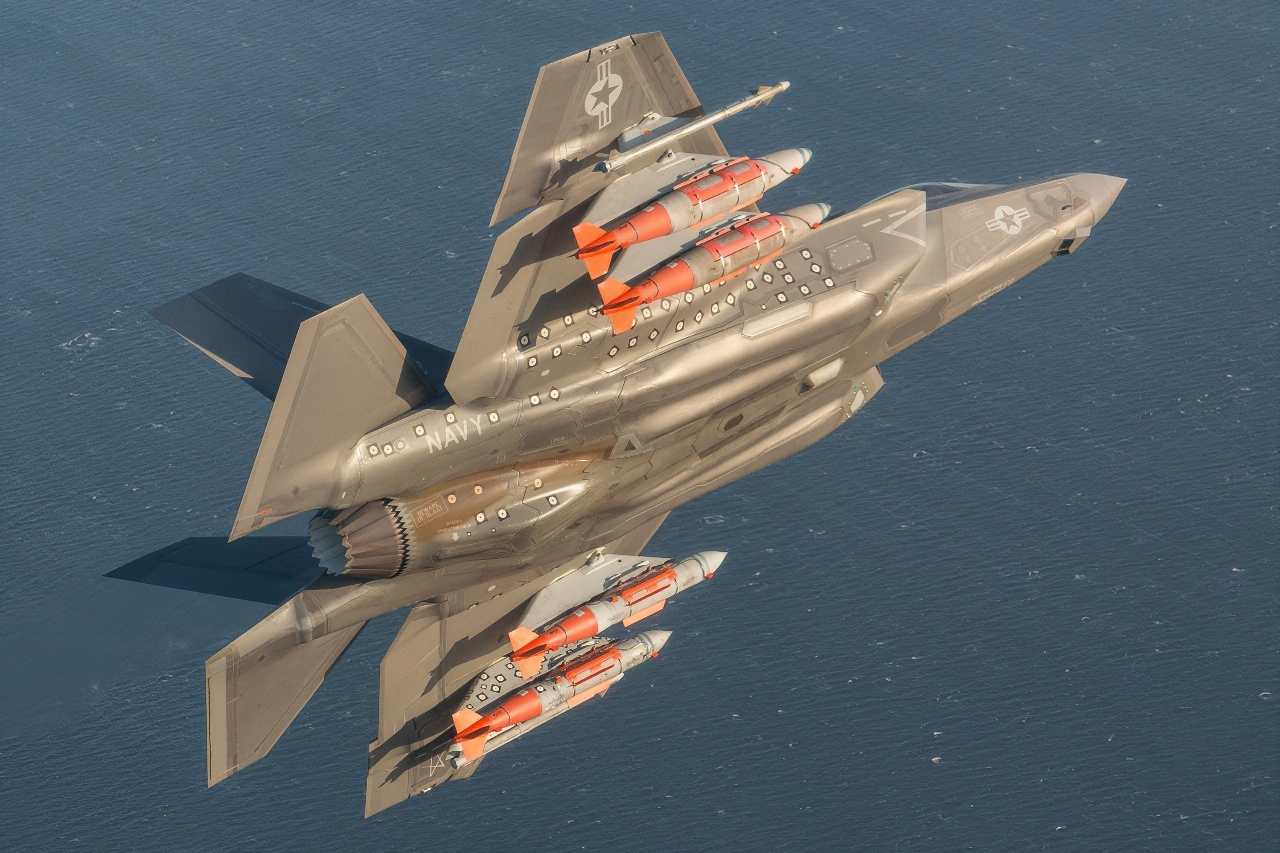
Billie Flynn, F-35 Pax River ITF, conducts an external GBU-31 and AIM-9x buffet and flutter test flight (Flt 592) from Naval Air Station Patuxent River, Maryland, April 4, 2018, in an F-35C test aircraft, CF-2. Photo courtesy of Lockheed Martin.
What the Agreement Would Do
From what has been leaked to various news outlets so far, the deal is expected to be a memorandum of understanding rather than a full nuclear settlement. Its first purpose would be to end the fighting and reopen the Strait of Hormuz, and then extend the ceasefire for another 60 days.
In other words, it’s not a peace deal.
According to U.S. officials so far, the deal would require Iran to reopen the strait and stop funding terrorist organizations. Iran would also be required to begin the process of dismantling its nuclear program – a condition on which President Donald Trump has refused to budge since the start. Washington also reportedly proposes that Iran would receive economic benefits if it complies with the deal’s conditions, and that no money would be released for simply signing the agreement.
However, Iran’s version of the deal appears to differ, as evidenced by statements from regime officials and press leaks.
Iranian state media outlets have described a very different-sounding deal – one that would lift the U.S. blockade and release frozen funds, while postponing nuclear discussions until later. On Friday afternoon, Iranian Foreign Minister Abbas Araghchi said that the management of the Strait of Hormuz would also not return to the pre-war era, when Iran and Oman maintained sovereignty and allowed commercial vessels to pass freely.
“Iran has made a firm decision that the administration of the Strait of Hormuz will no longer be the same as before,” he told an Iranian state television outlet. “The naval blockade must be completely lifted. That is the first point mentioned in the agreement.”
Israel May Not Be On Board
Israel is not a party to the U.S.-Iran negotiations, and that is likely to complicate implementation almost immediately. Iranian officials have so far indicated that the memorandum would include an end to conflict on multiple fronts, including Lebanon, but Israeli Prime Minister Benjamin Netanyahu, after Israeli officials said they were unaware of an agreed peace deal last night, has published a number of statements that seem to challenge Trump’s narrative.
In a statement released by his office, Netanyahu said, “As long as I am prime minister of Israel, Iran will not have nuclear weapons.”
“There is complete agreement between President Trump and me on this issue,” he continued.
At face value, it looks like an agreement with Trump. Dig deeper, and the comments read as a commitment to keep fighting Iran in the event that a negotiated peace deal does not meet Israel’s sniff test. If Netanyahu does not believe the deal does enough to prevent Iran from obtaining nuclear weapons, there is no reason Israel would not continue to strike Iranian targets.
Are These Delay Tactics?
The question now is whether Iran is negotiating in good faith or simply dragging out the process to gain leverage. Tehran is not an easy negotiating partner; the regime is ideological rather than rational. Iran broke the ceasefire by launching a drone at a U.S. Apache helicopter only days ago, and then claimed the aircraft had simply crashed, and accused Washington of using the incident as a pretext for strikes.
It is the same strategy Tehran has used time and again throughout this process: escalate, deny, delay, and demand concessions.
The progress seems to be real, but the risk hasn’t disappeared. Iran may still be using the promise of a deal to force Trump to lift pressure and restrain Israel – and should there be any more pushback from Tehran at the last minute, there may be a calculation that Trump is more likely to concede than he is to expend expensive missiles on new strikes and risk the process collapsing all over again.
Until Iran signs, the deal isn’t done – and even then, there’s no telling how long it might actually last.
About the Author: Jack Buckby
Jack Buckby is a British researcher and analyst specializing in defense and national security, based in New York. His work focuses on military capability, procurement, and strategic competition, producing and editing analysis for policy and defense audiences. He brings extensive editorial experience, with a career output spanning over 1,000 articles at 19FortyFive and National Security Journal, and has previously authored books and papers on extremism and deradicalization.


Fred Adams
June 13, 2026 at 1:48 pm
“The question now is whether Iran is negotiating in good faith or simply dragging out the process to gain leverage.” It may be usefully asked whether the US is following the same plan. What can be seen from here would tend to grant the US a favorable outcome in such attrition-by-negotiation. But time may render foolish all of today’s predictions.
AllahsHappyaHalalPorkEmporium
June 13, 2026 at 6:40 pm
Toll….. there’s not going to be any toll!
I think those rags you Islamos wear on your dumba$$ heads must be dipped in delusion juice! In FACT, IMHO, you Islamo nutjobs should be bombed off the planet; this is the 21st century, NOT the stone age you presently live in! Trump should kill and capture as many of you leaders who kill your own people and turn those survivors over to the Iranian people to properly hang/exterminate the lot of you!