
U.S. Strikes Iranian Nuclear Site as Tehran Hits Out at Kuwait: The United States launched its eighth consecutive night of strikes against Iran overnight into Sunday, July 19 – this time targeting major military and nuclear sites as well as coastal defenses and missile facilities.
Iranian authorities claim that the United States struck the construction site of a new nuclear power plant in southwestern Iran, although Washington has not confirmed that the facility was deliberately targeted. Meanwhile, Iran launched another wave of missile and drone strikes aimed at U.S.-allied states, striking a Kuwaiti power and desalination plant for the second time in two days. Iranian missiles were also reportedly fired toward southern Jordan.

Airman 1st Class Tommy Day (left), Senior Airman Phillip Ruiz (center) and Tech. Sgt. Dwayne Bolles prepare to load a BDU-56 bomb on a B-2 Spirit bomber at Andersen Air Force Base, Guam, on April 11, 2005. The airmen are Air Force weapons specialists deployed from the 509th Aircraft Maintenance Squadron, Whiteman Air Force Base, Mo.
(DoD photo by Master Sgt. Val Gempis, U.S. Air Force. (Released))

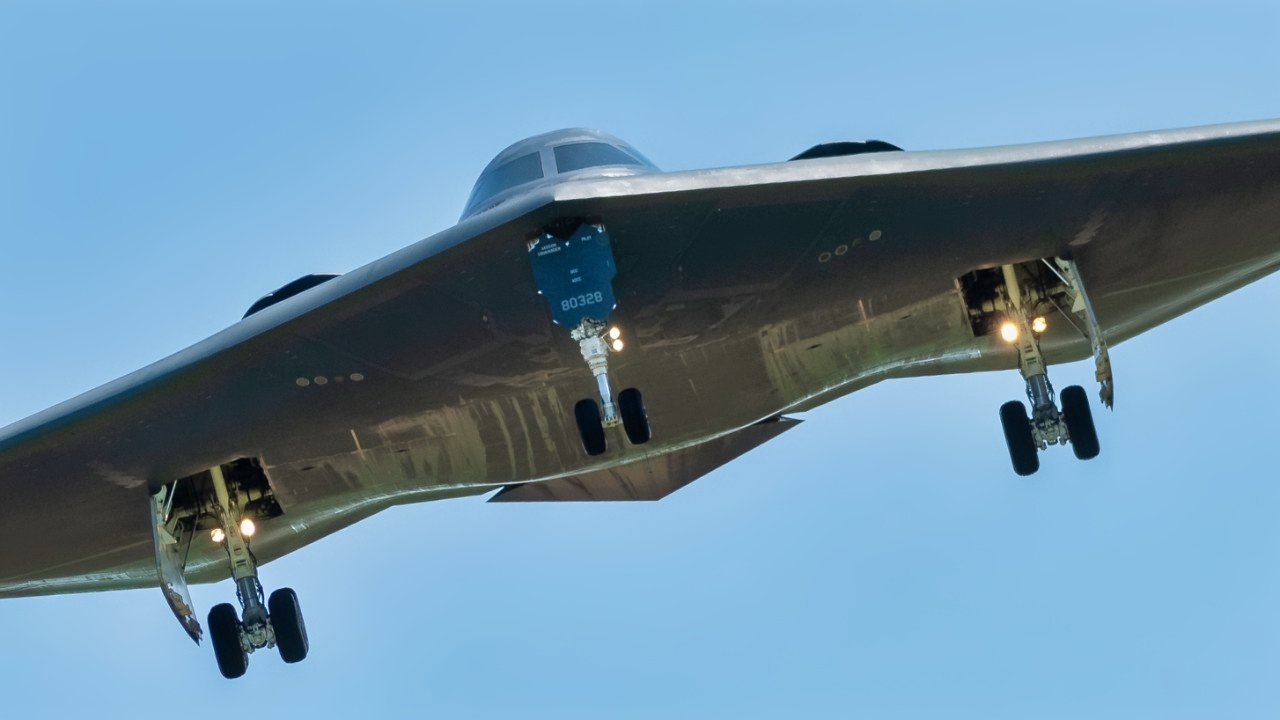
A United States Air Force B-2 Spirit Bomber from Whiteman Air Force Base, Missouri, undertook a hot pit refueling operation at Lajes Field, on September 12, 2023. The B-2 Spirit Bomber stop at Lajes highlights the readiness and capability of the men and women of the 65th Air Base Group to support global operations when called upon. (U.S. Air Force photo by Cristina Oliveira)
The extended fighting suggests that an all-out regional war is on the verge of breaking out, less than a month after both governments signed a preliminary memorandum of understanding (MOU) intended to end the fighting and open the Strait of Hormuz.
U.S. Launches Retaliatory Strikes
U.S. Central Command (CENTCOM) said that the overnight operation began at approximately 6 pm Eastern Time on Saturday at the direction of President Donald Trump. According to CENTCOM, U.S. forces targeted Iranian air defense facilities, maritime capabilities, military coastal surveillance sites, and missile and drone storage facilities.
“Today at 6 p.m. ET, U.S. forces began launching new airstrikes against Iran at the Commander in Chief’s direction. The strikes are designed to further degrade Iran’s ability to threaten commercial shipping in the Strait of Hormuz and swiftly punish Islamic Revolutionary Guard Corps forces who launched attacks against American service members in Jordan last night,” the CENTCOM statement reads.
Footage released by the U.S. military and shared online also appeared to show U.S. fighter aircraft and sea-launched Tomahawk cruise missiles striking various targets, including some facilities that appeared to be located in mountainous terrain. It marks a significant expansion of U.S. operations against Iran so far, which have heavily focused on maritime capabilities with the intended purpose of opening the Strait of Hormuz.
Explosions were reported around Bandar Abbas, Qeshm Island, Sirik, Shadegan, and later near Abadan in Khuzestan province. Valiollah Hayati, a deputy governor of Khuzestan, told Iranian state broadcaster IRIB that the Abadan strike caused no casualties.
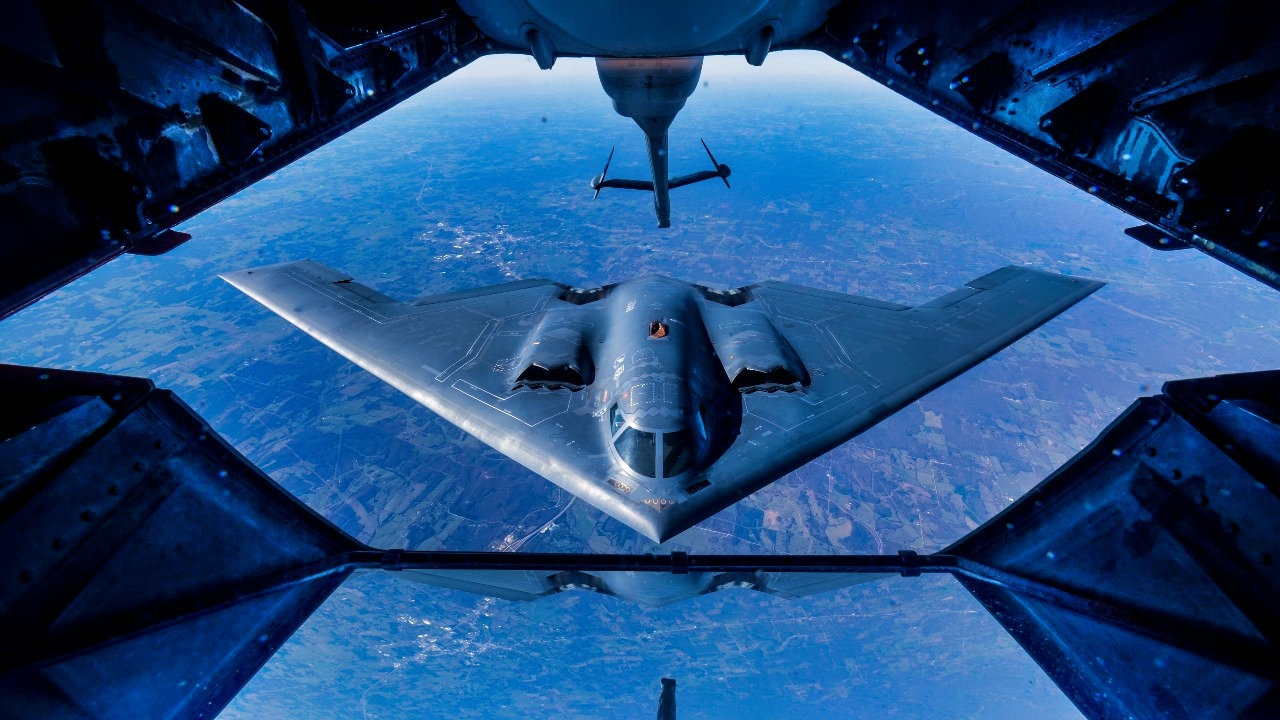
A 2nd Air Refueling Squadron KC-10 Extender from Joint Base McGuire-Dix-Lakehurst, N.J., prepares to refuel a B-2 Spirit, during a training exercise near Kansas, Nov. 10, 2016. The KC-10 Extender is an Air Mobility Command advanced tanker and cargo aircraft designed to provide increased global mobility for U.S. armed forces. Although the KC-l0’s primary mission is aerial refueling, it can combine the tasks of a tanker and cargo aircraft by refueling fighters and simultaneously carry the fighter support personnel and equipment on overseas deployments. (U.S. Air Force photo by Senior Airman Keith James/Released)
Iran Claims Nuclear Facility Hit
Iran’s Atomic Energy Organization said one of the overnight strikes hit the Darkhovin nuclear power plant construction site near the Iraqi border.
“An attack on a peaceful nuclear facility under international safeguards is a clear violation of international law,” a statement from Iran’s Atomic Energy Organization published on X reads.
The organization did not reveal any additional details about the scale of the damage at the site. The United States has also refrained from publicly confirming striking Darkhovin, and CENTCOM’s description of the operation did not mention any nuclear facility being hit.
The International Atomic Energy Agency (IAEA) also confirmed that it was investigating the Iranian claim, describing Darkhovin as being in the “very early stages” of construction, adding that it did not contain any nuclear material when inspectors last visited the site, making a radiological problem unlikely.
“While the reported attack is not believed to pose any radiological risk, [IAEA Director General] Rafael Grossi reiterates call for military restraint in the vicinity of all nuclear-related sites. The IAEA has contacted Iran about the public reports and will provide further information as it becomes available,” an IAEA statement reads.
Satellite imagery taken on July 9 has repeatedly shown earth clearing at the planned facility, but little substantial construction so far. Iran intends for Darkhovin to be a domestically built nuclear power reactor, but the project has faced decades of delays.
Kuwait Water Plant Attacked Again
Iranian drones and missiles also once again struck Kuwait, where authorities claim a power generation and water desalination facility was hit for the second consecutive day. Kuwait’s Ministry of Electricity, Water and Renewable Energy said the latest attack caused fires but insisted that the national power grid remained stable. Previous strikes had damaged multiple generating units, forcing authorities to activate emergency plans and ask residents to reduce electricity use during peak hours.
Kuwait Petroleum Corporation also issued a separate statement, reporting injuries and “significant material losses” after Iran targeted one of its facilities. Kuwaiti Defense Ministry spokesman Brig. Gen. Saud Al-Otaibi also described the damage done to electricity infrastructure as “severe.”
Jordan Under Renewed Pressure
Jordan also came under renewed pressure last night with the Jordanian Armed Forces confirming that air defenses had intercepted three Iranian missiles, while a fourth landed in a remote area near Aqaba without causing any casualties.
The U.S. Embassy had earlier warned Americans to avoid Aqaba’s airport and seaport because of a “specific and credible threat.” Jordan later summoned the chargé d’affaires of the Iranian Embassy, demanding an immediate end to what Foreign Ministry spokesperson Fuad Al-Majali described as “unjustified and blatant Iranian attacks” against the kingdom.
About the Author: Jack Buckby
Jack Buckby is a British researcher and analyst specializing in defense and national security, based in New York. His work focuses on military capability, procurement, and strategic competition, producing and editing analysis for policy and defense audiences. He brings extensive editorial experience, with a career output spanning over 1,000 articles at 19FortyFive and National Security Journal, and has previously authored books and papers on extremism and deradicalization.


