
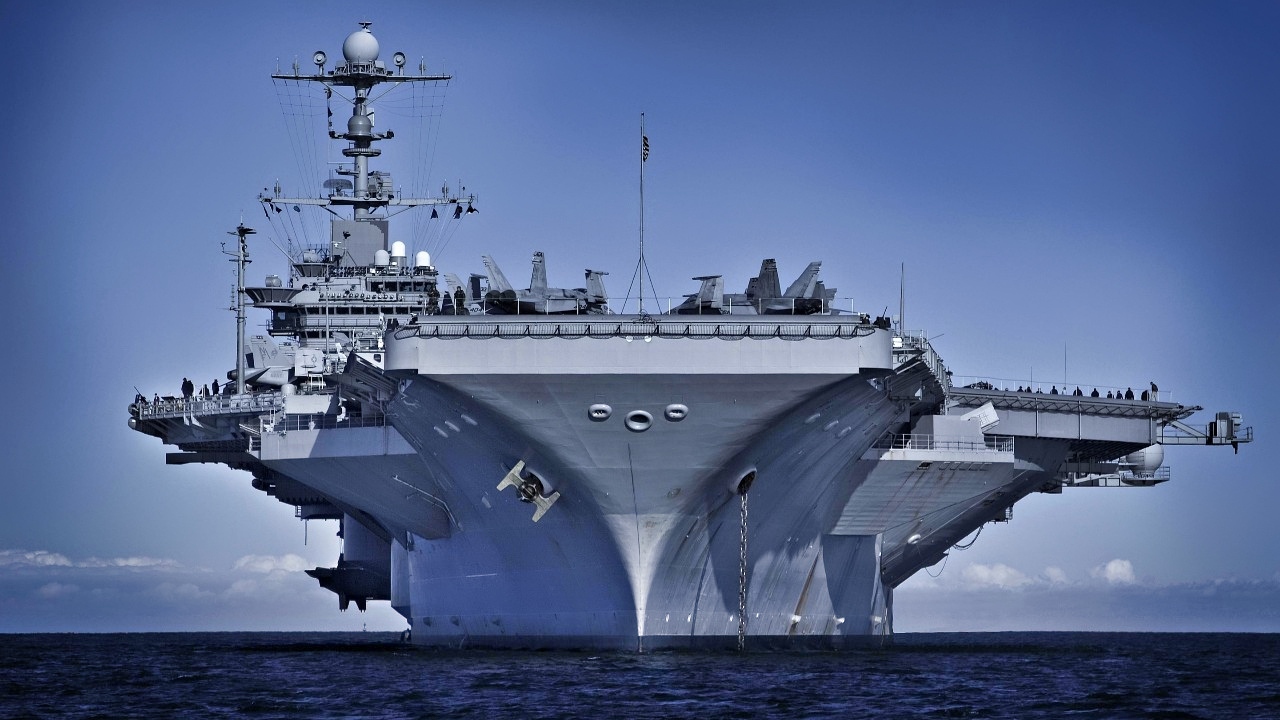
At a 1 pm press conference in Washington on Monday, August 24, the United States warned countries and companies worldwide to cut economic ties with Iran or risk being shut out of the U.S. financial system.
The announcement today was expected, with Treasury Secretary Scott Bessent announcing the press conference last week and warning Iran that it would be economically isolated unless the Islamic regime returns to the negotiating table.
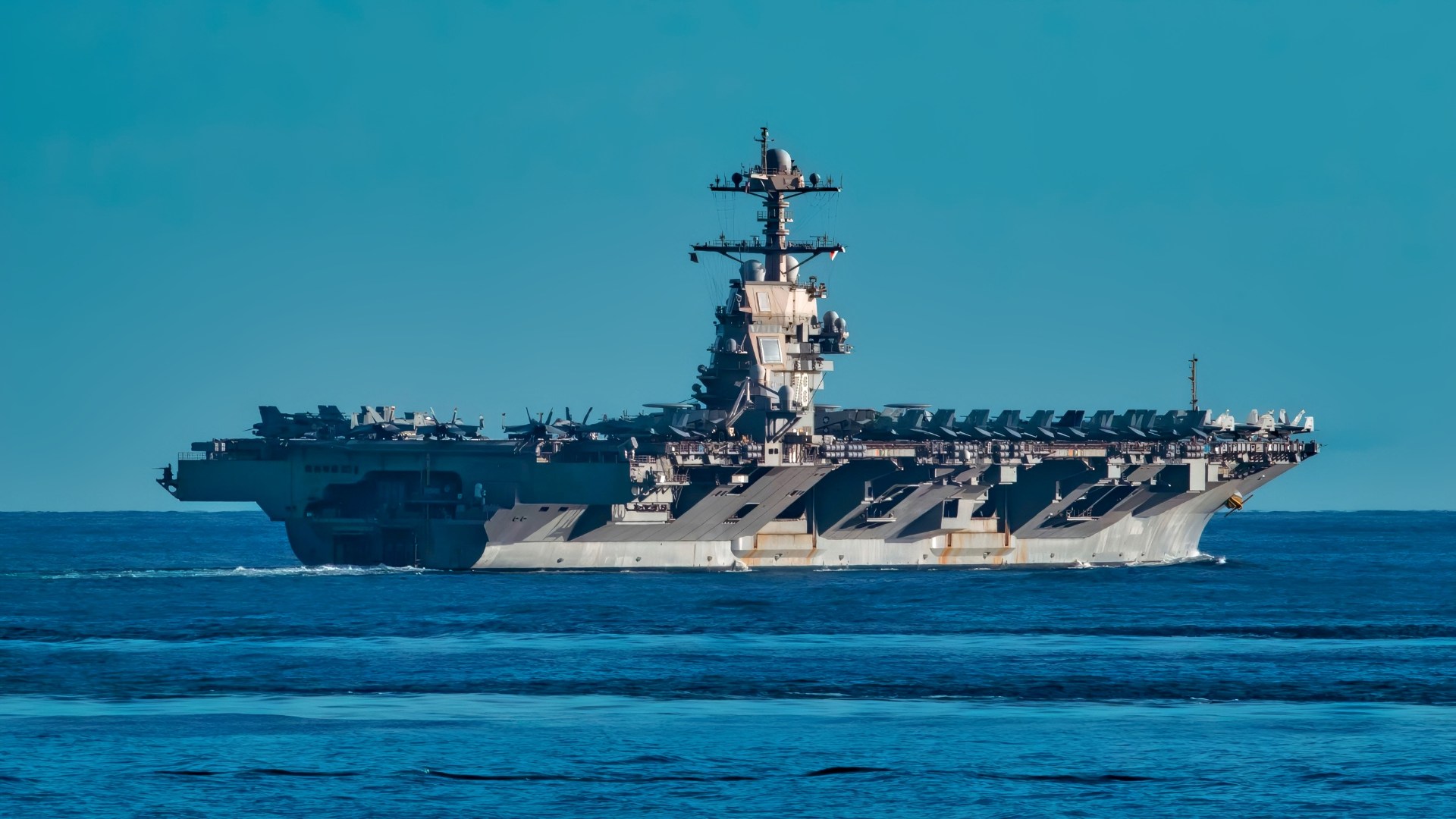
The Arleigh Burke-class guided-missile destroyer USS Winston S. Churchill (DDG 81) sails alongside the world’s largest aircraft carrier the USS Gerald R. Ford (CVN 78), Sep. 24, 2025. Winston S. Churchill, as part of Carrier Strike Group 12, is on a scheduled deployment in the U.S. 6th Fleet area of operation to support the warfighting effectiveness, lethality and readiness of U.S. Naval Forces, Europe-Africa, and defend U.S. Allied and partner interest in the region. (U.S. Navy photo by Mass Communication Specialist Seaman Hector Rodriguez)
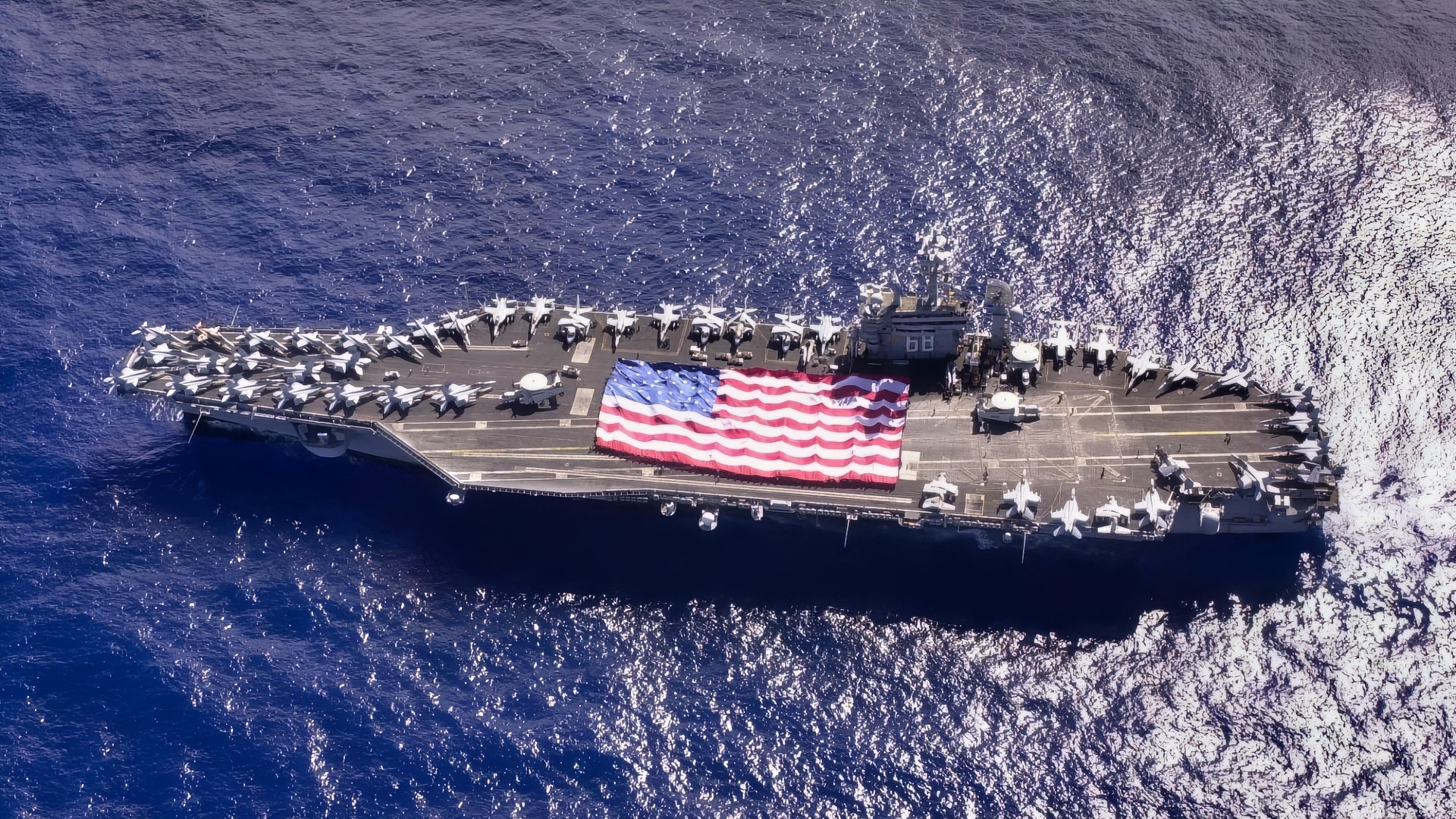
Pacific Ocean (Nov. 3, 2003) — USS Nimitz (CVN 68) crewmembers participate in a flag unfurling rehearsal with the help of family and friends on the ship’s flight deck during a Tiger Cruise. The Nimitz Carrier Strike Group and embarked Carrier Air Wing Eleven (CVW-11) are en route to San Diego, Calif., following an eight-month deployment to the Arabian Gulf in support of Operation Iraqi Freedom. U.S. Navy photo by Photographer’s Mate 3rd Class Elizabeth Thompson. (RELEASED)
During the press conference, Bessent announced what he called “Operation Economic Outcast,” immediately sanctioning roughly 60 Iran-linked individuals, companies, and vessels.
He also announced plans to expand secondary sanctions into five sectors of Iran’s economy.
Crucially, though, Washington stopped short of immediately imposing a series of other penalties on countries still trading with Iran, instead giving them some time to comply with U.S. demands.
The strategy comes after the United States ceased its two-week-long nightly strike campaign against Iran amid reports of a shortage of precision-guided interceptors and missiles.
What Bessent Just Announced
Speaking at a press conference at the Treasury Department in Washington, Bessent compared the situation to World War II.
“In the Second World War, D-Day marked the historic beginning of a campaign with our allies to target and drive the enemy from its positions, including those in third countries,” Bessent said. “Today, in that same spirit, we are launching an economic onslaught against Iran’s financial connections around the globe.”
Bessent’s point was that rather than relying only on sanctions against Iranian entities, the United States intends to use access to the dollar and American financial system as leverage against foreign banks and businesses that continue to facilitate Iranian trade.
Over the years, Tehran has built a clandestine network of intermediaries and partners, both of which have provided indirect access to the global economy. And the U.S. is looking to cut that off.
The secondary sanctions are also particularly important because they allow Washington to target companies outside of the United States for transactions with Iran – thereby potentially forcing banks, shipping companies, technology firms, commodity traders, and a host of other businesses to choose between maintaining Iranian relationships and retaining access to the far larger American financial system.
Bessent also said that the new strategy will have “zero leakage,” with the administration seeking to exert maximum pressure by closing all financial channels Iran has continued using to generate revenue and obtain goods despite existing sanctions.
“Those who tether themselves to Tehran should expect to share in the isolation of a withering regime,” Bessent said.
Two Economic Futures
The Treasury secretary also presented Tehran with two very different economic futures, saying the regime must now choose between complete global isolation and a subsistence economy, or regaining access to the international economy by reaching an agreement with Washington.
He also said that not every threatened penalty will be implemented immediately, adding that Washington will begin by contacting foreign governments and companies privately and giving some a limited opportunity to unwind their Iranian business before enforcement takes effect.
But that grace period, he said, may still be short – and he warned that major financial institutions could face sanctions by the end of the week.
Bessent, however, declined to identify which institutions would be impacted first.
Iran Promises to Respond
Iran responded to Washington’s new threats on Monday by warning countries not to cooperate with the United States.
Speaking during his weekly press conference in Tehran, Foreign Ministry spokesperson Esmaeil Baghaei said that Iran had already warned governments against cooperating with Washington and that Tehran’s hands “are not tied.”
“Any escalation of this situation will undoubtedly bring about consequences,” he said.
The warning followed a more explicit threat from Mohsen Rezaei, the secretary of the Supreme National Security Council, who said on Sunday that Tehran would treat any other country’s participation in the U.S. economic campaign as an act of war, adding that Iran would completely close the Strait of Hormuz if it has to.
“If the economic war continues, not a single drop of oil will be exported, neither through the Strait of Hormuz nor from anywhere in the Persian Gulf,” he said on Sunday.
Iran Will Keep Fighting
Meanwhile, Army chief Amir Hatami also said during a speech on Monday that Iranian forces will fight for “10-20 generations” if they have to, insisting that economic warfare will not be enough to cripple the regime.
“The only way is to make [the US] understand through a language of force that they cannot do what they intend,” he said.
But Washington expects Iran to buckle, with Bessent making clear that Monday’s announcement is only the beginning and promising to sanction a major financial institution by the end of the week if it does not comply with the new demands. The first major test of the new strategy, therefore, could come within days.
About the Author: Jack Buckby
Jack Buckby is a British researcher and analyst specializing in defense and national security, based in New York. His work focuses on military capability, procurement, and strategic competition, producing and editing analysis for policy and defense audiences. He brings extensive editorial experience, with a career output spanning over 1,000 articles at 19FortyFive and National Security Journal, and has previously authored books and papers on extremism and deradicalization.


