

With oil flowing from the Gulf at levels more than eighty percent of the pre-war levels, and the price of Brent Crude, a global oil benchmark, down from its springtime peaks when the fighting in Iran erupted, it would appear that a new normalcy has set in, one in which Washington and Tehran grapple for the upper hand. As they struggle to best one another, trade through the Strait of Hormuz, particularly in energy, has resumed.
The Saudis have leveraged other outlets besides that fickle wartime bottleneck to get their oil to the outside world.

Iran Missiles. Image Credit: Creative Commons.
Though Iranian forces continue to fire on ships running the gauntlet they have made of the strait, both America and Iran lick their wounds from the previous rounds of fighting.
Much of Iran’s conventional military has been decimated.
But American losses have not been inconsequential either.
Washington’s Report Card on Iran War
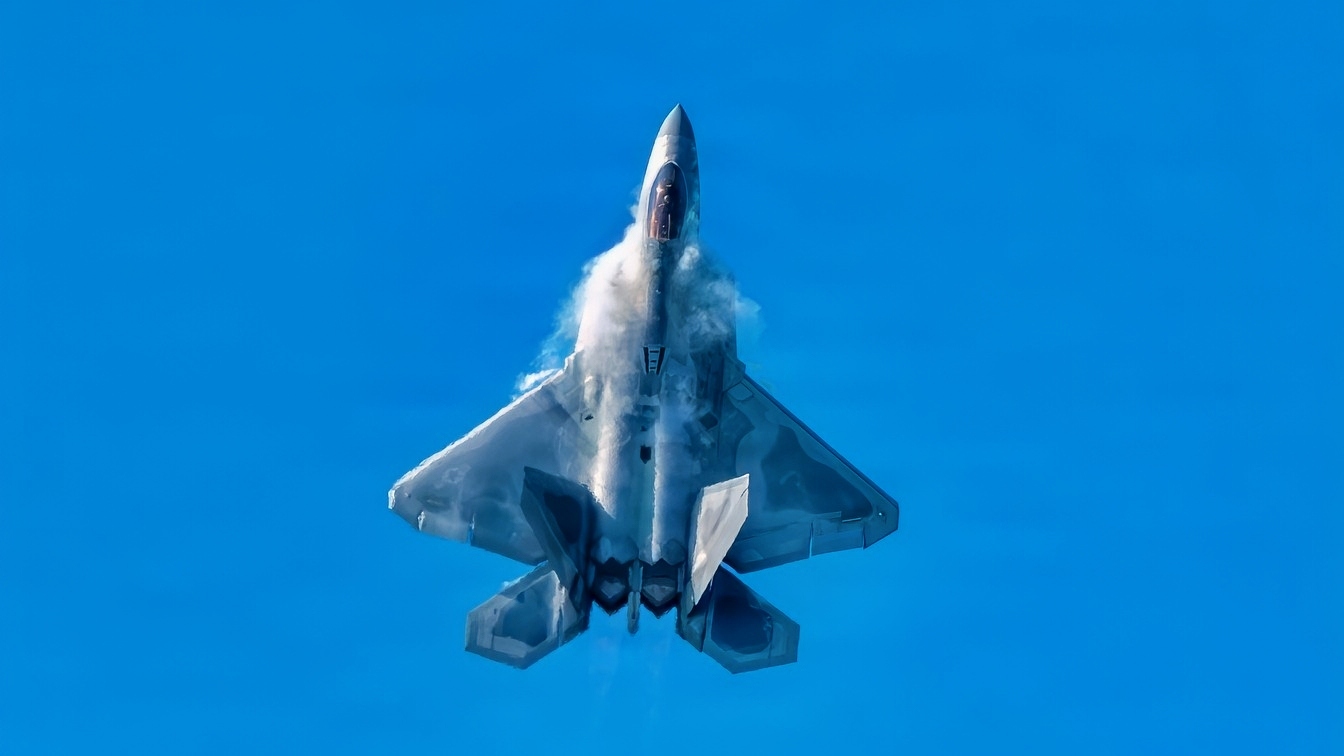
The 81 aircraft lost in the fighting against Iran represent a diverse mix, including one of America’s most advanced stealth platforms (damaged) and many older, Cold War-era aircraft. The list is extensive.
According to the Congressional Research Service, a nonpartisan body that compiles reports for the United States Congress, aircraft lost include twelve F-15E Strike Eagle fighter aircraft, one F-35A Lightning II fighter aircraft, two A-10 Thunderbolt II ground-attack aircraft, seven KC-135 Stratotanker aerial refueling aircraft, one E-3 Sentry airborne early warning-and-control system aircraft, two MC-130J Commando II special operations aircraft, one MQ-4C Triton high-altitude long-endurance uncrewed aircraft, three MQ-1 multi-role uncrewed aircraft, an astonishing forty-five MQ-9 Reaper multi-role uncrewed aircraft, one AH-64 Apache attack helicopter, four AH-6 Little Bird light attack helicopters, and one MH-60 Sea Hawk maritime helicopter.
The report is narrow in scope and does not include the damage sustained by a number of American bases throughout the region in Jordan, Iraq, Saudi Arabia, Oman, Kuwait, and the Gulf kingdoms that found themselves under fire by Iranian drone and missile attacks, sometimes on repeated occasions. Though additional information will no doubt emerge in the future, some Middle Eastern bases are likely destroyed. Some may never be rebuilt.
The war has proven costly, and its price tag is at least $43 billion, a number that rises steadily by about $1 billion each day. It could become even more expensive.
Lull Before the Storm?
President Trump has publicly signaled that he will not order fresh strikes on Iran before next month’s midterm elections. And while the pause gives American service members potentially a brief respite before renewed hostilities, it also gives Iran a chance to regroup as well, with the country’s notionally Islamist regime doing seemingly everything it can to boost its meager defenses.
Despite the dozens of aircraft lost in the course of fighting in Iran, the tally of aircraft lost skews heavily toward the opening days, as weeks of fighting before the United States secured control over most, if not all, of Iran’s skies. Today, thanks to an acute dearth of reliable air defenses, Iran has little recourse against American overflights, which today can be conducted over vast swaths of the country with virtual impunity. Still, according to recent reporting, Iran is aware that the most powerful military in the world could launch fresh strikes against it — and is bolstering its defenses.
Thanks to recently analyzed satellite imagery, Iran has fortified some of its most important underground nuclear sites — Natanz and Pickaxe Mountain — from a ground assault by erecting large earthen berms around the sites. But for a country that cannot defend its skies, the move appears to be a rather desperate, last-ditch effort rather than a viable defensive strategy.
The Iranian Revolutionary Guard Corps, the quasi-independent paramilitary force that operates in parallel to Iran’s conventional military, has offered civilians free training courses in how to handle a variety of weaponry, but in particular, reporting shows, of sniper rifles and man-portable anti-aircraft systems — the types of weapons that would complicate American overflights as well as a ground invasion of the country.
Speaking to The Times, a British print daily, one former senior American official within the defense establishment was particularly blunt about the political appetite for doubling down on the war within the Pentagon, the White House, and the heartland. “The damage to bases, munitions shortfalls, especially air and missile defence interceptors, as well as the aircraft losses, are all weighing on the decision-makers, although those concerns would not necessarily be [the deciding factor],” the official said.
“Much will depend on how far the current Iranian escalation in the Gulf and Strait of Hormuz extends — if, for instance, a US ship was hit with significant casualties — but these factors as well as political calculations will weigh heavily,” they added. “The war is extremely unpopular. It started with a low-level of support and Trump has never really made the case for it publicly.”
About the Author: Caleb Larson
Caleb Larson is an American multiformat journalist based in Berlin, Germany. His work covers the intersection of conflict and society, focusing on American foreign policy and European security. He has reported from Germany, Russia, and the United States. Most recently, he covered the war in Ukraine, reporting extensively on the war’s shifting battle lines from Donbas and writing on the war’s civilian and humanitarian toll. Previously, he worked as a Defense Reporter for POLITICO Europe. You can follow his latest work on X.


