

The EU recently agreed on its 21st sanctions package against the Russian Federation, according to diplomats.
This most recent package, EU members said, was the largest batch of sanctions in four years, targeting financial institutions, LNG companies, individual shadow fleet vessels, and more.

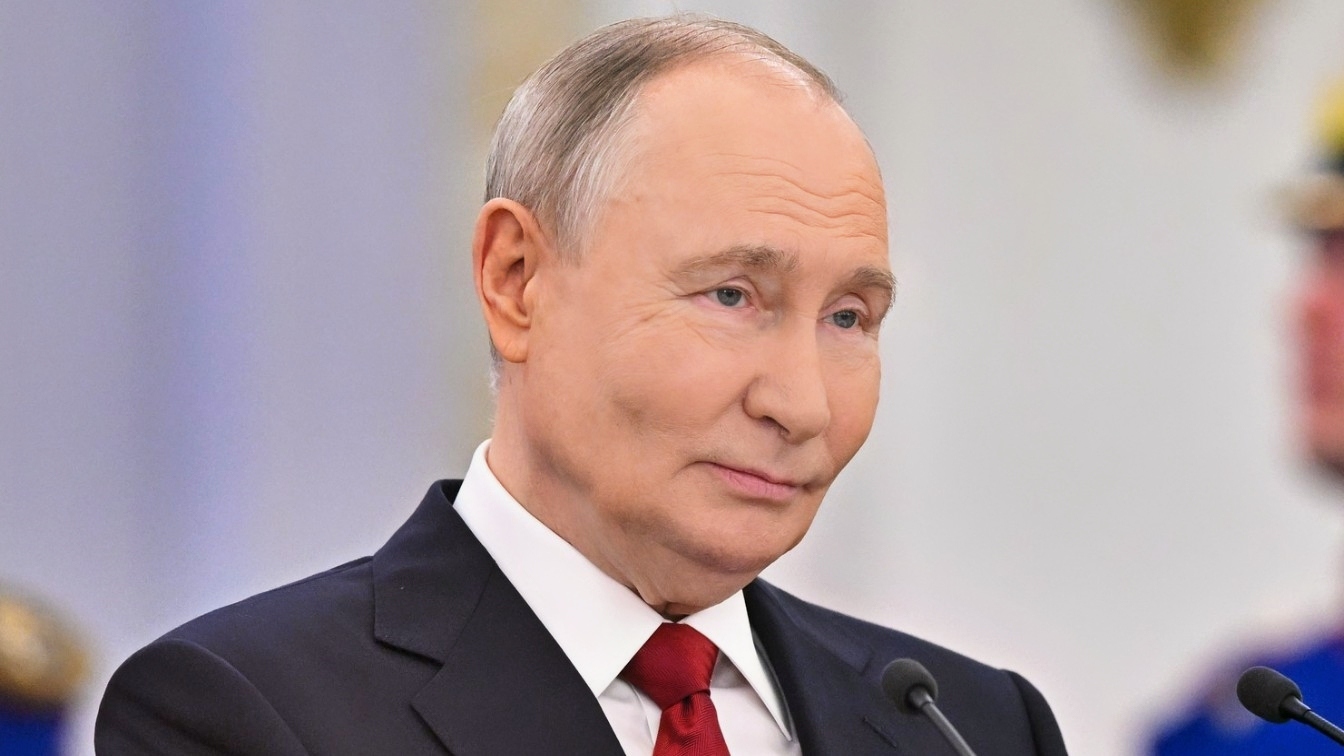
Putin in May 2025 Looking Grim. Image Credit: Kremlin.

Putin Back in 2023. Image Credit: Kremlin.
The debate over this newest round got a bit heated after Greece and a few other nations opposed some of the restrictions on Russian exports, claiming that they would have no practical impact on Russia’s overall revenue.
According to some reports, all members managed to reach a compromise, allowing for the importation of some goods, while tightening the price cap on Russian crude oil.
Hitting Russia’s Financial Center
The new round of sanctions targets some 218 listings ranging from financial institutions to vessels involved in illegally shipping Russian oil.
Banks and crypto organizations are the main emphasis of this new package.
The sanctions aim to squeeze Russia’s financial sector at a time when the economy is especially vulnerable, according to the EU. “We’ve hit more than a hundred banks and crypto operators, over 40 shadow fleet vessels, and several oil refineries in Russia and Belarus, who help keep Moscow’s war going,” said Kaja Kallas, the EU’s chief diplomat.
The package lists 94 financial institutions, 32 of which are banks, that will be disconnected from the SWIFT system.
The new sanctions package also includes a 12-month freeze on the Russian oil price gap at $44.10 per barrel. This measure is aimed at preventing Moscow from capitalizing on the current rise in oil prices due to the current war in the Middle East.
In March, the Russian economy received a much-needed windfall as revenues from oil exports increased due to the initial outbreak of the war.
The new round of sanctions seeks to limit potential profits by imposing a severe price gap on Russian energy exports. “We’re…freezing the oil price cap adjustment for a year, so that the Russian war machine does not benefit from market shocks,” European Commission President Ursula von der Leyen wrote on social media. Urals, Russia’s main export-grade crude oil, currently trades at $67.50 per barrel.
Coalition of the (Mostly) Willing
Despite the rhetoric from many EU leaders about how united Europe has been in its support for Ukraine, this newest round of sanctions had to be pared down to secure agreement from all members.
Earlier proposals included a visa ban to exclude Russian soldiers who had fought in Ukraine from entering the EU. After receiving pushback from several member states, this provision was axed altogether.
Another proposal aimed at sanctioning Patriarch Kirill, the current head of the Russian Orthodox Church, was also met with pushback from Bulgaria, whose population is 62% Eastern Orthodox Christian.
Other bans on imports, like cod and Alaskan Pollock, were opposed by France and Portugal and ultimately removed.
The most notable opposition, however, came from Greece, which opposed a measure restricting Russian LNG imports.
As the owner of 60% of the EU’s shipping fleet, Greece argued that its domestic economy would be disproportionately affected by energy sanctions and that these sanctions would have detrimental effects on its own economy, which has been struggling for a while now.
Officials in Athens also questioned the point of such measures. They argued that if the Russians were pushed out of the Western market, Moscow would instead find buyers elsewhere, and its export revenues would remain more or less the same.
Eventually, diplomats reached a compromise with Greece that exempted Athens from LNG bans. As it stands, all other EU members have a one-year window to transfer Russian LNG to third countries.
Is Ukraine Worth the Hit?
The debates on this newest round of sanctions are an example of the law of diminishing returns in action. After 20 rounds of sanctions, the EU is struggling to find targets that can be universally agreed upon by all 27 member states.
Additionally, not all member states have the money to easily substitute out Russian products. While wealthy states like the U.S. can easily substitute Russian oil and gas for domestic alternatives, poorer countries like Greece do not have that luxury.
Greece’s economy has been struggling for the past few decades (although there are signs of recovery) and is highly reliant on trade with Russia to generate some revenue.
Despite efforts to sanction Russian oil and gas, several EU members have actually increased their purchases of Russian energy in the first half of 2026.
According to data from the Centre for Research on Energy and Clean Air, Russia has enjoyed some of its highest revenues from LNG exports since 2022, when the war first began.
Russia’s Yamal export hub in Siberia has reportedly sent around 136 LNG tankers to Europe this year, marking a 16% increase compared to last year.
The highest buyers, according to the data, were France, Belgium, and Spain. Although the EU has tried to shift away from Russian fuel, Russia still makes up 13% of Europe’s energy supply.
Spain sources about a quarter of its gas from Moscow, while Belgium receives more than half its total gas supply from Siberia.
About the Author: Isaac Seitz
Isaac Seitz, a Defense Columnist, graduated from Patrick Henry College’s Strategic Intelligence and National Security program. He has also studied Russian at Middlebury Language Schools and has worked as an intelligence Analyst in the private sector.


