

Israel just doubled its F-35I Adir stealth fighter fleet to 100 and ordered 50 Boeing F-15IA strike fighters — part of a $119 billion military buildup approved May 3. The procurement, Israel’s largest-ever combat aviation expansion, follows Lockheed Martin’s existing deliveries of the F-35I and Boeing’s $8.58 billion contract for the first 25 F-15IAs. Israeli pilots already have over 15,000 combat flight hours on the F-35I from operations against Iran.
Israel Getting More F-35I Adir and F-35IA Fighters

Israel’s F-35I Adir Fighter. Image credit: Creative Commons
Israel has approved one of the largest combat aviation expansions in its history, authorizing the purchase of two new fighter squadrons from the United States as part of a massive post-war military buildup designed to prepare the country for what officials describe as a “demanding decade” of regional conflict. The decision, approved by Israel’s Ministerial Committee on Procurement on May 3, includes a fourth squadron of Lockheed Martin F-35I Adir stealth fighters and a second squadron of Boeing F-15IA aircraft.
The acquisition is part of a $119 billion force expansion plan unveiled following the October 7 attacks, the Gaza war, multiple regional operations against Iranian-backed groups, and direct military conflict between Israel and Iran in both 2025 and 2026. Israeli officials say the new aircraft are intended to preserve long-term air superiority while preparing the Israeli Air Force for sustained operations across the Middle East.
In an official statement, Israeli Prime Minister Benjamin Netanyahu said that the Israeli Air Force has “incredible aircraft” and “incredible pilots,” adding that their pilots “can reach any point in the skies of Iran,” and that they are “prepared to do so if required.”
“Regarding strengthening: We are acquiring two squadrons of advanced aircraft – the F-35 and the F-15IA. These aircraft bolster Israel’s overwhelming air superiority, a superiority that was proven in Operation Rising Lion and now in Operation Roaring Lion,” Netanyahu also said.
The latest announcement also marks a notable shift in Israeli defense planning. Before October 7, there had been an intense debate within Israel over whether limited defense funding should be used for additional stealthy F-35s or heavier F-15 strike aircraft.
What Israel Is Buying
Under the newly approved plan, Israel will eventually expand its F-35 fleet from roughly 50 aircraft to around 100 while also doubling its planned F-15IA fleet from 25 aircraft to 50.
Israel had already signed a 2023 agreement for an additional 25 F-35Is that would create a third squadron, with deliveries expected to begin around 2027. The new approval authorizes a fourth squadron in addition to the earlier order.
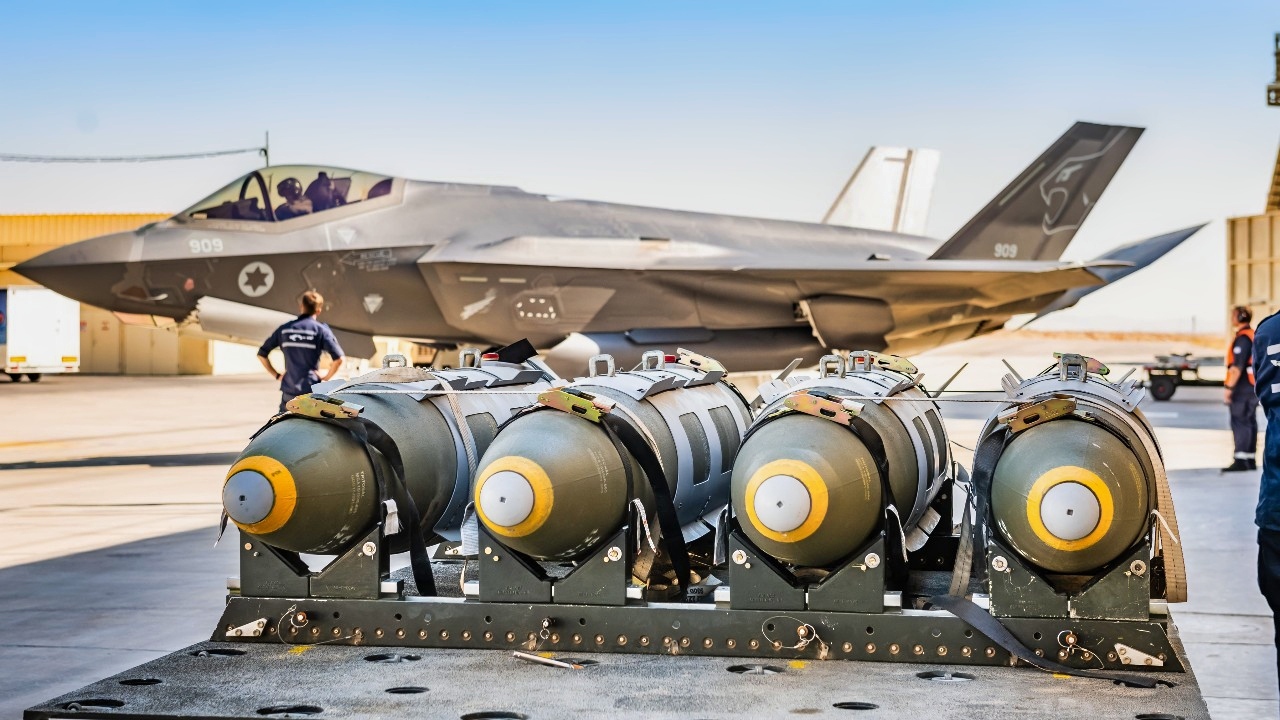
Israel F-35I Adir Stealth Fighter. Image Credit: IAF.

An Israeli Air Force pilot walks to an F-35I Adir prior to a Red Flag-Nellis 23-2 mission at Nellis Air Force Base, Nevada, March 15, 2023. Red Flag is an opportunity to build on the success of JUNIPER OAK 23-2, JUNIPER FALCON, and additional combined exercises to enhance interoperability with Israel, strengthen bilateral cooperation, and improve capabilities in ways that enhance and promote regional stability and reinforce the United States’ enduring commitment to Israel’s security. (U.S. Air Force photo by Airman 1st Class Trevor Bell)
The F-15IA side of the deal builds on a major Boeing contract announced in late 2025. The Pentagon confirmed on December 29 that Boeing had received an $8.58 billion contract to produce 25 F-15IA aircraft for Israel, with an option for another 25 jets now expected to be exercised under the new procurement plan.
The F-35I Adir is Israel’s customized version of the F-35A Joint Strike Fighter and includes Israeli-developed electronic warfare systems and other domestic modifications. The aircraft is primarily valued for its stealth characteristics, intelligence-gathering capabilities, and ability to penetrate heavily defended airspace.
The F-15IA, meanwhile, is derived from Boeing’s F-15EX Eagle II and is optimized for long-range strike operations and heavy payload missions.
Defense News reported that the aircraft can carry up to 29,500 pounds of payload and is intended for heavy engagement and extended-range missions.
Israel is also continuing other aviation modernization efforts alongside the fighter purchases. In 2022, Jerusalem finalized a deal to acquire four Boeing KC-46A aerial refueling tankers, aircraft considered critical for sustained long-range strike operations against Iran.

F-35I Adir Fighter. Image Credit: Israeli Air Force.
Lessons from the Iran War
The new procurement plans are a direct result of the conflict with Iran, and the Israeli Ministry of Defense has said as much.
“Alongside immediate wartime procurement needs, we have a responsibility to act now to secure the IDF’s military edge ten years from now and beyond,” the Israeli Ministry of Defense’s Director General Amir Baram said, adding that the war with Iran “reinforced just how critical the U.S.-Israel strategic relationship is, and how essential advanced air power remains.”
“The approval of this procurement is the first major step in executing the 350-billion-NIS force buildup plan for an intense security decade ahead. Alongside immediate wartime procurement needs, we have a responsibility to act now to secure the IDF’s military edge ten years from now and beyond…The complementary capabilities of these two squadrons will give the Israeli Air Force the flexibility to handle a broad range of combat scenarios,” Baram also said in the statement.
The U.S. and Israel launched strikes against Iran on February 28 before a ceasefire was reached on April 8. During the conflict, Israeli aircraft conducted long-range strike operations against Iranian military infrastructure while simultaneously maintaining operations across Gaza, Lebanon, Syria, and Yemen. Israeli F-35s also played a central role in suppressing Iranian air defenses during those operations, striking Iranian radar systems and air defense networks during multiple rounds of attacks.
Before the latest approval, Israel had already accumulated more than 15,000 operational flight hours on the F-35 fleet across regional combat operations, according to the Israeli Defense Ministry. Israeli officials also confirmed the aircraft had been modified during the war to carry JDAM munitions externally on their wings.
About the Author: Jack Buckby
Jack Buckby is a British researcher and analyst specializing in defense and national security, based in New York. His work focuses on military capability, procurement, and strategic competition, producing and editing analysis for policy and defense audiences. He brings extensive editorial experience, with a career output spanning over 1,000 articles at 19FortyFive and National Security Journal, and has previously authored books and papers on extremism and deradicalization.


