

Key Points and Summary – A major geopolitical shift is underway as France rapidly replaces Russia as India’s primary strategic defense partner.
-This is being solidified by two massive new agreements: a $7.5 billion contract for 26 French Rafale M carrier-based fighters, and a potential $7.2 billion “deal of the century” for France’s SAFRAN to co-develop a next-generation engine for India’s future stealth fighter.
-These deals come as Indian dissatisfaction with Russia’s deteriorating military support grows, marking the effective end of a defense relationship that has lasted for five decades.
Russia Has a Problem: India Is Buying More French Military Arms
WARSAW, POLAND – France is gradually replacing Russia as the Indian armed forces’ strategic defense partner.
One of the biggest recent indicators that this change is consolidating came earlier this year, when India signed one of its biggest-ever defense import contracts – a $7.5 billion agreement to procure 26 Rafale M fighter jets.
The Rafale M is a carrier-capable version of the land-based Rafale fighter – the Indian Air Force (IAF) purchased 36 Rafale fighters more than a decade ago. India this year selected the Rafale M over other options including the Russian-made MiG-29K and the U.S. F/A-18E/F Super Hornet.
India has spent 20 years running two consecutive Medium-Multirole Combat Aircraft tenders to acquire close to 200 fighter aircraft. But during this time, the question has remained open of whether India would turn away from a military-industrial partnership with Russia that goes back five decades, and finally decide to switch to a Western supplier.
Both the U.S. (Lockheed Martin and Boeing) and several European bidders (Dassault, the Eurofighter consortium, and Saab) were vying to unseat the Russians. But thanks in large part to previous purchases India made from France, Dassault Aviation and its industry partners in the Rafale program now seem to have taken the prize. (Those partners include SAFRAN, Thales and MBDA, among others.)
An Engine Deal of the Century
Three months later, India is reportedly poised to conclude another major deal that will have equal or greater impact on cementing the defense-industrial partnership between Paris and New Delhi.
According to reports over the last few days, India might sign an agreement for France’s SAFRAN group to co-develop a next-generation fighter jet engine.
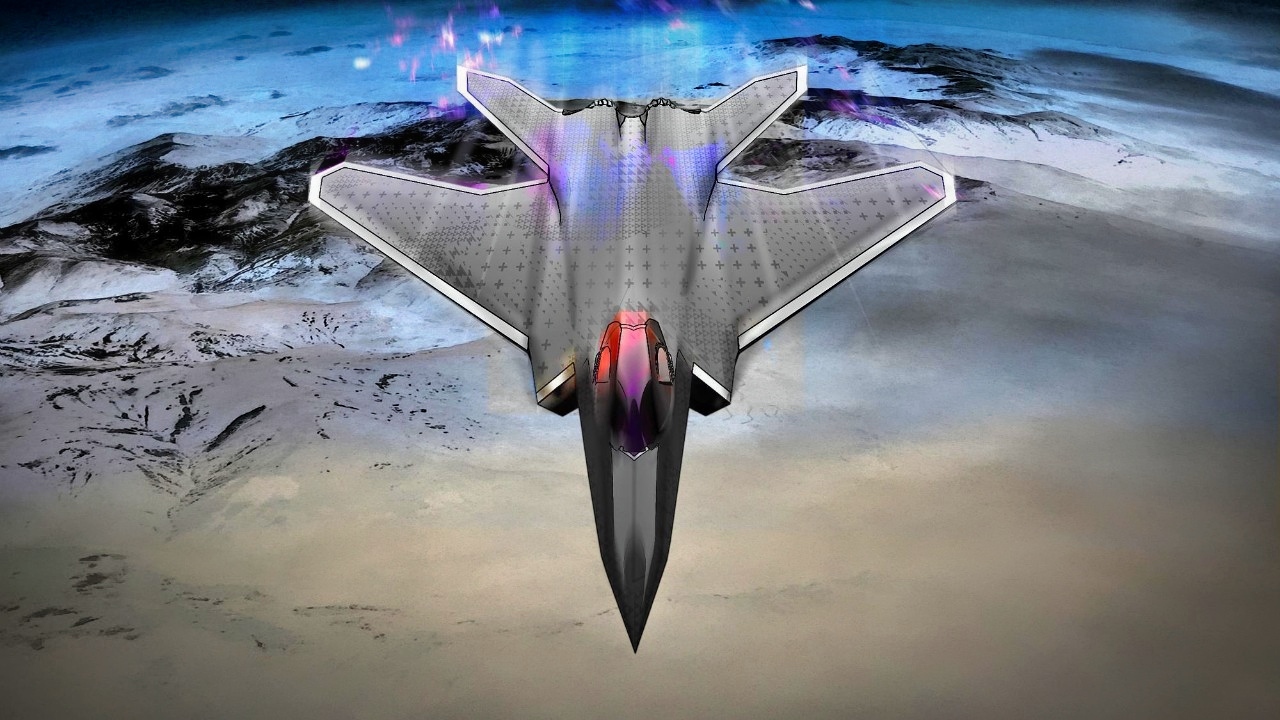
This engine would be used to power India’s fifth-generation stealth aircraft, the Advanced Medium Combat Aircraft (AMCA), which is currently under development.
Indian officials explain that the ultimate aim of the effort is to make India completely autonomous in the design and production of jet engines for combat aircraft. India has had enormous difficulties developing its own jet engines, and as a result remains dependent on foreign suppliers. This was also the case for China until recently.
India’s homegrown Kaveri engine project began in the 1980s. It continued in a stop-and-go fashion throughout the 1990s and the 2000s, experiencing regular delays. A failed test of the Kaveri in 2004 killed any chance it would become the engine for the Tejas Light Combat Aircraft (LCA) program.
The GE F404 was eventually chosen for the LCA, which made it and the Russian-designed AL-31F the two major power plants operated by the IAF. The contract for future IAF engines is projected as being for up to 250 units. It would be a tremendous boost for India to build these engines on their own, achieving self-reliance in this area.
Proposed Future Engine Program
Under the reported proposal, the Indian Ministry of Defense and SAFRAN would develop a 27,000-lb thrust engine that would be used for the AMCA, as well as for other future programs. The joint development and production is expected to cost an estimated $7.2 billion, which would also make it one of the largest-ever projects for French aerospace.
SAFRAN has reportedly offered a package of technology transfers for India and presented a set of program milestones that would match with the AMCA’s developmental timeframe.
Even with such an agreement in place, the first deliveries from the AMCA program may be powered with the same GE F414 engine used in the Super Hornet – an engine also being sold to South Korea for its KF-21 Boromae advanced fighter program. The transition to the French-Indian co-developed engine would take place in later tranches of production.
France is already one of India’s top defense suppliers, and according to the SIPRI 2025 report, at 33 percent of India’s defense imports, Paris is now India’s second-largest defense provider for the period from 2020-2024. Russia barely beats out France in this same period, supplying 36 percent of India’s arms imports.
However, taking a longer view, over roughly 15 years, it appears that France is rapidly gaining ground and will eventually surpass Russia as India’s primary source of defense systems and technology. By selecting SAFRAN as the engine supplier over bids from other firms such as Rolls-Royce, India would be showing that its partnership with France is becoming fairly exclusive.
It would not be entirely correct for blame disruptions from the war in Ukraine for Russia’s increasing problems supporting the hardware it has already sold to India. Dissatisfaction with Russia as a major supplier has been building for some years now.
Still, the speed at which Moscow’s after-sales support has deteriorated has certainly been a factor.
About the Author
Reuben F. Johnson has thirty-six years of experience analyzing and reporting on foreign weapons systems, defense technologies, and international arms export policy. Johnson is the Director of Research at the Casimir Pulaski Foundation. He is also a survivor of the Russian invasion of Ukraine in February 2022. He worked for years in the American defense industry as a foreign technology analyst and later as a consultant for the U.S. Department of Defense, the Departments of the Navy and Air Force, and the governments of the United Kingdom and Australia. In 2022-2023, he won two awards in a row for his defense reporting. He holds a bachelor’s degree from DePauw University and a master’s degree from Miami University in Ohio, specializing in Soviet and Russian studies. He lives in Warsaw.
More Military
We Almost Touched the F-117 Stealth Fighter


