

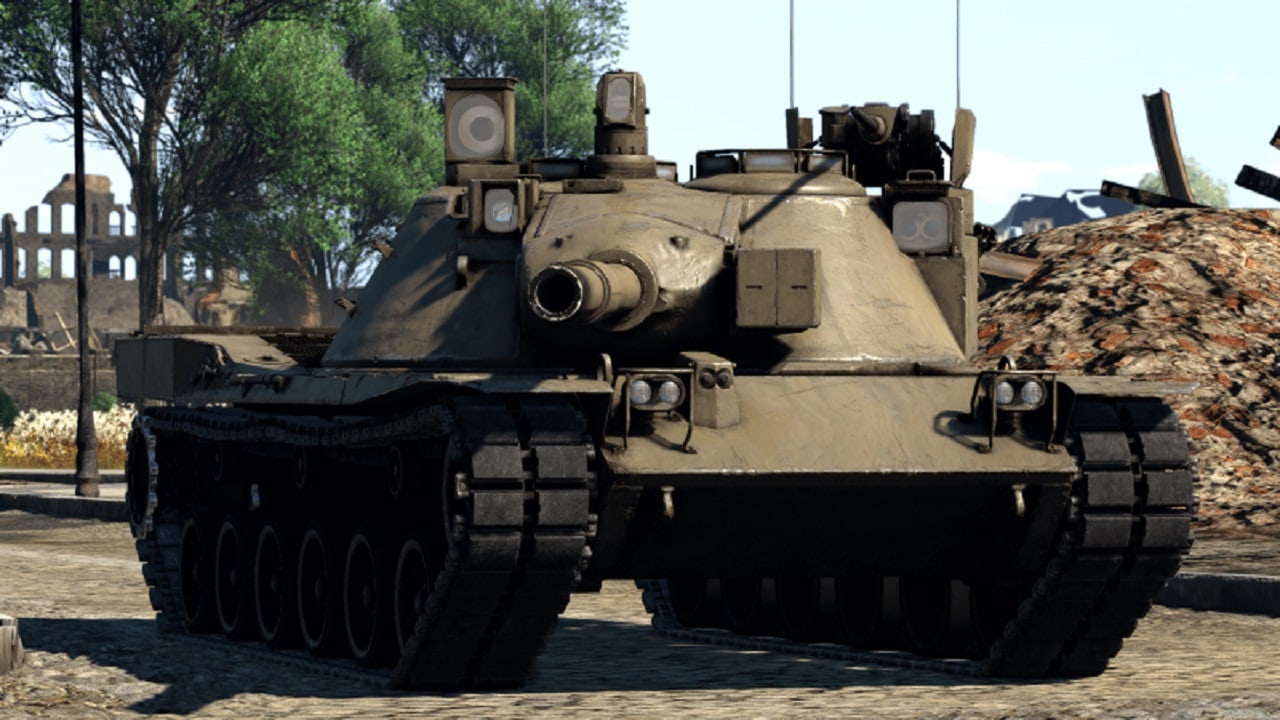
Key Points and Summary – The MBT-70 was a U.S.–West German attempt to leapfrog Soviet armor with a tank packed with firsts: a 152 mm gun/launcher for missiles and HE, a three-man turret with a rotating driver’s station, advanced fire control, and hydropneumatic suspension.
-Development exposed the cost of too many breakthroughs at once: reliability woes, diverging national priorities, and soaring costs.
-The program—and a simplified XM803 offshoot—were canceled in the early 1970s.
-Yet MBT-70’s best ideas—stabilized fire-on-the-move, laser ranging, crew survivability, and disciplined mobility—fed directly into the XM1 competition and the M1 Abrams, turning a painful failure into the blueprint for a classic.
MBT-70: The Brilliant Tank That Failed Its Way To The Abrams
By the late 1950s and early 1960s, NATO planners looked across the inner German border and saw a Soviet army modernizing fast.
The West had excellent crews and doctrine, but its “Patton era” tanks were still evolutions of World War II thinking. Both the U.S. and West Germany wanted a decisive leap—not a modest upgrade.
The result was a joint program to create a main battle tank that would outrun, out-shoot, and out-sense anything the Warsaw Pact could field for years. That ambition coalesced into the MBT-70 (U.S.) / KPz-70 (FRG), a single, cutting-edge design intended to replace the M60 on American lines and the newly built Leopards on German ones.
The vision was audacious: a three-man crew protected by advanced armor, a stabilized gun/launcher that could fire both conventional rounds and guided missiles for long-range kills, a next-generation fire-control system with laser ranging and automatic lead, and a hydropneumatic suspension that could kneel, squat, and sprint across rough ground with unprecedented speed. If it worked, the first shot would more often be your shot, delivered accurately from a moving tank at distances that made older designs irrelevant.
What They Tried To Build
The MBT-70 put nearly every big bet of 1960s armored warfare into a single hull:
A 152 mm gun/launcher. Instead of a conventional cannon alone, the tank’s main armament was designed to fire both powerful, low-velocity HE rounds for bunkers and Shillelagh guided missiles for tank-killing at range—marrying assault-gun punch to anti-armor precision.
A radical crew layout. To reduce the hull silhouette and protect crew in the best-armored volume, all three crewmen sat in the turret. The driver’s station was mounted in a rotating capsule that kept him facing forward even when the turret turned.
Advanced sights and a digital brain. Stabilized optics, thermal/IR aids then in their infancy, a laser rangefinder, and a ballistic computer promised first-round hits on the move, day or night.
Active ride control. A hydropneumatic suspension let the tank adjust ride height for hull-down positions, smooth the ride for fire on the move, and maintain speed off-road that would shake a conventional torsion-bar tank to pieces.
Extras for the battlefield we feared. A remotely controlled 20 mm turret for helicopters and soft targets, an overmatch machine gun, NBC protection, and a high-output powerpack that aimed to combine sprinting speed with reasonable range.
On paper this was the moonshot tank: fewer crew, more sensors, smarter weapons, and agility that would let a NATO battalion dictate the fight.
MBT-70 Tank Development: Two Nations, One Ambition, Many Frictions
The U.S. and West Germany began as equal partners, sharing costs and tasks. Very quickly, the friction of two engineering cultures showed. The Americans favored the 152 mm gun/launcher to future-proof anti-tank lethality; the Germans were wary—skeptical of missile reliability, concerned about ammunition stowage and propellant safety, and inclined toward a conventional high-velocity gun. Metric versus imperial standards infected everything from fasteners to gauges. Divergent safety rules, supplier ecosystems, and test methods slowed integration. Each “small” national preference cascaded into weight, power, and cost.
Meanwhile, the bleeding edge bled. The rotating driver’s station required superb reliability to avoid disorientation under turret slew; it worked in demonstrations but demanded maintenance discipline few units could sustain. The hydropneumatic suspension thrilled test crews but introduced seals, pumps, and accumulators that multiplied failure modes. The gun/launcher promised long-range kills; on ranges and in field tests it also delivered finicky alignment, fouling, and the logistics burden of a dual-nature ammunition family. Even the handy remote 20 mm mount added wiring, stabilization, and maintenance that mechanics had to master.
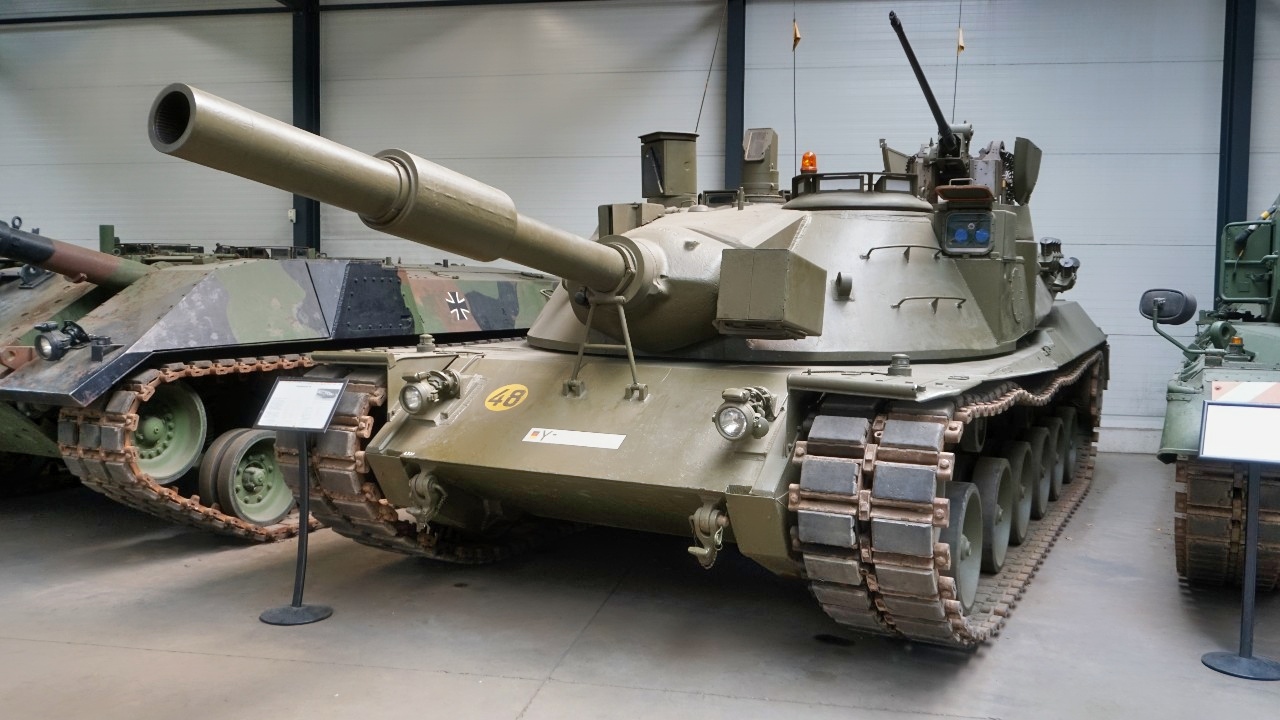
MBT-70 Tank. Image Credit: Creative Commons.
The Cost Curve Bent Upward—and Stayed There
Complexity is a tax you pay every day. As prototypes rolled, fixes piled up. Each reliability shortfall spawned redesigns; each redesign added weight; added weight demanded suspension and power changes; those changes rippled through cooling, space claims, and service access. Unit prices climbed out of the range that a mass army could afford. Program managers tried to hold schedule while chasing fixes, and the classic pattern emerged: concurrency—testing and redesigning while building—turned sensible risk into expensive rework.
By the end of the 1960s, the program had become a case study in how too many firsts at once overwhelm budget and patience. Congress and the Bundestag wanted a clear path to a fielded, supportable tank. What they had was a magnificent prototype that needed more time and more money to become a soldier’s machine.
Why It Failed: Four Hard Truths
1) Too Much Tech In One Leap. The MBT-70 stacked an experimental gun/launcher, novel crew arrangement, advanced fire-control, and active suspension in one package. Any one of those could have anchored a generational upgrade. Together, they multiplied risk. When one subsystem hiccuped, it degraded everything else the tank was supposed to do.
2) The Gun/Missile Compromise. The Shillelagh concept looked elegant in briefings—a precision, long-range kill without lugging a huge turret or recoil system. Field reality was uglier: exacting alignment requirements, maintenance burdens, temperamental electronics, and bulky rounds that ate stowage volume. The same family of problems showing up on other Shillelagh platforms (like the M551 and M60A2) eroded confidence.

M60 Tank. Image Credit: Creative Commons.
3) Divergent National Priorities. A true joint design is hard even with common standards. West Germany’s preference for a conventional, high-velocity gun and different survivability assumptions pulled the project in multiple directions. “Compromise” often meant a design that met neither side’s ideal.
4) Money, Time, And Industrial Reality. The tank could be built as a prototype; building it reliably, at scale, on a budget proved a different challenge. Suppliers had to master new processes, crews had to learn new maintenance rhythms, and test shortfalls kept sliding milestones to the right. The political capital that launched a moonshot ran out before a fieldable product arrived.
The XM803: A Last Attempt To Save The Idea
Facing a spiral of cost and complexity, the U.S. tried to salvage the core by simplifying—the XM803. It aimed to harvest what was working (improved armor shaping, elements of the FCS, lessons from the suspension) while dialing back or deleting the riskiest items. But the budget climate had changed, and the opportunity cost was stark: every extra dollar into a halfway fix was a dollar not funding a clean restart. The XM803 lingered; then it, too, was canceled.
How Failure Became A Blueprint For The Abrams
Program cancellations are painful—but they teach. The U.S. Army took three decisive lessons into the competitive XM1 program that birthed the M1 Abrams:
Pick fewer breakthroughs—and make them count. The M1 Abrams kept some boldness (a gas turbine powerplant; advanced armor; a superb stabilized FCS) while dropping the riskiest MBT-70 bets (no gun/launcher; no driver-in-turret; no experimental active suspension).
Prove the fire-control, then build the tank around it. MBT-70 convinced the Army that first-round hit probability on the move—thanks to laser ranging, a stabilized sight, and a ballistic computer—was the decisive edge. Abrams doubled down, fielding a system crews could trust in rain, dust, and darkness.
Keep the gun conventional and the ammo plentiful. Instead of chasing missile “silver bullets,” the XM1 prototypes used a 105 mm rifled gun with abundant, reliable ammunition. Only once the platform matured did the Abrams family up-gun to a 120 mm smoothbore, leveraging a well-understood gun/ammo ecosystem.
Design for maintainers, not just for test ranges. MBT-70’s dazzling features often hid complex service procedures. Abrams came with access, redundancy, and modularity in mind so line units could keep availability high without a depot on every corner.
Even armor shaping and crew protection benefited. While the Abrams’ composite armor lineage drew heavily from Anglo-American work that matured after the MBT-70 started, the earlier program’s experiments with internal layout, stowage safety, and survivability tradeoffs informed how the U.S. thought about protecting crews and ammo inside a modern hull.
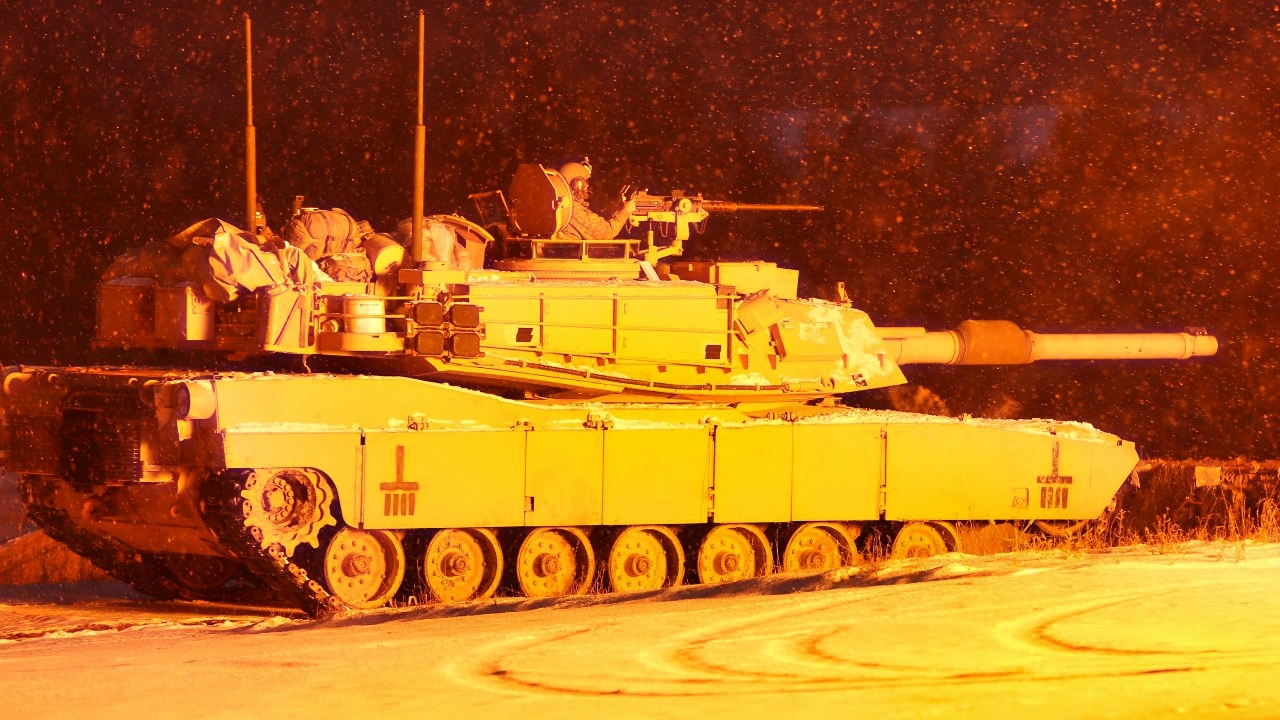
U.S. Soldiers assigned to 1st Squadron, 7th Cavalry Regiment, 1st Armored Brigade Combat Team, sit ready to engage targets in an M1 Abrams Main Battle Tank during Combined Resolve XV live fire exercise at Grafenwoehr Training Area, Germany, Feb. 9, 2021. Combined Resolve XV is a Headquarters Department of the Army directed Multinational exercise designed to build 1st Armored Brigade Combat Team, 1st Cavalry Divisions’s readiness and enhance interoperability with allied forces to fight and win against any adversary. (U.S. Army photo by Sgt. Randis Monroe)
What MBT-70 Got Right (That You Can Still See Today)
It’s easy to focus on what broke. But several MBT-70 bets were prophetic:
True fire-on-the-move tactics. Stabilization, laser rangefinding, and a computer to solve the shot turned into table stakes for modern tanks—exactly the advantage MBT-70 chased.
Active ride control—if you can afford it. While the Abrams stuck with torsion bars, later high-end designs around the world have revisited hydropneumatic suspensions to finesse ride and gunnery, particularly in rough terrain.
Crew survivability as a design center. The decision to concentrate crew in the best-armored space (even if the turret solution proved impractical) kept the spotlight on survivable internal layouts, blow-off panels for ammo, and NBC resilience.
Thinking beyond steel. The idea that sensors, computers, and human factors could overmatch a heavier gun alone was ahead of its time—and became the Abrams’ calling card.
Why The Story Still Matters
The MBT-70 is not just a cautionary tale about cost overruns. It’s a map of how militaries learn. The U.S. and West Germany tried to compress a decade of innovation into one product, discovered in painful detail where the engineering and industrial base weren’t ready, and then harvested the wins into follow-on designs. West Germany pivoted to the Leopard 2 path—big gun, superb FCS, conventional layout, great mobility. The U.S. did the same with Abrams. Both families became the reference standard for the next forty years.
In that sense, MBT-70 did what ambitious failures should do: it shortened the road to something better. Crews got a tank that could race, see, and hit. Maintainers got a machine they could actually keep in the fight. Commanders got predictable availability and logistics that worked in the field, not just on a whiteboard.
Verdict
The MBT-70 set out to be the tank that solved the next war early—and in a way, it did, just not directly. The program collapsed under the weight of too many firsts, binational compromises, and budgets that couldn’t keep pace. But its big ideas—first-round hits on the move, serious night fighting, thoughtful crew protection, and mobility that treats terrain like an ally—flowed straight into the XM1 competition and the M1 Abrams that followed. The M1 Abrams is famous because it works. The MBT-70 is important because it taught the hard lessons that made that possible.
About the Author: Harry J. Kazianis
Harry J. Kazianis (@Grecianformula) is Editor-In-Chief and President of National Security Journal. He was the former Senior Director of National Security Affairs at the Center for the National Interest (CFTNI), a foreign policy think tank founded by Richard Nixon based in Washington, DC. Harry has over a decade of experience in think tanks and national security publishing. His ideas have been published in the NY Times, The Washington Post, The Wall Street Journal, CNN, and many other outlets worldwide. He has held positions at CSIS, the Heritage Foundation, the University of Nottingham, and several other institutions related to national security research and studies. He is the former Executive Editor of the National Interest and the Diplomat. He holds a Master’s degree focusing on international affairs from Harvard University.
More Military
The M48 Tank Has a Message for the U.S. Army
Su-75 Checkmate: Russia’s Big Stealth Fighter Flop
Russia’s ‘New’ MiG-35 Fighter Looks RIP


