

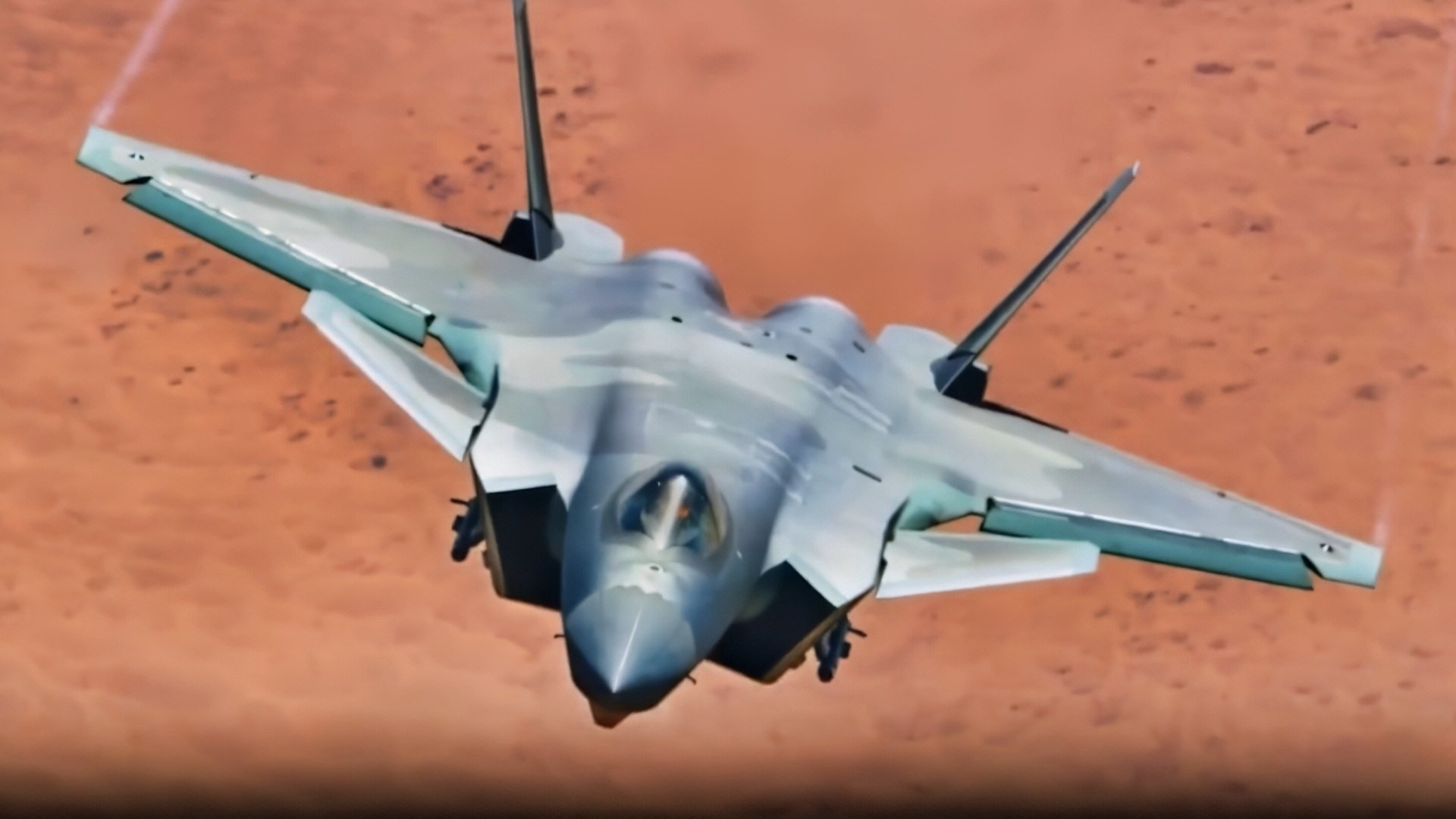
Key Points and Summary – China’s J-20 Mighty Dragon isn’t just a look-alike stealth jet—it’s a fast-maturing frontline asset.
-Its shaping, diverterless inlets and internal bays cut its radar signature; a modern sensor suite fuses radar, IR and E/O feeds so it can hunt quietly or quarterback other shooters.
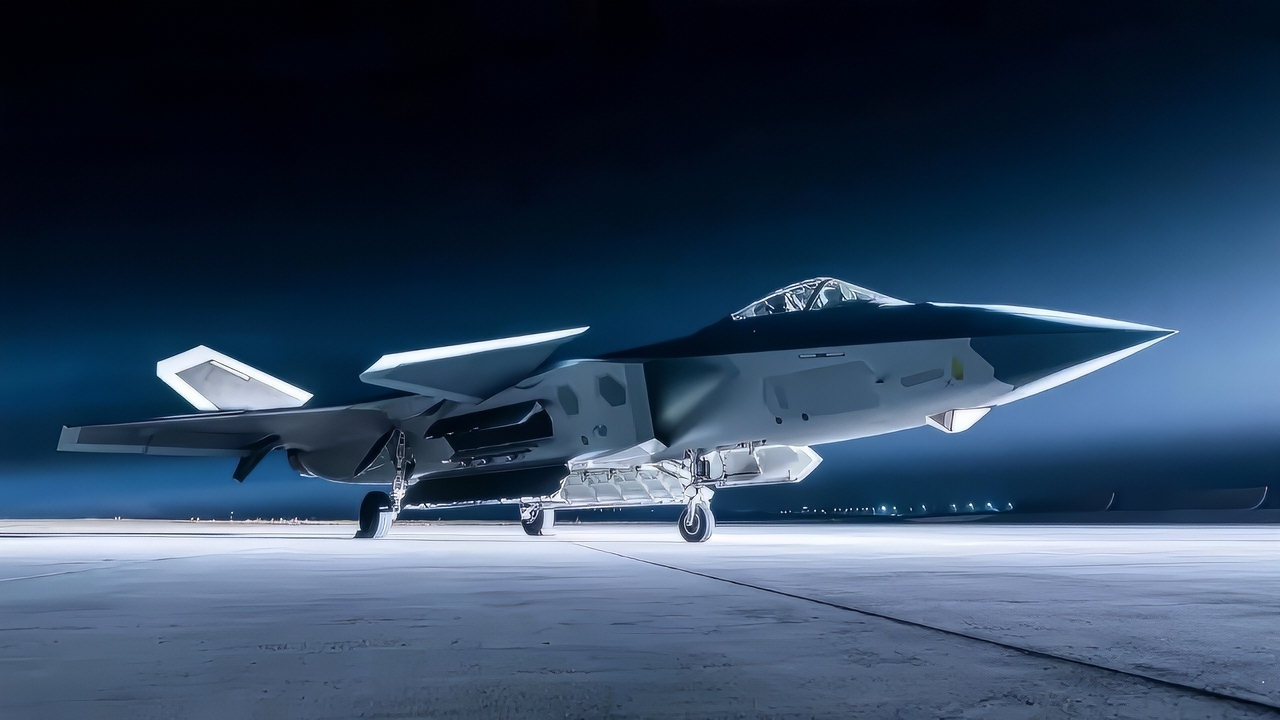
J-20 Fighter in the Dark. Image Credit: Creative Commons.
-The jet carries serious BVR punch—PL-15s inside for stealth, or “beast mode” externally when discretion isn’t required.
-Engine upgrades from WS-10B/C to WS-15 are pushing supercruise and lowering its heat signature.
-Most of all, China is building them at scale. In a regional fight, numbers plus growing sophistication make the J-20 a problem you can’t ignore.
The J-20 Fighter Is Out in the Open: 5 Best Features
The Chengdu J-20 Mighty Dragon is the first stealth fighter flown by the People’s Republic of China. The aircraft was heavily “influenced” by American stealth fighters and incorporates advanced stealth shaping and sophisticated avionics.
While the earliest versions of the aircraft leave much to be desired, the base J-20 still offers a significant amount of capabilities, making it a valuable strategic asset.
Here are five of the J-20 Mighty Dragon’s best features:
#1 Advanced Stealth Design
One of the most defining characteristics of the J-20 is its advanced stealth design and low observability.
The aircraft’s shape is carefully sculpted to minimize radar cross-section. It’s a canard-delta wing configuration that, while traditionally considered a disadvantage for stealth, has been optimized through advanced flight control software and shaping techniques. The use of diverterless supersonic inlets improves both stealth and aerodynamic efficiency, while serrated exhaust nozzles and sawtooth panel edges help scatter radar waves and reduce infrared signature.
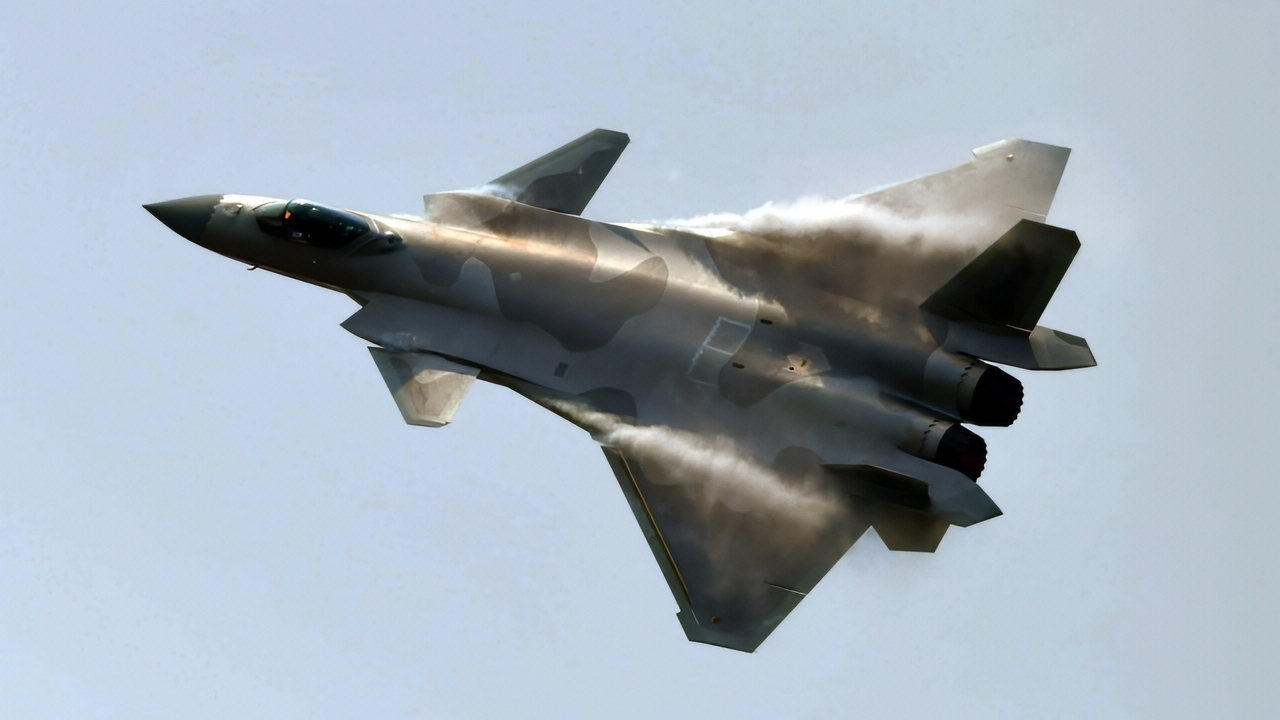
J-20 Fighter. Image Credit: Chinese Air Force.
The aircraft is coated with radar-absorbent materials, the composition of which is classified, but probably uses composites and advanced materials. Internal weapons bays allow the J-20 to carry missiles without compromising its stealth profile, a feature critical for maintaining low observability during combat operations.
Estimates suggest the J-20’s frontal radar cross-section is around 0.027-0.05 square meters, slightly higher than the F-22’s 0.0001, but still extremely low. Interestingly, some analysts believe the J-20 may have superior side and rear stealth characteristics compared to its American counterpart.
#2 Advanced Avionics
Complementing its stealth is the J-20’s powerful radar and sensor suite. The aircraft is equipped with the KLJ-5 active electronically scanned array (AESA) radar, developed by the Nanjing Research Institute of Electronics Technology.
This radar system is a cornerstone of the J-20’s situational awareness and targeting capabilities.
With 1,856 transmit/receive modules, it surpasses the F-35’s APG-81 radar and rivals the F-22’s APG-77. While later variants utilize upgraded radars, the base J-20 still features a capable radar, although most of the information about it remains unknown.
The J-20 also features sophisticated sensor fusion, integrating radar, infrared search and track systems, electro-optical targeting, and missile approach warning sensors.
This allows the aircraft to detect and track targets passively, without emitting signals that could reveal its position. In practice, this means the J-20 can operate as a stealthy command post in the sky, coordinating with drones and fourth-generation fighters in a networked battlespace, much like the F-35’s role in U.S. doctrine.

J-20 Fighter. Image Credit: Creative Commons.
#3 Deadly Arsenal
The J-20’s weapons systems and payload capacity further enhance its combat effectiveness, particularly in beyond-visual-range (BVR) engagements. The aircraft is designed to carry a substantial arsenal of air-to-air missiles, with three internal bays: one central and two side bays.
Typically, these bays house four PL-15 BVR missiles and two PL-10 short-range infrared missiles.
In less contested environments, the J-20 can switch to “beast mode,” mounting up to eight additional missiles externally, bringing its total capacity to fourteen air-to-air missiles. This is a significant advantage over the F-35, which has a maximum payload of 18,000 pounds, compared to the J-20’s 28,000 pounds.
Such a heavy payload allows the fighter to function as a strike fighter when stealth is less critical, delivering overwhelming firepower once air superiority has been established.
#4 High Performance Engines
Throughout its lifetime, the J-20 has undergone several powerplant upgrades, each modification enhancing its capabilities. According to reports, the LRIP models used domestically produced WS-10B turbofan engines.
Russian/Soviet made AL-31FM2 engines reportedly powered other models. While these engines were decent, they lacked the thrust vectoring and supercruise capabilities found in other fifth-generation fighters.
Additionally, these engines significantly raised the infrared signature of the J-20, compromising its stealth profile.
In 2019, however, the J-20 received a significant upgrade to its powerplant. The aircraft was equipped with newer WS-10C engines.
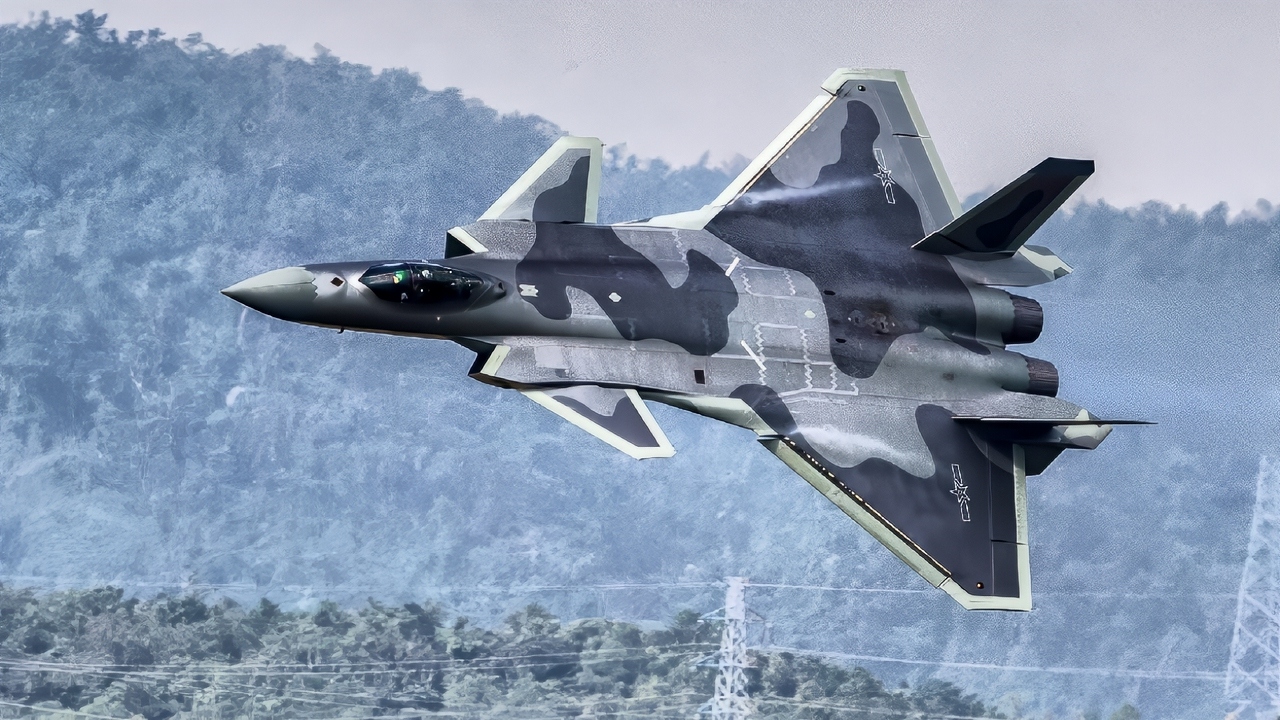
J-20 Fighter from China Flying High. Image Credit: Creative Commons.
These engines use serrated nozzles to lower their IR signature and now enable the aircraft to supercruise, although their cruise speed is unknown to the public.
The fighter was always planned to use the WS-15 engines, which provide greater power and thrust vectoring capabilities.
While base J-20s still use WS-10 engines, other variants are now being fitted with the more advanced engines.
Easy to Manufacture
While the J-20 boasts impressive specifications, its real value lies in its broader role within the PLA’s strategic doctrine.
It is central to the country’s anti-access/area-denial (A2/AD) strategy, which aims to deter or prevent adversaries from operating freely in contested regions such as the Taiwan Strait and South China Sea.
Future variants are expected to incorporate artificial intelligence for autonomous operations, target prioritization, and electronic countermeasures, making the aircraft even more versatile and lethal. With over 300 airframes already in service and more in production, the J-20 outnumbers the U.S. F-22 fleet, which has around 180 operational units. This numerical advantage, combined with its growing technological sophistication, gives China a formidable edge in any regional conflict scenario.
About the Author: Isaac Seitz
Isaac Seitz, a Defense Columnist, graduated from Patrick Henry College’s Strategic Intelligence and National Security program. He has also studied Russian at Middlebury Language Schools and has worked as an intelligence Analyst in the private sector.
More Military
Su-57 Felon vs. Eurofighter Typhoon: Who Wins?
The P-8A Poseidon Might Be the Ultimate Submarine Hunter
The S-3 Viking: The Best Submarine Killer Retired?


