

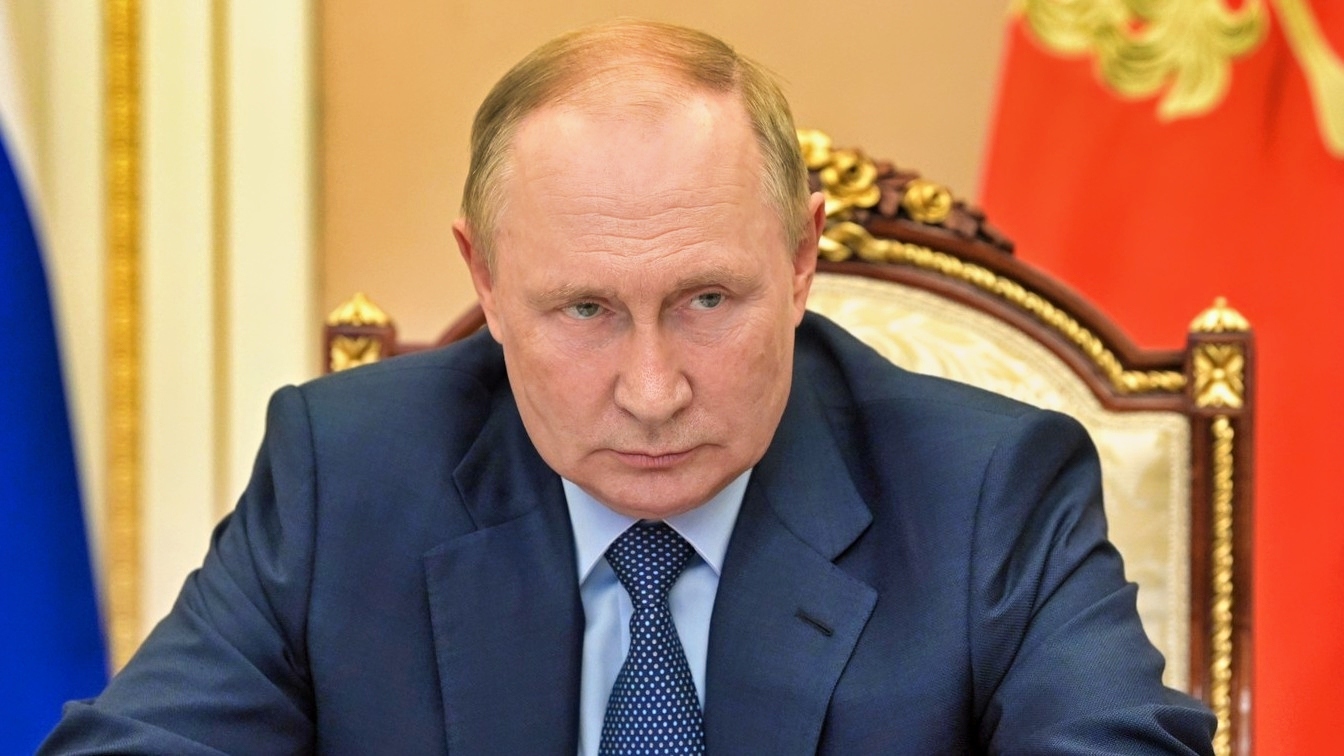
Time to ‘kick’ Putin when he is down? So reads the headline in one of the United Kingdom’s major daily newspapers. The smart money is that as the heads of the NATO alliance member states meet in Ankara this coming week, this is precisely the proposition that will be part of the discussions.
That Russia’s situation in this war worsens by the day is no longer an op-ed columnist’s wish fulfillment or a fantasy prediction. There are clear signs that Russian President Vladimir Putin is not only in serious trouble, but that even he is beginning to realize that what people have been saying for weeks now about Russia’s sinking fortunes in war is coming to a head.
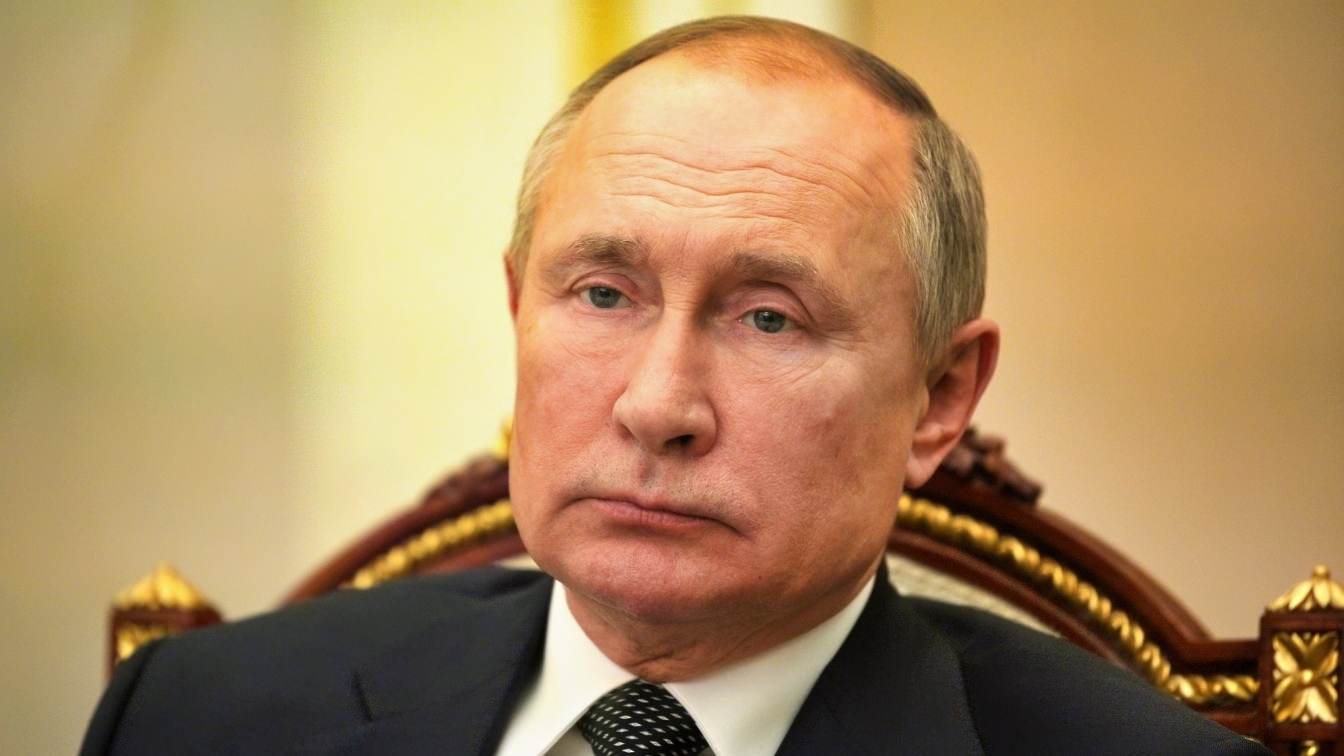
Putin Sitting in a Meeting Russian Federation Image
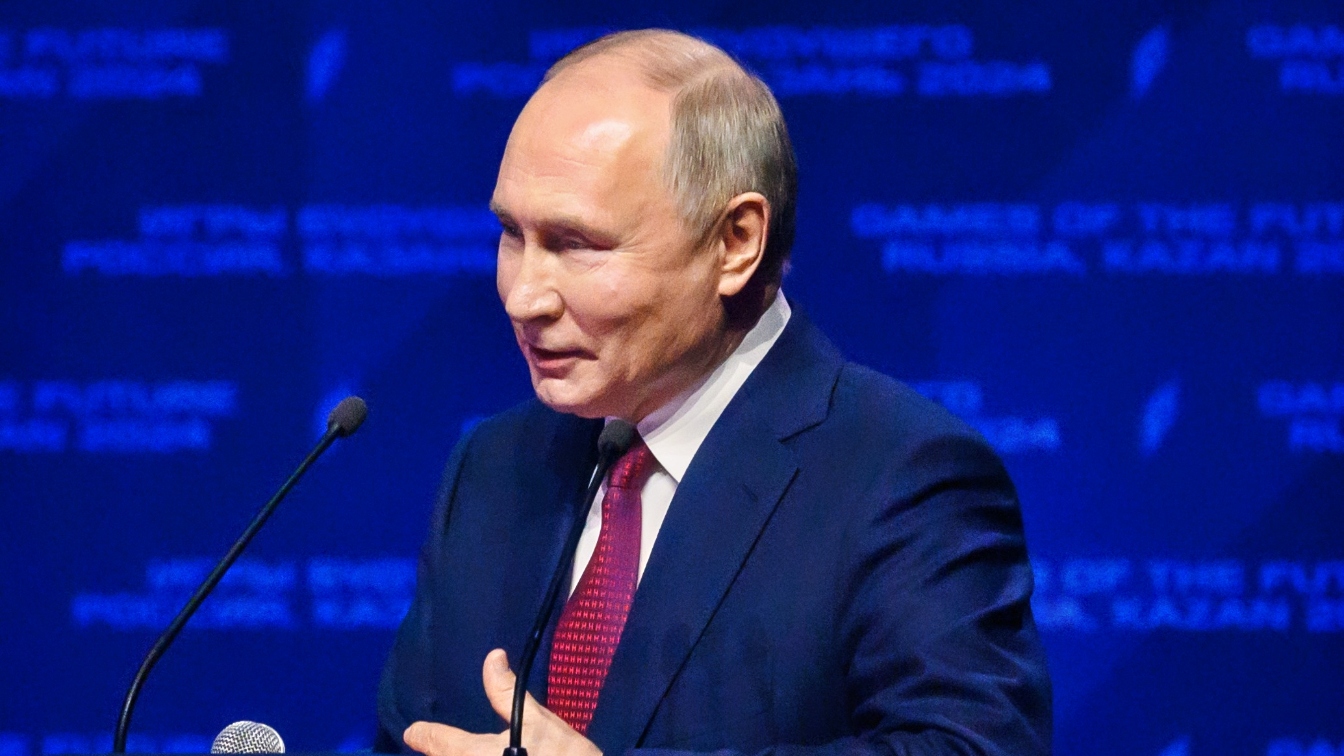
Putin Speaking Russian Federation Photo
By any objective criteria, Russia is losing its war against Ukraine.
So, what we are now seeing is that the former KGB Lt. Col. himself is trying to find a way out of a war with his neighbor. A war that has not been going his way for some time now and shows no signs of turning back around in his favor.
What is different about Putin today, however, is that his actions reveal he is frantically searching for a way to maintain the image that the war is still going as planned, while his maximalist demands for a peace agreement are proving increasingly untenable.
Closed Windows
The ruse he has now resorted to is to increasingly reach back to try to exploit windows of opportunity to shut off the conflict. But these are windows that closed shut long ago.
One of Moscow’s most commonly mentioned proposed exits from the war now is when Putin and his spokesman invoke the so-called “spirit of Anchorage.” This is in reference to the meeting that he had in August 2025 in Alaska with US President Donald Trump.
Putin himself finally admitted in June 2026 that there were actually no documents signed to this effect. But he has claimed that during the Alaska meetings, Russia agreed to US proposals about ending the war in Ukraine. Putin has also stated that Russia is ready to continue negotiations with the United States (but not with or involving Ukraine), following the Alaska Summit.
But Russian Foreign Minister Sergei Lavrov and others have clung so stubbornly to the storyline that there was actually a substantive agreement concluded at Anchorage that it required US Secretary of State Marco Rubio to set the record straight and pronounce the “agreement” from the Alaska interaction as non-existent.
“There was a proposal in Alaska, but there was no agreement. If there had been an agreement, we would have had an end of the war,” Rubio told reporters in late June, one day after Trump met with NATO Secretary General Mark Rutte at the White House.
During that meeting, Trump had also praised Ukrainian President Volodymyr Zelensky and told reporters he believed the Ukrainian leader was “doing pretty well, no matter how you look at it.”
Time To Take Advantage: Putin Is Losing the War
Putin’s continued reference to the Alaska event as a current-day potential avenue for peace reveals the depths of his desperation. What is even more telling is that he has also tried to resurrect points of negotiation that were discussed in the early days of the war, when Russia and Ukraine were meeting in Istanbul.
Trying to turn back the clock to the time when Ukraine’s Western allies believed that Kyiv was losing and that some kind of peace should be agreed with Moscow “before it is too late” says to many that now is the time to take advantage of Putin’s growing desperate position and put the full-court press on Moscow.
Time to “kick Putin while he is down”, the UK’s Independent has advocated.
European powers – either with or without the US – may now take maximum measures to “reinforce Ukraine’s success against Russia; to help Kyiv not merely to freeze the front lines, but to break the spine of the Russian logistics operations so that Moscow’s front collapses entirely,” asserts the daily’s chief world affairs editor.
This is becoming an increasingly popular position as the NATO summit kicks off. Even the US president seems to have abandoned support for at least some of Putin’s agenda in formulating an end to the war. The reason for the turnabout is simple. Trump likes to back a winner, and Putin no longer belongs in that category.
About the Author: Reuben F. Johnson
Reuben F. Johnson has thirty-six years of experience analyzing and reporting on foreign weapons systems, defense technologies, and international arms export policy. Johnson is the Director of Research at the Casimir Pulaski Foundation. He is also a survivor of the Russian invasion of Ukraine in February 2022. He worked for years in the American defense industry as a foreign technology analyst and later as a consultant for the U.S. Department of Defense, the Departments of the Navy and Air Force, and the governments of the United Kingdom and Australia. In 2022-2023, he won two awards in a row for his defense reporting. He holds a bachelor’s degree from DePauw University and a master’s degree from Miami University in Ohio, specializing in Soviet and Russian studies. He lives in Warsaw.


