
For most of the Russian invasion, Ukraine has fought a defensive war. It was outgunned and outnumbered from the start, with Kyiv focusing on holding territory while pleading with its Western allies for long-range weapons that it argued were necessary to strike targets deep inside Russian territory.
Even as recently as last year, when Zelenskyy had a tense meeting with President Donald Trump and Vice President JD Vance at the White House, it appeared possible that Ukraine’s military campaign could be scaled back under mounting political pressure.

TOS-1. Image Credit: Creative Commons.
But today, Ukraine’s fortunes appear to be changing. Certainly, the country has endured enormous damage – but it is making gains in ways few expected even just 12 months ago.
Rather than relying exclusively on Western missiles, Ukraine has dramatically expanded its own long-range strike capability with domestically produced drones and missiles.
Those new weapons, which are being produced in their millions every year, are now striking Russian oil refineries and fuel depots, military factories and logistics hubs, and air bases hundreds – even thousands – of kilometers away from the front lines.
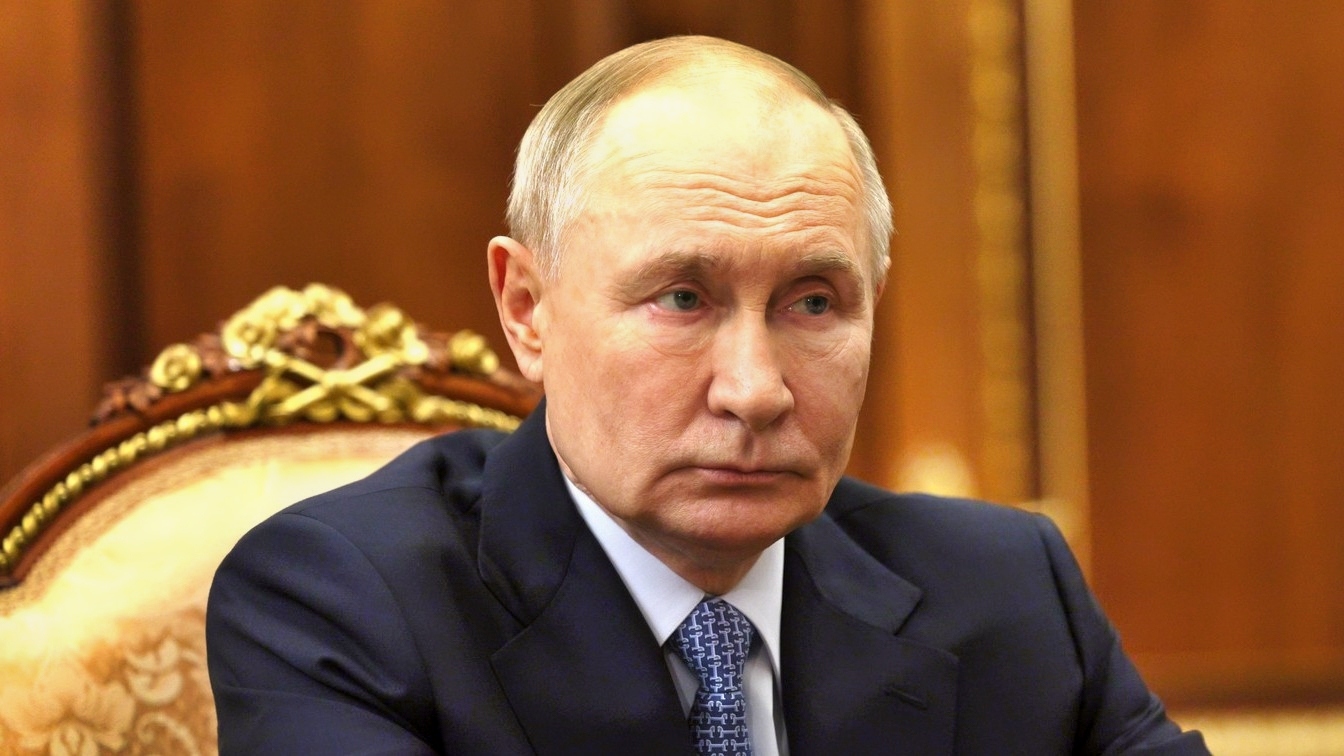
The campaign is now forcing Russian President Vladimir Putin to face difficult decisions as his country grapples with worsening fuel shortages and economic strain that the general public is finally starting to notice.
It’s so bad, in fact, that even the Kremlin has begun publicly acknowledging the impact of these attacks. And now, Putin needs to respond. The question is: how?

Russian President Vladimir Putin (R) meets with North Korea’s leader Kim Jong Un in Vladivostok, Russia April 25, 2019.
July 1-2 Strikes Continue the Pressure
Ukraine continued its campaign overnight on July 1-2, carrying out yet more long-range strikes against targets inside Russia.
In a statement, President Zelenskyy confirmed that Ukrainian forces had struck an oil refinery in Ufa, more than 800 miles away from the front line. It was the second such strike on the facility.
Zelenskyy also described hitting a military-industrial facility in the Penza region of Russia, which was said to be involved in the production of sensors for cruise and ballistic missiles.
“For the second time, our sanctions in response to Russia’s prolongation of the war have reached the oil refinery in Ufa, one of Russia’s largest producers of lubricants. The distance is more than 1,300 kilometers from the frontline,” Zelenskyy said.
“Every day, our plan for imposing Ukrainian long-range sanctions is being implemented. This is an entirely just response to everything Russia is doing against us. Peace is needed, and this is exactly what Russia’s leadership must realize. Russia must end its war. And Russia’s leadership has every opportunity to do so,” the statement continued.
The attacks build on a campaign that has accelerated in recent weeks. Ukraine’s Defense Ministry said its forces struck 11 Russian oil refineries in June alone, as well as fuel logistics sites, military factories, bridges, and other infrastructure.
Russia Responds – Because It Has To
The Kremlin has little choice but to respond, even if its full response hasn’t been fully prepared. Kyiv recently warned that Russia may be preparing another offensive from the north, potentially opening a new axis of attack into Ukraine’s Chernihiv region.
Should an operation like that unfold, it would force Kyiv to divert troops and air defenses away from other sectors and increase pressure along the border. But it would also force Russia to mobilize new troops.
At the same time, Russia continues to launch periodic large-scale missile and drone attacks against Kyiv and other major cities.
Those strikes serve multiple purposes: they inflict civilian damage and instill terror within Ukraine; they force Kyiv’s forces to expend increasingly scarce interceptor missiles; and they potentially intimidate Kyiv into reducing its long-range campaign against Russian infrastructure.
Kremlin spokesman Dmitry Peskov confirmed after Russia’s most recent attacks that Moscow intends to keep increasing military pressure on Ukraine, as it has throughout the conflict, and argued that Russia would persist until its objectives are achieved.
For now, though, Russia’s responses have been reactive more than anything – and while Moscow retains enormous military capabilities, Ukraine’s expanding ability to strike thousands of kilometers into Russian territory has created problems that cannot simply be solved by large missile attacks on Ukrainian cities.
Putin Faces Tough Decisions
Ukraine’s “long-range sanctions” campaign is now having effects well beyond the battlefield – and Putin knows that the Russian people are becoming doubtful.
Prediction market Polymarket has also seen increased betting that Putin could leave office before the end of 2026 – news that doesn’t necessarily mean Putin is on the way out, but which reflects the difficult reality that the Russian president now faces.
Amid reports of growing frustration inside Russia with Putin’s leadership and the war, long lines at fuel stations, civilians being evacuated from Crimea, and the mounting damage being done to the civilian economy, Putin now has some tough decisions to make.
Either the war escalates now before more Russian infrastructure is lost, or Moscow comes to the table to talk. The latter seems less likely than the former.
About the Author: Jack Buckby
Jack Buckby is a British researcher and analyst specializing in defense and national security, based in New York. His work focuses on military capability, procurement, and strategic competition, producing and editing analysis for policy and defense audiences. He brings extensive editorial experience, with a career output spanning over 1,000 articles at 19FortyFive and National Security Journal, and has previously authored books and papers on extremism and deradicalization.


