


Summary and Key Points: The M60 Patton may be long retired in U.S. service, but thousands remain relevant overseas thanks to aggressive service-life extension upgrades that reshape firepower, protection, and mobility.
-Major operators—including Egypt, Turkey, and Saudi Arabia—continue to field modernized variants, while others from Taiwan to Jordan keep the platform as a practical, affordable armored backbone.

M60 Tank. Image Credit: Creative Commons.
-Modern packages can swap the legacy 105mm gun for a 120mm smoothbore, add thermal sights and digital fire-control, replace hydraulic turret systems with electric actuators, and install stronger engines and explosive reactive armor.
-For many militaries, upgrading the M60 beats buying expensive new tanks.
The M60 Patton “Zombie Tank” Is Still Fighting in 2026—Here’s Why
The M60 was a very good tank and served well for a long time, and, of course, there was a large number of them, with about 15,000 M60s produced during its run, before the M1 Abrams came along.
The M60 Patton tank remains relevant through extensive modernization programs (SLEP) that enhance its firepower, armor, and mobility, thereby enabling it to continue to serve in nations such as Turkey and Egypt.
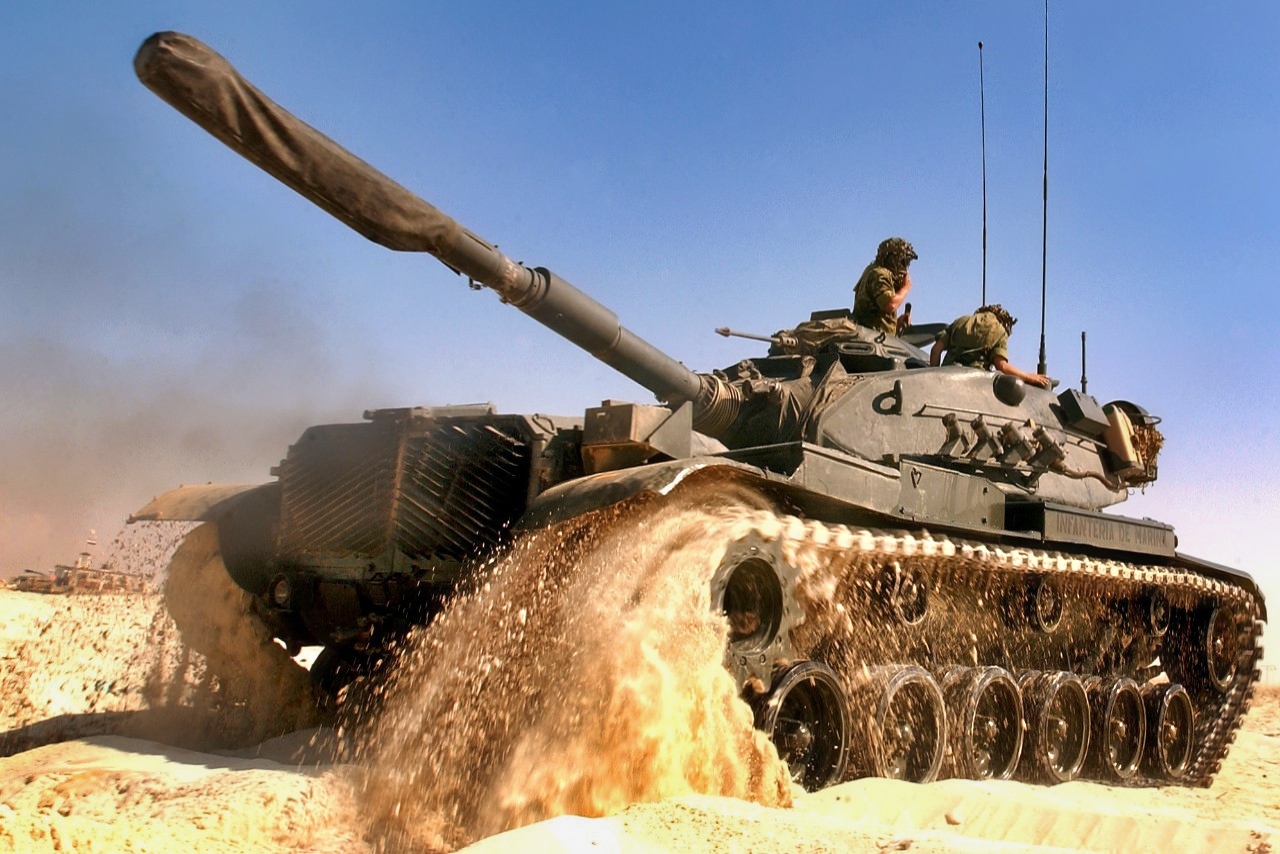
M60A3 Tank. Image Credit: Creative Commons.
Recent cost-effective upgrades include 120mm smoothbore guns, digital fire control systems, 1,000-horsepower engines, and explosive reactive armor to meet modern combat requirements.
Countries Still Fielding The M60 MBT
Although the M60 has long retired in the United States, the tank remains an important asset for militaries worldwide.
The largest operators of the M60 are Egypt, Turkey, and Saudi Arabia, which have operated some of the largest Patton fleets.
Other notable users include Taiwan, which has actively upgraded its fleet of M60A3s in response to Chinese military developments. Other countries still using the tank include Brazil, Greece, Israel, Jordan, Morocco, Spain, and Thailand.
However, in 2024, Spain announced that it was selling off between 260 and 300 M60s of multiple variants, the majority of which were M60A3 Tank Thermal Sight (TTS), between 1992 and 1993.
So why do other countries continue to field the M60 Patton as a main battle tank when it has been relegated to a museum piece in the US?
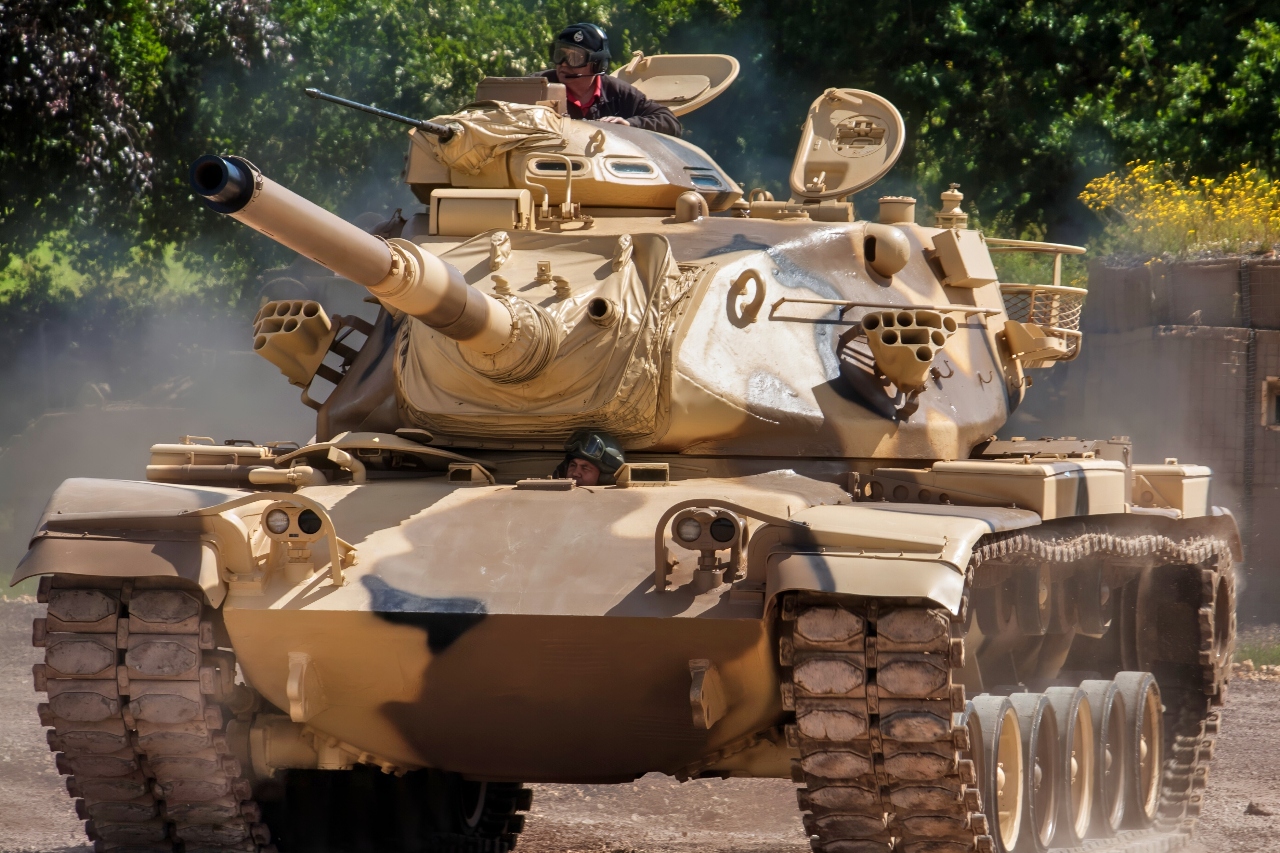
M60 Tank U.S. Army. Image Credit: Creative Commons.
Today’s M60 Tanks Scarcely Resemble The Originals
Despite its age and museum status in the US, many countries still operate the M60 tank because it is a reliable and affordable armored vehicle. Many of the M60s still in service are not the same vehicles that the US military retired decades ago.
Significant upgrades have modernized the tank’s combat systems, enabling it to remain effective against potential adversaries that continue to use older equipment. For some militaries, upgrading the M60 is a more practical option than purchasing expensive new tanks.
A decade ago, Raytheon developed a plan to “hot-rod” M60s to make them competitive on the modern battlefield at one-third the cost of a modern main battle tank.
Those upgrades included a new V12 diesel engine rated at 950 hp and the replacement of the legacy 105mm gun with the same M256 120mm gun used in the M1A1. Also included were new digital fire-control and sight systems that are part of the SLEP. The hydraulics that moved the turret were replaced with digitally controlled electrical wiring and actuators, resulting in a quieter, lighter turret that rotates faster.
For example, the Turkish M60T is a further development of the prolific M60 series MBT. Some of the new features of the M60T include an upgraded Fire Control System, new armor, and a turret that resembles the Israeli Merkava MBT, new crew seats, a new battlefield management system, a remote weapon station, and a 120mm smoothbore gun
New tanks also require new and improved maintenance facilities, and new, more expensive spare parts. Some of the factors in keeping the M60 include:
The Cost of Buying and Maintaining New Tanks Can Be Prohibitive
The primary reason for the M60’s continued use is that it remains a cost-effective option for many nations that cannot afford the high cost of modern main battle tanks such as the M1 Abrams or the Leopard 2.
The high cost of modern MBTs can exceed $10 million per tank, with additional operating and maintenance expenses.
Upgrades Are Much Cheaper
Service Life Extension Programs (SLEPs), such as those offered by companies such as Raytheon and Leonardo, are substantially less expensive than other options. These packages can include new engines, fire-control systems, and improved armor, thereby enhancing the M60’s capabilities at a fraction of the cost of a new tank.
The original 750-horsepower diesel engine can be replaced with a higher-output model, thereby increasing the tank’s speed and mobility.
For example, the Israeli Sabra I tank uses the General Dynamics AVDS-1790-5A diesel engine (908 hp), while the Sabra Mk.II is powered by a German MTU MT 881 KA-501 diesel engine that produces 1,000 hp.
Since more than 15,000 M60s were produced, a robust international market exists for parts and upgrades, making it simpler and less costly to keep the tanks operational.
Operators have developed extensive upgrade programs to enhance the M-60’s firepower, mobility, and protection.
120mm Smoothbore Guns
Upgrade packages from contractors and national militaries (such as the Israeli Sabra) have replaced the original 105mm gun with a modern 120mm smoothbore cannon. The Israelis have equipped it with the 120 mm MG253 gun.
Modern Fire Control-
Digital computers, laser rangefinders, and thermal sights have replaced the original M60’s systems. These upgrades dramatically improve first-shot accuracy, even at ranges that were previously unattainable.
Explosive Reactive Armor (ERA)
Older M60 models with reactive armor have proven capable of defeating more modern threats in combat. The Israeli Sabra tank’s armor is a modular composite system that provides enhanced protection compared with the original M60 tank, with specific versions, such as the Sabra Mk.2 (M60T), featuring explosive reactive armor (ERA).
While the composite armor excels against HEAT rounds and ATGMs, the steel sides and rear remain vulnerable. The armor is a significant upgrade that may include passive and ERA protection, automatic fire suppression, and active protection systems in some configurations.
Iranian Armor Units Field Highly Modified M60s
The Iranian Army Ground Forces upgraded the M60 tank in its arsenal following extensive modernization in 2024.
The upgraded M60 tank scarcely resembles the original and is now equipped with advanced armor protection and enhanced combat capabilities.
The modernization was developed at Iran’s Zarharan Production, Optimization, and Renovation Center and includes key upgrades, such as an advanced fire-control system, new coaxial and commander’s machine guns, and a dual-axis-stabilized platform for more precise targeting.
Other upgrades include a new turret, reactive armor that makes it appear Russian-designed, track shields, a laser detection system, infrared jamming capabilities, and smoke grenade launchers.
The tank is also fitted with an intelligent fire-detection and suppression system, multiple cameras providing 360-degree visibility, and enhanced communication systems.
For many countries, the M60 remains a viable deterrent because it is used against enemy threats that also employ aging equipment.
A country whose neighbors operate older, first- or second-generation Soviet tanks such as the T-55 or T-72 does not require the most advanced, expensive tank on the market. An upgraded M60 can be a cost-effective countermeasure.
Some militaries have begun to incorporate newer armor into their armored formations. However, some still use M60s for infantry support or other missions in which they are not expected to engage modern, well-equipped forces. They can also be used as training vehicles to preserve more expensive, newer tanks.
The M60’s simpler systems make it easier to maintain than more complex modern tanks, particularly for countries with less developed industrial and logistical infrastructure.
The M60 was designed to confront Soviet forces crossing the Fulda Gap, but it has proven to last much longer than anticipated. In some respects, this is a zombie tank, as it just won’t die anytime soon.
About the Author: Steve Balestrieri
Steve Balestrieri is a National Security Columnist. He served as a US Army Special Forces NCO and Warrant Officer. In addition to writing on defense, he covers the NFL for PatsFans.com and is a member of the Pro Football Writers of America (PFWA). His work was regularly featured in many military publications.


