


Key Points and Summary – The F-16XL—an F-16 stretched with a distinctive cranked-arrow wing—entered a USAF strike-fighter competition to replace the F-111, but the service picked the F-15E in 1984 after tests and wargames.
-With budgets shifting to the F-15E, F-117, and ATF, XL development ended in 1985.

F-16XL Fighter from NASA. Image Credit: Creative Commons.

F-16XL Fighter. Image Credit: Creative Commons.
-NASA then flew both prototypes in the Supersonic Laminar Flow Control program, proving large-area laminar flow at Mach 2 and 55,000 feet using a perforated titanium “glove” and suction system.
-After 45 sorties and 90 flight hours, flights ceased in 1996; a 2007 revival bid ended in 2008.
-The XL’s data shaped later aero modeling—and cemented its “what-if” legend.
Why the F-16XL Never Went Forward
The F-16XL is one of the great what-ifs in the history of American aviation.
A variant of the F-16 Fighting Falcon, the F-16XL, had two prototypes built in 1981 for the Advanced Tactical Fighter competition in the early 1980s, when the Air Force was seeking to replace the F-111 Aardvark.
The winner of that competition was the McDonnell Douglas F-15E Strike Eagle, and the F-16XL therefore did not go forward. However, its legend remains, mainly carried forward by aviation enthusiasts who wonder what could have been.
“Revolutionary Evolution”
In late 1983, Army Lt. Col. F. Clifton Berry wrote for what’s now called Air and Space Forces Magazine about the F-16XL’s debut.
He cited remarks from Lt. Gen. Lawrence A. Skantze, who spoke at the rollout of the aircraft in 1982. Skantze had stated that “somewhere out there is a new and advanced technology fighter.” But until then, it was “our responsibility to take the fighter craft we have today and evolve those into higher performers, better performers, and improve their margin and hone the edge of their cutting abilities as the future goes before us.”
The article also cited D. Randall Kent, who was Vice President and Program Director for the General Dynamics F-16XL program.
“The F-16XL flight-test program has conclusively demonstrated that the XL performs as predicted. This performance level represents a significant increase in mission capability for USAF,” Kent said, per Berry’s article.
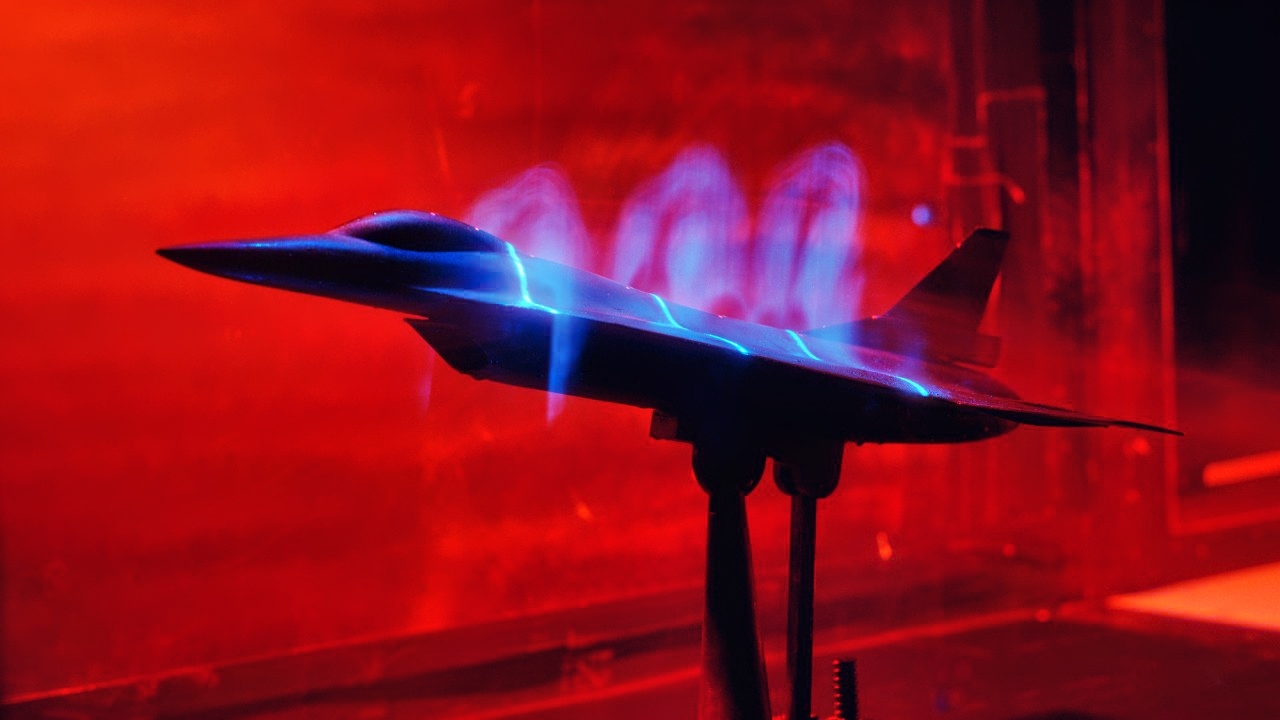
F-16XL Fighter Concept. Image Credit: Creative Commons.

F-16XL. Image Credit: Creative Commons.
“Coupling this with the affordability and low risk of the F-16XL presents USAF with a viable way to increase mission capability while simultaneously growing to a forty-wing TAC force structure.”
The Air Force, however, didn’t see it that way, at least when it came time to choose which fighter to go with in that process.
Writing the Book on the F-16XL
A whole book, nearly 500 pages, was written about the jet, titled “Elegance in Flight: A Comprehensive History of the F-16XL Experimental Prototype and its Role in NASA Flight Research,” by Albert C. Piccirello. It was published in 2014 through the NASA Aeronautics and Space Report Book Series.
“Based on the combination of a stretched F-16 fuselage and a highly tailored cranked-arrow wing, the F-16XL began as an initiative of the General Dynamics Corporation (GD),” the book begins.
“By independently developing an experimental prototype that would inexpensively validate the concept of transonic/supersonic cruise and maneuverability along with improved air-to-ground capabilities, GD hoped to interest the Air Force in supporting development and production of what was essentially a new aircraft, but one that shared much in common with the basic F-16,” the book says.
Why Didn’t the Air Force Choose it?
“Flight-test evaluation results for both competing aircraft and other sources of information, including the outcomes of computerized war games, were used in the Air Force DRF source selection,” the book says of the process. “The F-15E was selected for production in January 1984. Based on competing programmatic and budgetary choices, the Air Force rationally had elected to fund the F-15E, the F-117, and the ATF, finally terminating the F-16XL development in mid-1985.”
The NASA Years
The two F-16XL prototypes ended up in the hands of NASA, where they were used, through the mid-1990s, as part of the Supersonic Laminar Flow Control (SLFC) program. According to NASA, the F-16XLs flew a total of 45 missions as part of the SLFC program.
“The project demonstrated that laminar—or smooth—airflow could be achieved over a major portion of a wing at supersonic speeds by use of a suction system,” the NASA website says. “The system drew a small part of the boundary-layer air through millions of tiny laser-drilled holes on a titanium ‘glove’ fitted to the upper left wing. About 90 hours of flight time were logged on the aircraft during the program, much of it at speeds of Mach 2 and altitudes up to 55,000 feet.”
The NASA website also includes additional information about how the space agency used the F-16XL.
“The laminar flow research project, flown at NASA’s Dryden Flight Research Center, Edwards, CA, investigated the use of a suction system built into the experimental panel and wing to remove a small part of the boundary layer of air along the aircraft wing,” NASA says. “The resultant expansion of the area of laminar (smooth) flow over the wing can reduce aerodynamic drag and help reduce aircraft operation costs by improving fuel consumption.”
In addition, Peter Suciu has written about the changes NASA made to the aircraft.
“NASA Dryden extensively modified the two-seat F-16XL for the Supersonic Boundary Layer Control research project in the mid-1990s,” he wrote. “A turbine-driven suction system was installed in the aircraft’s fuselage, while a modified, thickened left wing pulled in boundary layer air flowing over the wing to enable laminar, or smooth, airflow over the wing. The aircraft last flew in 1996 and is reportedly no longer airworthy.”
Some have credited NASA’s work with paving the way for innovations such as the F-22’s supercruise capabilities.
The final flight took place in 1996, and one of the prototypes is currently displayed at Edwards Air Force Base, while the other is in storage there. In 2023, a Reddit user spotted it at Edwards while using Google Earth.
Suciu wrote about one other near-use of the aircraft.
In 2007, he writes, a decade after that last flight, NASA approached Lockheed Martin, now the owner of GD’s aviation business, about its interest in conducting “further tests on the feasibility of returning one of the prototypes to flight status.” But after that, he writes for 19FortyFive, “that program finally ended in 2008, and both of the prototypes were officially retired and returned to storage yet again.”
“Follow-on NASA experiments with the F-16XLs produced a very large volume of technical data and reports that were very effectively used to further the state of the art in computer modeling of aerodynamic, acoustic, and sonic boom phenomenology,” the Piccirello book says of the jet’s NASA legacy.
About the Author: Stephen Silver
Stephen Silver is an award-winning journalist, essayist, and film critic, and contributor to the Philadelphia Inquirer, the Jewish Telegraphic Agency, Broad Street Review, and Splice Today. The co-founder of the Philadelphia Film Critics Circle, Stephen lives in suburban Philadelphia with his wife and two sons. For over a decade, Stephen has authored thousands of articles that focus on politics, national security, technology, and the economy. Follow him on X (formerly Twitter) at @StephenSilver, and subscribe to his Substack newsletter.
More Military
Russia’s Mach 2 Su-30SM Fighter Has A Message for Any Air Force on Earth
The Mach 2.2 B-1A Bomber Has A Message for the U.S. Air Force
The Mach 2.35 ‘Super’ Eurofighter Typhoon Fighter Has a Message for Any Air Force On Earth
Canada’s CF-18 Hornet Fighter Crisis
Forget NGAD or the J-20: A 7th Generation Fighter Could Hit Mach 5


