

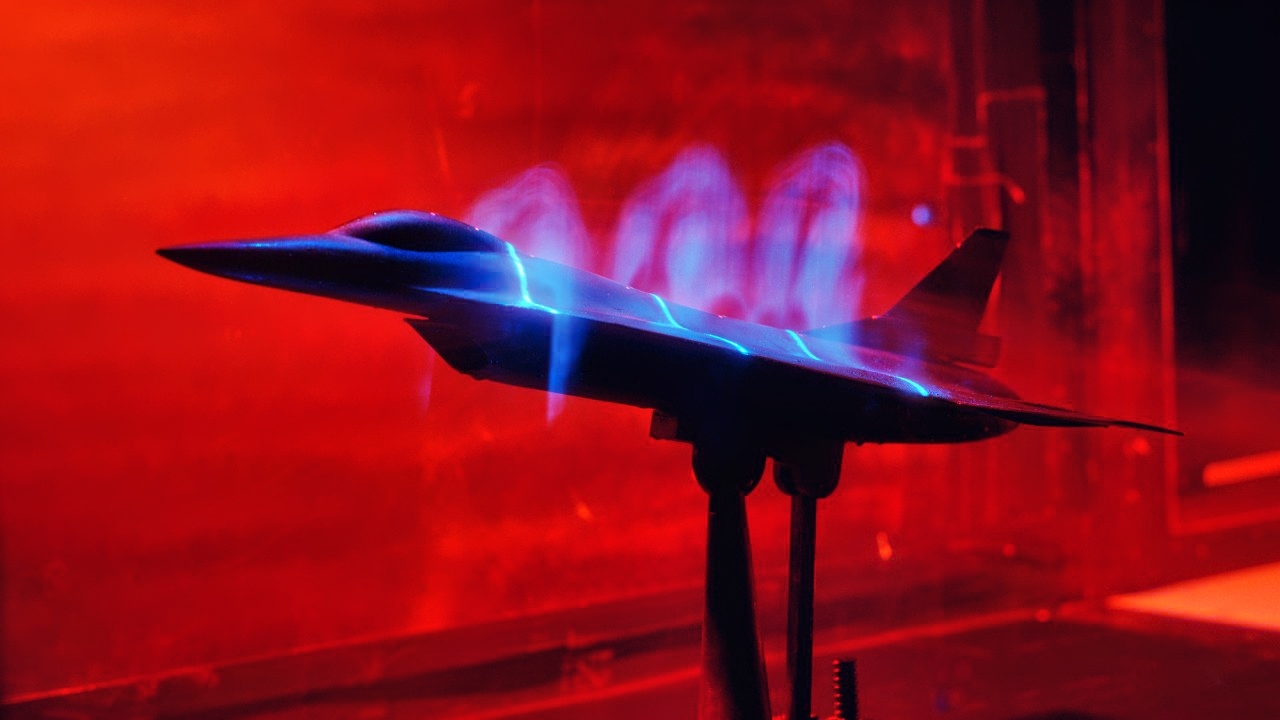
Key Points and Summary – A retrospective on the 1980s Enhanced Tactical Fighter competition concludes the Pentagon wisely chose the F-15E over the F-16XL.
-The F-15E was selected for its superior twin-engine performance (Mach 2.25 speed) and faster production timeline, a decision validated by its perfect 100-0 air-to-air combat record and its evolution into the modern F-15EX.
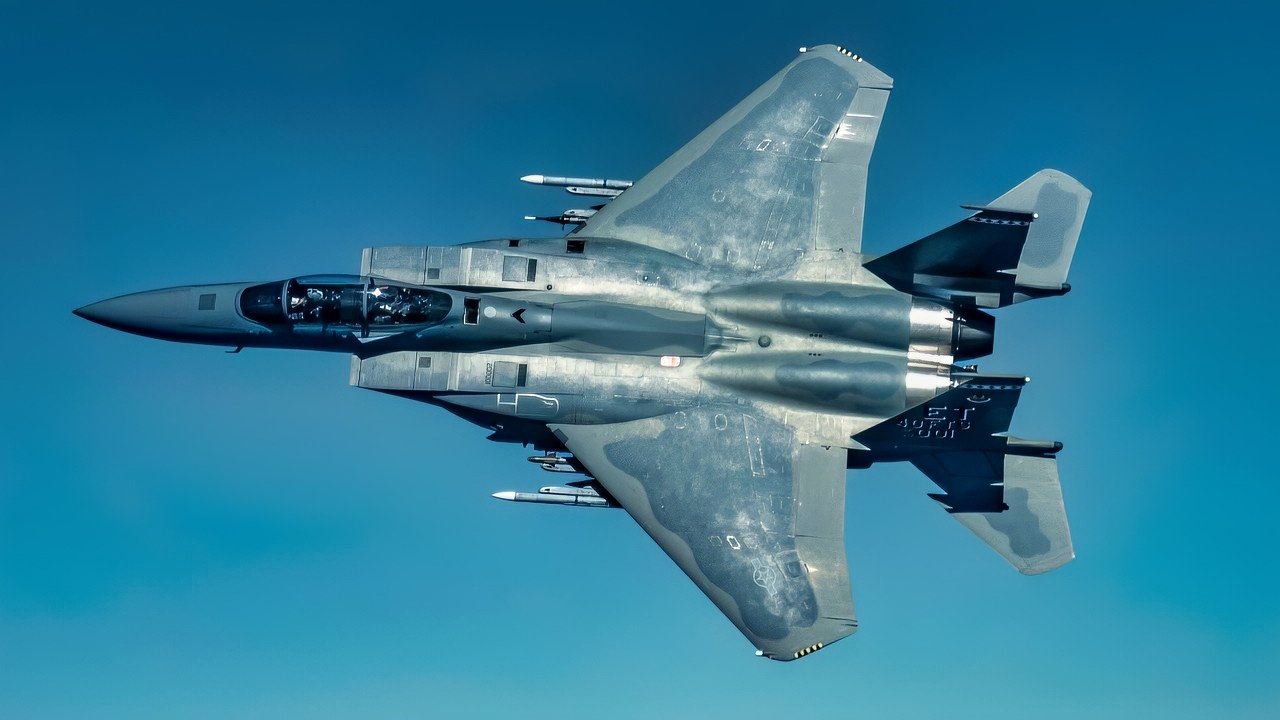
U.S. Air Force Lt. Col. Richard Turner, 40th Flight Test Squadron commander flies 40 FLTS Senior Enlisted Leader, MSgt Tristan McIntire during a test sortie in the F-15EX Eagle II over the Gulf of Mexico on Jun. 14, 2022. Assigned to the 96th Test Wing at Eglin Air Force Base, Fla., the F-15EX Eagle II is the Air Force’s newest 4th generation fighter being tested at the 40 FLTS. (U.S. Air Force photo by Tech. Sgt. John McRell)
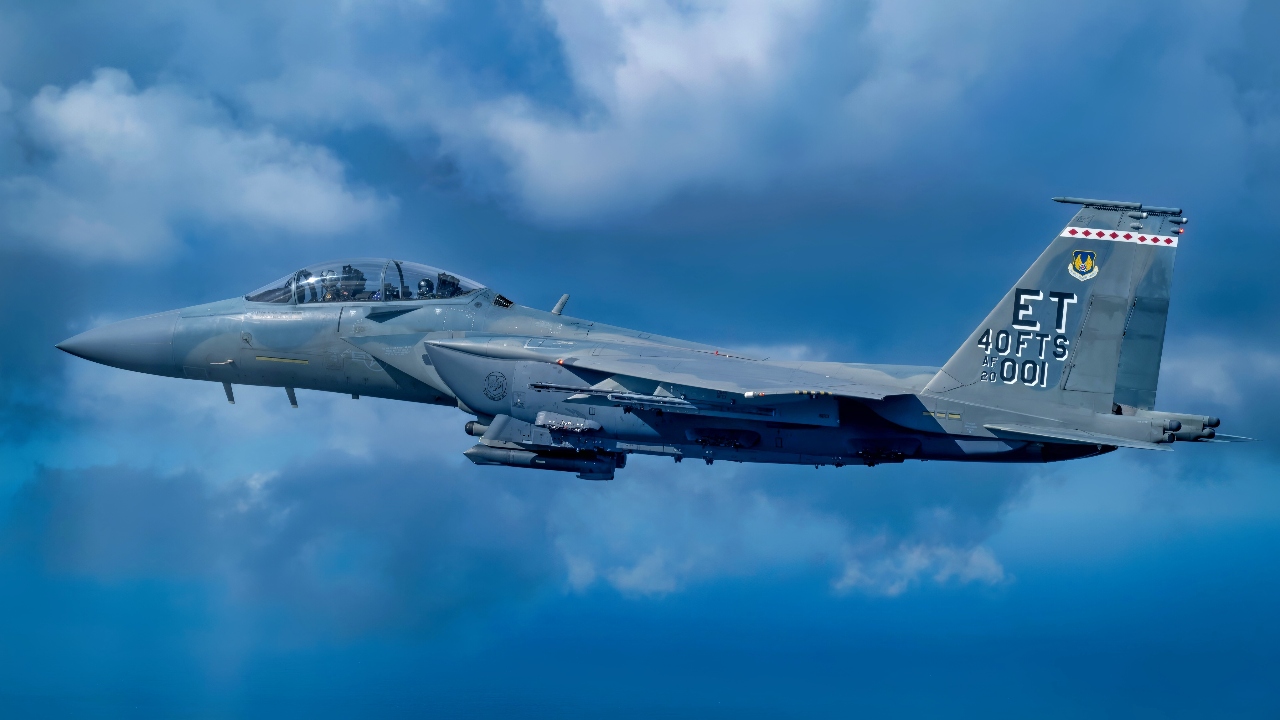
A U.S. Air Force F-15EX Eagle II fighter jet assigned to Eglin Air Force Base, Florida, flies near Jacksonville, Florida, Nov. 2, 2024. Airmen from the 40th Flight Test Squadron and 96th Aircraft Maintenance Unit supported a flyover for the annual Florida-Georgia college football game. (U.S. Air Force photo by Staff Sgt. Blake Wiles)
-The F-16XL, a radical “cranked-arrow” delta wing design, was a creative dead end, though the standard F-16 was later heavily modernized on a separate track.
The F-16XL Mistake?
During the height of the 1980s Cold War, the Pentagon chose to produce the F-15 Eagle fighter jet as part of its Enhanced Tactical Fighter program.
This decision left General Dynamics F-16XL offering as merely a short-lived emblem of creativity.
In retrospect, the decision appears sound, given the significant extent to which the F-15E has advanced.
Not only is today’s F-15E upgraded with paradigm-changing computing, weapons, sensing, and radar, but its progress has also further inspired the creation of the 4.5-gen 4th-Gen “plus” F-15EX aircraft.
Was F-15E The Right Choice?
It is certainly easy enough to look back and question previous decisions about fighter jet design, development, and selection, given the many variables.
Yet it does seem difficult to question the Pentagon’s wisdom when it comes to its 1980s decision to pick Boeing’s F-15E over General Dynamics’ F-16XL.
The famous F-25 Eagle can reach speeds of Mach 2.25, equivalent to an F-22 and among the best fighter jet speeds anywhere in the world.

F-16XL Fighter. Image Credit: Creative Commons.

F-16XL Fighter from NASA. Image Credit: Creative Commons.
The jet’s combat record is also likely unparalleled, as the fighter has 100 air-to-air kills with no losses, establishing that the F-15E has never lost a dogfight.
It is unclear if the actual “performance” of the F-16XL would have accomplished this objective or substantially rivaled the F-15 Eagle, particularly because the F-15 has two engines and a virtually unparalleled thrust-to-weight ratio.
On the surface, there was a self-evident production and design reality behind the decision: the F-15E could be manufactured more quickly and easily because its fuselage and basic components were aligned with those of previous F-15C and D models.
The F-16XL, however, departed from existing F-16s by adopting a different, heavily modified design called a “cranked-arrow” delta wing. The design has a “bend” in its leading edge, making the aircraft fuselage look like a “bent arrow.”
The “cranked arrow” configuration seeks to optimize performance by combining a highly-swept wing, something ideal for supersonic flight, with a “less-swept” wing able to support subsonic maneuvering.
The design, therefore, sought to deliver both supersonic and subsonic advantages, achieving speed and maneuverability at different speeds and altitudes.
F-16E and F?
Should the F-16XL have been selected by the Pentagon as the Enhanced Tactical Fighter in the 1980s, there would likely be F-16Es and F-16Fs today.

F-16XL. Image Credit: Creative Commons.
As it stands, no such aircraft exists; however, the Air Force has taken significant steps to extend the F-16’s service life well beyond what was initially expected.
Not only did Lockheed build a special, upgraded F-16 variant for international sales, but the company also retrofitted the US Air Force’s existing F-16 fleet with a host of performance-enhancing upgrades.
At one point, Lockheed and the Air Force upgraded the F-16 with F-35 technologies, including an AESA radar.
Service Life Extension Program
U.S. Air Force modernization experts have described this Service Life Extension program as 12 structural modifications called a Time Compliance Technical Order.
Part of this included upgrading F-16 radar systems from mechanically scanned radar (APG-68) to an Active Electronically Scanned Array (AESA) (APG-83).
Lockheed F-16 weapons developers have also said the aircraft was getting new computers, software, targeting technology, and cockpit displays to ensure it remained cutting-edge and capable against advanced 4th-generation threats.
As part of this effort, Lockheed even engineered a new “V” variant of the F-16, which continues to generate allied interest worldwide with added missile warning systems, EW, and helmet-mounted cueing technology.
About the Author: Kris Osborn
Kris Osborn is the President of Warrior Maven – Center for Military Modernization. Osborn previously served at the Pentagon as a highly qualified expert in the Office of the Assistant Secretary of the Army—Acquisition, Logistics & Technology. Osborn has also worked as an anchor and on-air military specialist at national TV networks. He has appeared as a guest military expert on Fox News, MSNBC, The Military Channel, and The History Channel. He also has a Master’s Degree in Comparative Literature from Columbia University.
More Military
The Army’s AbramsX Tank Boils Down to 1 Word
China’s Big Plan To Sink U.S. Navy Aircraft Carriers Comes Down to 4 Words
The New Air Force B-21 Raider Isn’t Just a Stealth Bomber
The F-22 ‘Super’ Stealth Fighter Is Coming
The Real Reason U.S. Air Force Recruiting Numbers Are Surging


Danny
October 27, 2025 at 11:08 am
You don’t have a clue about fighter aircraft apparently.
The F-15E has ONE air to air kill. A bomb dropped on a Hind as it was taking off. The 100+ kills were made by F-15A and C’s. A completely different aircraft. They might look similar, but underneath they are nothing alike. The A and C are 1 seater superiority fighters without air to ground capabilities. The E is a 2 seater bomb truck.